

More Flutes Sound Good: Toolholding
While endmills with higher flute counts are often associated with finishing operations, more shops turn to endmills with four or more flutes for roughing operations, especially when it comes to harder materials. When performing today’s aggressive machining strategies, such as high-efficiency milling, each flute added to an endmill proportionally increases feed rate capabilities and, in turn, shortens machining cycle times.
While endmills with higher flute counts are often associated with finishing operations, more shops turn to endmills with four or more flutes for roughing operations, especially when it comes to harder materials. When performing today’s aggressive machining strategies, such as high-efficiency milling, each flute added to an endmill proportionally increases feed rate capabilities and, in turn, shortens machining cycle times. Plus, spreading the wear across more cutting edges helps boost tool life. However, tools with a higher flute count come with some drawbacks.
Multi-flute endmills generate high levels of radial and axial cutting forces that then amplify problems stemming from tool runout and vibration. The result is an inconsistent distribution of cutting forces that diminish tool life and part quality. To avoid these situations, a high-quality toolholder is a must when using endmills with four or more flutes because it reduces runout and dampens vibration at the point of contact between the spindle and cutting tool.
Reducing Runaway Runout
Runout, usually expressed in total indicator runout (TIR), often stems from a misalignment between the cutting tool and the toolholder, and that usually leads to headaches for machinists. Common causes of this misalignment include inadequate clamping forces, an imbalance in the toolholder assembly, or contaminants present within the toolholder that interfere with the cutting tool relative to the rotation of the spindle. This dramatically decreases cutting tool efficiency because certain flutes experience greater cutting forces than others, which leads to a reduction in tool life and material removal rates, as well as a poor surface finish. The more cutting flutes, the greater the potential for runout problems.
With excess runout, only about half of the endmill’s cutting edges likely will engage the material, which would significantly reduce the effective feed rate and exacerbate a weakness of multi-flute endmills — chip evacuation. This is because the more cutting edges a solid carbide cutting tool has, the smaller its flute channels become. When runout causes two flutes to do the work of five, those smaller channels clog more easily, leading to frequent chip-clearance problems and the accompanying loss of tool life and/or breakage. Precision balancing is one of the best ways to reduce TIR, which is why toolholding systems manufacturer REGO-FIX USA, Whitestown, Indiana, balances its toolholders at the factory for high-rpm performance and provides its Hi-Q balancing rings.
The rings allow toolroom workers to balance the assembly for a particular machining process at hand. The REGO-FIX Hi-Q ER collet system includes collet nuts that use dimples as reference indicators to simplify assembly and ensure the collet properly aligns with the rest of the toolholder assembly. This helps reduce the incidence of costly assembly mistakes and ensures excellent clamping force. Clamp Down on Vibration Like runout, vibration is another major issue affecting multi-flute endmills.
Review the print ads from this magazine to continue
This quick advertiser review unlocks the rest of the article and keeps the full-screen reader focused on the ads instead of the page chrome.
Advertisers included in this article experience
Print placements connected to this article
Ingersoll Cutting Tools
Hi, Feed
Ingersoll highlights the HiPosWin, GoldSFeed and DiFeedWin high-feed milling families.
Ingersoll presents three high-feed milling tool families with insert designs for higher feed rates, ramping and seating security.
Visit Ingersoll Cutting Tools View this placement in the issue recordPrint ads from this magazine
Ingersoll highlights the HiPosWin, GoldSFeed and DiFeedWin high-feed milling families.
Ingersoll presents three high-feed milling tool families with insert designs for higher feed rates, ramping and seating security.
Continue reading
May 2026
While vibration is bad for every endmill, the cutting forces generated by multi-flute endmills easily lead to chatter and increased tool wear. This is, in part, because cutting tools with high flute counts reach their full potential through the even distribution of cutting forces across all their cutting edges. Vibrations disrupt the even contact between cutting edges and the material being cut. This causes some flutes to bear the majority of wear, which leads to inconsistent surface finishes and reduced tool life.
Additionally, many machining strategies that use tools with high flute counts depend on consistent cutting tool engagement with a workpiece. These approaches prevent repeated changes in forces due to constant disengagement and reengagement with the workpiece. Vibrations disrupt this function. One of the best ways to reduce disruptive vibration is through rigid toolholding and consistent tool clamping forces.
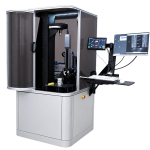
High-end ER collets provide the grip needed for most applications. REGO-FIX offers its powRgrip system for more aggressive machining strategies. The powRgrip system uses a desktop hydraulic press that pushes a collet into a toolholder. The collet and holder have mating tapers that create approximately 1,100 Nm of clamping force for gripping the cutting tool more securely than many conventional methods.
With such high clamping force and a TIR under 0.0001", this system significantly reduces the micro movements that create vibration. When it comes to endmills with high flute counts, vibration and runout must be minimized as much as possible. Combining the use of a high-quality toolholder with precision balancing will make the most aggressive machining strategies with multi-flute cutting tools much more achievable.
Related


 MFGAxis Discussion
Be part of the shop-floor conversation
Like, save, or comment on this CTE story.
MFGAxis Discussion
Be part of the shop-floor conversation
Like, save, or comment on this CTE story.


MFGAxis Discussion