



Toolholders Can Make or Break Your Day
Switching to hydraulic chucks and ER collets improved machining quality and productivity, proving toolholders are as crucial as machines.
My metalworking career began in my dad’s machine shop. It was a typical small machine shop with a few lathes, mills and surface grinder. Everything was manual. We made a lot of different parts but always in small quantities and nothing that required CNC machines.
That all changed with a phone call from a long-time customer who was trying to source a production part. The customer used about 3,000 of these parts per year, and making them in the needed quantities was going to require CNC equipment. So, we started shopping for a vertical machining center (VMC).
We researched several manufacturers from high-end Japanese makers with names you would recognize to low-end machines that you probably would not recognize. While researching the machines we found out quickly there was a significant difference in machine construction, spindle power, available RPM and features like thermal compensation. As you are already aware, the more you spend the more you get. We ended up making a compromise between price and performance and chose a machine that, on paper, was not as robust as the competition.
Off we went on the great CNC journey. We broke tools, scrapped parts, crashed into things, drilled a few holes in the table and learned other hard lessons about programming and running a CNC machine. We were not reaping the benefits of a CNC controlled machine; quality was a problem, and labor costs were too high. It was frustrating.
One of the most important realizations we came away with is that, in general, the quality of the tooling you put in a machine is more critical than the quality of the machine. Junk tools will impede the capability of high-end machines and high-quality tools will improve the performance of a budget machine.
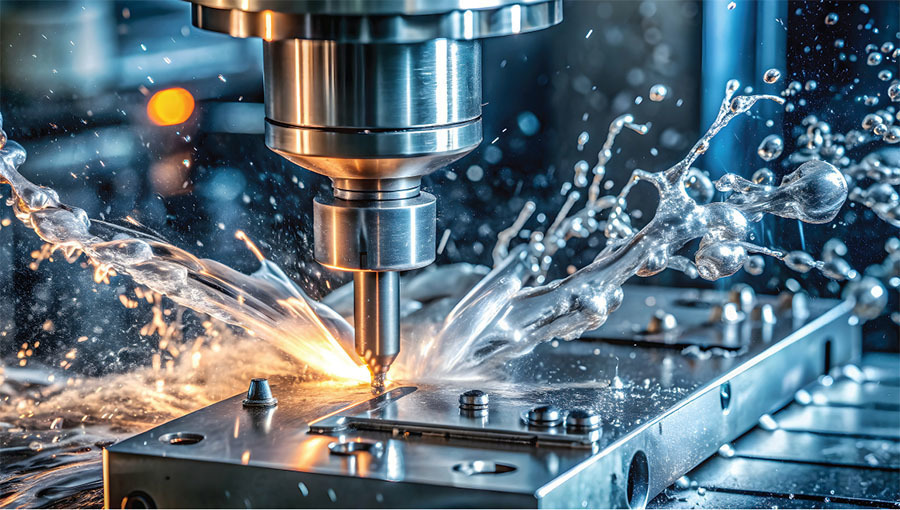
Several problems plagued our machining process and chatter was a frequent issue. Our first big job was machining aluminum extrusions, which should have been super easy, but we kept getting a terrible surface finish and had to throw out the parts. Eventually, one of our cutting tool representatives suggested we ditch the side lock endmill holder we were using and buy something sturdier. So we purchased a hydraulic endmill chuck. These chucks use hydraulic pressure to collapse the toolholder around the entire shank of the tool, providing a firm grip on the shank. The old-style side lock holders have some clearance between the tool shank and toolholder that can open the door to chatter at the high RPM needed to efficiently machine aluminum. Once we started using the endmill chuck, the chatter problems disappeared.
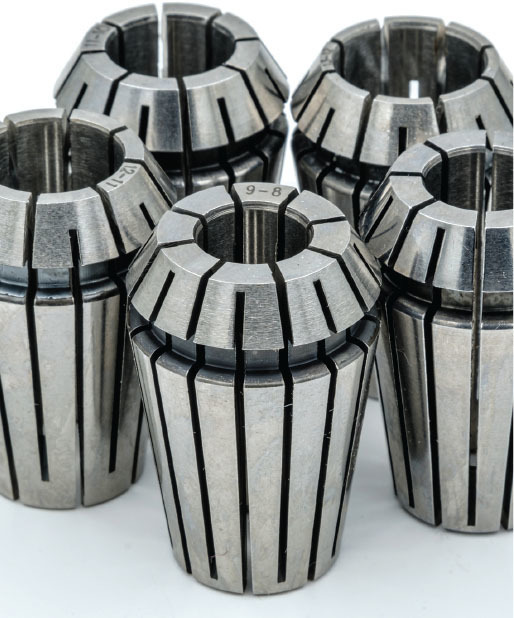
Drilling and reaming holes “to size” was another frequent problem. Holes would be oversized or out of round and on occasions the depth would change over time. We were using the DA-style collets that have grip range of 0.030″, and we took full advantage of that — running drills that were at the bottom of the collet grip range. Unfortunately, the collets lose grip strength and accuracy as you approach the bottom of the grip range. So, a 3/8″ drill runs OK in a 0.375″ collet, but an 11/32″ drill wobbles and slips in the 0.375″ collet. TIR (total indicator runout) of our drills in the DA collets caused the drills to make oversized and out of round holes.
To combat this issue, we transitioned to ER style collets that are more accurate and provide better grip strength. These also have a grip range that is about 0.030″, but they are available in more sizes so you can get the one that matches your drill size. Once we started running collets that were matched to the drill diameter, the TIR of drills dropped to almost zero, and the hole quality improved dramatically.
Threading was also a problem. The parts required a series of 3 mm × 0.5 mm threaded holes 14 mm deep. Not only did we struggle to produce a good thread we left lots of broken taps in the holes. Although we purchased a bargain machine, we splurged for the rigid tapping option and used it to tap these holes. That was a mistake. We had to run the taps very slowly to prevent tool breakage and get the required thread quality. After trying the ER collets with rigid tapping, we tried using tension-compression tap holders. Both made good threads, but they were still too slow because the spindle had to change direction to come out of the hole. The machine was just not responsive enough when the spindle was synced to the Z-axis for rigid tapping.
Finally, we purchased a self-reversing tapping head for the VMC. It was expensive, but it was fast. We ditched the rigid tapping cycle and used a standard drill cycle as we no longer needed to change spindle direction to get the tap out of the hole. The tapping head is also sloppy compared to the ER collets and the slop helped improve the thread quality by allowing the tap to float a little.
Several times when the learning curve was steep, we lamented the purchase of the budget machine and thought the purchase was a mistake. In the end, we adjusted our machining strategies and replaced the bargain toolholders with ones that were higher quality. The toolholders made the difference, quality improved and cycle times went down. This ended up being the most profitable job in the shop and a year later we bought a second machine just like the first.
Glossary terms in this article
Related



Subscribers can use MFGAxis notes, saves and discussion tools with their innoNET account.


