

Multipurpose mills
For machining operations in which change is a constant, general-purpose endmills can have a value that far exceeds their actual cost. As the name suggests, these endmills are not designed for a specific cutting application or material. Instead, they are tools that can be used for most standard machining jobs.
For machining operations in which change is a constant, general-purpose endmills can have a value that far exceeds their actual cost. As the name suggests, these endmills are not designed for a specific cutting application or material. Instead, they are tools that can be used for most standard machining jobs.
“I see a general-purpose mill as the adjustable wrench of cutting tools,” said Dan Doiron, milling product manager at Emuge-Franken USA, a tool manufacturer in West Boylston, Massachusetts. “The adjustable wrench can adapt to many bolt sizes conveniently and quickly on the spot.”
Similarly, he said general-purpose endmills provide the versatility needed at shops where rush jobs often pop up and there is no time to determine whether the exact tool is available for each material that must be machined. For this reason, these endmills must be capable of machining most materials, from aluminum to hardened steels.
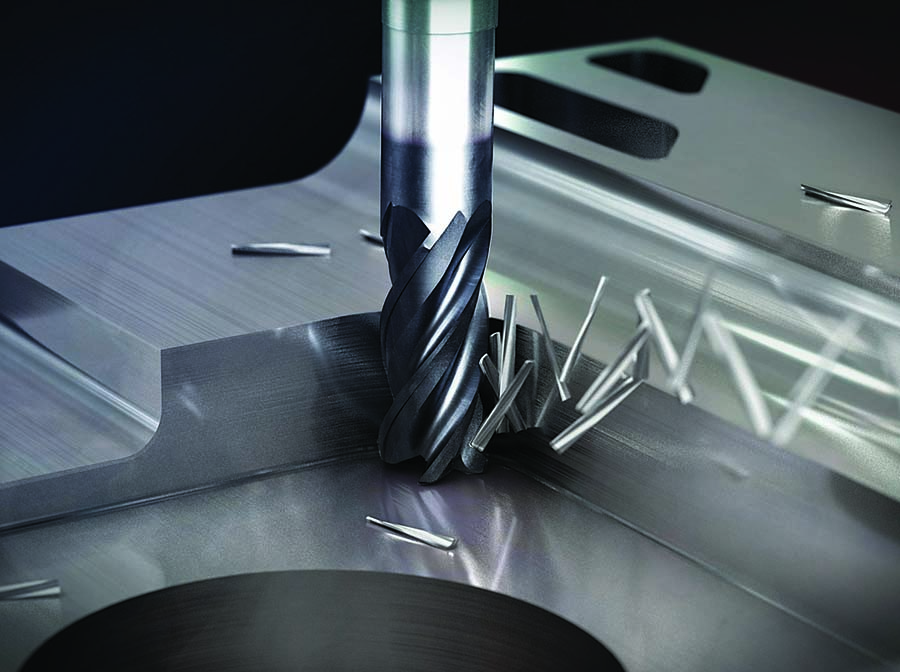
The V7 Plus offers good performance in a variety of materials. Image courtesy of YG-1 Tool (USA)
Designed for the requirements of fast-paced, fast-changing machining environments, Doiron said a general-purpose mill “will get you running quickly and efficiently without breaking the bank.”
Another Option
An alternative to a general-purpose endmill is a high-performance tool.
“If you have the right part with the right machine and the right program, a high-performance tool will work better than a general-purpose (one),” said Yair Bruhis, global industry project manager at YG-1 Tool (USA) Co. in Vernon Hills, Illinois.
Unlike general-purpose endmills, he said high-performance tools normally are aimed at specific applications. For example, a high-performance endmill might be designed to cut titanium in a high-speed machining application.
While a custom or special endmill is usually a high-performance tool, Bruhis pointed out that both general-purpose and high-performance endmills can be either off-the-shelf or custom tools. He noted that a custom high-performance tool sometimes is designed from scratch to meet the requirements of a particular application. But this normally wouldn’t be done to create a custom general-purpose tool.
“Usually,” he said, “you just modify a general-purpose and call it a special.”
Key Characteristics
Bruhis said those comparing the designs of typical general-purpose and high-performance endmills will notice significant differences in the flutes on the tools. For one thing, he said, general-purpose endmills normally have two to four flutes while high-performance tools probably will have at least five and possibly as many as 12 flutes. In addition, he noted that high-performance endmills have unequal index and variable helix angles to minimize vibration. So while all the flutes on general-purpose endmills will have helix angles of about 30 degrees, a high-performance tool might have a couple of flutes with 37-degree helix angles and a couple with 35-degree helix angles, he said.
An exception to this rule, however, is Emuge-Franken’s Top-Cut VAR. Billed as a multipurpose endmill, Doiron said Top-Cut VAR features flutes with variable helix angles that provide significant vibration dampening.
Other features that generally distinguish high-performance endmills from general-purpose alternatives include special coatings and edge preparation. When it comes to coatings, Bruhis said general-purpose endmills normally sport common coatings, such as AlTiN and TiCN, while high-performance tools might get a special coating like TiAlSiN or AlCrN.
Regarding size options, general-purpose endmills usually offer more than their high-performance counterparts. He said one of the biggest advantages of general-purpose endmills is that they come in diameters down to 0.396875 mm (1/64″) while high-performance tool diameters commonly go only as low as 3.175 mm (1/8″) or 6.35 mm (1/4″).
“So when you talk about very small tools,” Bruhis said, “you’re going to use general-purpose in most cases.”
Another major advantage of general-purpose endmills is their relatively low cost.
“For the small job-shop environment,” Doiron said, “it’s usually the cost of the tool that will direct their sights to the general-purpose mill.”
Bruhis said the prices of general-purpose endmills typically are 20% to 40% lower than high-performance tools. And Doiron noted that the versatility of general-purpose endmills saves money in another way because users need fewer endmill types in their toolcribs to handle a variety of jobs.
However, Bruhis sees more and more shops moving from general-purpose to high-performance endmills because the price of tooling is only 3% to 5% of the overall manufacturing cost, as well as the dropping price of some high-performance tools. As an example, he points to demand for YG-1 Tool’s V7 Plus endmill.
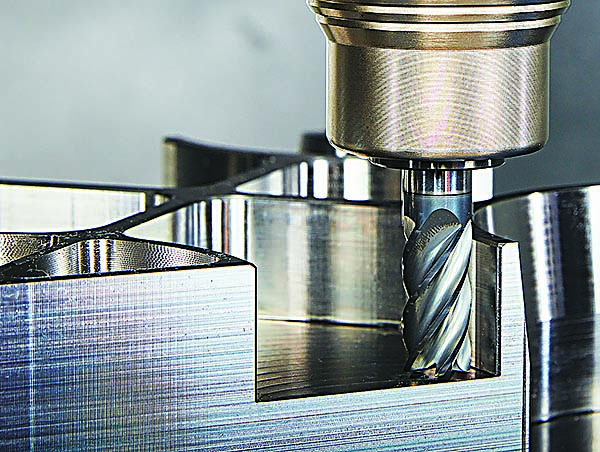
Top-Cut VAR multipurpose endmills feature flute and profile geometries optimized for long tool life and good performance in both roughing and finishing applications. Image courtesy of Emuge-Franken USA
Introduced about five years ago as a high-performance tool, he said the V7 Plus “is becoming more of a general-purpose tool because of its lower price and (material) versatility.”
Performance Considerations
Doiron said one reason that general-purpose endmills cost less than their high-performance counterparts is that they normally offer only a “midrange” cutting tool geometry.
“The more intricate the geometry gets,” he said, “the more expensive it is to create and grind.”
Of course, the performance of a lower-cost design doesn’t measure up to that of a more expensive tool, said Matt Goss, applications engineer at Greenleaf Corp., a toolmaker in Saegertown, Pennsylvania.
A general-purpose tool “isn’t going to be geared toward that one operation like a special tool might be,” he said, “but it does provide a means of completing a job.”
At a shop that normally handles five-piece orders, moreover, the need for a specialized tool that helps reduce cycle times may not be as great as it would be at a shop dealing with much higher order volumes, Goss said. However, as production volumes grow, so do the benefits of optimizing a process to boost throughput — and one way to do that is to use a tool designed for that particular process rather than a general-purpose endmill.
Even in some low-volume production environments, he said opting for a specialized endmill might make sense.
“If the shop sees a high mix of parts that are all the same material type or the same geometry, I can see where they can have a specialized tool for that specific material type” or geometry, Goss said. “That would (help) them increase their machining efficiency for each job, and then they could increase their capacity to take on more work of that same type.”
Unlike general-purpose endmills, Doiron said specialized endmills are designed specifically for the latest machine tools (often five-axis), as well as advanced milling strategies offered by modern CAM software. So shops that lack up-to-date machining hardware and software may be better off going with general-purpose endmills.
Even in cases in which specialized endmills are an appropriate choice, he sometimes can spare customers the expense of purchasing the tools by suggesting a change in machining strategy that opens the door to the use of general-purpose endmills.
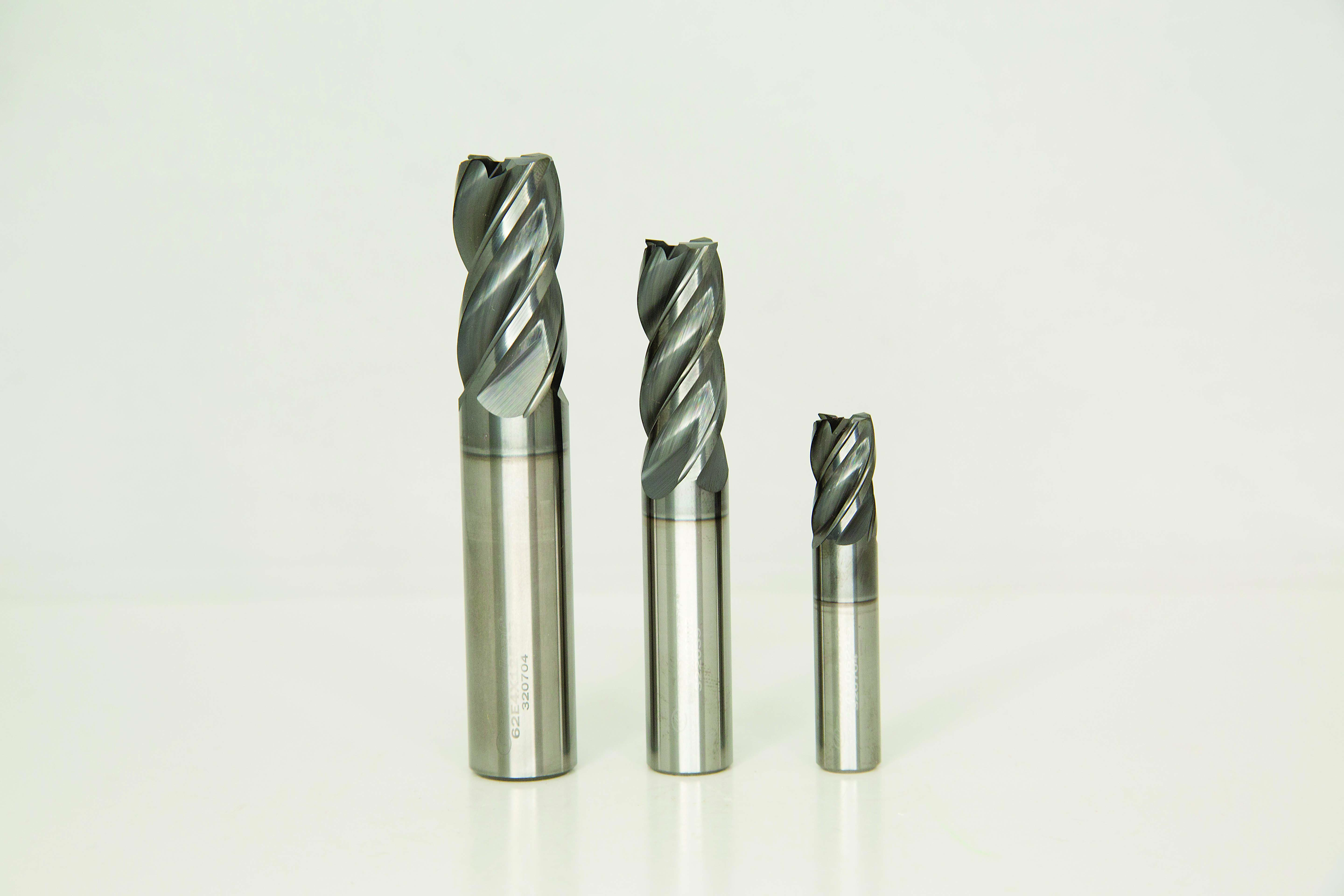
Greenleaf’s 360 four-flute carbide endmills are designed for applications requiring heavy material removal rates. Image courtesy of Greenleaf
However, “when dealing with specific materials and trying to increase tool efficiency along with cycle (time) reductions,” Doiron said, “a specialized tool is needed to generate profits.”
Using Both
Rather than choosing between general-purpose and specialized endmills, the best option in some situations may be to employ both. Consider a case in which a shop needs to create a two-piece prototype to bid on a job. Doiron pointed out that the shop may not want to sacrifice expensive endmills to make a prototype for a job that the shop might not get, so it could opt for a general-purpose endmill to machine the prototype.
Now let’s say the shop gets the job, which requires producing 500 pieces. But the general-purpose mill that cut the prototype may have produced chatter in the process due to part characteristics, resulting in a rather long cycle time.
When the task at hand changes to production, “the introduction of a more specific cutting tool to match the material will be the game changer,” Doiron said.
For example, the shop could switch to a “corncob” milling cutter, a special roughing tool with a dense, spiral mesh surface. He said this tool can eliminate the problematic vibration that occurred when machining the prototype and also remove more material in each pass.
Besides supplementing general-purpose endmills with higher-performance tools in some cases, shops now can opt for general-purpose tools that offer better performance thanks to additional flutes. While the traditional general-purpose mill was limited to four flutes, Doiron noted that some styles now feature five, six and even seven flutes.
“This trend of higher flute count is based on toolpaths developed by CAD/CAM suppliers promoting large axial depths of cut with light radial passes,” he said. “We as cutting tool manufacturers are developing tools to support the concept.”
Glossary terms in this article