Technology tames gear trouble for machine shops
Precise synchronization between the cutter and spindle is needed for any gear-machining operation.
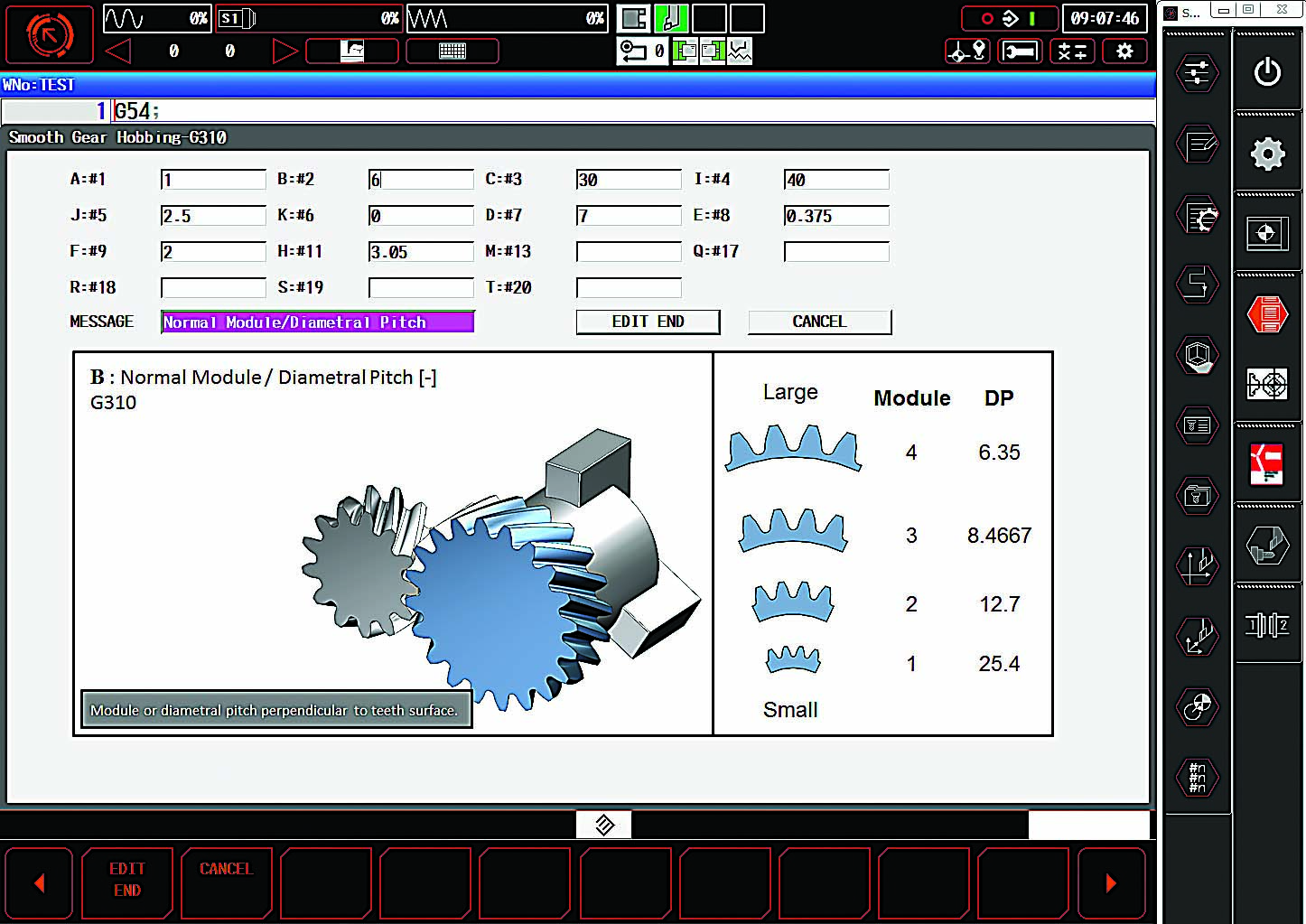
Precise synchronization between the cutter and spindle is needed for any gear-machining operation. Image courtesy of Mazak
Perhaps you already own a multitask machine or a mill/turn lathe. Perhaps you’ve considered investing in one. Whatever the case, here’s yet another way that these machines can add value and flexibility to any job shop or discrete manufacturing company: gear hobbing.
Hobbing, like most gear-making operations, is a complex process. It uses a rotating drum-shaped cutter that, depending on the gear type, is either held parallel to the workpiece centerline or tipped at a slight angle. As the hob rotates, the machine is fed in the longitudinal axis into the workpiece, which rotates in the same direction but at a slower rpm. It is a single-pass process and, in terms of multitaskers and mill/turn lathes, primarily for external gear production.
Multi-Options
As you might have guessed, hobbing requires specialized cutting tools called hobs. It also demands accurate synchronization between the rotating workpiece and cutter and a working knowledge of terms like root circle, pressure angle and module. This is why most shops have long subcontracted their gear-cutting needs to specialty houses, which have the equipment and tools necessary to perform such esoteric work.
Not anymore. Thanks to increasingly capable CNC machines and on-board programming software that tames even the gnarliest of gear forms, machine shops everywhere are performing their low- to medium-volume gear work in-house. One example is the Integrex AG series multitask machine from Mazak Corp. Mike Finn, senior applications development engineer, said the unit has several additional features that allow it to perform at a higher level than a standard Integrex.
“Because synchronization is critical when hobbing, we’ve added scale feedback to the Z-axis and the milling spindle,” he said. “There’s also a software package included on the Integrex AG machines titled Smooth Gear that lets you plug in values, such as diametral pitch, helix angle, pressure angle, cutter diameter and various gear form information, and the control will make the program for you. There are three modules to serve milling, hobbing and power skiving gear-cutting strategies.”
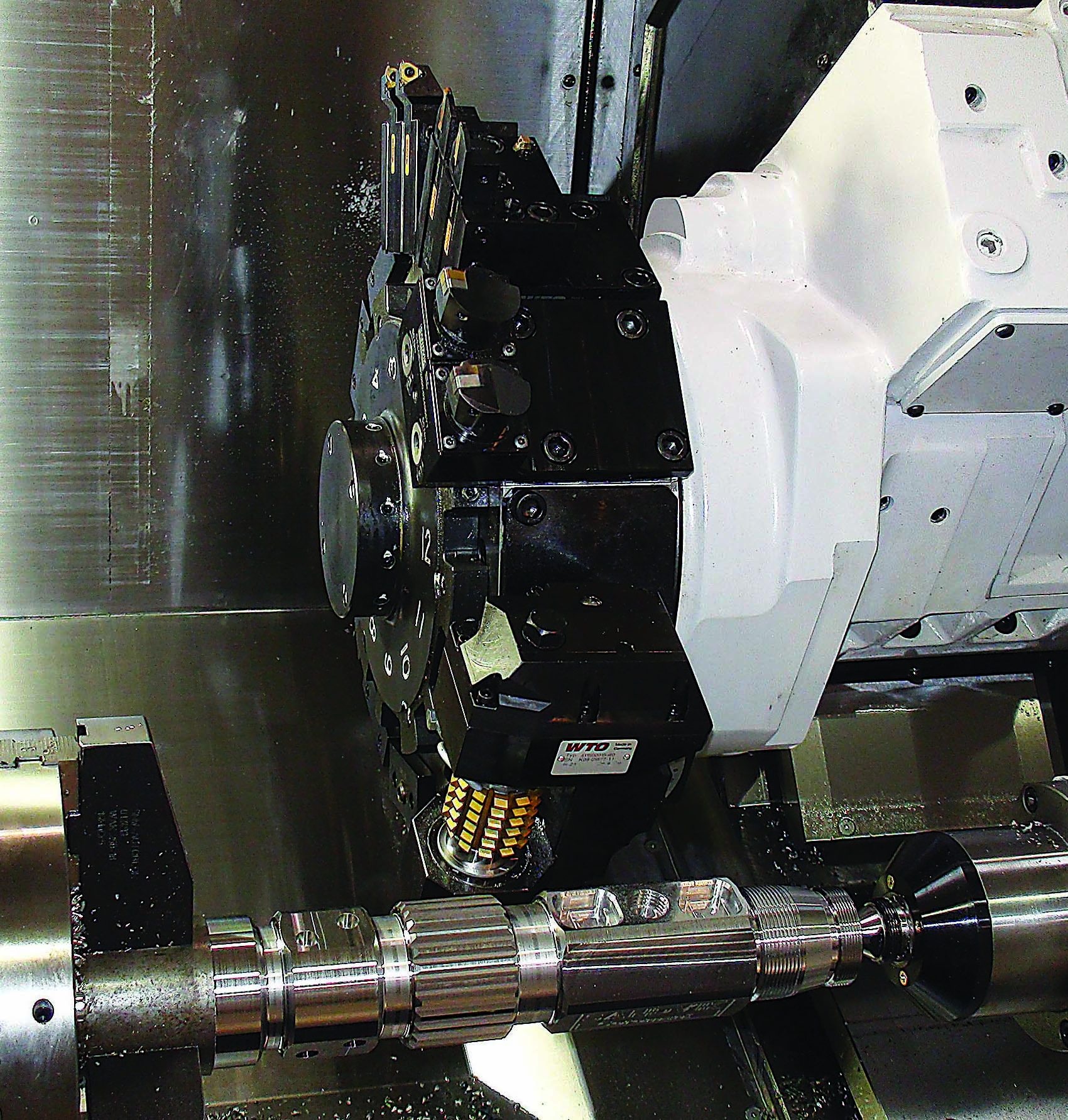
Splines are among the many gear forms produced on multitask and mill/turn machines. Image courtesy of Okuma America
The Florence, Kentucky, machine builder isn’t alone. Hoffman Estates, Illinois-based DMG Mori USA Inc. offers similar gear-hobbing options, or Technology Cycles, on its NLX, CTX and NZX series lathes. Okuma America Corp., Charlotte, North Carolina, has gear packages for the company’s Multus multitask machines, as well as several of its mill/turn centers. Each uses the same hobs found on any comparable hobbing machine, and each is capable of producing a variety of high-quality gears and splines, although at a slightly slower rate than a dedicated hobber.
Why Go Slow?
No machinist or shop owner likes to hear the words “slower rate” used in any sentence. And because users need dedicated tools anyway, many people might suggest that it makes more sense to purchase a used, far less expensive mechanical hobbing machine and stick it in a corner for occasional gear jobs rather than waste valuable multitasking time on a suboptimal machining process.
But not so fast. Multitask machines and mill/turn lathes are known for their ability to reduce part handling and work in process while increasing part quality, and geared parts are no exception. And as far as using a decades-old hobbing machine goes, it’s difficult enough to find qualified CNC machinists.
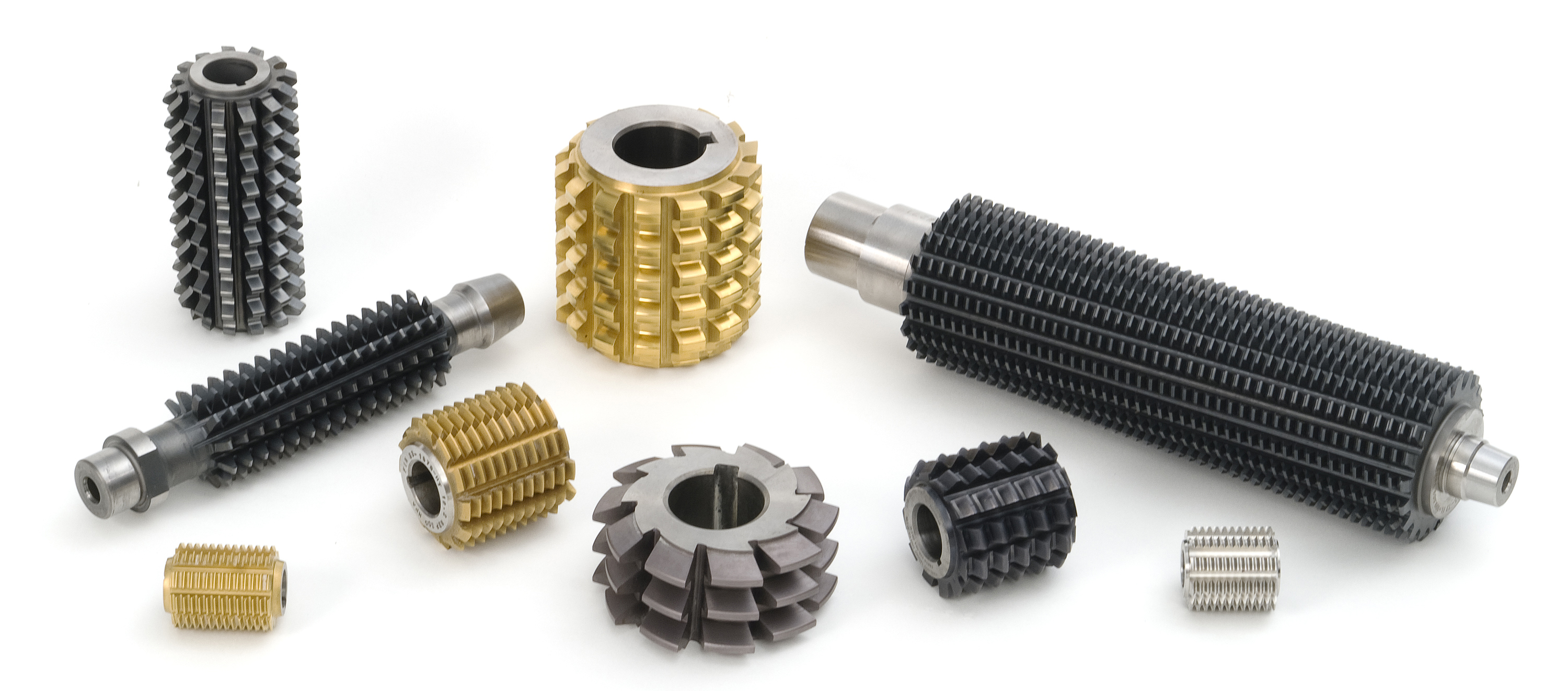
The hobs used on CNC lathes are no different from those used on dedicated hobbing machines. Image courtesy of Star Su
“Unless you have high production, you’re probably not going to buy a gear-cutting machine, new or used, because operating one calls for a very specialized skill set,” said Kevin Kraieski, senior application engineer at Okuma America. “Hobbing and indeed any kind of gear making is just so much easier on a multitasking machine. Also, companies generally want to integrate their processes into as few operations as possible. That’s the beauty of any multitasker or mill/turn.”
Tooling Up
Easy or not, there’s still plenty to know before embarking on any gear-making project. Robert Smiley, applications engineer at DMG Mori USA’s 5-Axis Center of Excellence in Hoffman Estates, said the company’s Technology Cycles make the programming aspect of hobbing easier. But he said there’s also machine-dependent tooling to consider.
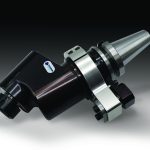
“On a turret-based lathe,” he said, “you’ll need to purchase a special hob holder from someone like WTO or MD Tooling, which mounts on the turret and supports the cutter from both ends. For a multitasking machine, you would most likely opt for a spindle-mounted hob, probably using a Capto or HSK toolholder for the greatest rigidity.”
Review the print ads from this magazine to continue
This quick advertiser review unlocks the rest of the article and keeps the full-screen reader focused on the ads instead of the page chrome.
Advertisers included in this article experience
Print placements connected to this article
Tungaloy America | [email protected] | 888.554.8394
ACCELERATED DRILLING
Deep hole drilling for Exceptional Straightness MCTR... for machining centers (8xD, 10xD, 15xD and 25xD) TRLG... for gundrill machines (up to 94" (2400 mm) length) TOHT Unique insert with 3 cutting edges, chip splitter and built-in wiper.
ACCELERATED DRILLING Deep hole drilling for Exceptional Straightness MCTR... for machining centers (8xD, 10xD, 15xD and 25xD) TRLG... for gundrill machines (up to 94" (2400 mm) length) TOHT Unique insert with 3 cutting edges, chip splitter and built-in wiper Tungaloy America | [email protected] | 888.554.8394 www.tungaloy.com/us
Visit Tungaloy America | [email protected] | 888.554.8394 View this placement in the issue recordPrint ads from this magazine
Deep hole drilling for Exceptional Straightness MCTR... for machining centers (8xD, 10xD, 15xD and 25xD) TRLG... for gundrill machines (up to 94" (2400 mm) length) TOHT Unique insert with 3 cutting edges, chip splitter and built-in wiper.
ACCELERATED DRILLING Deep hole drilling for Exceptional Straightness MCTR... for machining centers (8xD, 10xD, 15xD and 25xD) TRLG... for gundrill machines (up to 94" (2400 mm) length) TOHT Unique insert with 3 cutting edges, chip splitter and built-in wiper Tungaloy America | [email protected] | 888.554.8394 www.tungaloy.com/us
Continue reading
June 2019
Compared with many machining processes, cutting forces are relatively high with hobbing. So it’s easy to argue that because a turret-mounted tool has dual support and therefore greater rigidity, this is the clear path. However, dual support means greater potential for interference with the toolholder, making the ends of a fairly expensive cutting tool harder to reach. Also, a turret-driven toolholder’s available torque is a fraction of the torque from a multitasker’s milling spindle, reducing some of the rigidity gains.
Slightly greater tool deflection, however, is a fairly small price to pay for access to the entire length of the tool. This is the case with spindle-mounted hobs, which as a rule provide greater flexibility and tool life despite the need for less aggressive cutting parameters. Some machine tool builders have even added automatic shifting capabilities so tool wear can be spread across all the hob’s teeth.
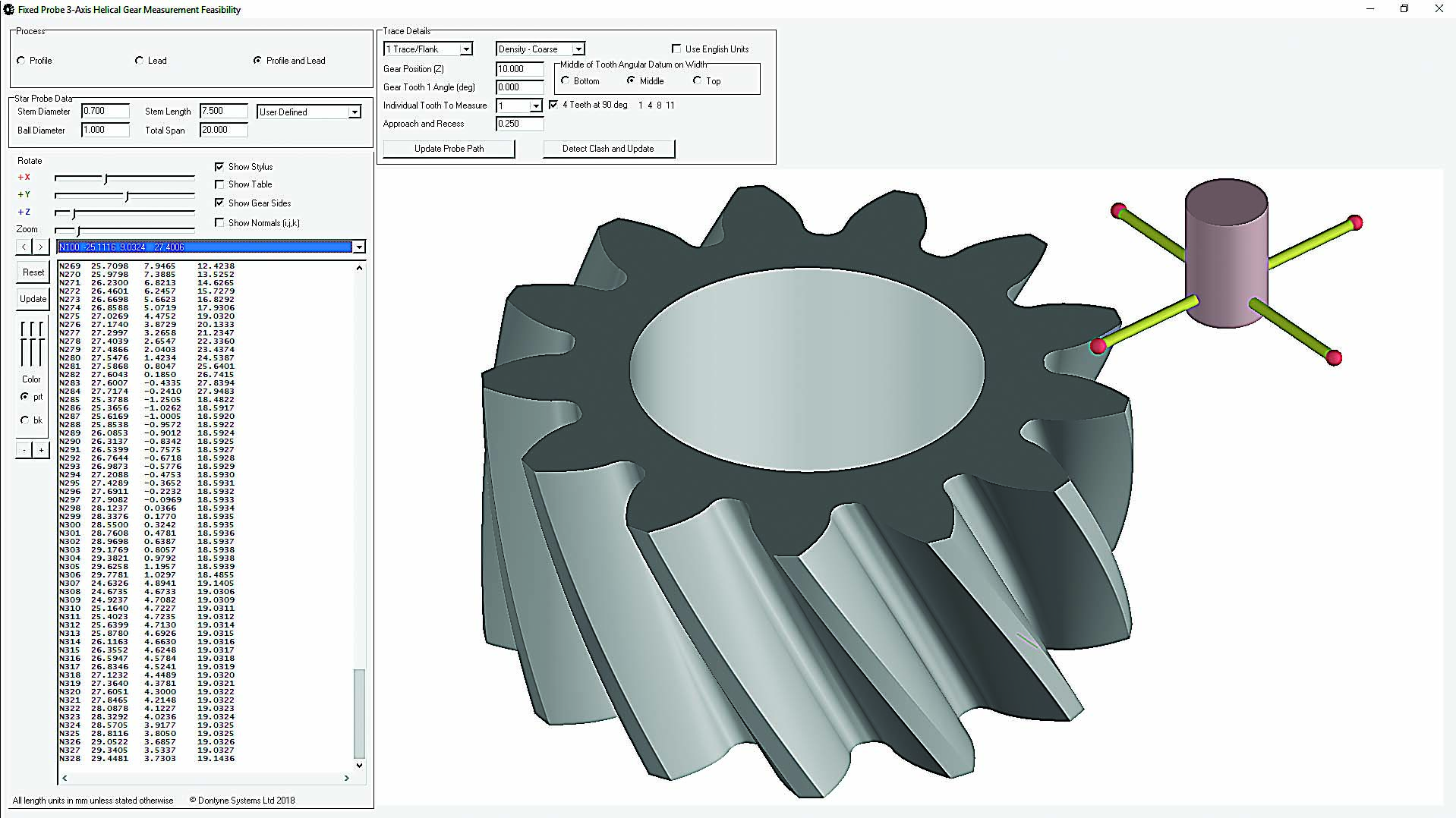
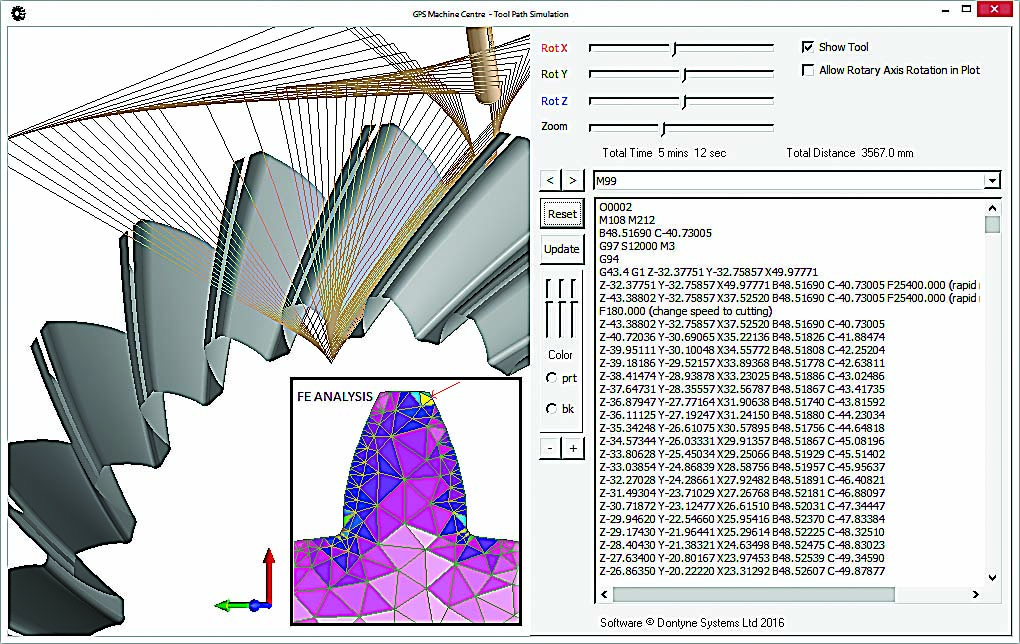
Dontyne Systems’ Gear Production Suite is advertised as a complete gear manufacturing solution, including design, machining and measurement. Image courtesy of Dontyne Systems
Hob selection is also important. Tom Ware, product manager for gear tools at Star SU LLC, Hoffman Estates, said myriad hob styles, coatings, tooth geometries and base materials are available.
“Choosing a hob is really no different than choosing any other cutting tool in that you have to pick the appropriate substrate and coating based on the workpiece material, production quantities and budget,” he said. “Whichever tool you select, though, just know that each form is unique, and you will need a different hob for each gear.”
The Waiting Game
Buying multiple different hobs is a bummer for some people. Although a powder metal or HSS cutter is less expensive than one made of carbide, it still costs hundreds of dollars—sometimes way more. Aside from a generous tool budget, good planning is needed because lead times for even a standard hob are best measured in weeks and months.
An alternative to waiting for a special cutter is to mill the gear profile using a ballnose cutter, an operation that many machine tool builders support. This can be accomplished on a multitasker and some mill/turn machines, but it’s easy on a 5-axis machining center. Milling individual teeth in this manner, if the most flexible approach, does rank among the slowest of all gear production methods.
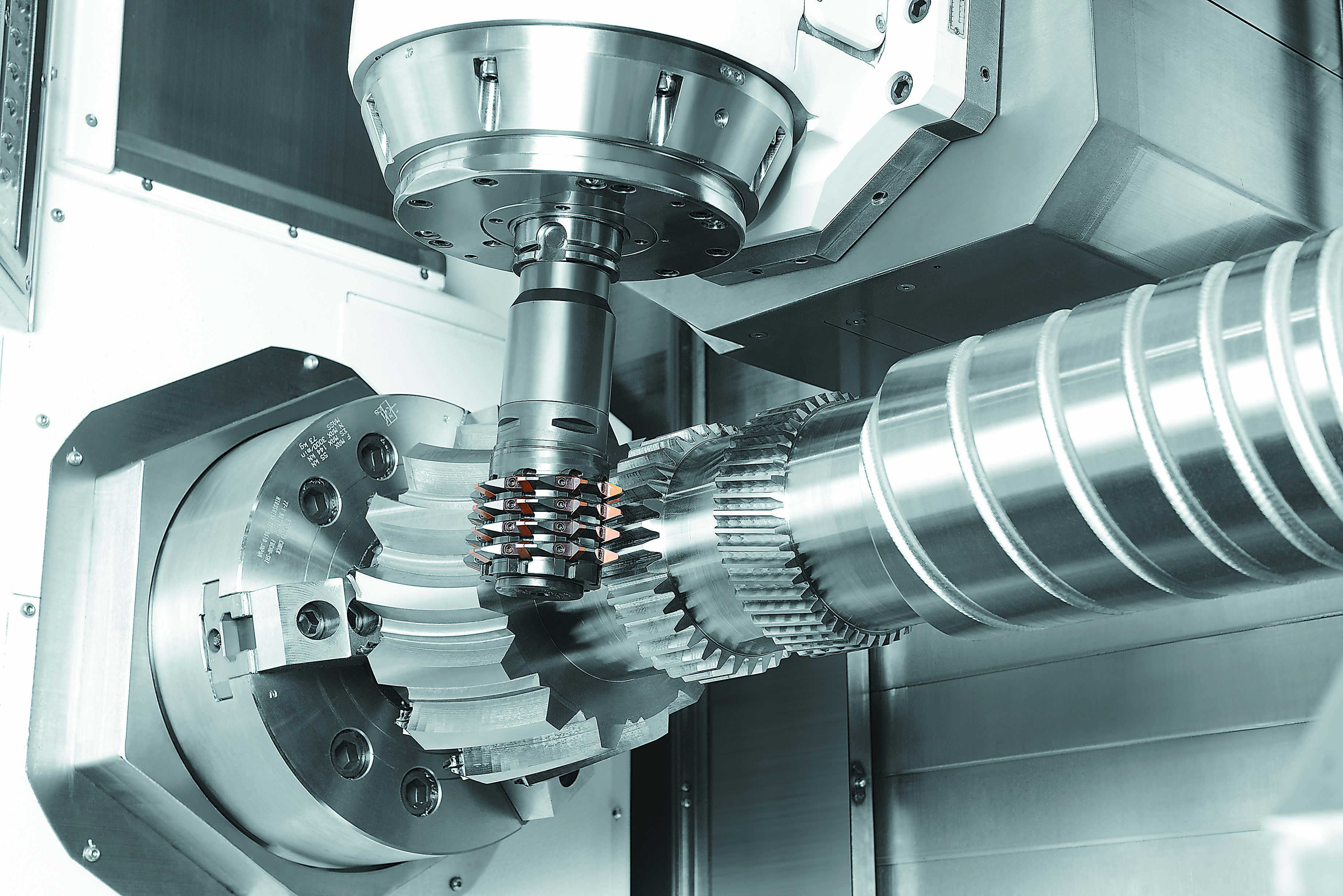
Given the right machine, software and cutting tools, even complex parts like this one can be”done in one.” Image courtesy of Mazak
Despite some apparent, though often negligible, drawbacks, growth in this area is high. Each machine builder source said it has seen great interest in hobbing in recent years, with hundreds of gear-making control packages sold. A variety of such packages and software programs are available, including gear hobbing; power skiving, which often is used for internal gears; and milling.
Aside from the control software, some builders offer probing cycles for in-process part measurement. This can be a big help to newcomers who are learning not only how to make gears but how to measure them. Properly executed, the gears produced on multitaskers and mill/turn centers are very accurate, with American Gear Manufacturers Association ratings in the range of eight to 10 (12 being highest).
Take It to the Limit
Mike Fish, co-director of Dontyne Systems Ltd., a software developer in Newcastle Upon Tyne, England, that specializes in gear manufacturing, has a slightly different take on hobbing. He said there’s much more to making gears than cutters, machine tools and easy-to-use programming cycles. There’s also gear design.
“Unless you specialize in gear making, it can be difficult to understand what effect even very small deviations in the manufacturing can have on gear accuracy,” he said. “Based on the application, a gear’s tooth form can vary, and micron-sized adjustments are often applied to optimize performance. This is why our company focused its efforts on a closed-loop system, one that helps you design the gear; machine it precisely despite distortions, deflections and tool wear; and verify the results with the inspection machine.”
The company’s Gear Production Suite or a similar software package is a necessity for people designing and producing their own gears, but part manufacturers might question the need and say that’s what the control option is for. Yet shops that arm themselves with the best tools possible are most successful, especially with a complex undertaking like gear making, said Rich Easley, North American business manager for Dontyne Systems.
“The real power behind a system like this is that it links the design process to manufacturing,” he said. “It offers offline simulations for various gear-making processes, including hobbing, grinding, shaping, shaving and skiving. It provides cutting paths and tool design functions for CNC machinery, as well as inspection files for gear-checking machines, CMMs and in-process probing systems. It can help a shop utilize their existing tooling to produce prototypes or small-batch gears quickly and at low cost and allows a CNC to produce very challenging gears—spiral bevels, for instance—rather than using dedicated equipment. And perhaps most importantly, it opens the door for anyone that wants to pursue additional gear-making opportunities.”
Glossary terms in this article