

Design-software leader (and good talker) resigns as CEO of Autodesk
Forward-looking, funny, Cornell University mathematics major Carl Bass resigned his Autodesk post as CEO on Feb. 7, but he remains on the company's board.
Industry people regularly ask me to recommend a knowledgeable and entertaining speaker to address an audience of manufacturers. One person I routinely suggest is Carl Bass, the former CEO of Autodesk.
I heard the forward-looking, funny, Cornell University mathematics major speak at a conference in November 2013. Bass, who resigned his Autodesk post Feb. 7 but remains on the company’s board, talked about innovation.
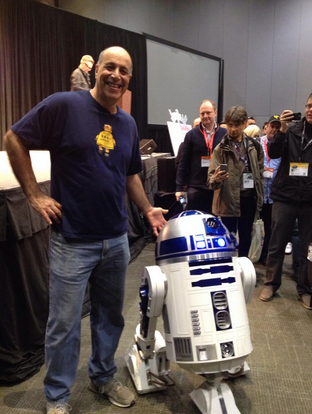
Carl Bass, who recently resigned as CEO of Autodesk, says he’s going to spend “time in my shop with my robots.” This photo was taken as SXSW 2014. Image courtesy Shapeways, www.shapeways.com.
Manufacturing “used to focus on quality,” said Bass, who oversaw major advancements in 3D design and engineering software during his 24-year tenure at Autodesk. “Now, the focus is on innovation (‘How can I differentiate myself from my competitors?’).”
During the presentation, he predicted five trends that will drive innovation.
Review the print ads from this magazine to continue
This quick advertiser review unlocks the rest of the article and keeps the full-screen reader focused on the ads instead of the page chrome.
Advertisers included in this article experience
Print placements connected to this article
Nachiamerica
Nachi Tool America Inc.
Greenwood, Indiana facilities Manufacturing, Regrinding & Coating Broaches • Carbide Drills Shaper Cutters • Skiving Cutters • Hobs Shave Cutters • Forming Racks Largest Global Gear Cutting Tool Company.
Nachi Tool America Inc. Greenwood, Indiana facilities Manufacturing, Regrinding & Coating Broaches • Carbide Drills Shaper Cutters • Skiving Cutters • Hobs Shave Cutters • Forming Racks Largest Global Gear Cutting Tool Company 888-340-8665 Cutting Tool • 317-530-1004 Gear Tool
Visit Nachiamerica View this placement in the issue recordPrint ads from this magazine
Greenwood, Indiana facilities Manufacturing, Regrinding & Coating Broaches • Carbide Drills Shaper Cutters • Skiving Cutters • Hobs Shave Cutters • Forming Racks Largest Global Gear Cutting Tool Company.
Nachi Tool America Inc. Greenwood, Indiana facilities Manufacturing, Regrinding & Coating Broaches • Carbide Drills Shaper Cutters • Skiving Cutters • Hobs Shave Cutters • Forming Racks Largest Global Gear Cutting Tool Company 888-340-8665 Cutting Tool • 317-530-1004 Gear Tool
Continue reading
February 2017
- The move from owning something to accessing experience. (“People don’t want to own a DVD; they just want to experience watching a movie.”)
- “Business ‘un-usual’ ” (financing options like Kickstarter).
- Digital fabrication (3D printing).
- Accessing information anywhere at any time on many types of devices.
- Ever-cheaper, more-powerful computers.
Despite more than 3 years passing since Bass made the predictions, they still sound fresh. (To judge for yourself, view Bass’ 2013 TED Talk by clicking here www.youtube.com/watch?v=yRcDCGtf06c.)
As for what’s next for Bass, he wrote in a blog posted to the Autodesk website, “I am not leaving to spend more time with my family—that presumes my family wants to spend more time with me. I will, however, be spending more time in my shop with my robots.”
Turning serious, he continued: “When I first became CEO, people asked how I wanted to define Autodesk and I often answered somewhat cryptically, ‘great, good and important.’ In my mind, great companies are defined, first and foremost, by their financial performance. Good companies are defined by their values and culture and how they treat their employees, their customers and the communities in which they do business. And important companies make a real difference in the world.
“Being able to do all three is the most critical and difficult task any executive team faces. By almost any measure, I think we’ve done very well on all fronts,” Bass wrote.
I do, too.
QR codes and videos from this issue
Print QR codes, video callouts, and in-magazine links for this article now point to the CTE video hub in the HTML version.







