

PCD reamers offer long tool life and productivity gains while reducing secondary operations
It is widely acknowledged within the manufacturing industry that PCD tools deliver excellent results when reaming nonferrous metals and abrasive plastics. Reaming with a PCD tool allows the user to ream holes faster, to tighter tolerances and produce cleaner-edge holes than is possible with carbide or HSS tooling.
It is widely acknowledged within the manufacturing industry that PCD tools deliver excellent results when reaming nonferrous metals and abrasive plastics. Reaming with a PCD tool allows the user to ream holes faster, to tighter tolerances and produce cleaner-edge holes than is possible with carbide or HSS tooling.
In addition, by producing cleaner edges, a PCD reamer can reduce, or even eliminate, the need for secondary finishing operations such as deburring, thereby lowering overall production costs.

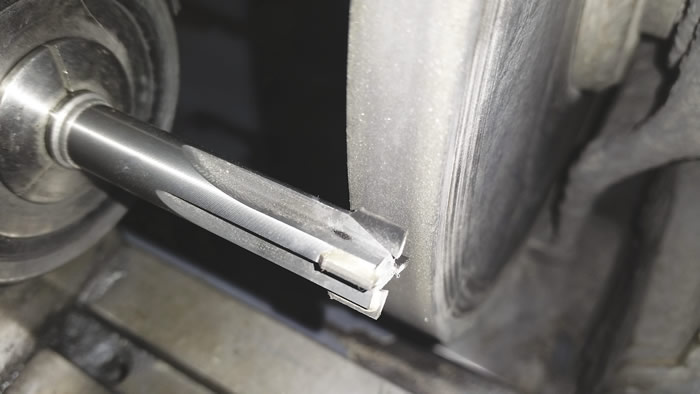
All images courtesy of Tool Engineering, Consulting and Manufacturing LLC.
PCD reamers provide consistent results for a longer time than their traditional counterparts, because production does not have to be periodically interrupted to change worn tools. (Note: As with HSS and carbide, PCD edges can be sharpened to extend their working life.)
For a manufacturer engaged in steady production, a carbide tool might last a few days to a week, while a PCD tool could last for months.
Experience shows that during production reaming, the extended tool life a PCD reamer provides, along with reduced secondary operations, typically results in a cost per hole that equals 20 percent of the cost per hole when a carbide reamer is used.
In addition to high-volume-production facilities, job shops can achieve savings with PCD reamers. The reason is because a tool’s effective life is measured over the total number of holes reamed, regardless of the number of separate projects involved.
PCD reamers run at significantly higher speeds than carbide ones. A carbide reamer is usually operated at about 2,500 rpm, whereas PCD reamers need to run at 8,000 to 12,000 rpm to work effectively. In fact, PCD will actually produce lower-quality results when run at the speeds typically used for carbide reamers.
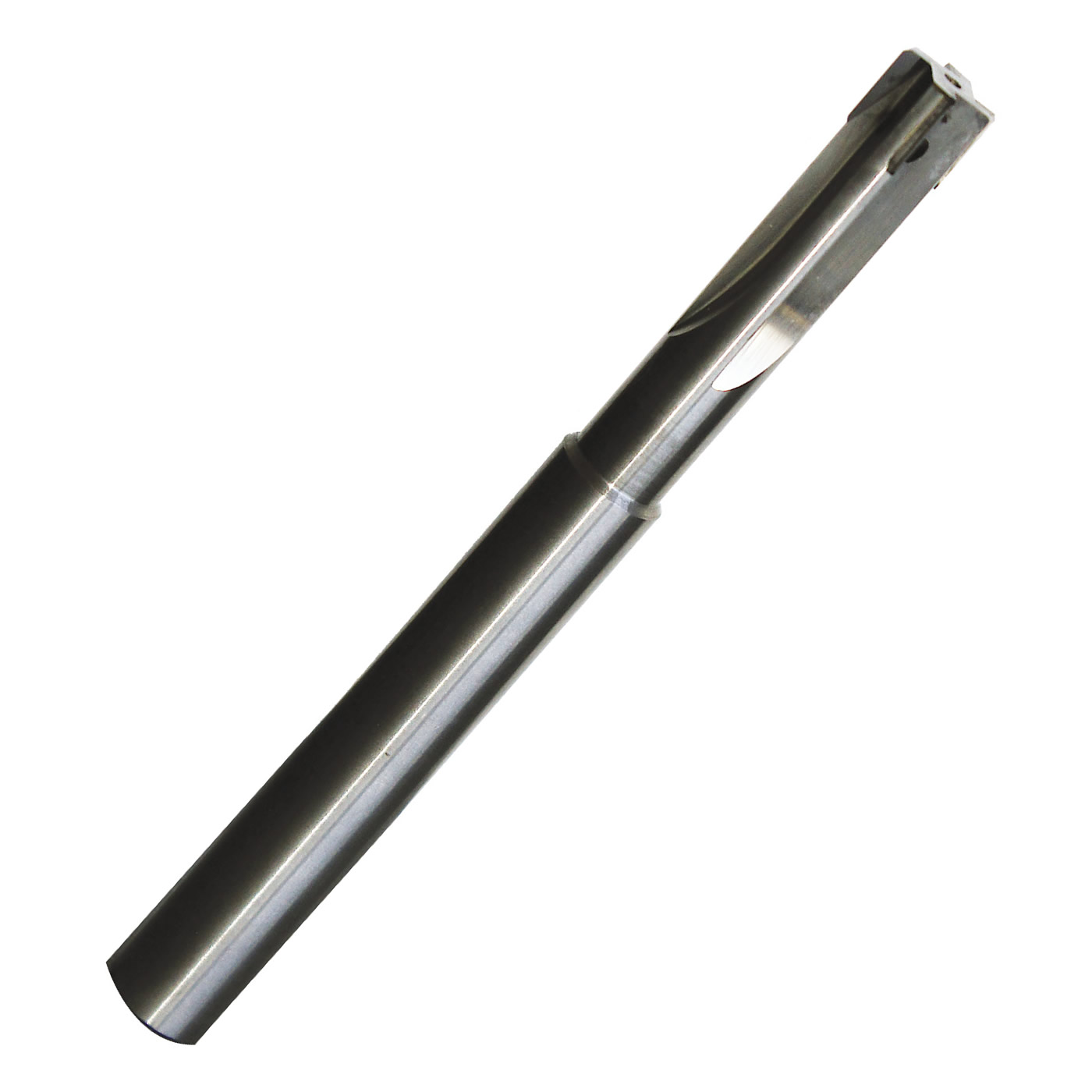
A 4-flute, through-coolant reamer is suitable for automotive applications.
Review the print ads from this magazine to continue
This quick advertiser review unlocks the rest of the article and keeps the full-screen reader focused on the ads instead of the page chrome.
Advertisers included in this article experience
Print placements connected to this article
Prab
INCREASE PROFITABILITY
from Your Machining Operations Turnings & Chip Dualpak™ Coolant Recycling Processing Systems Chip Briquetters Systems With Custom Built Equipment for Processing Scrap Metal and Spent Fluids OPTIMIZE IMPROVE CUT Container Loading Plant Safety New Coolant Purchases and Tool Life and Haul Away Costs Designed for you – guaranteed
INCREASE PROFITABILITY from Your Machining Operations Turnings & Chip Dualpak™ Coolant Recycling Processing Systems Chip Briquetters Systems With Custom Built Equipment for Processing Scrap Metal and Spent Fluids OPTIMIZE IMPROVE CUT Container Loading Plant Safety New Coolant Purchases and Tool Life and Haul Away Costs Designed for you – guaranteed.
Visit Prab View this placement in the issue recordHassay Savage
Swiss Machining’s Best Partner
Magafor USA Precision Round Tools World’s Finest Broaches GMauvaisUSA™ New 2016 3 Program Catalog MICRO Drills Now Available We Do “Small” Really Well See Us At IMTS Chicago Sept. 12-17, 2016 Booth #W2356 Hassay Savage Company 10 Industrial Blvd, Turners Falls, MA 01376-2251.
Swiss Machining’s Best Partner Magafor USA Precision Round Tools Hassay Savage World’s Finest Broaches GMauvaisUSA™ New 2016 3 Program Catalog MICRO Drills Now Available
Visit Hassay Savage View this placement in the issue recordPrint ads from this magazine
from Your Machining Operations Turnings & Chip Dualpak™ Coolant Recycling Processing Systems Chip Briquetters Systems With Custom Built Equipment for Processing Scrap Metal and Spent Fluids OPTIMIZE IMPROVE CUT Container Loading Plant Safety New Coolant Purchases and Tool Life and Haul Away Costs Designed for you – guaranteed
INCREASE PROFITABILITY from Your Machining Operations Turnings & Chip Dualpak™ Coolant Recycling Processing Systems Chip Briquetters Systems With Custom Built Equipment for Processing Scrap Metal and Spent Fluids OPTIMIZE IMPROVE CUT Container Loading Plant Safety New Coolant Purchases and Tool Life and Haul Away Costs Designed for you – guaranteed.
Continue reading
August 2016
For large-diameter holes, however, a PCD reamer can still run effectively at speeds as low as 6,000 rpm.
While the need for PCD reamers to run at higher speeds may make them unsuitable for some older machine tools, most equipment in active service today can handle the higher speeds. These speeds increase throughput and result in quicker delivery of finished parts to customers. In some cases, the heightened productivity justifies investment in a new higher-speed machine.
PCD reamers do have drawbacks. They cannot work ferrous materials, for example. But they can ream aluminum, brass, copper, carbide, bronze and abrasive materials, such as some of the advanced plastics used in aerospace and automobile manufacturing.
Moreover, PCD reamers can cost three times more than comparable carbide reamers. The higher cost deters some companies from even exploring the technology.
Another factor that has limited companies from adopting PCD reamers in the past has been their long delivery times—up to 14 weeks or more. This was partly due to low demand for the tools, which did not drive toolmakers to focus on more effective ways to produce them.
Today, however, thanks to growing demand and advanced production techniques developed by manufacturers of PCD tools, delivery times have been dramatically reduced. A standard PCD reamer can be delivered in 48 hours and specials in 3 to 4 weeks.
Broader Market Opportunities
Changes in manufacturing in recent years have created new market opportunities for PCD reamers. In particular, the increasing use of aluminum in the manufacture of automotive engine blocks and aerospace components, as well as the use of metal-matrix composites to reduce vehicle weight, has expanded the market for PCD reamers. These materials can only be machined effectively with PCD tooling.
Aluminum engine blocks also require the truer holes that PCD reaming produces to achieve required performance levels. The same can be said of the increasing use of abrasive plastics in aerospace and automotive manufacturing.
Products combining plastics and new, advanced workpiece materials are increasingly replacing metals. This group of extremely challenging-to-machine materials can limit a carbide reamer’s effective life to approximately 100 holes, while a PCD tool can ream more than 3,000 holes before needing to be replaced.
As market changes take place, additional applications for PCD reamers will continue to grow. This, in turn, will give parts manufacturers the ability to win contracts by being able to cost-effectively machine these new materials.
Related


 MFGAxis Discussion
Be part of the shop-floor conversation
Like, save, or comment on this CTE story.
MFGAxis Discussion
Be part of the shop-floor conversation
Like, save, or comment on this CTE story.


MFGAxis Discussion