

Machine Technology: Latest in lubrication
Want a good reason for lubricating the moving parts of machine tools? Here's one from Klüber Lubrication NA LP, Londonderry, N.H., a developer of specialty lubricants: Lubrication of machine tool components minimizes wear. "When a component in a machining center wears—whether it's a spindle bearing, a ball-screw, a gear or whatever—you start to lose precision," said Steve Mazzola, Klüber's director of engineering.
Want a good reason for lubricating the moving parts of machine tools? Here’s one from Klüber Lubrication NA LP, Londonderry, N.H., a developer of specialty lubricants: Lubrication of machine tool components minimizes wear.
“When a component in a machining center wears—whether it’s a spindle bearing, a ball-screw, a gear or whatever—you start to lose precision,” said Steve Mazzola, Klüber’s director of engineering. “And when you lose precision in a machining center, you may produce parts that are out of spec.”

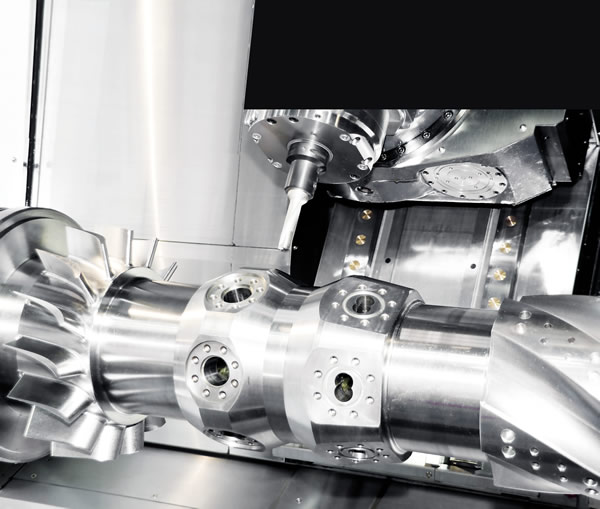
Precise machining depends in part on proper lubrication of moving components. All images courtesy Klüber Lubrication.
A more-serious possibility is catastrophic failure caused by wear. Mazzola pointed out that even small amounts of wear can cause high-speed spindle bearings to fail. “That’s why lubrication of those spindle bearings is the lifeblood of the machine tool,” he said.
Among the more-recent developments in machine lubrication is the increased attention given to the cleanliness of oil applied to lubricate spindles. This is important, Mazzola said, because small amounts of dust, dirt and other
debris in lubricating oil can have a big impact on high-speed spindle bearings, causing wear that may result in catastrophic failure, as well as unwanted noise.
In response to the threat posed by contaminants, Mazzola noted that lubrication manufacturers have developed high-purity oils, and the International Organization for Standardization has established a standard to quantify the cleanliness levels of lubricating oils. In addition, efforts have been made to educate end users about proper storage and application of oils to reduce oil contamination in plant settings.
Machine tool users have also benefitted from the introduction of greases for higher-speed applications. “It used to be that for low speeds you used grease and for high speeds you used oil,” Mazzola said. “But now greases have been pushed to extremely high speeds.”
This is beneficial, Mazzola explained, because greased components are often considered “lubricated for life,” while oiled components require relubrication over their normal service lives. Components commonly thought of as lubricated for life include grease-lubricated spindle bearings, which normally achieve 3 to 5 years of “fairly continuous service,” he said.
Review the print ads from this magazine to continue
This quick advertiser review unlocks the rest of the article and keeps the full-screen reader focused on the ads instead of the page chrome.
Advertisers included in this article experience
Print placements connected to this article
Hornusa
Micro-Precision Taken to the Extreme
Machine the smallest of parts with maximum precision – accurate to tolerances in the micron range. Authentic Supermini®. The high-production tooling system handles the most challenging jobs starting in bore diameter 0.2mm (.008 ). More than 1,000 standard carbide inserts with ideal geometries are H ORN – EXCEL L ENCE IN TE CHNOLOG Y.
Micro-Precision Taken to the Extreme Machine the smallest of parts with maximum precision – accurate to tolerances in the micron range. Authentic Supermini®. The high-production tooling system handles the most challenging jobs starting in bore diameter 0.2mm (.008 ). More than 1,000 standard carbide inserts with ideal geometries are available. All standard and custom solutions fit the same toolholder for use with or without coolant. www.hornusa.com Minimalism meets the high-tech production of miniature parts. www.hornusa.com H ORN – EXCEL L ENCE IN TE CHNOLOG Y GROOVING PARTING OFF GROOVE MILLING BROACHING PROFILE MILLING DRILLING REAMING
Visit Hornusa View this placement in the issue recordPrint ads from this magazine
Machine the smallest of parts with maximum precision – accurate to tolerances in the micron range. Authentic Supermini®. The high-production tooling system handles the most challenging jobs starting in bore diameter 0.2mm (.008 ). More than 1,000 standard carbide inserts with ideal geometries are H ORN – EXCEL L ENCE IN TE CHNOLOG Y.
Micro-Precision Taken to the Extreme Machine the smallest of parts with maximum precision – accurate to tolerances in the micron range. Authentic Supermini®. The high-production tooling system handles the most challenging jobs starting in bore diameter 0.2mm (.008 ). More than 1,000 standard carbide inserts with ideal geometries are available. All standard and custom solutions fit the same toolholder for use with or without coolant. www.hornusa.com Minimalism meets the high-tech production of miniature parts. www.hornusa.com H ORN – EXCEL L ENCE IN TE CHNOLOG Y GROOVING PARTING OFF GROOVE MILLING BROACHING PROFILE MILLING DRILLING REAMING
Continue reading
May 2016
Available greases for high-speed machine tool spindles can handle “speed factors” of around 2 million NDm. NDm, the speed factor for rolling bearings, equals the bearing speed (N) in rpm times the mean bearing diameter (Dm).
These greases, on the market for about a decade, didn’t initially win over the machine tool industry. In recent years, however, use has become more common, according to Bill Watson, Klüber’s director of marketing and engineering. Why the delayed reaction? Generally speaking, the industry is “slow to adopt” new developments, he said.
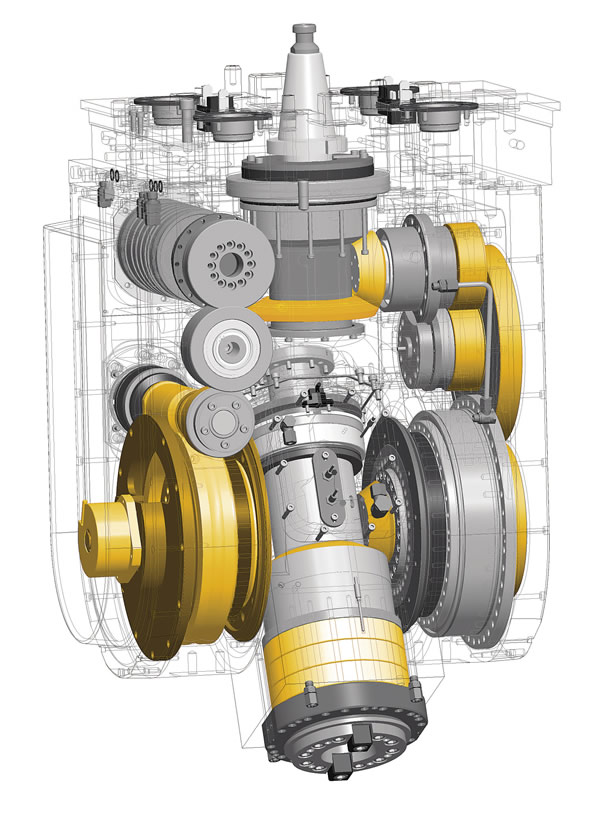
Milling head gear units include numerous parts that must be lubricated.
Another development impacting machine lubrication is the growing popularity of water-based metalworking fluids at the expense of cutting oils, noted Bob Panchbhaya, technology director for Ashburn Chemical Technologies, Houston, which manufactures lubricants for machine slideways. According to Panchbhaya, problems can arise when water-based fluids come in contact with oil-based way lubricants. “If your way lubes are going to wash out in the presence of water, you’re going to have trouble,” he said. “You want resistance to that.”
In addition, way lubricants can emulsify in water. If this happens, Panchbhaya explained, the lubricant “will become part of the metalworking fluid—you won’t have any way lubricant left.” Way lubricants that come in contact with water-based metalworking fluids should contain demulsifiers.
Fortunately, there has been no shortage of progress when it comes to lubricant water resistance and demulsification. “There’s a lot of new chemistry coming along all the time,” Panchbhaya said.
When reviewing all these developments, the message is clear: Machine tool users open to changing their ways stand to benefit greatly by embracing the latest in lubrication technology.
Glossary terms in this article
Related




Subscribers can use MFGAxis notes, saves and discussion tools with their innoNET account.


