

Heat Handlers: Turning Performance
Nickel-base superalloys can withstand hot and tough conditions, but are difficult to machine. With the right approach, machinists can keep their cool when cutting them.
Nickel-base superalloys can withstand hot and tough conditions, but are difficult to machine. With the right approach, machinists can keep their cool when cutting them.
Metal components used high in the sky and deep in the ground experience high-temperature, high-stress environments. For those applications, part designers often call on heat-resistant superalloys (HRSA), which are classified into nickel-, iron- and cobalt-base groups.
According to Pat Schuur, owner of metal distributor Schuur Metals Inc., San Clemente, Calif., the primary applications for nickel- and cobalt-base superalloys are for the aerospace, oil and gas and petrochemical industries. “That covers about 90 percent of HRSAs,” he said.
Superalloys provide high mechanical strength and resistance to surface degradation at temperatures of 1,200° F and above. That’s because HRSAs have high tensile, creep-rupture and fatigue strength; good ductility and toughness; and enhanced resistance to oxidation and hot corrosion, stated Rick Frank, metallurgist for metals producer Carpenter Technology Corp., Wyomissing, Pa.
Compared to other superalloys, iron-base superalloys cost less but are less tolerant of alloying additions and have less favorable mechanical properties and lower temperature limits. Cobalt-base superalloys cost significantly more than the others and typically cannot be age hardened to high strength levels. However, cobalt is an important alloying addition to nickel-base superalloys because it extends the maximum temperature they can be used at by reducing the solubility of the age-hardening phase.
Nickel-base metals represent at least half of the market for superalloys, with 718 Inconel, Waspaloy and Udimet 720 being the most prominent members of that group, according to Sean Holt, aerospace applications manager for Sandvik Coromant Co., Fair Lawn, N.J. He added that aerospace applications account for 60 percent of that group’s usage. Nickel-base superalloys represent about half of the weight of a typical aircraft engine, which has two hot areas: combustion and turbine.
This article covers applications for nickel-base superalloys, the properties of nickel and elements alloyed with it to produce the metals, tools and techniques for effectively cutting them and cost considerations when selecting the appropriate workpiece material.
Application Areas
In addition to aerospace engines, other common applications for nickel-base superalloys include power-generation-turbine parts, aerospace fasteners, automotive manifold bolts, diesel-engine exhaust valves and hot-working tools and dies, according to Carpenter Technology.
Paul Dickinson, new product engineer for Winsert Inc., Marinette, Wis., noted that the foundry is involved in numerous exhaust-gas recirculation applications using nickel alloys. “Basically, it’s making sure customers have a material that they can use to make their equipment, such as an engine running on diesel, EPA compliant,” he said. In addition to producing superalloys, the company also machines them based on customer requirements.
When copper is a major alloying element, the nickel-base superalloys are used to make electronic components, such as fuses and shunts, noted Gregory Zahm, quality and safety manager for Vista Metals Inc., Bristol, R.I., a warehouse distributor of bar, rod, wire and strip metals. One frequently used metal the company offers is Niclal 37 and 38, copper-manganese-nickel alloys that Vista sells in coil form or cuts to length. “For shunt applications, it takes high energy through a piece of equipment without any surges that may short out the equipment,” he said.
Zahm added that cobalt-nickel alloys provide magnetic shielding, so component-shielding shells and canisters are often made of the material, and copper-nickel alloys’ corrosion-resistance properties make them suitable for parts found in fumigation spraying equipment.
Because of their combination of strength, toughness and environmental resistance, some of the alloys are also suitable for other lower-temperature applications, such as medical implants.
Nickel and Alloying Elements
Although most superalloys contain more than 50 percent nickel, some do not. For example, Carpenter Technology reports its Pyromet A-286 alloy is still considered a superalloy with only 25 percent nickel.
In some applications, Zahm pointed out that the superalloy’s hardness and electrical properties increase as the percentage of nickel increases, which is beneficial for fuse or shunt applications.
Commercially pure (99.6 percent) nickel 200 is ductile and has good mechanical properties, high electrical and thermal conductivity and a low hardness, stated Ulbrich Stainless Steels and Special Metals Inc., North Haven, Conn., in a white paper about nickel-base superalloys. Although it has a relatively low workhardening rate, nickel strip can be cold worked to moderately higher strength levels while maintaining ductility.
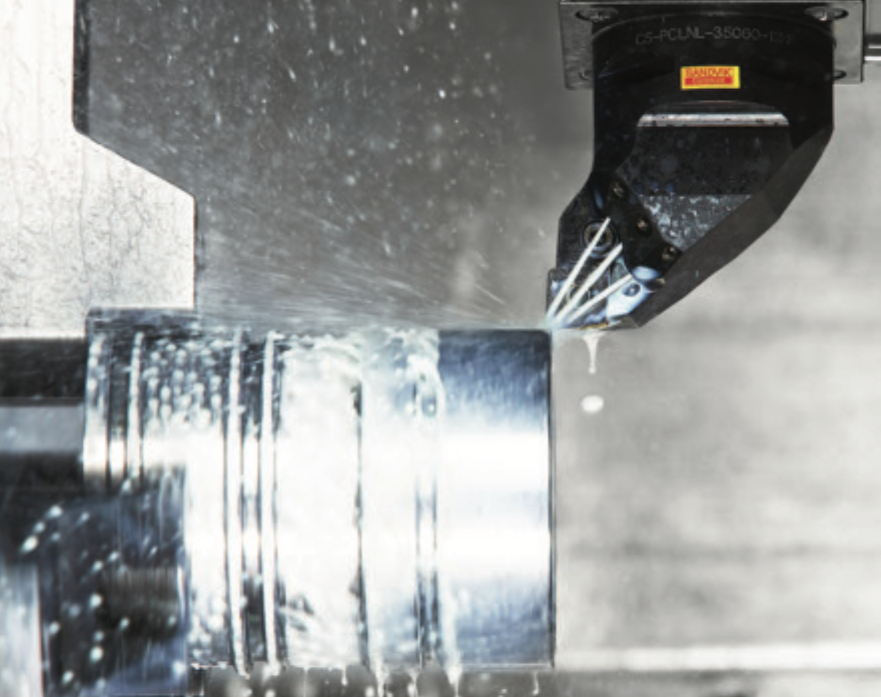
Courtesy of Sandvik Coromant
When turning heat-resistant superalloys, accurately targeted high-pressure coolant provides chip control while enhancing cooling at the tool/workpiece interface and enables higher cutting speeds.
The paper also stated that nickel 200 is best at resisting corrosion in reducing environments, which have little or no free oxygen, but can also be used under oxidizing conditions and in caustic environments that develop a passive oxide film on the alloy surface. Nickel also can withstand sulfuric acid at low or moderate temperatures, anhydrous hydrofluoric acid at elevated temperatures, organic acids of all concentrations (if aeration is not high), caustic soda and other alkalis and nonoxidizing halides.
Nickel 201, the low-carbon version of nickel 200, is similar in terms of corrosion resistance, according to the Ulbrich paper. It is preferred for applications involving exposure to temperatures higher than 600° F.
For most applications, alloying elements help to impart and maintain the desired properties at elevated temperatures, according to Carpenter’s Frank. In addition to nickel, superalloys contain various combinations of iron, cobalt and chromium, with smaller amounts of other elements, including molybdenum, niobium, titanium, aluminum and minor additions of beneficial elements such as boron and zirconium.
Refractory elements such as molybdenum, tungsten and niobium, with their large atomic diameters, increase high-temperature strength and stiffness by straining the nickel/iron base matrix, according to Frank. Larger additions of molybdenum increase this solid-solution strengthening effect. Other alloying additions, such as chromium and aluminum, also contribute to solid-solution strengthening, but to a lesser extent.
Frank added that titanium, aluminum and niobium are added to the nickel or nickel/iron matrix to form an intermetallic Ni3 (Al, Ti, Nb) phase during age-hardening heat treatments. The resultant gamma prime or gamma double-prime phases are the main strengthening agents in superalloys. Although other elements, such as boron, zirconium and magnesium, may be added at less than 0.1 weight percent, the beneficial effects are quite potent. These elements segregate to and stabilize grain boundaries, significantly improving hot workability, high-temperature strength and ductility. Small additions of carbon may be made to form carbides that restrict grain growth and grain boundary sliding during high-temperature exposure.
Numerous other elements, including silicon, phosphorus, sulfur, oxygen, nitrogen and a larger number of tramp elements (like lead, bismuth and selenium) must be tightly controlled in superalloys to avoid detrimental effects on high-temperature properties, Frank stated. These minor and tramp elements are controlled during raw material selection prior to melting, as well as during the melting and remelting processes.
Machining Guidelines
A number of wear mechanisms occur when machining HRSA. According to Sandvik Coromant’s Holt, the two major ones that have a detrimental effect on chip formation are built-up edge and, because the surface is prone to workhardening, notch wear.
The latter effect, also called notching, is found on the main and secondary cutting edges and is more prominent when cutting nickel- and cobalt-based alloys, the toolmaker reports. On the main edge, notching is seen as chipping at the DOC and is mainly mechanical wear. Notching occurs on the secondary edge where an insert exits the workpiece and negatively impacts the surface finish. Notching on the secondary edge is caused mainly by chemical wear; aluminum-oxide and PVD tool coatings are recommended to minimize it.
BUE and notching on the main and secondary edges can be minimized by applying round inserts with positive, reinforced geometries. “Round inserts are the strongest inserts available, and with a round insert you’re getting out of the area of notch wear by varying the entering/lead angle, depending on the depth of cut selected,” Holt said. “You should never be using a typical CNMG insert to machine superalloys as this creates a 95° entering angle, thus increasing notch wear on the insert.”
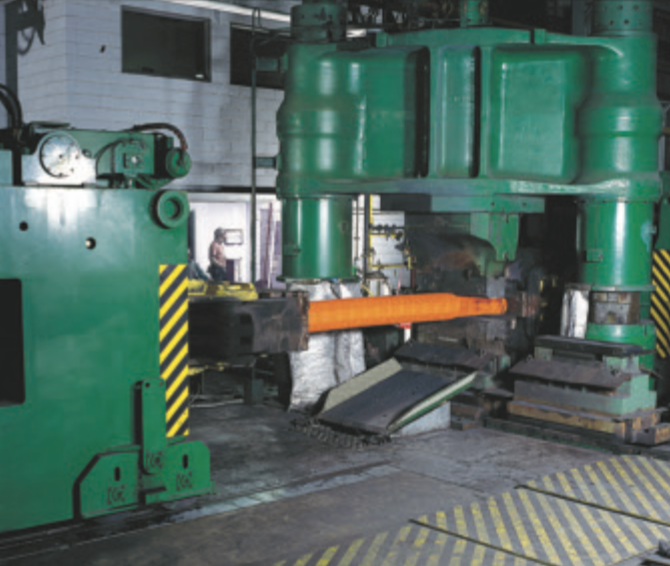
Courtesy of Carpenter Technology
Carpenter Technology’s vacuum arc remelting furnaces remove impurities from ingots produced in primary melting.
Although machining hardened materials tends to cause the most notching and increases the cutting temperature, it’s easier to effectively break a chip in harder nickel-base alloys because the material has less elasticity, Holt noted. “By fixing the coolant nozzle in the correct position, a parallel laminar coolant jet is created with high velocity to segment the chip in harder materials.”
He added that a heat-treated HRSA part with a hardness of 44 to 52 HRC is usually finish-machined, whereas the part is roughed in a softer state with a hardness of about 26 HRC. Softer materials are much gummier, he added.
Other wear mechanisms when cutting HRSA include plastic deformation, chip hammering and top slice, which is only found in ceramic tools. According to Sandvik Coromant, plastic deformation is thermal wear caused by high temperature and high pressure on the cutting edge.
An insert that resists flank wear and has high hot hardness helps reduce plastic deformation. “Wear on the insert should never exceed 0.008 ” because that’s when you start to create plastic deformation in the insert and create negative residual stress in the part,” Holt said.
Chip hammering is a form of mechanical wear created when chips hit the edge line outside the cutting zone and mainly occurs when machining softer, more ductile nickel alloys. It can occur at the top and bottom of an insert, and changing the feed rate and DOC may redirect chips to reduce wear. Because they have a higher edge-line toughness, PVD-coated inserts rather than CVD-coated ones are recommended for nickel alloys, especially when roughing, according to Holt.
Top slice is caused by high cutting pressure and vibration and must be controlled when surface quality and burr minimization are important. To minimize top slice, Sandvik Coromant recommends lowering the cutting pressure by reducing the chip area in stable conditions, and reducing the engagement angle with programming techniques in vibration-generating unstable conditions.
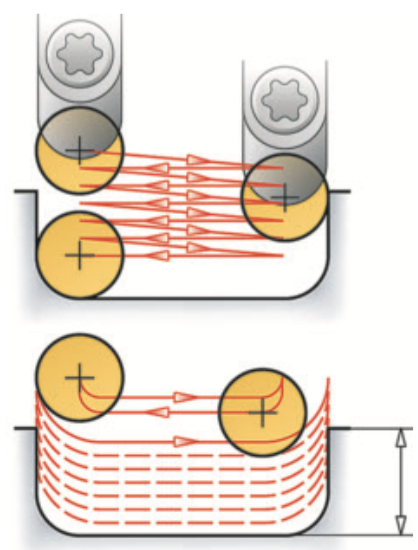
Holt pointed out that when cutting nickel-base superalloys, trochoidal milling and trochoidal turning can be effective because they eliminate the high level of contact between the insert and workpiece and prevent wraparound. (Wraparound occurs when plunging or profiling corners with round inserts because of the high angular engagement, creating high cutting pressures. Therefore, the feed must be reduced.)
Review the print ads from this magazine to continue
This quick advertiser review unlocks the rest of the article and keeps the full-screen reader focused on the ads instead of the page chrome.
Advertisers included in this article experience
Print placements connected to this article
Iscarmetals
Improved Productivity and Less Down Time
for Mass Production Hole Making ISCAR’s SUMOCHAM drill family is the next evolution of the very successful CHAMDRILL 1.5xD 3xD 5xD 8xD 12xD P M K N S H Double Margin ICP/ICK - 2M.
Improved Productivity and Less Down Time for Mass Production Hole Making ISCAR’s SUMOCHAM drill family is the next evolution of the very successful CHAMDRILL 1.5xD 3xD 5xD 8xD 12xD P M K N S H Double Margin
Visit Iscarmetals View this placement in the issue recordYg1usa
AF;J=9KAF?
;9H9;ALQ LGE==L QGMJ ?JGOAF? F==
AF;J=9KAF? ;9H9;ALQ LGE==L QGMJ ?JGOAF? F==
Visit Yg1usa View this placement in the issue recordPrint ads from this magazine
for Mass Production Hole Making ISCAR’s SUMOCHAM drill family is the next evolution of the very successful CHAMDRILL 1.5xD 3xD 5xD 8xD 12xD P M K N S H Double Margin ICP/ICK - 2M.
Improved Productivity and Less Down Time for Mass Production Hole Making ISCAR’s SUMOCHAM drill family is the next evolution of the very successful CHAMDRILL 1.5xD 3xD 5xD 8xD 12xD P M K N S H Double Margin
Continue reading
February 2012
“A trochoidal toolpath is almost like a swinging toolpath,” he said. “You’re not plunging in. The insert is not under sudden shock and you get a nice, smooth, optimized toolpath. Especially when taking a smaller DOC, you can increase the feed rate and that helps with chip breaking as well.”
For controlling wear, in general, Holt recommends an entry angle of 45°, with a maximum of 60°.
According to Winsert’s Dickinson, getting through the surface layer, or forged skin, is the most difficult aspect of cutting nickel-base superalloys because that layer can have shrink porosity, slag inclusions and hairline cracks. “There are a whole lot of issues,” he said.
To get under the forged skin, also called “elephant scale,” Holt recommends a DOC up to 0.400 ” with an insert having a sharp, positive rake angle to avoid high notch wear. That contrasts with a 0.020 ” DOC for finishing.
Tooling and Cooling
In contrast to roughing titanium, where HSS tools are often applied, carbide and ceramic tools are suitable for roughing—and finishing—nickel-base superalloys, according to Holt. He noted that HSS tools would experience excessive notch wear and easily break down.
Holt explained that two basic types of ceramic inserts are available: whisker reinforced, which is for machining forged components with rough scale and ovality, and sialon, which is a mixture of silicon, aluminum oxygen and nitrogen. Examples of sialon use include Sandvik Coromant’s CC6060 sialon grade, for long cutting lengths in clean material and for profiling and pocketing with optimized programming techniques, and CC6065, for heavy roughing, plunging and machining directly into a corner.
When applying ceramic tools, the toolmaker recommends balancing the cutting speed to create enough heat in the cutting zone but not too much, which would unbalance the ceramic because not enough heat is generated. “You do not create a highly plasticized and sheared chip, unbalancing the material and creating top slice,” Holt said.
“Whisker is a much tougher ceramic than sialon ceramics and has increased bulk strength, allowing for tougher applications,” he added. “With sialon, you can run at about a 20 percent elevated speed. Regarding metal removal, sialon is quite a step change compared to whisker-reinforced inserts for the industry and more people are adopting it.”
When applying carbide inserts, Holt indicated that the cutting speed should never be higher than 220 sfm for finishing critical parts. “It’s not about maximizing productivity when you get to that last stage,” he said. “It’s about getting good surface quality and a predictable tool life with an optimized toolpath.” In addition, a maximum chip thickness from 0.08mm to 0.15mm is optimal.
Although some feel flood coolant promotes thermal fracturing of the workpiece when cutting nickel alloys, Holt recommends applying coolant because of the high amount of heat generated, with the exception being milling with ceramic tools. That’s because ceramic requires heat to shear the material and milling is an intermittent process. “To create enough heat when milling with ceramics, you should never use coolant,” he said.
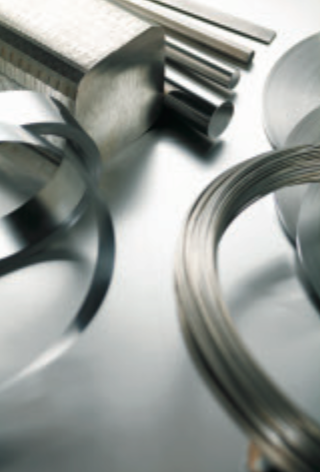
Courtesy of Carpenter Technology
Carpenter Technology produces nickel-base superalloys in a variety of product forms to meet stringent customer specifications.
It is best to use accurately targeted high-pressure coolant—up to 1,200 psi—from an optimized nozzle to produce a high-velocity, parallel laminar jet, Holt noted. Benefits of high-pressure coolant include extending tool life, enabling higher cutting speeds and enhancing chip breaking and control by providing a hydraulic wedge between the tool and chip to lift the chip.
In a laboratory test, Sandvik Coromant compared the application of high- and low-pressure coolant when machining 718 Inconel. The high-pressure coolant increased tool life, increased metal removal 50 percent when using a CNMX insert at a cutting speed of 164 sfm, allowed a 20 percent increase in cutting speed with the same or better tool life and improved chip control during finishing.
Cost Considerations
Along with being able to withstand extreme environments better than steel, nickel-base steel superalloys are slightly more expensive. Nickel, cobalt, molybdenum and other superalloy elements are significantly more costly than iron, the major component of steel, according to Carpenter Technology. However, the cost can often be justified based on service life in demanding applications and other factors, such as engine efficiency.
In previous years, the price of the alloying elements also fluctuated, primarily because of global competition. “The market is constantly changing due to the volatility of supply and demand from countries like China,” said Zahm of Vista Metals. “At one time the price of nickel went as high as $21 per lb. Unfortunately, metal prices haven’t been very stable for the past 5 or 6 years as compared to the prior 10 to 20 years.”
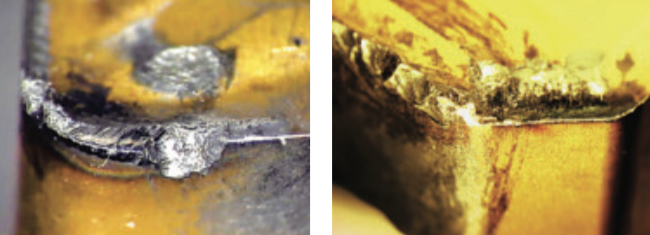
Images courtesy of Sandvik Coromant
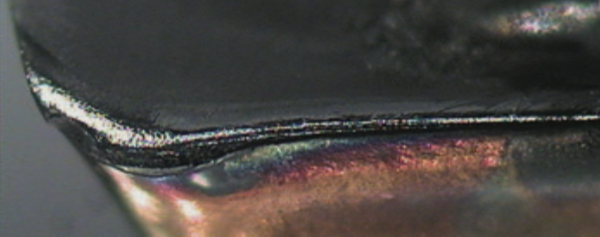
Typical insert wear mechanisms when machining heat-resistant superalloys include notch wear on the main cutting edge at the DOC (left), chip hammering (right) created by chips hitting the cutting edge line outside the cutting zone, and plastic deformation (below) caused by a combination of high temperature and high pressure on the cutting edge.
Zahm noted that some customers have been ordering peeled bar or rod, where the outer layer is removed. A shop can reduce material costs by purchasing hot-finished redraw stock instead of costlier bars that are cold-drawn to size. “You may waste a bit more processing time, but you’re not buying the more-expensive drawn bar,” he said.
When the application is appropriate, part manufacturers can save money by switching to a lower-cost alternative alloy. For example, in addition to its commercial alloy offerings, Winsert produces proprietary wear- and corrosion-resistant alloys to replace cobalt- and nickel-base superalloys. “If somebody wants something that will compete against a wrought material, we definitely have a cast alternative,” Dickinson said. “We can make an alloy that will work as good if not better.” The cost savings for a cast material can be as much as 25 to 50 percent, he added.
Courtesy of Sandvik Coromant
Compared to conventional profiling/pocketing with a round insert (top), trochoidal turning rolls the insert into and out of the cut with a reduced feed rate and increases the feed rate to the maximum f for linear cuts.
However, if a nickel-base superalloy is required for the job, it requires disciplined machining—and that includes repeatable, rigid setups. “Doing the basics can’t be underestimated,” Dickinson said. “If you’re a little sloppy at times and used to cutting materials where alignments and things like that aren’t critical, you’re going to be in for a shock.”
Because nickel-base superalloys retain their strength at high temperatures and provide a high dynamic shear strength, high cutting forces are required. In addition, the material’s poor thermal conductivity generates high cutting temperatures, and hard carbides in its structure create abrasive wear during machining. As a result, “people tend to shy away once they hear Inconel and nickel alloys are involved,” Holt said. “But if you get the right recipe for nickel alloys, they’re very easy to machine.”
That recipe includes a rigid machine setup, high-pressure coolant delivery, positive-rake inserts, a suitable entry angle and achieving the optimal chip thickness. “It is a shock if you’re moving from aluminum and cast iron to nickel alloys,” Holt said. “If you’re getting into these materials, concentrate on the five key success factors and you should be OK.” CTE
About the Author: Alan Richter is editor of CTE, having joined the publication in 2000. Contact him at (847) 714-0175 or alanr@jwr.com.
Contributors
Carpenter Technology Corp.
(610) 208-2000
www.cartech.com
Sandvik Coromant Co.
(800) SANDVIK
www.sandvik.coromant.com/us
Schuur Metals Inc.
(949) 498-3185
www.schuurmetals.com
Ulbrich Stainless Steels and Specialty Metals Inc.
(800) 243-1676
www.ulbrich.com
Vista Metals Inc.
(401) 253-1772
www.vismet.com
Winsert Inc.
(715) 732-1703
www.winsert.com
Glossary terms in this article
Related



Subscribers can use MFGAxis notes, saves and discussion tools with their innoNET account.


