

Miscellaneous tips and tricks: Turning Performance
This column, which is my final installment, is like that special odds and ends drawer in your toolbox, the one with all the weird stuff in it for which you can't seem to find the perfect storage space.
This column, which is my final installment, is like that special odds and ends drawer in your toolbox, the one with all the weird stuff in it for which you can’t seem to find the perfect storage space.
When I was a kid, my dad had a workshop in the basement. I spent a fair amount of time snooping around, because that’s what kids do when left to their own devices. There was a special drawer in a cabinet under the workbench my dad called “the top drawer.” It was a magical drawer, with all kinds of strange and interesting stuff in it. It contained a cork boring set, the tool to sharpen a cork boring set, master links, steel balls, several pounds of hex wrenches left over from mounted bearing kits, springs—a veritable mechanical cornucopia. If I was on a deserted island, this would be the drawer I would want with me.
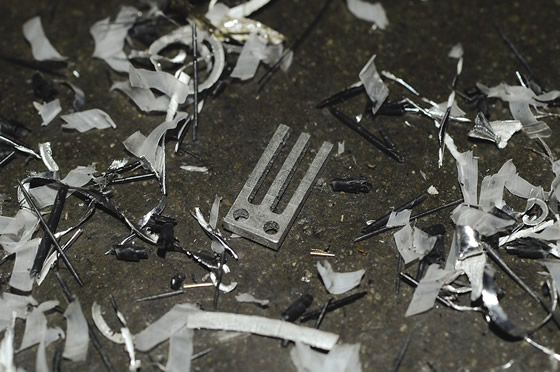
Before working with tiny parts, sweep the floor so a part can be easily found if dropped. All images courtesy T. Lipton.
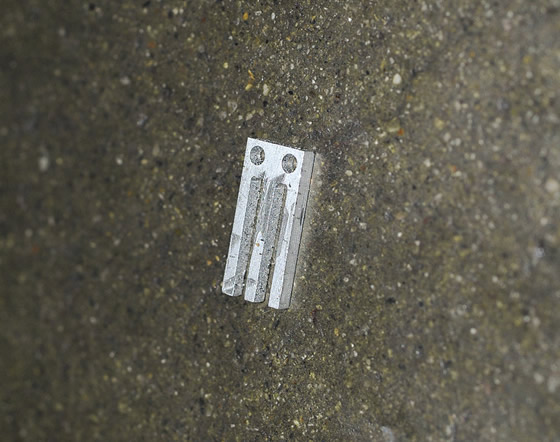
Machinists and metalworkers all have drawers like this. The following is a list of some things I would bet can be found in most machinists’ “top drawers.”
Review the print ads from this magazine to continue
This quick advertiser review unlocks the rest of the article and keeps the full-screen reader focused on the ads instead of the page chrome.
Advertisers included in this article experience
Print placements connected to this article
Carmexusa
thread cutting
Longer life, higher speeds, and improved finishes — even in the hardest materials Carmex’s specially engineered combination of carbide substrates and advanced multi-layer coatings deliver higher production, improved finish, and longer tool life. Developed for medium to high cutting speeds in conventional materials including stainless.
thread cutting Longer life, higher speeds, and improved finishes — even in the hardest materials Carmex’s specially engineered combination of carbide substrates and advanced multi-layer coatings deliver higher production, improved finish, and longer tool life. Developed for medium to high cutting speeds in conventional materials including stainless, Carmex BMA inserts are available in a wide range of sizes. Developed for thread cutting of all machinable materials, new BLU 16mm inserts combine micro-carbide substrate and advanced coating that increases the thermal barrier to 4200º F.
Visit Carmexusa View this placement in the issue recordPrint ads from this magazine
Longer life, higher speeds, and improved finishes — even in the hardest materials Carmex’s specially engineered combination of carbide substrates and advanced multi-layer coatings deliver higher production, improved finish, and longer tool life. Developed for medium to high cutting speeds in conventional materials including stainless.
thread cutting Longer life, higher speeds, and improved finishes — even in the hardest materials Carmex’s specially engineered combination of carbide substrates and advanced multi-layer coatings deliver higher production, improved finish, and longer tool life. Developed for medium to high cutting speeds in conventional materials including stainless, Carmex BMA inserts are available in a wide range of sizes. Developed for thread cutting of all machinable materials, new BLU 16mm inserts combine micro-carbide substrate and advanced coating that increases the thermal barrier to 4200º F.
Continue reading
September 2015
- Steel balls from ball bearings. Machinists can’t throw these away, ever.
- A box of carbide inserts that don’t fit any toolholder in the shop.
- Three to five insert Torx wrenches, all the same size. These are too nice to just throw away.
- At least one broken 6″ scale.
- A pound or more of dowel pins in assorted sizes and lengths.
In that spirit, here are some top-drawer tips and tricks.
- When wrapping parts in stainless wrap for heat treating, add a pinch of fine cast iron shavings to the envelope. These burn up during heat treatment and consume the detrimental oxygen inside the wrapping. The small particles of cast iron heat up and burn long before the heavier parts have a chance to scale from the oxygen. In addition, blow some argon from the TIG welding torch into the envelope to help exclude oxygen and improve the atmosphere inside the envelope.
- Sweep the floor before you work with really small parts and assemblies. Those tiny parts closely resemble chips and debris. I’m getting too old to crawl around on the floor so I had to get a little smarter. The precious part stands out in stark relief on a cleanly swept floor.
- Put something in the sink drain before you wash tiny parts. I really hate it when I lose a part to plain old stupidity. This beats explaining why you’re taking the drain trap apart.
- If you have a really diabolical mechanical assembly that is a jack-in-the-box of preloaded balls and springs, do yourself a favor and put it inside a clear plastic bag to take it apart. Slip your hands inside the bag or do the work from the outside if possible. If you absolutely cannot lose any parts, this is the way to keep them contained to a small area.
- Annealed stainless steel wire is so consistent and pliable, it’s like metal taffy. Use it to secure small parts for tricky welding or silver soldering jobs. The wire can withstand the heat of a welding torch without breaking or melting while still holding your assembly in position.
- Often machinists are called upon to cut small lengths of threaded rod to use as studs or connectors in an assembly. Instead of fussing with cutting and the inevitable deburring, buy several popular sizes of long setscrews. They have the nifty added features of a small hex driver on the end so you can hold or tighten them. One of my favorite setscrew tricks is in a situation when you need a solid standoff with a male thread. I fabricate the standoff with two tapped holes. Instead of single-point turning a male thread, I just install a long setscrew into the female thread and—presto—instant male thread. CTE
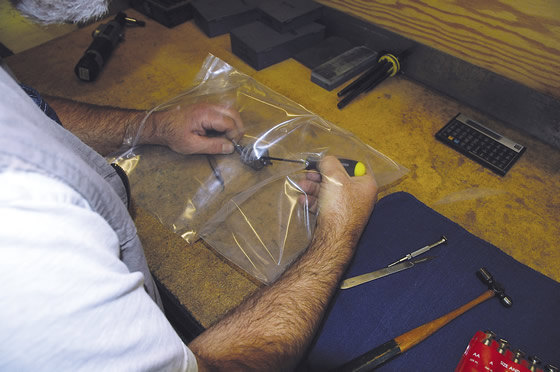
Use a clear bag when disassembling a diabolical mechanical assembly that is a jack-in-the-box of preloaded balls and springs.
About the Author: Tom Lipton is a career metalworker who has worked at various job shops and lives in Alamo, Calif. Lipton’s column is adapted from information in his book “Metalworking Sink or Swim: Tips and Tricks for Machinists, Welders, and Fabricators,” published by Industrial Press Inc., South Norwalk, Conn. The publisher can be reached by calling (888) 528-7852 or visiting www.industrialpress.com. By indicating the code CTE-2015 when ordering, CTE readers will receive a 20 percent discount off the book’s list price of $44.95.
Glossary terms in this article
Related




Subscribers can use MFGAxis notes, saves and discussion tools with their innoNET account.


