

5 reasons to upgrade to vit-CBN
Advice is given for switching from conventional vitrified grinding wheels to vitrified CBN when cylindrical grinding.
When upgrading a cylindrical grinding process from a conventional vitrified Al2O3 or ceramic wheel to vitrified cubic boron nitride, or vit-CBN, there are key points to consider.
Sometimes a grinding machine is designed to handle either conventional or vit-CBN, and other times it is necessary to add certain features to allow a machine to run vit-CBN. Additionally, to tune up a vit-CBN wheel, grinding and dressing conditions need adjustments.
But why use CBN instead of Al2O3 or ceramic grains at all? There are five main reasons that can justify the use of CBN over conventional abrasive grains.
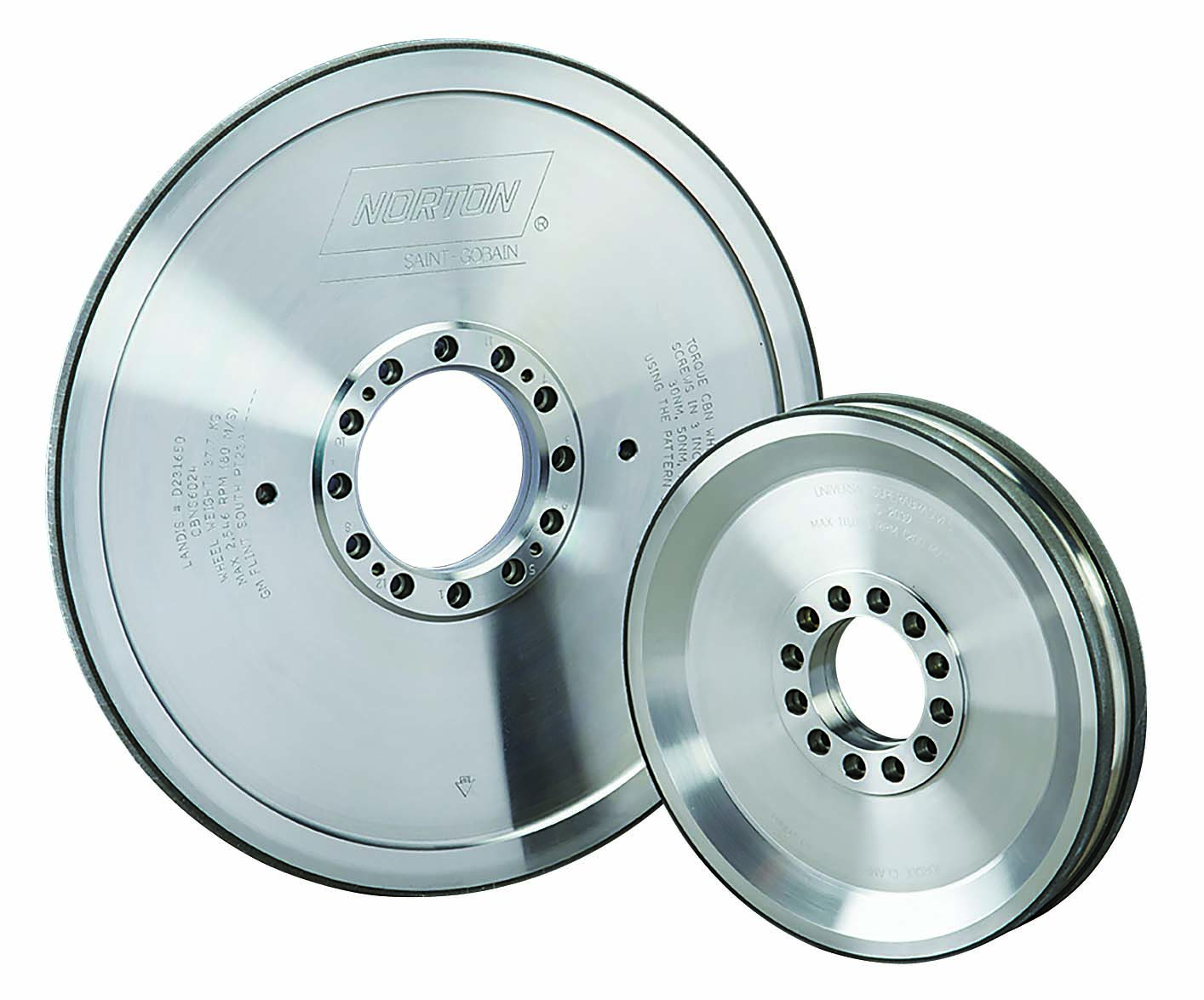
Used primarily for automotive and bearing applications, Norton Winter Vitron7 is the newest vit-CBN wheel from Norton | Saint-Gobain Abrasives. Image courtesy of Norton | Saint-Gobain Abrasives
1. Cycle time. The desire to grind faster is a reason to consider CBN. Since it has a higher hardness and can stay sharp longer than Al2O3 or ceramic grains, it can be pushed harder and cut quicker. CBN grain hardness also helps maintain cutting ability for longer periods without redressing. The reduced frequency of dressing eliminates downtime.
2. Superhard materials. With some difficult-to-grind materials, such as M4, becoming more popular, it makes sense to use CBN instead of conventional grains. This is because sometimes the hardness of an alloy is close to the hardness of a conventional grinding wheel, which could glaze or damage the wheel.
3. Grinding stock. Having a high volume of material to remove may warrant using vit-CBN grinding wheels. For example, the high volume could be due to a large number of parts or a few parts with considerable grinding stock.
4. Cost per part or operational costs. Due to the hardness of CBN, it cuts longer and has a lower wear rate. A vit-CBN wheel reduces the amount of dressing and abrasive layer required to grind big batches. This can translate into lower overall operational costs.
5. Thermal stability. The thermal conductivity of the CBN grain is greater than Al2O3 or ceramic grains, which helps the CBN grain dissipate heat away from a grinding zone, preventing thermal damage to a workpiece.
When switching from conventional grinding to a vit-CBN process, it is important to review three principal areas: machine requirements, grinding wheel considerations and operator know-how.
Machine Requirements
Machine requirements involve the grinding wheel spindle, dressing, the coolant system, machine rigidity and safety.
The grinding wheel spindle needs rigid bearings to handle a heavier wheel. Vit-CBN wheels are heavier because of the steel used as the core material. The motor requires enough horsepower to spin the wheel and maintain the necessary grinding speeds. Spindles for vit-CBN call for higher operating speeds than for conventional wheels. Vit-CBN wheels usually run from 40 to 120 m/sec. (131 to 394 ft./sec.) or higher.
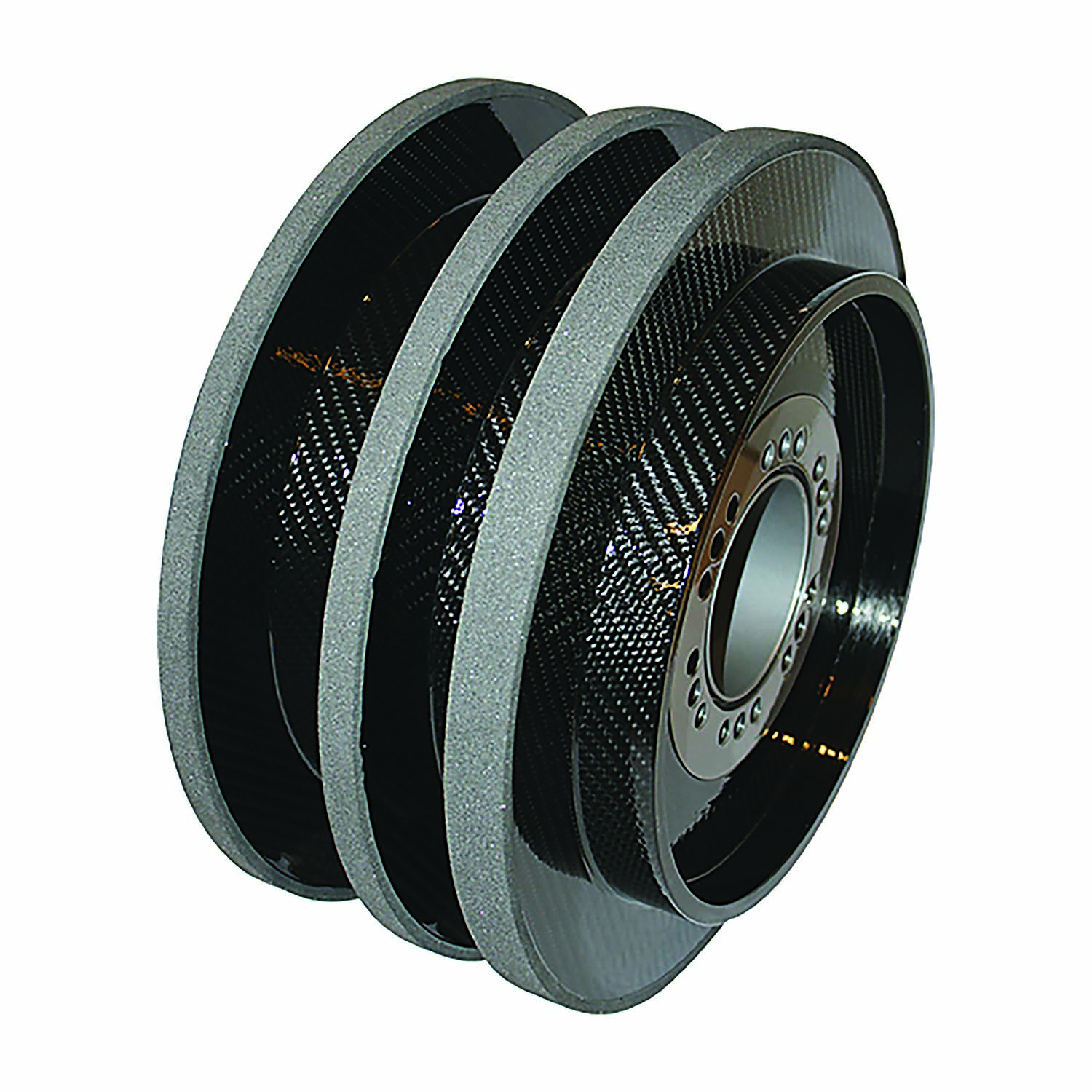
Norton Winter CarbonForce uses a carbon-fiber hub, which reduces the overall weight of the wheel. Image courtesy of Norton | Saint-Gobain Abrasives
Similar to titanium, in recent years carbon fiber has been used as a core material for vit-CBN wheels, which considerably lowers their weight. Although this could help reduce spindle requirements, it comes with a higher price tag that may be difficult to justify in many cases.
Vit-CBN wheels require a rotary dresser. The machines using conventional wheels typically do not
include dressing spindles. This feature is necessary as there is no other way to dress a vit-CBN wheel.
Because the conventional process usually does not necessitate a rotary dresser, there may be no convenient place to set up such a device. It is important to find a spot that allows good access to the vit-CBN wheel without interfering with the grinding process, and this location must be rigid enough to withstand the dressing forces.
The coolant flow for a vit-CBN wheel needs to match the wheel speed. This means that the pump should provide enough pressure to match the speed of the wheel, break the air barrier and ensure optimal delivery of coolant into the grinding zone. Sometimes specially designed nozzles are required to help break the air barrier and deliver coolant. Those nozzles also are designed to withstand coolant pressure.
In many cases, coolants used with conventional wheels can be used for vit-CBN. But it is recommended to work with the coolant manufacturer to come up with the best option, such as emulsion-type or oil-based coolant, as long as the overall process allows it.
Because CBN is harder than any Al2O3 or ceramic grain, a grinding machine needs to be rigid enough to withstand the grinding forces. In addition to having tight spindles, close-fitting slides are necessary. Lack of stiffness can cause bending and vibration.
Many grinders using conventional wheels — particularly older machines — do not have adequate safety guards to prevent wheel or workpiece particles from going airborne. When running vit-CBN at high speeds, it’s important to have a guard to protect the operator.
Grinding Wheel Considerations
If a cylindrical grinding machine is not able to spin the wheel fast enough, the vit-CBN specification will have to be modified for slower speeds. However, that will affect the performance and life of the wheel.
If a spindle cannot take the weight of the vit-CBN wheel, a smaller wheel will need to be designed, as long as the machine and process can accept that. In some cases, it may be possible to change the core of the wheel to a lighter material.
Operator Know-How
An operator must learn the proper way to handle a vit-CBN wheel. Besides the risks associated with handling a heavier wheel, the vit-CBN wheel needs to be stored in a dry area to avoid rust. Operators and engineers also are obligated to learn and determine the optimal conditions for grinding and dressing a vit-CBN wheel.
Vit-CBN wheels are a great option for production grinding due to their potential for increasing productivity and part quality and lowering tool costs. However, this is not a possibility for every application, so a thorough study should be conducted to determine the feasibility of such a project.