



Automation and quality control
No matter if your business produces 1,000 or 10,000 products a day, the risk attributed to poor quality management remains the same. Having appropriate protocols in place to consistently deliver reliable goods is essential to not just maintaining customer loyalty but to sustaining business costs and profits.
No matter if your business produces 1,000 or 10,000 products a day, the risk attributed to poor quality management remains the same. Having appropriate protocols in place to consistently deliver reliable goods is essential to not just maintaining customer loyalty but to sustaining business costs and profits. After all, few things can impact revenue as much as product quality.
As a business owner or manager, you can invest in the best equipment and support it with talented staff, but if you cannot limit bad parts, you risk increasing material, labor and disposal costs, jeopardizing order deadlines and damaging customer satisfaction and retention rates.
All that has heavy effects on reputation and the bottom line. So how does a business ensure that at every stage of the manufacturing process goods are monitored efficiently for defects without disrupting the line? The answer is quality control.
Quality control is a procedure or set of procedures that a company uses to see that all end products meet predefined standards and requirements. This allows businesses to identify product variation and in return rectify production line failures. While no one can guarantee total elimination of errors, if a supplier easily can capture input and process flow data of individual parts, that can go a long way toward capturing deficient parts before they are shipped.
Aligning the production process with industry standards comes with headaches for medium-to-high-volume production parts suppliers. Maintaining quality control of an individual part by keeping up with a line’s history of processes can be very labor-intensive and slow. This holds especially true when multiple machines — sometimes at multiple stations — perform the same process. If one machine begins producing nonconforming parts and they flow down the line with good parts, the quality-suspect range of nonconformist parts increases exponentially. Or if raw material is determined to be in nonconformance, then which in-process parts and finished goods now are impacted?
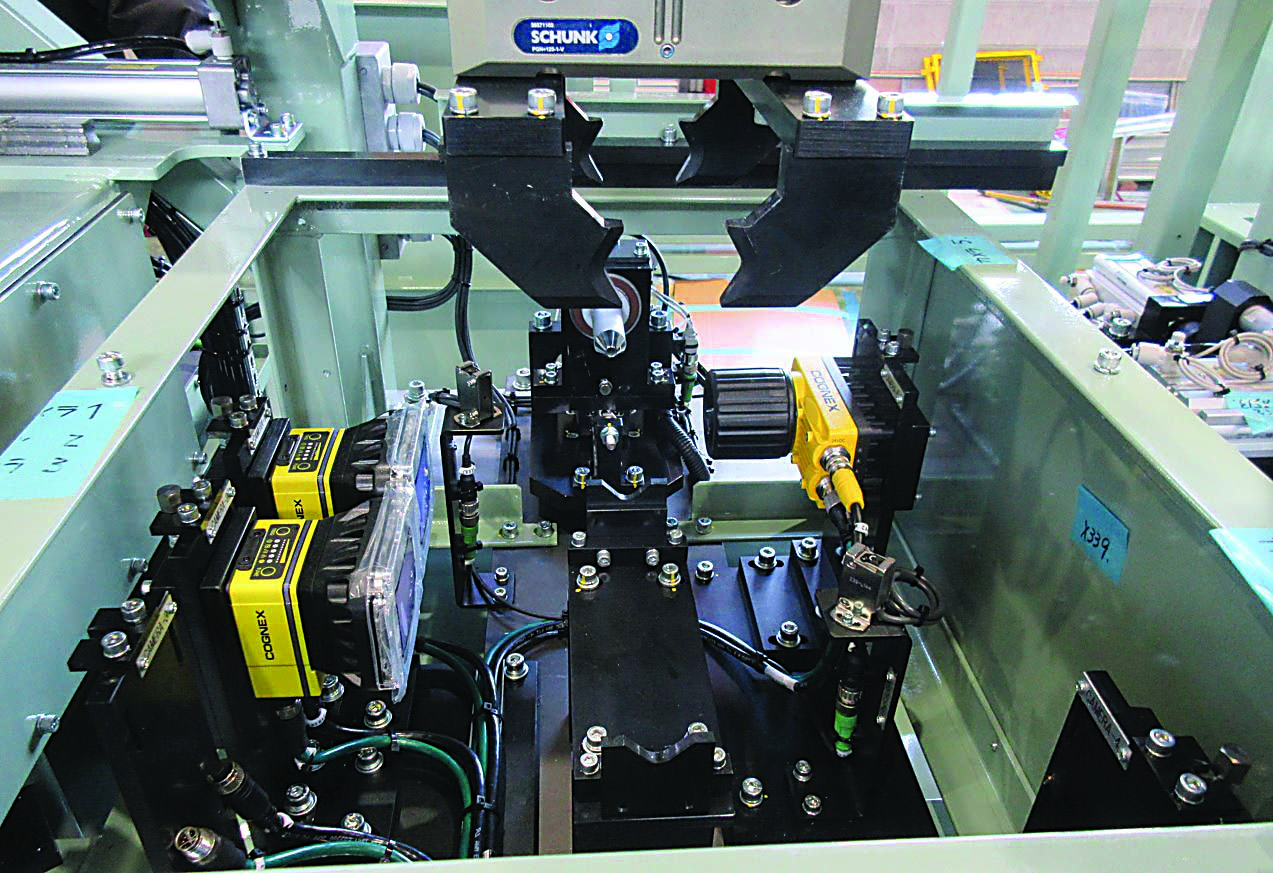
A bar code reading station can be useful in monitoring quality control and consistency. Image courtesy of Focus Technology
So how does one go about developing the best quality control system for his or her business? What real-time monitoring measures can employ prompt production corrections?
An effective way to bolster a quality control plan is to leverage Internet of Things integration with a machine’s load/unload automation system to communicate with a PC database and maintain part serialization records and real-time process history. This autonomous communication process provides many levels of tracking and control, from simple part history recording to confirming model types’ critical part data storage and more. Through a unique serialization numbering system, such as a bar code or radio frequency identification tag (which is best applied where raw material is produced), application life cycle management gives better visibility, reliability and responsiveness to manufacturing operations.
This system was integrated successfully in 2010 by Honda Motor Co. Ltd. at several plants by installing cameras at key locations on the automation line. Sensors were able to gather and analyze data by identifying parts as they moved down the line. This real-time communication between the process control system and machine controllers was so successful at increasing day-to-day operating efficiency that the system has since been implemented at additional Honda manufacturing plants using various methods of data capture, data storage and queries.
Many products and technologies specifically are geared toward improving quality control practices. Recognizing the strengths of these options and understanding how they could fill gaps in a production process can be daunting but rewarding.
Glossary terms in this article
Related




Subscribers can use MFGAxis notes, saves and discussion tools with their innoNET account.


