

Ballscrew breakthrough
With technology under development at Karlsruhe Institute of Technology in Germany, machining firms soon may be able to improve the process of spotting ballscrews in danger of failing.
With technology under development at Karlsruhe Institute of Technology in Germany, machining firms soon may be able to improve the process of spotting ballscrews in danger of failing.
KIT researchers have nearly completed a system for fully automated monitoring of ballscrew drives in machine tools. The system includes a camera with a light source, which attaches to the nut of a drive. As the nut moves on a spindle, the camera photographs each spindle section. These images are evaluated by an artificial intelligence algorithm capable of determining whether they show signs of wear that can lead to ballscrew failure.
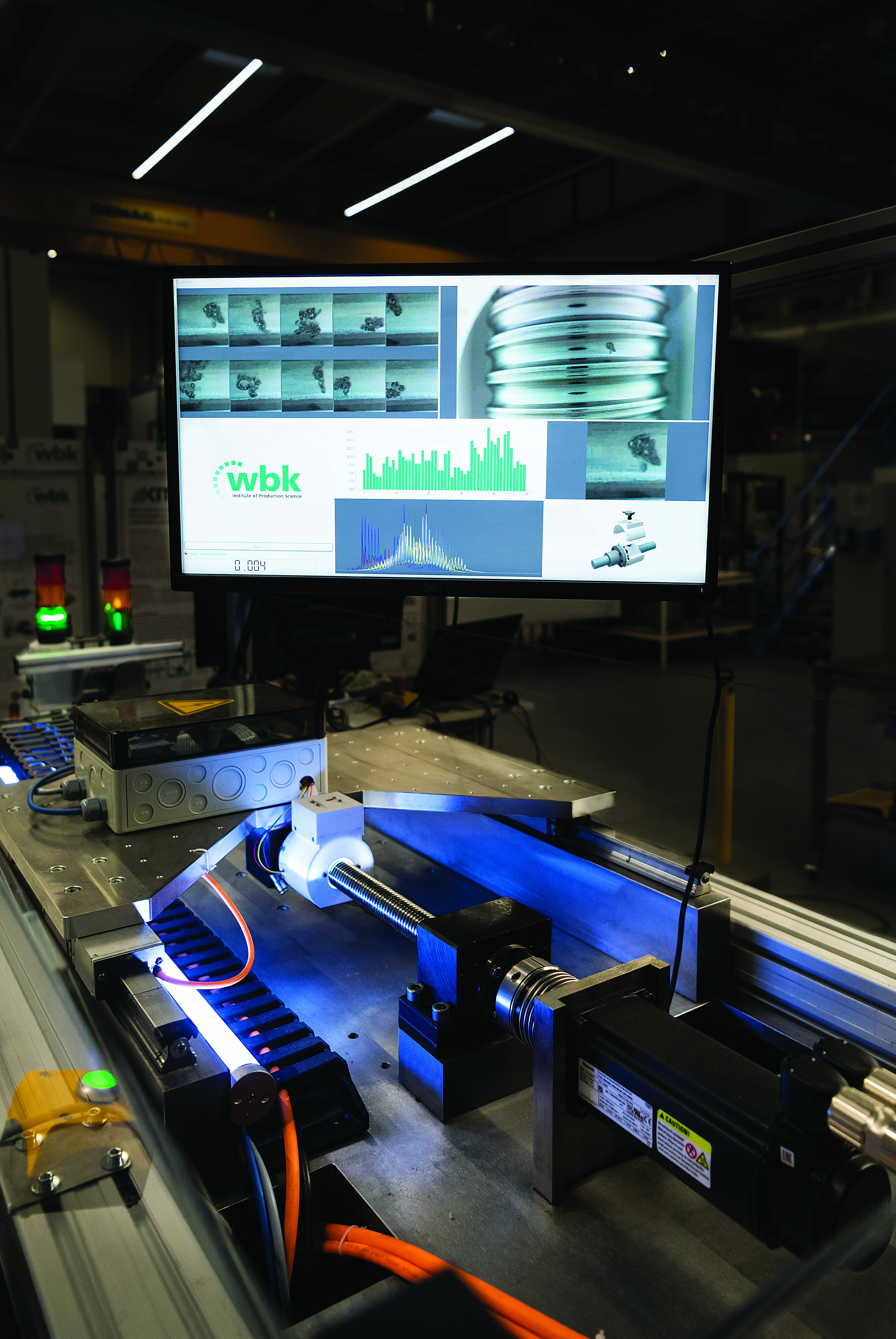
A system under development at Karlsruhe Institute of Technology automatically monitors ballscrew wear using artificial intelligence. Image courtesy of Karlsruhe Institute of Technology
Using machine-learning methods, the AI algorithm was trained with thousands of images to distinguish between spindles with and without defects. When training the algorithm, KIT reports that the research team took into account “all conceivable forms of visible (ballscrew) degeneration.” As a result, the software system can tell whether discoloration shown in ballscrew images is simply dirt or harmful pitting, according to the institute, which added that its researchers have substantiated that claim by testing the system with new ballscrew images that the system never had seen.
At present, people interested in monitoring the status of ballscrew drives in machines have two choices: measuring the motor current or the acoustics of the devices, said Tobias Schlagenhauf, a research associate who helped develop KIT’s system. He said when current or sound exceeds a specified threshold, that indicates that a ballscrew is worn. But he pointed out that both monitoring methods have significant downsides.
When measuring motor current, “you can see something only when the component is very worn” and virtually at the end of its life, he said.
As for the acoustic option, Schlagenhauf said, “it’s very hard for a user to find small defects in this signal. Finding small defects is very important because they indicate that the component will fail in the near future.”
He said the automatic KIT system is much better at finding small defects than acoustic- or motor current-based systems.
Review the print ads from this magazine to continue
This quick advertiser review unlocks the rest of the article and keeps the full-screen reader focused on the ads instead of the page chrome.
Advertisers included in this article experience
Print placements connected to this article
Gmsigroup
VHR-500 CNC
ID Grinding Spindle Three spindle multi function CNC rotary table grinding machine. All three operations can be accomplished OD Grinding Spindle in one setup. Engineered to your application Manual - PLC - CNC Surface Grinding Spindle Full Series of Surface Grinders Horizontal Rotary Grinders Vertical Rotary Grinders Renishaw Measuring Probe.
VHR-500 CNC ID Grinding Spindle Three spindle multi function CNC rotary table grinding machine. All three operations can be accomplished OD Grinding Spindle in one setup. Engineered to your application Manual - PLC - CNC Surface Grinding Spindle Full Series of Surface Grinders
Visit Gmsigroup View this placement in the issue recordPrint ads from this magazine
ID Grinding Spindle Three spindle multi function CNC rotary table grinding machine. All three operations can be accomplished OD Grinding Spindle in one setup. Engineered to your application Manual - PLC - CNC Surface Grinding Spindle Full Series of Surface Grinders Horizontal Rotary Grinders Vertical Rotary Grinders Renishaw Measuring Probe.
VHR-500 CNC ID Grinding Spindle Three spindle multi function CNC rotary table grinding machine. All three operations can be accomplished OD Grinding Spindle in one setup. Engineered to your application Manual - PLC - CNC Surface Grinding Spindle Full Series of Surface Grinders
Continue reading
July 2020
“The image data is easy to interpret because you can actually see what happens on the surface” of a ballscrew, Schlagenhauf said. “When you see something in an image, you can label this image and give the image and label to the machine-learning model. The model is trained using a large number of these image and label pairs, and it learns what a defect looks like.”
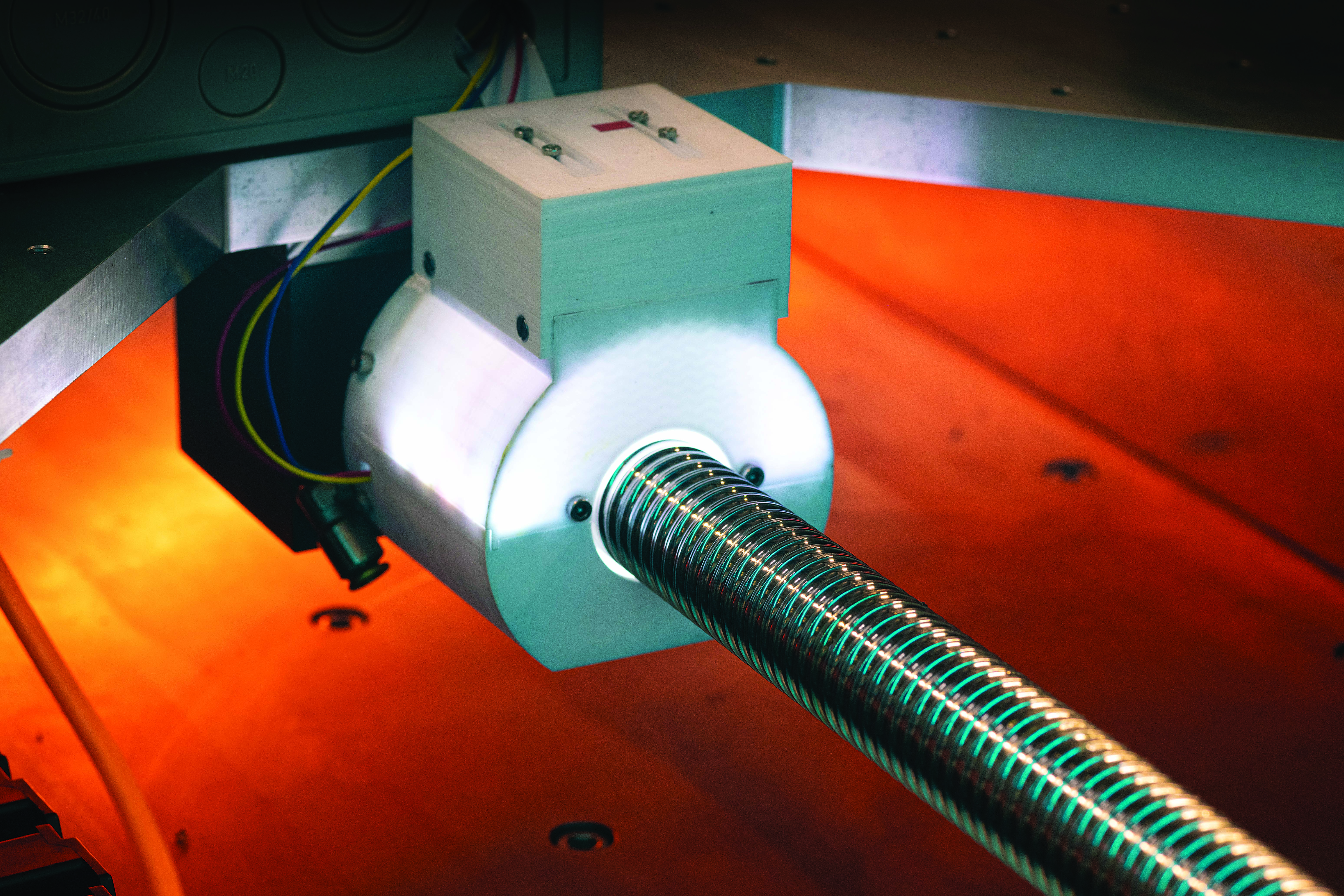
In addition to artificial intelligence, the system for monitoring ballscrew wear includes a camera and light source attached to the nut of a drive. Image courtesy of Karlsruhe Institute of Technology
If evaluation of image data shows that action is needed, KIT’s system automatically informs a user. He said there are different options for handling information from the system. One is to supplement the system with its own computer, which would eliminate implementation difficulties involved in hooking it up to a programmable logic controller or other external hardware devices. The computer, he said, would allow users to do whatever they want with information from the system — for example, to display information or use it in their manufacturing execution or enterprise resource planning systems.
In developing its system, Schlagenhauf said KIT’s primary objective is to further research efforts aimed at understanding wear-related defects in the surfaces of ballscrews and other machine tool components. Secondarily, the institute would like to commercialize the technology in some form. At this point, however, it’s not entirely clear how companies will get access to the technology upon completion of development work, which he believes is about a year away.
As of now, the system’s machine-learning model is based on data from ballscrew drives that come from only two or three suppliers. So one item on the development team’s to-do list is to see how the model works with other ballscrew drives.
Another task is to speed up surface evaluation.
“This depends on the size of the ballscrew drive, and we are not as fast as we would like,” Schlagenhauf said. “We have to work on the speed of the system so we can have real-time detection of surface defects.”
Related




Subscribers can use MFGAxis notes, saves and discussion tools with their innoNET account.


