



Can-do coolant strategies
With the cost of high-performance coolants on the rise, coolant management is more important than ever. It starts by getting the basics right.
With the cost of high-performance coolants on the rise, coolant management is more important than ever. It starts by getting the basics right.
If you are paying $8 to $12 per gal. for coolant and are satisfied with the cleanliness and sump life, the coolant produces no odors and operators love working with it, don’t bother to read this article. If you feel you are paying too much for coolant and not getting the performance and payback you expect, read on.
This article’s purpose is to arm you with some basic information to gain control of coolants, improve the shop environment and lower costs. This information will help you deal with and evaluate suppliers of coolant products, equipment and services.
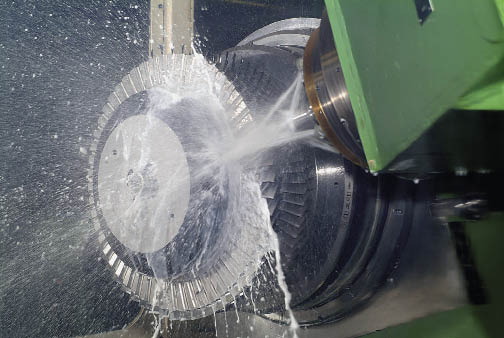
Courtesy of Rego-Fix
Coolants have ingredients for machining, rust prevention, bacteria control, pH stability and other functions. When a coolant is in use, these ingredients are consumed at different rates, depending on the metals being machined and type of machining.
Coolant development has been spurred by several factors, including the rising cost of additives, chlorinated paraffin and oil, and the need to keep pace with changes in the machine tool industry. As new coolant technology is developed, coolant prices typically increase, reflecting the performance improvements and the cost of raw materials.
Coolants now sell for $15 to $28 per gal. or more, so a new look at coolant management and recycling to maximize return on investment (ROI) is warranted.
The term “coolant management” is commonly used to describe the actions and equipment required to maintain coolants at their maximum performance level. The first step in implementing a coolant management program typically involves calling manufacturers of coolant recycling, filtration and oil skimming equipment. These companies will survey your plant and estimate the equipment needed. Savings will be itemized in many categories, including gal. of coolant purchased and reduced waste disposal and machine downtime. They usually provide a projected ROI as well.
At this point, many manufacturers are in a rush to get started. Not so fast! In reality, many of these equipment installations will not generate the promised ROI. Visits to many shops show large numbers of centrifuges, coalescers and filters sitting unused. Why? Largely because the steps to control coolant on a day-to-day basis were not incorporated with the purchase of equipment.
Rule No. 1 is you must implement operational coolant control before purchasing coolant recycling and filtration equipment. Most of the factors that determine the success or failure of coolant management programs can be done with minor, noncapital investment. Start by keeping records, selecting an effective base coolant for the program, controlling the concentration and cleaning coolant sumps on a regular basis.
Record Keeping
Each operator should have a logbook to track the coolant concentration and sump life for his machine. Readings for pH and bacteria are optional and can be delayed until you get further into your coolant management program. Note any unusual occurrences that affect the coolant. A well-kept logbook will provide your coolant supplier with valuable information should problems develop.
Machine ID: unit 21Sump capacity: 50 gal.Date Charged: 07-10-08Coolant: Kool Rite 2290Recommended concentration: 7%Recommended refractive index: 1.3DateConcentrationpHBacteriaComments. Note additions, problems, sump cleanouts11-11-085.5/7%9.10Water added from dispenser at 2.5 percent11-12-084.5/5.85%9.10Hydraulic line break, excess tramp oil vacuumed out
Use the coolant usage information as a baseline to judge the impact of future coolant management changes. Consider tracking your current coolant situation for 3 to 6 months before examining equipment. It is critical to know the sump capacity for each machine and the shop’s total. If you can’t find the sump size as specified by the manufacturer, you can determine it easily. Measure the sump’s width and length and coolant depth at the normal operating level in feet. To determine sump capacity in gal., multiply width × length × liquid height × 7.5.
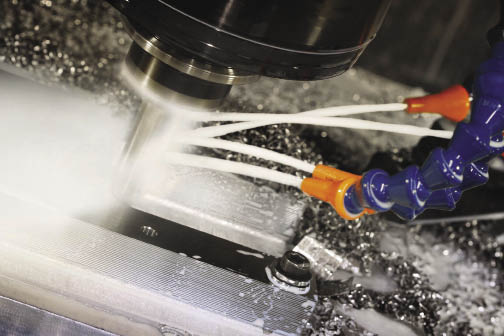
Courtesy of Haas Automation
Coolant development has been spurred by several factors, including the rising cost of additives, chlorinated paraffin and oil.
Coolant Selection
Lower-priced coolants typically do not contain biocides at high enough levels to control bacteria. They contain six to 10 ingredients, use low-cost emulsifiers and little pH buffering. More advanced, pricier coolants provide increased performance by combining 16 to 20 ingredients at optimal levels.
Why spend the money for advanced technology? Coolants are never the same once put to use. You can add coolant to the sump but the resulting coolant will always be a different mix of chemistries than the virgin coolant. The reason is selective depletion. Coolants have ingredients for machining, rust prevention, bacteria control, pH stability and other functions. When a coolant is in use, these ingredients are consumed at different rates, depending on the metals being machined and type of machining.
The most obvious example of this is when odor from bacteria is present even though the coolant is at the proper concentration. This is because the biocide has been selectively depleted faster than the other components. With a central control system, selective depletion many times requires adding ingredients, such as pH buffers and biocides, in addition to replenishing the coolant.
Traditional coolants come in three categories:
• Soluble oils, which are actually emulsified oils that combine petroleum or vegetable oil and water.
• Semisynthetics are made with lower amounts of oil than soluble oils and utilize synthetic additives to some degree.
• Synthetics are made without any oil.
Each coolant has pros and cons, depending on a shop’s needs and conditions. A competent coolant supplier can review these choices and help you select a coolant type that is best for your situation. In addition, new technology has made new, hybrid coolant types available.
Among the new hybrid coolants is a new category that falls in the area between soluble oils and semisynthetics. The definitions of semisynthetic and soluble oils are not set in stone. Some coolant manufacturers define semisynthetics as having 30 percent oil or less and others say 40 percent oil or less. The coolants that fall into the low-oil soluble or high-oil semisynthetics use the space made available from the reduction of oil to add new extreme-pressure additives, alkalinity sources and emulsifiers. These additives allow the production of chlorine-free coolants with equal or better machining performance than chlorine-containing coolants. The elimination of sulfur-based emulsifiers increases the bio-resistance of coolants and new alkalinity materials improve stability as well as bio-resistance—so much so that some of these coolants are made without bactericides. These “in-between coolants” complement and simplify coolant management.
Many manufacturers of another new category of coolants call them synthetics to simplify conversations with customers. However, the new category of coolant technology is better termed chemical emulsions. A synthetic coolant blends raw materials to form a stable solution—a homogeneous mixture of chemicals. The chemical emulsions hold the synthetic coolant materials together by emulsification. Chemical emulsions offer long sump life without the use of bactericides and have enhanced machining capabilities compared to other technologies. These products come in oil-free and low-oil formulas.
When considering a new coolant to form the base of your management program, test some of the newer technologies. Many work exceedingly well and fully justify the increased cost.
Concentration Control
The main foundation of coolant management is concentration control. If you have ever had a problem with a coolant and called your supplier for advice, chances are the first question he asks is, “What is the concentration?” About 80 to 90 percent of the coolant problems JTM encounters can be traced to lack of concentration control.
Coolant problems typically start with concentrations that are too high or too low. Rusting is a good example. Operating for several days with a coolant concentration that is too low can incubate rust cells. Bringing the coolant back to proper concentration may not stop the rust from appearing on machine tools. This can also happen with sump life. Running at low concentrations leaves the coolant without enough biocide or other bio-resistant materials to maintain control. When the concentration is brought back up, the added coolant does not have enough ingredients to re-establish control.
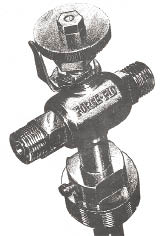
Courtesy of JTM
A coolant proportioning valve.
Make sure every operator has easy access to a refractometer to determine coolant concentration and make the needed adjustments at least once per shift. Checking by “feel” is just not accurate enough. Also, invest in a coolant proportioning valve. These devices connect to a water line and automatically dispense coolant at a preselected concentration. One $350 model has a control knob that can increase and decrease the concentration automatically (see photo above.)
When filling the sump with the dispenser, set the concentration at the recommended level. As a rule of thumb, when adding makeup coolant set the concentration at 50 percent of the recommended concentration for oil-based products and 25 percent for synthetics.
Cleaning Sumps
There is often disagreement about how carefully a sump should be cleaned. The general recommended steps are:
1. Drain coolant and remove sludge, chips, fines and other debris,
2. Refill with water and add sump cleaner at a 3 to 5 percent ratio,
3. Circulate cleaner for 2 to 4 hours, making sure areas of the machine not flooded with coolant get washed and scrubbed if needed,
4. Drain cleaner,
5. Refill with rinse water and circulate,
6. Drain, and
7. Refill and bring coolant to proper concentration.
The cleaning should be done every time you change out coolant. Much of the debate occurs over whether or not some of these steps can be skipped. Some plants put the cleaner in the old coolant and keep running. Some perform the cleaning step but don’t rinse. Some get away with skipping steps, but others don’t. The one thing that is certain—the dirtier the sump, the more likely it is you should include more of these steps.
If the sump has high bacteria counts and the resulting odor, it’s wise to perform all the steps. For smaller shops that do not have regular waste disposal, fill a 55-gal. drum with cleaner and pump it into and out of the machine. You can save this cleaner and use it for more than one machine. Sump cleaning is a pay-me-now-or-pay-me-later scenario. You will get a return on your cleaning with longer sump life and improved coolant performance over the life of the sump.
Once a shop has performed basic coolant management, it should experience better coolant control with longer sump life and better coolant performance. Coolant purchases and disposal costs will decrease, and sump life will increase. After implementing these basic steps, it may make sense to evaluate coolant recycling and filtration equipment and more advanced management techniques. With good coolant management, it is possible to improve coolant sump life 50 to 100 percent. By improving your coolant situation, your recycling equipment can be downsized, reducing capital costs.
Shops should also invite their coolant supplier to speak with operators in a two-way dialogue on a regular basis. This can be a 10-minute meeting over doughnuts or a 1-hour formal presentation as part of a safety meeting. A good coolant supplier recognizes that it is in its best interest to help shops set up coolant management programs—even though it will most likely reduce coolant consumption. In the end, a long-term partnership that reduces operating costs is the most successful strategy for both parties. CTE
About the Author: Warren Runestrand is industrial division manager for JTM Products Inc., Solon, Ohio. He is managing the introduction of JTM’s line of Kool Rite metalworking fluids with BioArmor technology, which have eliminated the use of chlorine, sulfur, bactericides and DCHA. For more information, call (800) 229-6744, visit www.jtmproductsinc.net or enter #360 on the IS Form.
Glossary terms in this article
Related


Subscribers can use MFGAxis notes, saves and discussion tools with their innoNET account.


