
Ceramic composite cutting tools: are they tough enough?
Ceramic composite cutting tools: are they tough enough?
Ceramic composite cutting tools are effective for machining heat-resistant superalloys and other challenging materials.
As the demand for more fuel-efficient gas turbine engines continues to escalate, traditional heat-resistant superalloy (HRSA) materials are being replaced with new ultratough, high-temperature and wear-resistant alloys. The physical demands on these materials are high—as are the demands on the cutting tools applied to machine them.
Manufacturers tasked with cutting these alloys quickly learn that following traditional machining guidelines alone will not keep them competitive. Cutting tool manufacturers are familiar with these difficulties and are poised and ready to offer a productive and cost-effective alternative: ceramic composite cutting tools.
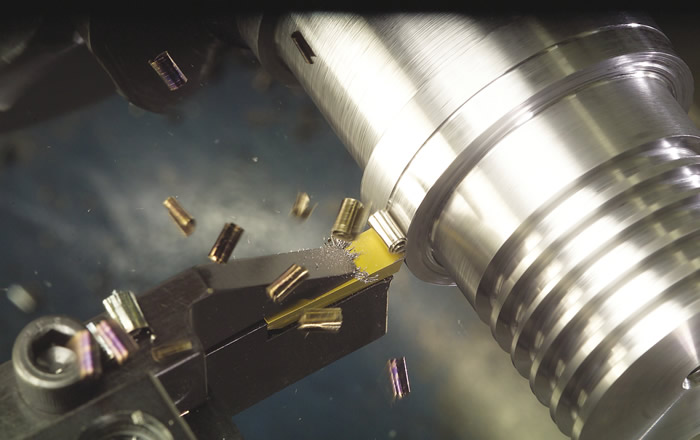
CCCTs are specifically engineered to combine extreme temperature resistance with high strength. This combination provides a highly productive and predictable cutting tool material capable of withstanding the extreme conditions encountered when machining HRSAs and other challenging materials.
Reinforcements to the Rescue
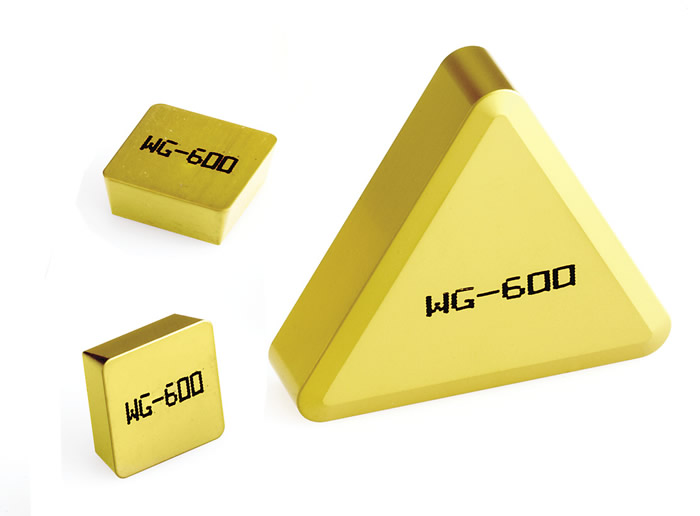
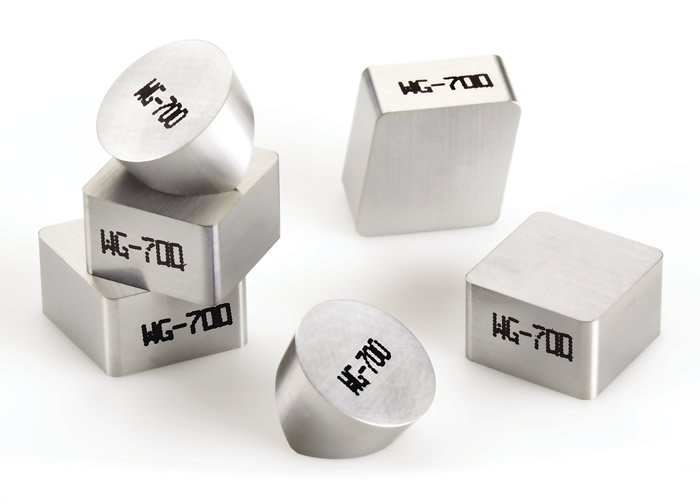
One of the most widely known CCCT materials for cutting HRSAs is whisker-reinforced ceramic. When introduced more than 30 years ago, whisker-reinforced ceramic tools took the market by storm by providing up to 10 times the productivity of carbide. Without the whisker reinforcement, ceramic cutting tools of the time lacked the predictability to excel at machining HRSAs. Whisker-reinforced ceramics continue to excel at machining these difficult-to-machine materials.
In addition, coated, whisker-reinforced ceramics introduced in the last decade provide additional time and cost savings compared to their uncoated counterparts. The addition of high-performance coatings increase an insert's temperature and wear resistance, much like coatings on carbide cutting tools, and further boost productivity and tool life.
On average, by upgrading from an uncoated to a coated, whisker-reinforced ceramic tool, users can expect a 20 to 40 percent increase in cutting speed. And depending on the grade of the coated insert, up to a 20 percent increase in feed and up to a 50 to 100 percent increase in tool life can also be realized. In many applications, a coated grade imparts a finer surface finish and allows a longer length of cut than an uncoated grade.
Implementing CCCTs is not as simple as placing an insert in a pocket and hitting the green button. Users must understand the basic science behind why these tools are capable of such performance gains and how to accurately gauge and adjust for tool wear.
Recipe for Success
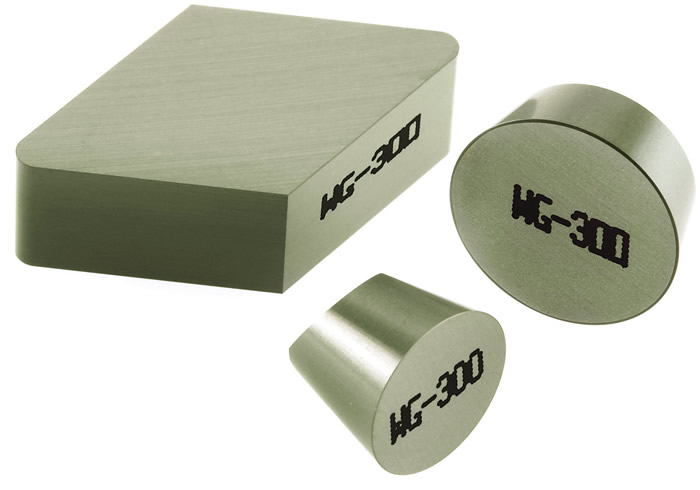
Whisker-reinforced ceramic inserts are made from fine-grain alumina oxide, combined with silicon-carbide crystals, commonly called whiskers. Al2O3 is a high temperature- and wear-resistant material but lacks strength and, therefore, predictability. By adding silicon-carbide whiskers, Al2O3 is reinforced and becomes predictable and strong, much like rebar in cement or fiber filaments in fiberglass. This reinforcement allows the ceramic tool material to operate at much higher cutting speeds than traditional carbide tools.
High cutting speeds are crucial for plasticization, or softening, of HRSAs, so material can be efficiently removed layer by layer. The plasticization process, however, generates a high level of heat in the cutting zone, which needs to be effectively managed and evacuated so the microstructure of the parent material is not compromised. Because of this, it is essential to properly balance the cutting speed with the feed rate and maintain the correct average chip thickness (ACT) to ensure the bulk of the heat is carried away with the chip.
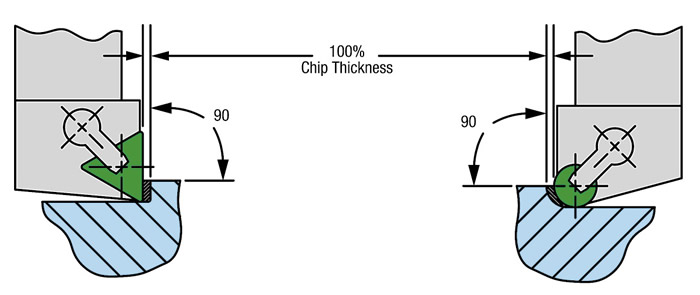
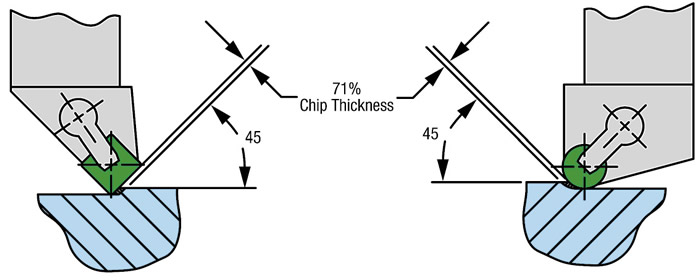
The feed rate is expressed as ACT instead of feed per revolution or feed per tooth because the chip thickness can vary in relationship to the feed rate, depending on many factors. When applying a round insert, for example, the ACT depends on the DOC, because the effective lead angle changes as the DOC changes, varying the thinning or thickening effect on the chip.
When using a straight-edge insert, the ACT depends on the orientation of the tool to the part, otherwise known as the tool's lead angle. While machining with a lead-angle tool can be beneficial for many reasons, such as reducing ceramic notching, it is important to adjust the programmed feed rate to account for these chip-thinning
phenomena and ensure a predictable tool wear pattern.
A rule of thumb for whisker-reinforced ceramics is to have an ACT of 0.002" to 0.004" (0.05mm to 0.10mm). This will ensure the chip maintains the proper cross section to carry the extreme heat developed by high cutting speeds from the tool/workpiece interface.
Creating too thin of a chip will not carry enough heat away and, therefore, heat will be transferred into the parent material. In addition, having a chip that's too thin causes an insert to rub the part instead of cutting it, leading to rapid flank wear and, ultimately, premature tool failure. Too thick of a chip has the opposite effect, increasing pressure on the insert, which leads to chipping and breakage.
Proper cutting speeds and feed rates vary, depending on the composition of the material being machined. In addition, it's particularly important to pay attention to the material's hardness. A harder material requires a lower cutting speed than a softer material to plasticize the parent material to the point where a tool can efficiently remove it.
Tougher Tools
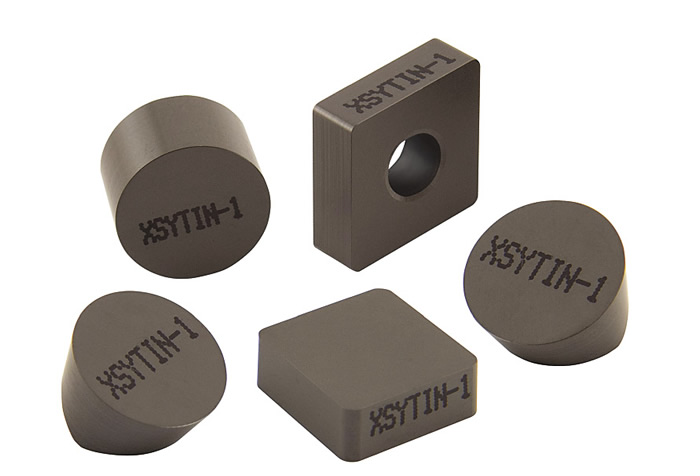
A new ceramic composite material that is gaining favor for turning and milling HRSAs is phase-toughened ceramic. Offering almost twice the strength of whisker-reinforced ceramics, this new ceramic composite can be run at the feed rates used for carbide inserts with the cutting speeds common with ceramic inserts. In addition, the increased strength of a phase-toughened ceramic tool can triple productivity, compared to other ceramic composite tools.
So far, the only phase-toughened ceramic available is Greenleaf Corp.'s XSYTIN-1. It is a thermally stable, whisker- and particulate-toughened silicon nitride with almost twice the strength of any other commercially available ceramic tool from Greenleaf.
The major benefit of phase-toughened ceramic is its ability to retain strength in demanding, high-force, interrupted cuts and excel in continuous cuts. Machining forging and casting scale and highly abrasive materials are just a few of the application areas these inserts are designed for.
It's important to know that phase-toughened ceramic inserts cannot be run like other ceramics on the market; increased feed rates are a must. If the feed rate is not high enough, a high level of flank wear will occur, leading to premature tool wear. The ACT for phase-toughened ceramics is generally much higher than that of whisker-reinforced ceramics and many SiAlON (silicon aluminum oxynitride) materials.
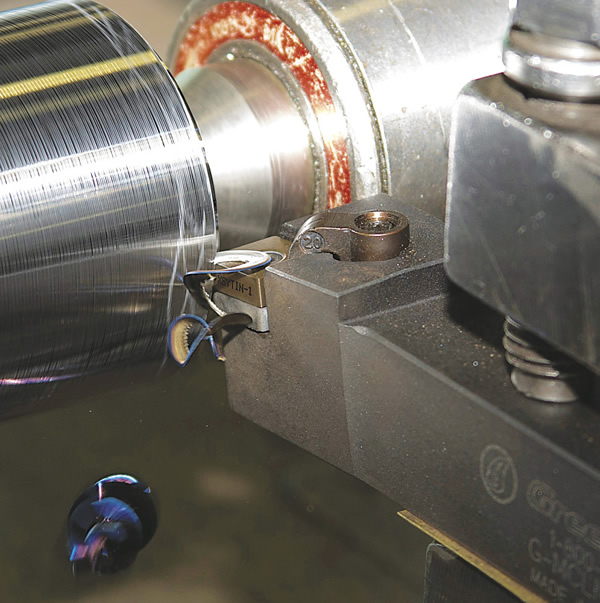
To further illustrate this difference, the rule-of-thumb starting parameters for turning Inconel 718 with a round, uncoated, whisker-reinforced ceramic insert that has a ½" (12.7mm) IC is called "the rule of eight": a cutting speed of 800 sfm (244 m/min.), a feed of 0.008 ipr (0.20 mm/rev.) and a DOC of 0.080" (2.03mm). This results in a mrr of 6.14 in.3/min. (100.6 cm3/min.).
When switching from a whisker-reinforced ceramic insert to a phase-toughened ceramic one, a slight speed reduction is typically necessary, but the feed rate can be greatly increased. Data illustrates that 700 to 750 sfm (213 to 229 m/min.), 0.014 to 0.016 ipr (0.36 to 0.41 mm/rev.) and 0.080" to 0.120" (2.03mm to 3.05mm) DOC creates the sweet spot when cutting Inconel 718. This results in an mrr from 9.4 in.3/min. (154.2 cm3/min.) to 17.3 in.3/min. (283.5 cm3/min.) when conditions are ideal.
Another benefit of phase-toughened ceramics is their ability to operate across a wide cutting speed range. The traditional method would be to rough HRSA parts with carbide because of a limited rpm or the limitation of an older piece of equipment that would not allow the use of whisker-reinforced ceramics. In the past, those who simply could not use ceramics now are finding they can apply the phase-toughened ceramic. Cutting speeds can be as low as 450 sfm (137 m/min.) and be combined with a slightly lighter feed rate of 0.008 to 0.010 ipr (0.20 to 0.25 mm/rev.) at the same DOC when applying the same phase-toughened ceramic insert, bridging the gap between carbide and ceramic cutting tools.
The Payoff
What does all of this mean for manufacturers who must process these heat-resistant superalloys? If baseline productivity can be increased as much as 10 times with whisker-reinforced ceramics, compared to carbide tools, throughput can be greatly increased—freeing up machine time to run more jobs on the same equipment and reducing tool costs, as well as overhead costs and capital expenditures.
Add to that productivity increases achievable with coated, whisker-reinforced ceramics or the new phase-toughened ceramic, and the potential productivity gains are significant. With the broad application range of these ceramic composite cutting tools, there is virtually a solution for all manufacturers of HRSA parts, as well as those tackling other challenging workpiece materials.