

To-do’s for maintaining machines
Author Kurt Vonnegut once noted that a "flaw in the human character is that everybody wants to build and nobody wants to do maintenance." The same might be said of some manufacturers. But when preventive maintenance practices are overlooked or ignored, the likely consequences are costly repairs, replacements and downtime.
Author Kurt Vonnegut once noted that a “flaw in the human character is that everybody wants to build and nobody wants to do maintenance.” The same might be said of some manufacturers. But when preventive maintenance practices are overlooked or ignored, the likely consequences are costly repairs, replacements and downtime.
With the economy during COVID-19 affecting equipment purchases and staffing decisions, machines of all types are being kept longer and often with fewer technicians, which presents challenges for manufacturers. The good news is that machine builders and service support firms stand ready to assist. Three such companies — Graymills Corp., Mitsubishi Electric Automation Inc. and UP! LLC, which does business as The UP! Service Network — recently discussed what they consider to be six important to-do’s for maintaining machines. As for the don’ts, there’s just one: Don’t ignore the do’s.
Do Read and Use the Manual
The No. 1 best practice for maintaining equipment is to “read the freaking manual,” said Graymills’ Tom Kucklick with a laugh.
As technical sales/applications specialist at the Broadview, Illinois-based maker of metalworking pumps, ink pumps and parts washing equipment, he is familiar with a common scenario at plants of all sizes.
“When the machine is delivered, the supervisor or plant manager grabs the manual and puts it in a file for safekeeping, but the employees who need to read and use the manual never see it,” Kucklick said. “Whether it’s your car or industrial equipment, manuals contain the necessary information for maintaining equipment. We spend a lot of time troubleshooting on the phone with customers who don’t refer to their manuals.”
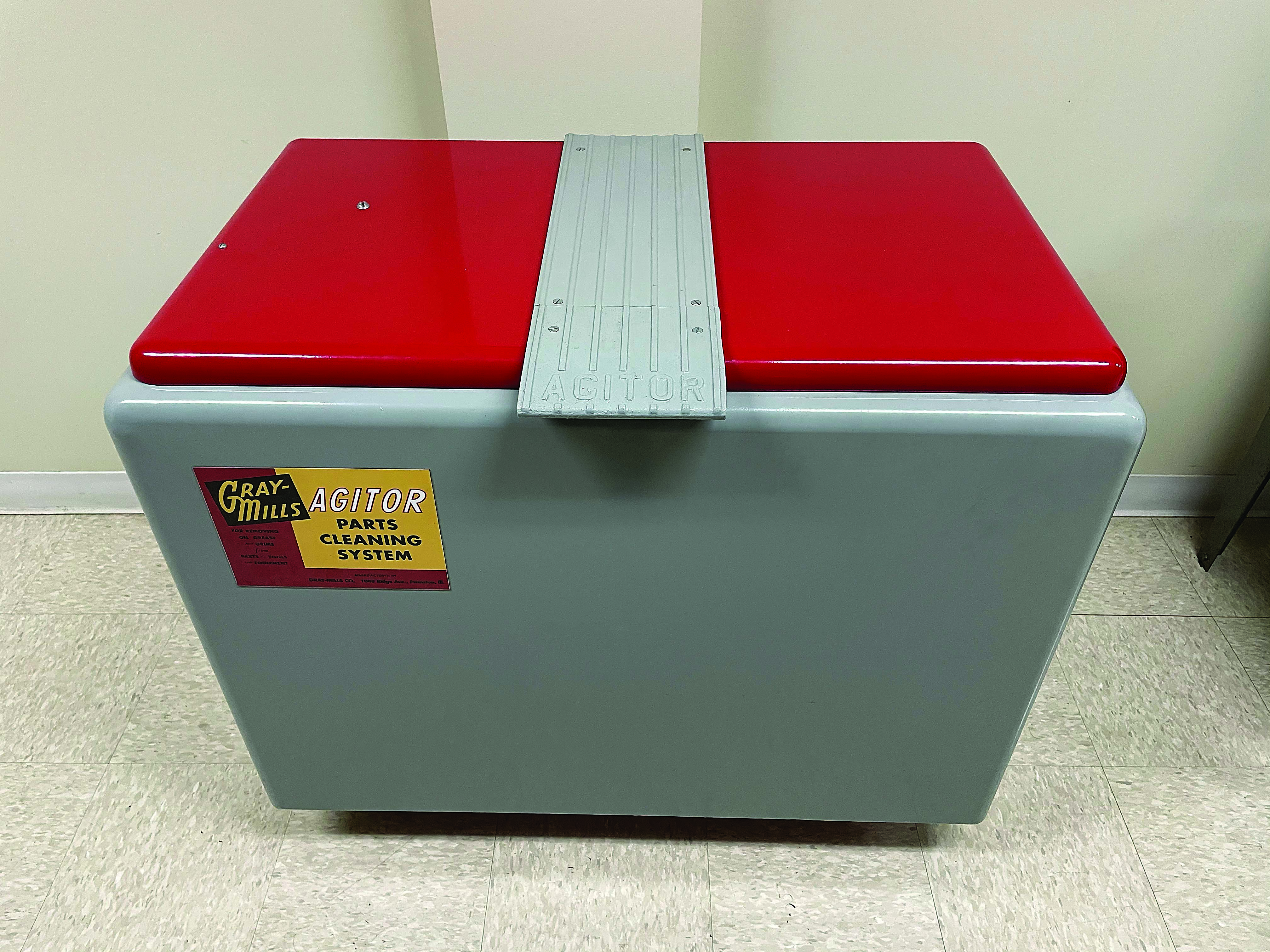
An automatic, agitating immersion cleaning machine is shown. Image courtesy of Graymills
Do Replace Fluids and Filters
For companies that do routinely review their machine manuals, advice from Justin Kueker, senior product manager of service at Mitsubishi Electric Automation in Vernon Hills, Illinois, should come as no surprise. He oversees servicing of CNC-equipped mills and lathes for metalcutting.
“Some of the biggest things when it comes to preventive maintenance are the basics,” he said. “Regularly change fluids and filters to ensure smooth operation.”
Kucklick agreed.
“Hydraulic machine oil, for example, doesn’t last forever,” he said. “Manufacturer recommendations need to be followed.”
As for filters, Kucklick said clogging is good and certainly not a reason to go without them.
“When die change filters clog, it’s because they’re doing their job,” he said. “Nonetheless, I’ll go into facilities that are operating without filters in the housings because the filters are clogging up. Sure, replacing a $20 disposable paper filter monthly will add $240 to a company’s annual operating costs. However, that’s a lot less than the amount of revenue lost due to downtime resulting from not regularly replacing filters.”
Kucklick said filters with stainless steel shell cartridges can be cleaned simply by “banging them a couple of times in a garbage can or using a parts washer.”
Do Monitor Movement and Speed
Kueker said movement as it pertains to axes and spindles also warrants ongoing attention. He stressed the importance of routinely taking machines through their paces to evaluate axis movement and spindle speed.
“Looking for deviations and out-of-spec movement is necessary for avoiding breakage,” he said.
David Rhodes, general manager of The UP! Service Network, a 3-year-old industrial service network based in Mason, Ohio, that matches service requesters with service providers nationwide, concurred.
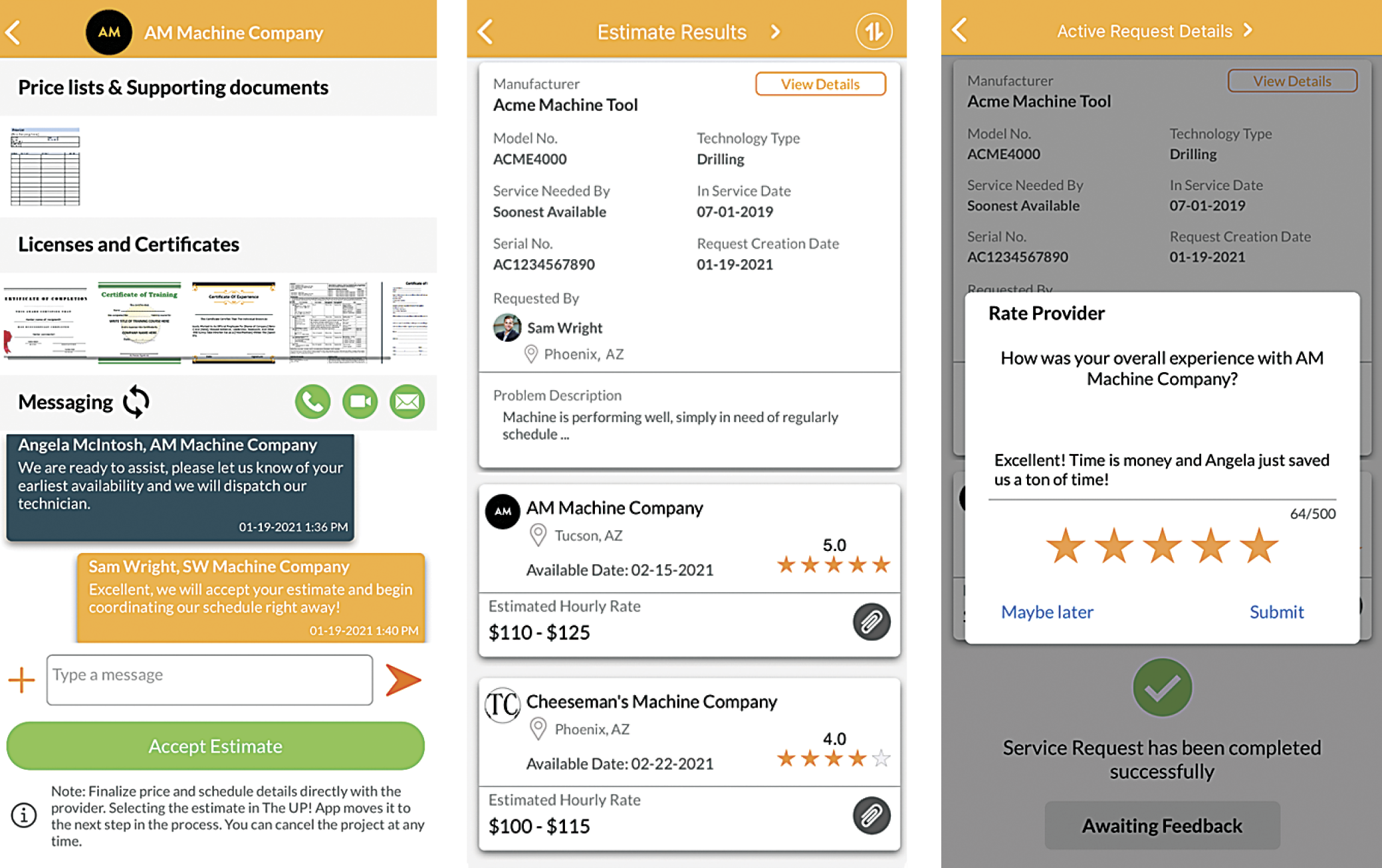
The UP! Service Network matches service requesters with service providers nationwide. Image courtesy of UP!
“There’s a range of parts that can break depending on the machine types,” he said. “Perhaps it’s a toolchanger that isn’t grabbing a tool properly or an x- or y-axis that is out of alignment. Whatever the scenario, machine shops need to practice preventive maintenance, whether with in-house technicians, (with) a service agreement through the machine builder or through outside service providers.”
Do Protect Electronics
Kueker said one of the best ways to protect electronics is by paying careful attention to fans.
“If dirty fans are allowed to operate continuously, heat won’t dissipate, resulting in a harmful situation for the electronics,” he said. “Fans must be cleaned and replaced on (a) regular basis or else there will be premature failure of electronic parts.”
Although fan life can be extend-ed with proper cleaning, Kueker said small ball bearings present a challenge.
“Care must be taken to not spray any liquid into the bearing area of the fan,” he said. “My recommendation: Just replace the fan according to the user recommendations, generally every two or three years. It may cost $50 to $200 to replace a fan, but to replace a drive system that fails due to an improperly maintained fan will set the company back $2,000 to $7,000.”
To ensure access to critical data, Kueker said another component that needs to be replaced systematically on CNC machines is the battery.
“While data can be backed up on the cloud,” he said, “it’s best to replace batteries every one to five years depending on manufacturer recommendations.”
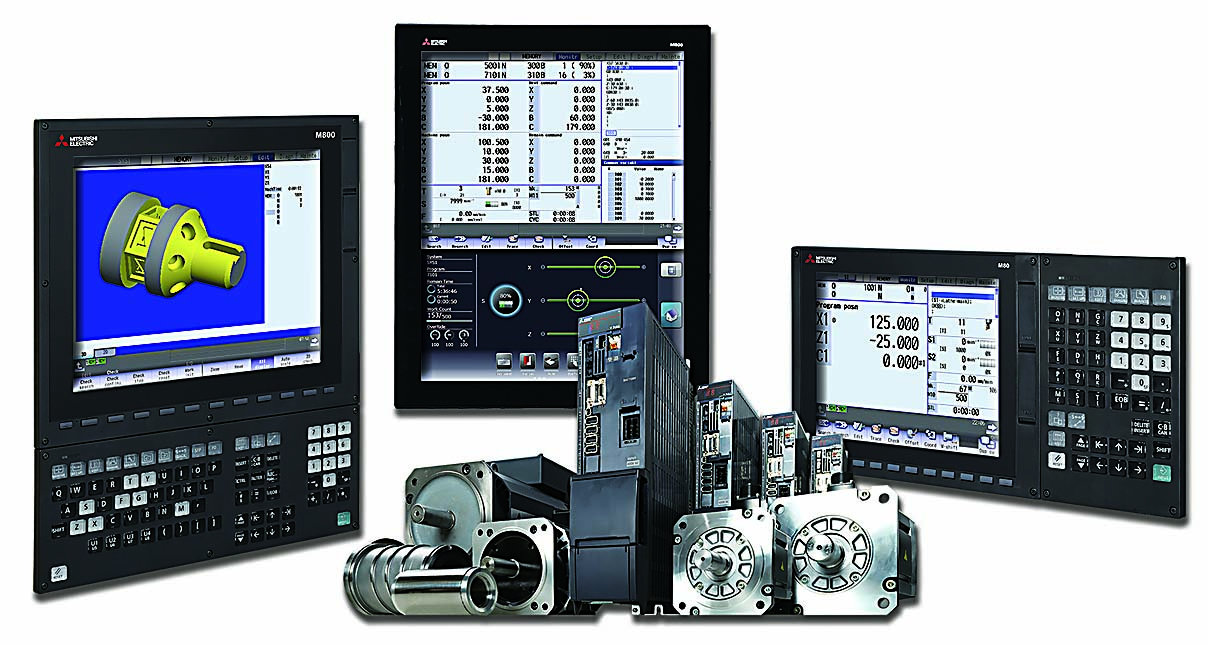
The M8 series control platform is presented. Image courtesy of Mitsubishi Electric Automation
Senior Product Manager Rob Ruber, who is responsible for the line of programmable logic controllers at Mitsubishi Electric Automation, said it is a good idea for a programmer to create custom alarms alerting users when it’s time to replace batteries. As for a PLC itself, he stressed the importance of appropriate installation inside an enclosure that maintains proper environmental ratings.
“As one would expect, there shouldn’t be any moisture, dust or debris in the air, and the PLC should be mounted to ensure proper airflow around the device,” he said. “Depending on where the product is located, an additional device may be needed to cool or heat the cabinet.”
Do Know Your Options
Ruber said it’s important to know how to evaluate options when it comes to maintaining or replacing equipment. He cited four assessment tools that machine shops should be familiar with: overall equipment effectiveness, maintenance cost, benefits of new features, and depreciation.
“OEE, a metric that determines the overall efficiency of machines, can be used to determine the level of attention a machine requires,” he said. “Then we need to consider how much it costs to maintain older equipment. This includes machine downtime, employee overtime, replacement parts, service calls, etc. When evaluating buying a new machine versus retrofitting an old (one), customers need to ask themselves where do they see themselves in five, 10 or 15 years? They have to weigh business as usual versus taking advantage of newer features available. Some of these features include Industrial Internet of Things connectivity, reduced cabinet space, energy efficiency, integration into supervisory control and data acquisition or building management system software, and the ability to add equipment, such as robotics. Finally, there’s the depreciation value, which helps determine whether a company should move to retrofit an existing machine or buy new.”
Moreover, Ruber said if manufacturers know they’re going to keep machines longer, they need to “stay aware of when component obsoletions occur to ensure that they buy enough spare parts to see them though the planned life of the machine.”
Do Have a Plan
The importance of having a plan can’t be underestimated, Rhodes said, adding that this often requires an assessment of not only physical but human resources. He suggested that companies adopt hybrid labor models that include W-2 employees (in-house technicians) and 1099 contractors (outside service contractors) for strategizing how to handle maintenance before problems occur.
“Even large machine builders with in-house technicians will strategically use outside tech support for customer service,” he said, “reserving their in-house techs for more complex tasks.”
Kueker said another resource not to be overlooked by machine shops is preventive maintenance agreements offered by machine builders and control providers.
Rhodes said one thing is certain.
“Just because these are difficult economic times,” he said, “machines still need to be serviced and maintained.”
Glossary terms in this article