


Help wanted: Workforce Development & Training
The outlook for workforce development in the manufacturing industry is optimistic, but hurdles remain.
Manufacturing is an ancient yet ever evolving endeavor. As a result, workforce development shifts constantly. However, a manufacturer must attract workers before it can develop them. The process begins with companies striving to become the employer of choice.
People entering the workforce frequently are searching for a career that provides a sense of purpose, said Alexander Freund, director of product management for production software at Hexagon’s Manufacturing Intelligence Division. The U.S. headquarters of the company is in North Kingstown, Rhode Island, and he is based in Frankfurt am Main, Germany.
“When they join a company,” he said, “they ask, ‘OK, what am I delivering to customers, or how can I make a change to address also the bigger topics that we have in the world?'”
Those subjects include sustainability and the transition to green energy, Freund said, noting that companies like Hexagon develop solutions that help drive the movement to sustainable energy sources.
Although manufacturing has “been out there forever,” he said, “I think the image of manufacturing is also changing.”
Moving Pictures
The image of manufacturing needs to change from the perception of the four D’s (dirty, dark, dangerous and declining) to the four S’s (sustainable, smart, safe and surging), said Michael Molnar, director of the Office of Advanced Manufacturing at the National Institute of Standards and Technology in Gaithersburg, Maryland, which is part of the U.S. Department of Commerce and coordinates Manufacturing USA, a network of 17 manufacturing innovation institutes.
He said many people outside the industry still view manufacturing similarly to the way that Diego Rivera rendered it in the famous murals at the Detroit Institute of Arts.
“These murals depicted the original vertically integrated Ford Rouge plant where iron ore and coal were transformed into Model T autos,” Molnar said. “The foundry looks like Hades, and men — all men back then — are sweating away on the assembly line. Unfortunately, that image from nearly a century ago is what so many people think of as manufacturing. Modern manufacturing is high-tech, clean and sustainable.”
He said construction of the Ford Rouge complex began in 1917 and was completed in 1928.
“It not only had this innovation of a moving assembly line,” Molnar said, “but it was the largest integrated factory in the world.”
He said one way that industry is trying to change that negative perception is with the annual Manufacturing Day. The national event takes place the first Friday in October when a growing number of manufacturers open their doors to the public, giving people, such as students, the opportunity to see production facilities with clean work environments and workers operating expensive, sophisticated machine tools.
“One of the target audiences on national Manufacturing Day is guidance counselors and educators to show them the manufacturer in their community,” Molnar said.
He said by visiting manufacturing plants, students and counselors can see how robots and other automation equipment are not eliminating workers but allowing them to gain skills, become more productive and, as a result, earn more.
“Everyone wants a good, high-paying job,” Molnar said, “and Manufacturing Day was established to show people this is what manufacturing in your local community is about. If you want to be an employer of choice, you offer opportunities for upward mobility.”
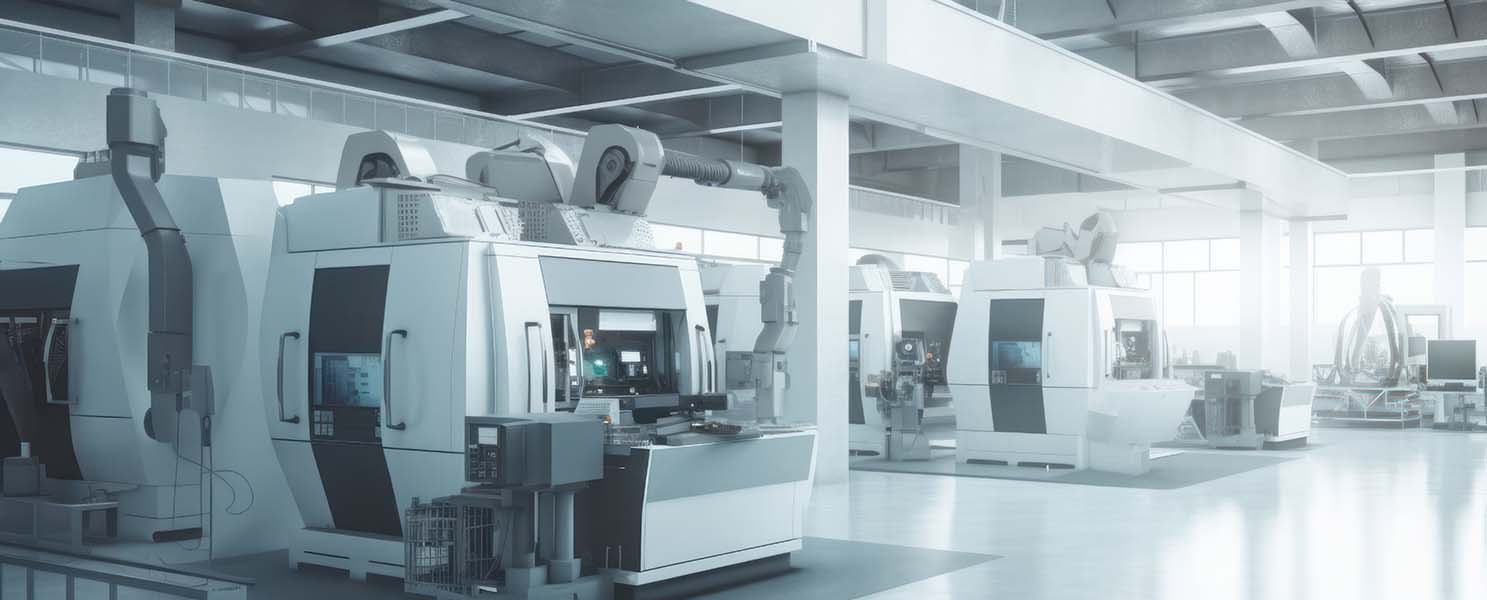
The image of manufacturing needs to change from the perception of the four D’s (dirty, dark, dangerous and declining) to the four S’s (sustainable, smart, safe and searching).
Freund concurred that automation creates openings for career advancement.
“Putting robots on the machine and so on, somebody needs to do that,” he said, “so the complexity itself enables a lot of opportunities.”
The need for workers remains urgent.
“The No. 1 issue of manufacturers, among the many challenges ahead of them, is they can’t find skilled workers,” Molnar said. “That’s what economists call a market failure — where government can help.”
That situation occurs when a manufacturer cannot expand or create a business if it cannot find the needed workers.
“It stops it in its tracks,” Molnar said. “It takes a long time to develop the right skilled workforce, and so this is where the role of government comes in to help facilitate working with the private sector to address the ongoing shortage of workforce. This is not only a clear and present issue today — it’s a growing one.”
The manufacturing skills gap in the United States could result in 2.1 million unfilled jobs by 2030, according to a study by the professional services network and consultancy Deloitte and The Manufacturing Institute. The cost of not filling those jobs could reach $1 trillion in 2030 alone.
“We built the largest middle class in the world because of U.S. manufacturing,” Molnar said. “We need to get back in that game of strengthening the middle class. The best way to do this is to upskill and to connect interested workers to growing and new manufacturing organizations.”
The result of those efforts is bearing fruit.
“I am very optimistic about the future of manufacturing,” Molnar said. “If you look at the uptick in new factories being launched and manufacturing employment, and this is not just a re-shoring of things over there coming back. This is creating new products, whole new industries.”
On-the-Job Training
Both short- and long-term internship programs can help manufacturers attract some of the people they need to hire, said Olivier Thenoz, principal product manager for production software at Hexagon Manufacturing Intelligence, who is based in Camarillo, California. The company collaborates with engineering schools to help students learn about manufacturing and add workers to its teams through internships.
“We’re giving them some interesting projects so that they will come back and be present at the end of their internship,” he said. “Quite often, we end up keeping those people.”
Molnar concurred that internships are a “huge tactic” for connecting with people who want to try something related to technology and advanced manufacturing and see whether they like it.
“When I was in industry,” he said, “we would bring on 300-plus interns every summer to learn and gain experience. It really does help.”
Apprenticeships also assist. For advanced manufacturers, which use technology and innovation to change the way that parts and products are made, Molnar said the primary issue is a shortage of skilled technicians. Although the tech is advanced, people don’t need a four-year college degree to become involved with that type of manufacturing.
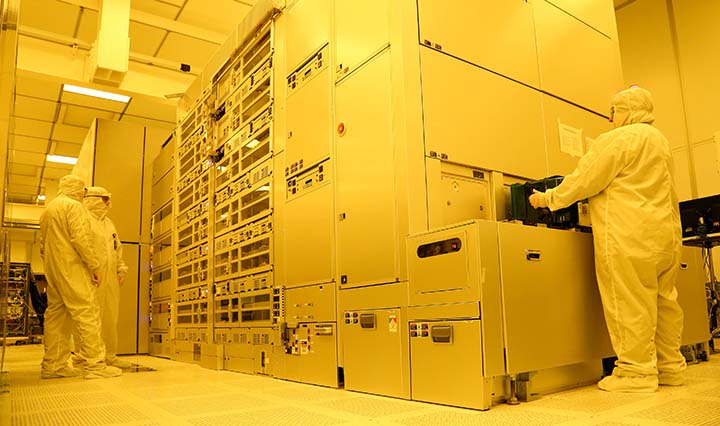
Clean room technicians working at the Albany NanoTech Complex chip fabrication facility in New York are an example of advanced manufacturing. Photo courtesy of SUNY Polytechnic Institute
“There is a misperception that advanced manufacturers are only hiring degreed engineers and Ph.D.s,” he said. “In actuality, the greatest needs are skilled trades and operators with certifications. Community colleges, tailored programs and apprenticeships are really effective ways to gain these
credentials.”
Molnar said graduates with degrees that were earned over multiple years of study often are saddled with enormous debt. In contrast, an apprenticeship program generally involves a participant working at a manufacturing company for pay with benefits.
“In the apprenticeship,” he said, “you’re getting paid to learn.”
Whether through an internship, an apprenticeship or some type of mentor-led training program, a manufacturer can teach people what they need to learn if they have a positive attitude, an open mind and a willingness to learn, said Chuck Mathews, general manager for production software at Hexagon Manufacturing Intelligence.
“People with even great experience, if they don’t have a great attitude, then it’s much harder to produce a positive outcome for everybody,” he said. “We select intellect and passion over experience.”
In addition, Mathews said an ideal job candidate takes responsibility.
“It’s a sense of self-responsibility to prove themselves,” he said.
While acknowledging that those individuals can be difficult to find, Mathews said it revolves around fulfilling the need for a purpose and a sense of belonging.
“Basic human needs,” he said, “and I think we can do a good job in manufacturing because it’s not our grandfather’s machine shop.”
Rise of the Machine
As generative artificial intelligence becomes implanted in a vast array of industries, including manufacturing, some people have expressed concern about the advances that a machine can achieve to make its own decisions. Yet the growth of AI seems inevitable.
“Large language models are going to find their way into degrees of what people do,” Mathews said. “The number of applications that we’ll see it embodied in is going to be super-surprising for everybody.”
For example, AI could help plan a machining job, he said, by having an operator ask an AI-enabled machine in a conversational manner which materials and tools to use and how to set up the job.
“The opportunities are endless for what those change models are going to do,” Mathews said.
He predicts that AI will become a reference source similar to an internet search engine but more advanced.
“Tomorrow,” Mathews said, “large language models are going to power even the most novice person to get answers to pretty sophisticated, advanced questions almost instantaneously like search does. We all know what search does today, but it’s search on steroids.”
Nonetheless, he cautioned that the answers might be tremendously helpful but not always correct.
“You need to use some intellect to get the answers,” Mathews said, “as well as to make some judgment call as to whether I trust that answer or whether I need to validate that through other sources.”
Consulting specialists can generate helpful insights, but he said those results are basically opinions.
“Large language models offer knowledge from hundreds of thousands of people who are combined,” Mathews said. “You’ll get a less prejudiced answer.”
Like a lot of technologies, Molnar said AI is disruptive, and if it is applied poorly, it can have unintended consequences.
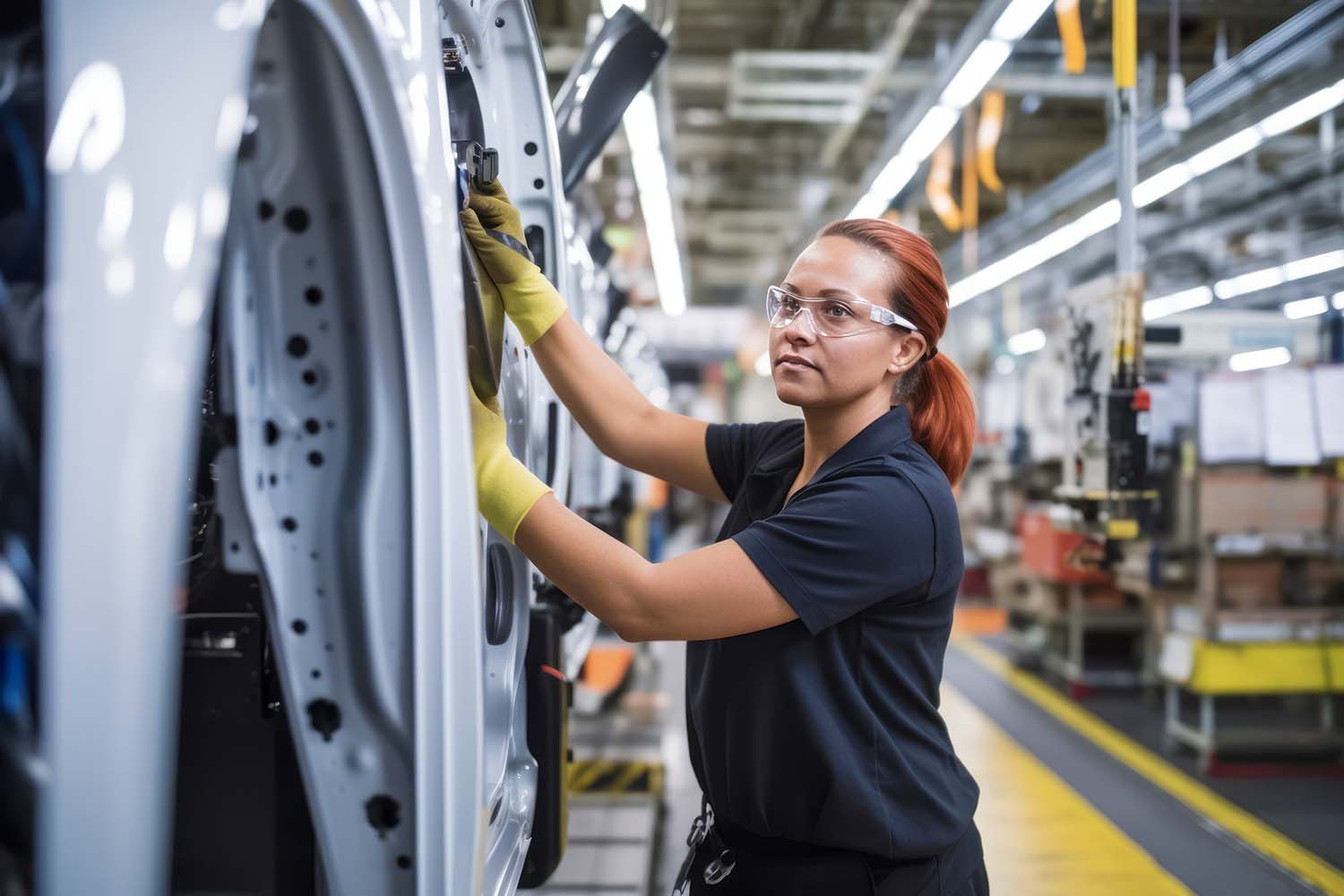
With a more diverse, equitable and inclusive workforce, a manufacturer creates an optimal team-based environment that tends to design better products and boost productivity.
When properly applied, AI tools offer “some terrific opportunities,” he said, such as for training and transferring knowledge.
The knowledge transfer can be from those who are about to retire to new workers or to people who are upskilling after working in a different field — for instance, restaurant workers and returning veterans.
“One recent example of upskilling is from the LIFT institute on lightweight materials in Detroit, part of the Manufacturing USA network,” Molnar said. “LIFT had a single mother who was a waitress come over to learn how to weld, got mentored by Women Who Weld and ended up in a secure job with benefits paying two to three times what she was making. She was thrilled by the opportunity to jump into manufacturing.”
Such a scenario is beneficial to manufacturers as they continue to diversify their workforces. With a more diverse, equitable and inclusive workforce, he said a manufacturer creates an optimal team-based environment that tends to design better products and boost productivity.
“In short,” Molnar said, “this is why the administration is talking about connecting underserved populations, including women, underserved communities, rural communities and neurodiverse populations, to the needs of U.S. manufacturing.”
Of course, diversity by itself does not necessarily generate positive results. Communicating information in a way that is timely, concise and relevant plays a critical role.
“We do that through collaboration and bring everyone opportunities to be on the team and speak and bring their own view about the problem and project,” Thenoz said.
While it often is said that the U.S. is in a post-industrial environment and the service sector provides high-paying jobs, it is not a matter of deciding between manufacturing or service.
“It’s manufacturing and service,” Molnar said. “The reason why the manufacturing sector has the highest economic multiplier effect is because when you create a job in manufacturing you also create many other jobs up and down the supply chain.”
Those other jobs include service jobs, and he said advanced manufacturing has the highest economic multiplier effect of any subsector.
“Advanced manufacturing jobs are diverse,” Molnar said. “They offer exciting, innovative careers. You are not stuck on an assembly line doing some mindless thing. Rather, you are there running things, and the need is so great. (You’re) doing something that really fires you up.”
One advanced area involves the digitalization of manufacturing, which Mathews said is a great place for career advancement. Ultimately, however, it is up to the individual to determine one’s fate.
“If you have the willpower to do something,” he said, “then there’s literally nobody holding you back.”