


Investing in streamlined plant operations boosts profit
Nowhere will you find more gold — i.e., profits — than by streamlining redundant or antiquated plant operations, according to Phillip Canipe, whose job it is to eliminate waste and redundancy at manufacturing plants.
View print ads from this spread
Review the ads on this magazine spread to continue reading. Each ad takes two seconds; a two-page ad counts once.
Advertisers on this magazine spread
Print placements on this magazine spread
Ezburr
Smooth Operator
FRONT AND BACK HOLE DEBURRING IN A SINGLE PASS E-Z Burr saves you time and money! Our long lasting patented tools deburr holes in tough materials in just seconds! Tools are available in all metric and fractional sizes from .040" through 2.0" and custom deburring tools can be produced in 2 to 3 weeks. View our complete list.
Smooth Operator FRONT AND BACK HOLE DEBURRING IN A SINGLE PASS E-Z Burr saves you time and money! Our long lasting patented tools deburr holes in tough materials in just seconds! Tools are available in all metric and fractional sizes from .040" through 2.0" and custom deburring tools can be produced in 2 to 3 weeks. View our complete list of products, sizes, specs and capabilities at ezburr.com. Easy. Fast. Built to Last. www.ezburr.com 844.363.0240 LIVONIA, MI
Visit Ezburr View this placement in the issue recordPrint ads from this magazine
FRONT AND BACK HOLE DEBURRING IN A SINGLE PASS E-Z Burr saves you time and money! Our long lasting patented tools deburr holes in tough materials in just seconds! Tools are available in all metric and fractional sizes from .040" through 2.0" and custom deburring tools can be produced in 2 to 3 weeks. View our complete list.
Smooth Operator FRONT AND BACK HOLE DEBURRING IN A SINGLE PASS E-Z Burr saves you time and money! Our long lasting patented tools deburr holes in tough materials in just seconds! Tools are available in all metric and fractional sizes from .040" through 2.0" and custom deburring tools can be produced in 2 to 3 weeks. View our complete list of products, sizes, specs and capabilities at ezburr.com. Easy. Fast. Built to Last. www.ezburr.com 844.363.0240 LIVONIA, MI
Continue reading
September 2017
 My job is to eliminate waste and redundancy at manufacturing plants. My customers and I aren’t pirates, but everyone loves a treasure hunt. And nowhere will you find more gold — i.e., profits — than by streamlining redundant or antiquated plant operations.
It bothers me to see so much waste and inefficiency in manufacturing, especially considering what took place years ago in the automotive industry, which really had its tail kicked. That sector has recovered, but the question remains: Has it learned anything since?
After 35-plus years in industry, it’s amazing to me that when walking into almost any manufacturing facility—even large aerospace companies—I’ll find 1960s and ’70s technology that’s poorly applied.
Another factor driving plant inefficiency is the decades-long decline in the number of top-notch machinists, who have been replaced with undertrained or undereducated operators. Years ago, shops relied on machinists’ skills to make sound decisions that drove efficiency and increased production.
Today, however, control of the manufacturing process is required at the highest levels of companies. Automation is king, and you must embrace data and let it drive the decision-making process. This is the pathway toward reducing costs and increasing throughput.
Leaning Out Waste
You have probably talked to other people in the manufacturing industry about the waste that exists along the supply chain. The conversation to have, though, is about whether you are exploring all the efficiencies available to further “lean” the supply chain, cost of acquisition, the number of hours required to produce a part and work in progress (WIP).
You must:
- generate a high capital-investment return on infrastructure;
- adopt a continuous-improvement mentality in every process;
- have a high throughput for any given manufacturing hour;
- have room to implement consolidated billing; and
- automate replenishment via radio-frequency identification, a vending solution or a “keep-fill.”
Combined, all these things can eliminate or drive down the cost of acquisition for purchase-order creation and the number of invoices you must pay suppliers. Other factors that drive up costs but are easy to rectify include risk avoidance, lost-time accident prevention and maintenance repair.
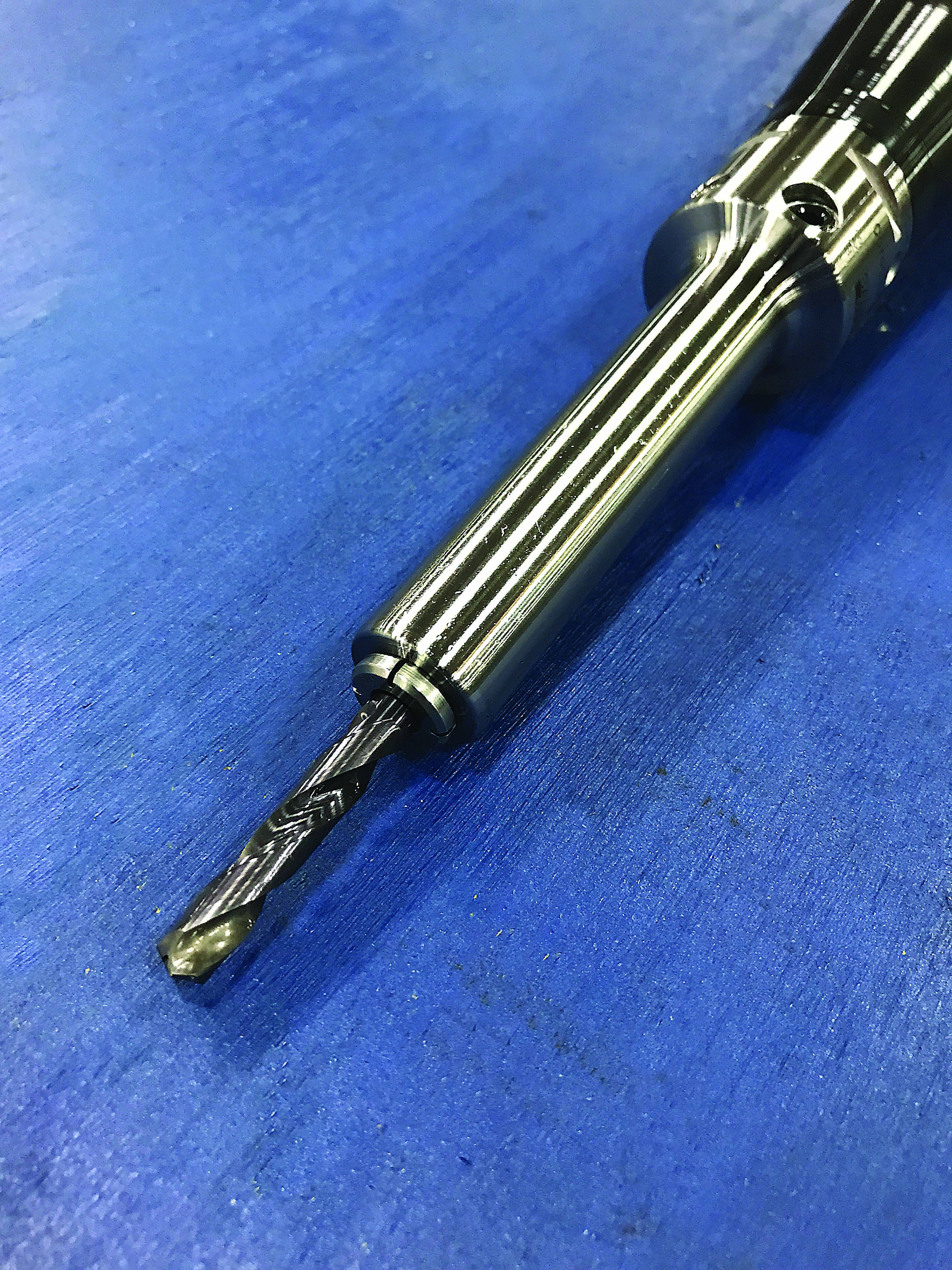
Parts manufacturers can obtain a better total indicator runout with modular tooling. Image courtesy of Stellar Industrial Supply.
The scenario off the shop floor is another matter entirely. What is your process for procuring products used on the floor? What steps are taken in the procurement process of those products? Are you stuck in the old three-bid process when procuring products?
Oftentimes, just auditing the methodology for how you obtain, dispense or replenish products at their point of use can lower the cost of procurement. Unnecessary actions waste time and money. If you bring materials into central storage, for instance, you need folks to inventory, manage and disperse them at the point of use. For replenishment, instead of using a minimum/maximum trigger, you could deploy an automated process that ensures the correct amounts of materials are dispensed, with the least amount of effort, while eliminating lost time and product waste.
It’s paramount to make your manufacturing and supply chain lean because you’re looking for them to be just-in-time, more predictive and more analytical while allowing data to drive decisions proactively vs. reactively.
Watch What You Eat
Before identifying problem areas, ask yourself if you’re really focused on reducing the cost of operations and not the piece-price of the products you buy. The overall cost of this includes labor, machine utilization and throughput per hour, as well as what can be invoiced per hour.
One thing that hugely impacts efficiency is setup time, which is an area ripe for improvement at almost any plant. When production waits while the machine spindle is idle, because the machine needs to be properly set up, for example, or the tools need to be placed in position, all you are doing is eating profits.
The second thing to ask yourself is whether you deploy the most effective machining practices and use the most advanced cutting tools. You’ll probably find errors within the cutting tools themselves, such as how they are held and their specific holding mechanisms.
But you can’t just rush in and make changes. Changing your manufacturing operations must be a collaborative, investigative approach driven by data that informs what is accurate and possible. Proper analysis, investigation, training, testing and coordination are required. You don’t want to place a modern cutter in an old holder and then cut with it like you always did. If you do, it will end up being a more expensive line item. You can’t push a new peg into an old hole.
Realistically, you may have to spend 30 to 50 percent more on a line item to dramatically increase throughput, along with achieving a higher level of machining integrity that is also more defined and controlled. Simple math indicates that if a plant produces 30 percent more product per hour in the same amount of hours, it is worth far more than cutting the price by 30 percent from a simple, expandable tool. Best of all, those savings go directly to the bottom line.
Case History: Implementing Changes
A recent experience Stellar Industrial had working with a machine shop illustrates how a company successfully implemented changes. The third-generation-owned shop was under extreme pressure to reduce its prices and maintain long-term agreements with its top two customers. The dilemma for the three owners, all brothers, was their fear of destroying the family legacy. They were distraught and thought that it would be impossible to find another 10 or 15 percent price reduction. They worried they would have to no-bid or walk away from customers that represented more than 40 percent of their revenue stream.
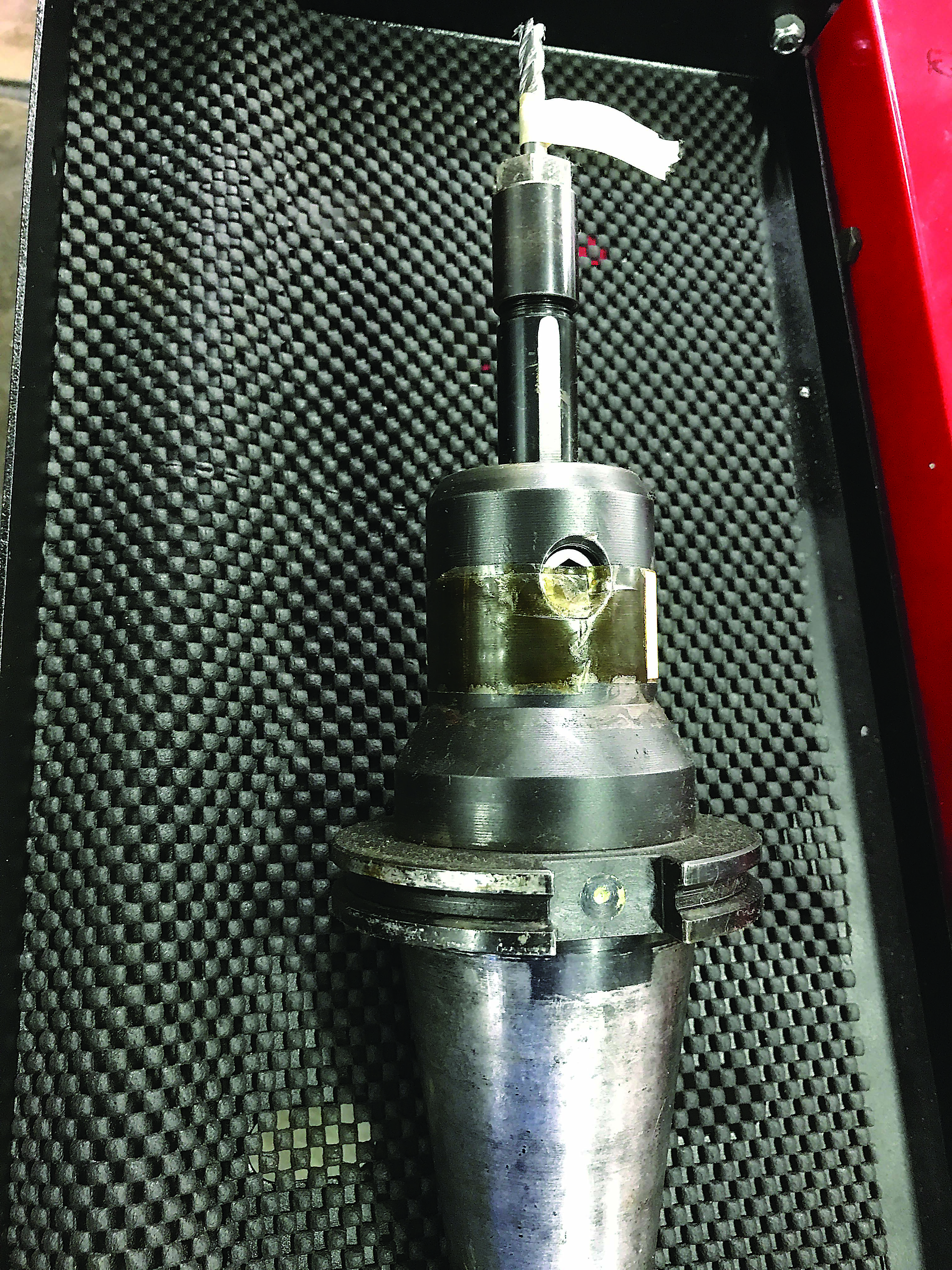
If the taper of a toolholder looks like this, the inside of the machine spindle matches it. Image courtesy of Stellar Industrial Supply.
We looked at some of the higher-volume parts the company manufactured for these clients and saw that there was a way to improve related processes by eliminating or streamlining portions of them. We first analyzed the top 10 items from the long-term agreements—everything from raw material purchases to the number of operations, such as outside processes, WIP at every stage of each operation and the time it took to conduct each operation. We identified bottlenecks, reasons for scrapped parts and manual labor. We also tried to adapt modern technology as best as we could to older machines, and this, in turn, made the company realize that it needed to recapitalize for further cost savings.
To get the shop started, we set up an educational process about applying the proper tools and correctly holding and driving them. That netted the shop a higher-quality, more-controlled process and reduced the number of operations required from three to two. This cut WIP by a third and decreased cycle times by almost half. (It used to take 6 weeks to make a certain part; now it’s only 3 weeks.) Scrap went from 3 percent to almost unmeasurable, with much higher integrity during the process.
Throughput also improved by 41 percent, allowing the shop to accept more parts from other customers. The shop moved to four 10-hour shifts per week, replacing six 8-hour shifts and some second shifts. Profitability on earnings before interest and taxes improved from 1 to nearly 12 percent.
The company then was able to start a recapitalization phase to acquire better machine technology, such as ones with twin spindles and twin turrets, as well as switching to high-pressure coolant. The shop also installed a better CNC milling machine, further reducing cycle times and improving profitability.
The company met its price-reduction targets of 5 percent the first year, 10 percent the second year and 15 percent the third year. Profitability went up tenfold, sales doubled, and the run rate nearly doubled.
Just as importantly, the company culture changed. It now utilizes a continuous-improvement process that includes modern technology and ongoing training.
With so many moving parts and stakeholders, improving plant efficiency across the shop floor and the supply chain is a daunting task. You can read about it, and you can hear about it, but, ultimately, you may find that it is more difficult to apply these changes without guidance. As you begin to think about how you will improve your manufacturing and production capabilities, here’s a quick checklist of common concerns to help get you started:
- Don’t use methods, tools, holders and processes that mirror decades-old technology.
- Reduce reliance on undertrained and undereducated
- operators.
- Control the manufacturing process from the engineering standpoint, then control how tools are held and applied from the top down vs. from the floor up, which is the old way. Education is the key. Collaborate and focus on new and developing technologies.
- Improve processes instead of relying on cheap labor from emerging markets.
- Look at investing in modern machine technology that can create extra capacity and lower the cost of manufacturing.
- Educate employees.
- Stair-step the reengineering of manufacturing and supply chain processes across the board.
Glossary terms in this article
Related



Subscribers can use MFGAxis notes, saves and discussion tools with their innoNET account.