



Light trumps water: General Industry Coverage
Reduce energy costs as part of a sustainability program. Replace a waterjet cutting machine with a fiber optic laser cutting machine.
END USER: The Wagner Cos., (888) 243-6914, www.wagnercompanies.com.
CHALLENGE: Reduce energy costs as part of a sustainability program.
SOLUTION: Replace a waterjet cutting machine with a fiber optic laser cutting machine.
SOLUTION PROVIDER: Bystronic Inc., (800) 247-3332, www.bystronic.com.
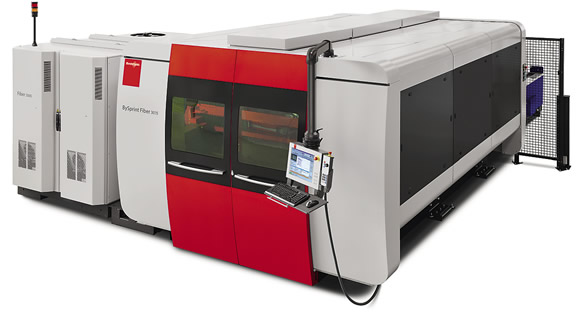
Just because one type of machine tool can produce parts to the required specifications, that doesn’t mean an alternative approach isn’t in a parts manufacturer’s best interest. For example, as part of a sustainability program to improve efficiency, The Wagner Cos. recently replaced its waterjet cutting machine with a BySprint fiber optic laser cutting system from Bystronic Inc., Elgin, Ill.
“We primarily switched for the energy savings,” said Jeff Wissbroecker, manufacturing project manager for the Milwaukee manufacturer. “We project an overall savings in our utility bill of about 15 percent.”
Wagner is a metal fabrication house with Milwaukee roots dating back to 1850. The main product lines include architectural railing components and systems and industrial OEM products such as valve handles and pump flanges. In addition to laser cutting, the shop’s capabilities include bending, stamping and polishing, as well as engineering assistance.
According to Wissbroecker, the fiber optic laser cutter turned out to be four to five times faster than the waterjet machine.
The BySprint is a 4,000w fiber optic laser that Wagner uses to cut flat sheets up to 5 ‘×10 ‘, producing everything from ½ “-dia. disks up to a custom panel from nearly an entire 5 ‘×10 ‘ sheet. The fiber optic laser can cut any metal Wagner needs, including steel, stainless steel, aluminum and brass. Wagner uses it to cut steel sheets up to 5⁄8 ” thick, aluminum up to 3⁄8 “, stainless up to ½ ” and brass up to 5⁄16 “.
“That’s why we had a waterjet machine in the first place,” said Mike Skelton, manager of manufacturing services for Wagner. “At the time we bought it [in 2005], the technology for CO2 lasers was limited and unable to cut all metals. For instance, [CO2 lasers] did not do a good job on aluminum, brass or bronze, but the waterjet did.”
Wissbroecker added that fiber optic lasers were in their infancy in 2005 and were not a viable option for Wagner at that point.
Courtesy of Bystronic
The BySprint fiber optic laser machine has a 5 ‘×12 ‘ bed and cuts steel up to 5/8 ” thick, aluminum up to 3/8 “, stainless up to ½ “, galvanized steel up to 3/16 ” and other nonferrous metals up to 5/16 “.
Wagner does have another laser—a 4,000w, 6-axis CO2 laser capable of cutting ½ “-thick tubing.
“Based on fiber optic technology advancements, and what we know about having a CO2 laser, we were well aware we wanted a fiber laser,” Wissbroecker said. “We based the decision to go with a fiber laser over the waterjet on electrical usage along with reduced maintenance and operating costs. The fiber optic laser operating costs, including maintenance, are one tenth those of the waterjet machine.”
The fiber optic laser also helped Wagner with its sustainability program by reducing material waste. “We are able to nest parts better than before and have been able to move some of our blanking operations into the fiber optic laser cutter because of better material utilization,” Skelton said.
Courtesy of Wagner
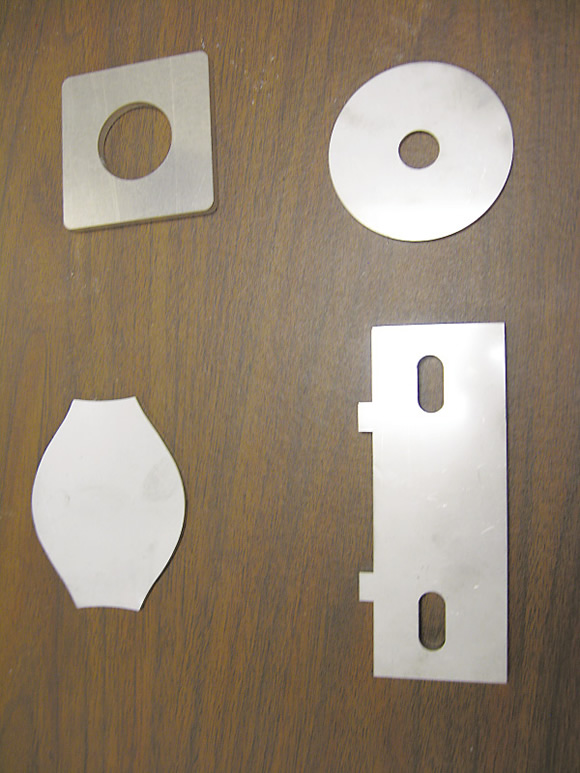
Examples of flanges, made from ¼ ” stainless steel, 11-gauge stainless steel and 3/8 ” aluminum, that Wagner produces with the BySprint fiber optic laser cutter.
“And we don’t have the waste disposal of the spent garnet that we had with the waterjet machine,” he added. “We were sending 65 tons of spent garnet to the landfill every year.”
The BySprint fiber optic laser cutting system includes the automatic ByTrans extended loading system. According to Bystronic, a complete loading and unloading cycle takes 60 seconds, and this is true for Wagner. “The loading system has two pallets, each capable of holding 3 tons of sheets and loading and unloading them in the fiber optic laser cutter so it can run continuously through multiple sheets,” Wissbroecker said. “This gives us hours of unattended operation, depending on how intricate the parts are and how many sheets are used.”
This represents another improvement over the waterjet. “With the waterjet, there was always significant downtime between sheets,” Wissbroecker said.
Glossary terms in this article
Related


Subscribers can use MFGAxis notes, saves and discussion tools with their innoNET account.


