

Look Ahead: 3D printing picks up the pace
Desktop Metal Inc., a 2-year-old startup, developed a different method of metal 3D printing that it calls an "office-friendly" system for rapid prototyping. The Desktop Metal (DM) Studio system is based on a new approach—Single Pass Jetting (SPJ), which was created by the inventors of the binder-jetting and the single-pass inkjet processes.
One reason additive manufacturing of metal parts isn’t more widespread is that, for many manufacturers, it’s too slow and expensive compared to subtractive methods. Laser sintering, the most-popular AM method, builds a part layer by layer at the pinpoint of a laser beam. It’s a slow process that uses metal powders specially formulated to have a consistent grain size. Those powders are not cheap.
Desktop Metal Inc., a 2-year-old startup, developed a different method of metal 3D printing that it calls an “office-friendly” system for rapid prototyping. The Desktop Metal (DM) Studio system is based on a new approach—Single Pass Jetting (SPJ), which was created by the inventors of the binder-jetting and the single-pass inkjet processes. The company also offers DM Production, a printer for the manufacturing market it claims is 100 times faster than current laser- sintering machines.
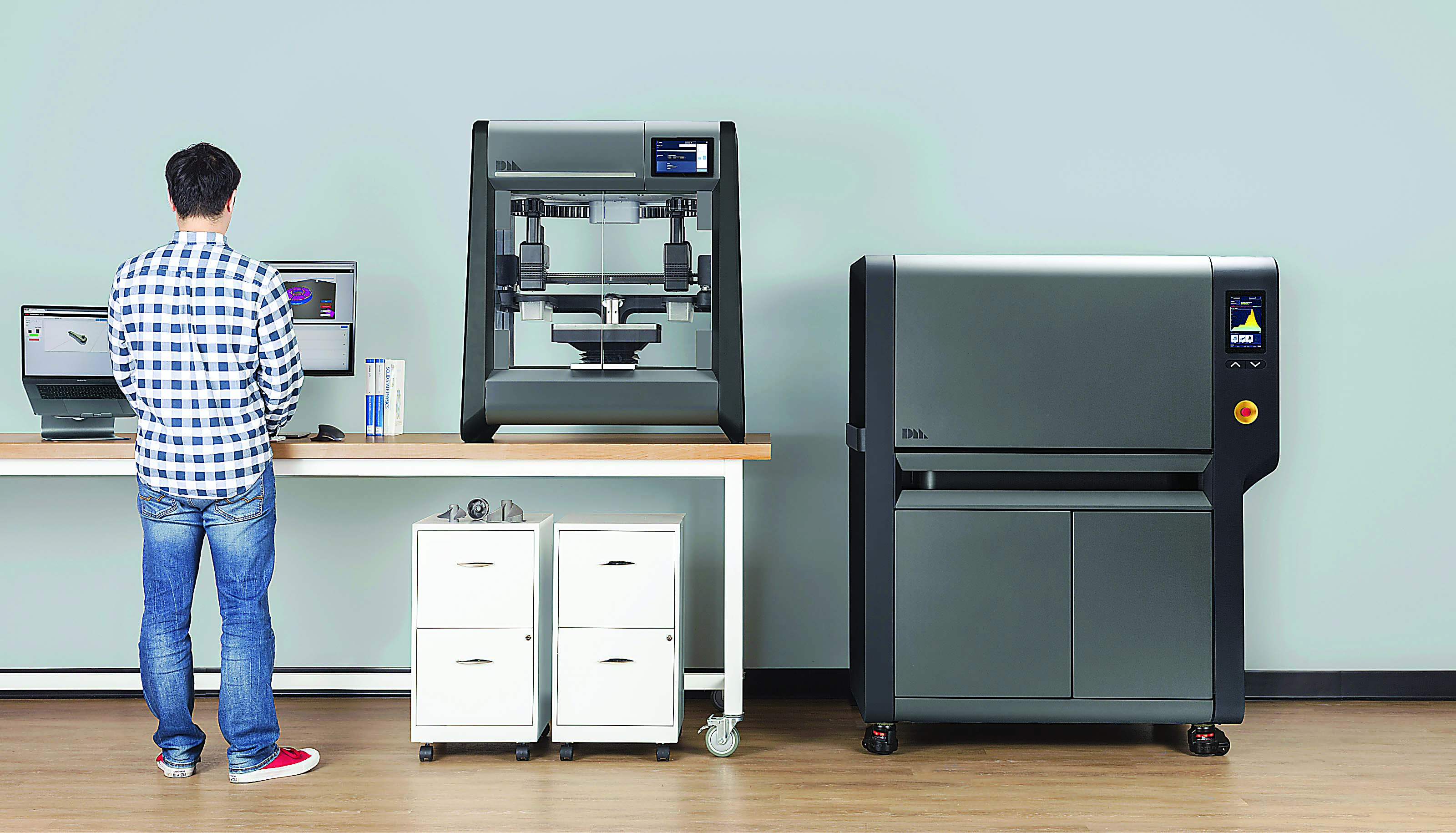
The DM Studio System allows rapid prototyping with the same alloys used in production. Image courtesy of Desktop Metal.
In this process, the component is first printed completely and then sintered in a microwave-enhanced furnace. The system relies on Bound Metal Deposition, a proprietary process from DM that’s similar to the widely used fused-deposition modeling additive process for plastics.
Review the print ads from this magazine to continue
This quick advertiser review unlocks the rest of the article and keeps the full-screen reader focused on the ads instead of the page chrome.
Advertisers included in this article experience
Print placements connected to this article
Ceratizitpromos
RELIABILITY
MATTERS Depend on carbide solutions from CERATIZIT: For an extensive range of standard sizes and cut-to-length rods As a dependable source of superior carbide rods and preforms For quick quote turnaround For high percentage of on-time delivery For innovative custom solutions with ROI you can trust To view the catalogs and video.
RELIABILITY MATTERS Depend on carbide solutions from CERATIZIT: For an extensive range of standard sizes and cut-to-length rods As a dependable source of superior carbide rods and preforms For quick quote turnaround For high percentage of on-time delivery For innovative custom solutions with ROI you can trust To view the catalogs and video,
Visit Ceratizitpromos View this placement in the issue recordPrint ads from this magazine
MATTERS Depend on carbide solutions from CERATIZIT: For an extensive range of standard sizes and cut-to-length rods As a dependable source of superior carbide rods and preforms For quick quote turnaround For high percentage of on-time delivery For innovative custom solutions with ROI you can trust To view the catalogs and video.
RELIABILITY MATTERS Depend on carbide solutions from CERATIZIT: For an extensive range of standard sizes and cut-to-length rods As a dependable source of superior carbide rods and preforms For quick quote turnaround For high percentage of on-time delivery For innovative custom solutions with ROI you can trust To view the catalogs and video,
Continue reading
June 2017
SPJ is bidirectional. It combines all the necessary steps for printing so that whenever there is movement, there is printing. Two full-width print bars that contain more than 32,000 jets work in conjunction with powder spreaders. In a single quick pass across the build area, they spread powder and print, jetting millions of droplets per second. The production system prints at up to 8,200 cm3/hr. (500 in.3/hr.).
The bulk-sintering process achieves densities greater than 98 percent. Parts perform similar to wrought alloys and it’s possible to fine-tune part density, according to the company.
Cost savings come from the system’s reliance on using existing materials for metal injection molding rather than developing new, specially formulated metal powders. This approach opens up an ecosystem of low-cost, high-quality alloys—from steels and aluminum to superalloys and titanium—with a mature supply chain and well-studied process controls. The company claims DM Production is 20 times less expensive to use than existing technology.
For more information about Desktop Metal Inc., Burlington, Mass., visit www.desktopmetal.com or call (978) 224-1244.
Glossary terms in this article
Related



Subscribers can use MFGAxis notes, saves and discussion tools with their innoNET account.


