

Look Ahead: an oscillating laser head for joining, cutting
The welDYNA laser scan head from SCANLAB America Inc. uses beam oscillation to improve both joining and cutting applications. Designed for multiple-kilowatt lasers of high beam quality, the scan head features a digital servocontrol and an integrated sensor system for real-time monitoring.
The welDYNA laser scan head from SCANLAB America Inc. uses beam oscillation to improve both joining and cutting applications.
Designed for multiple-kilowatt lasers of high beam quality, the scan head features a digital servocontrol and an integrated sensor system for real-time monitoring.
The company reports that the device is a solution to the challenge of substance-to-substance joining of unlike materials, such as aluminum and copper. Mechanical fasteners can negatively impact the electrical conductivity, heat transfer and mechanical strength of the joined materials. Meanwhile, effectively laser-welding together materials with different properties has been elusive, said Dale Sabo, vice president of sales and marketing at SCANLAB America.
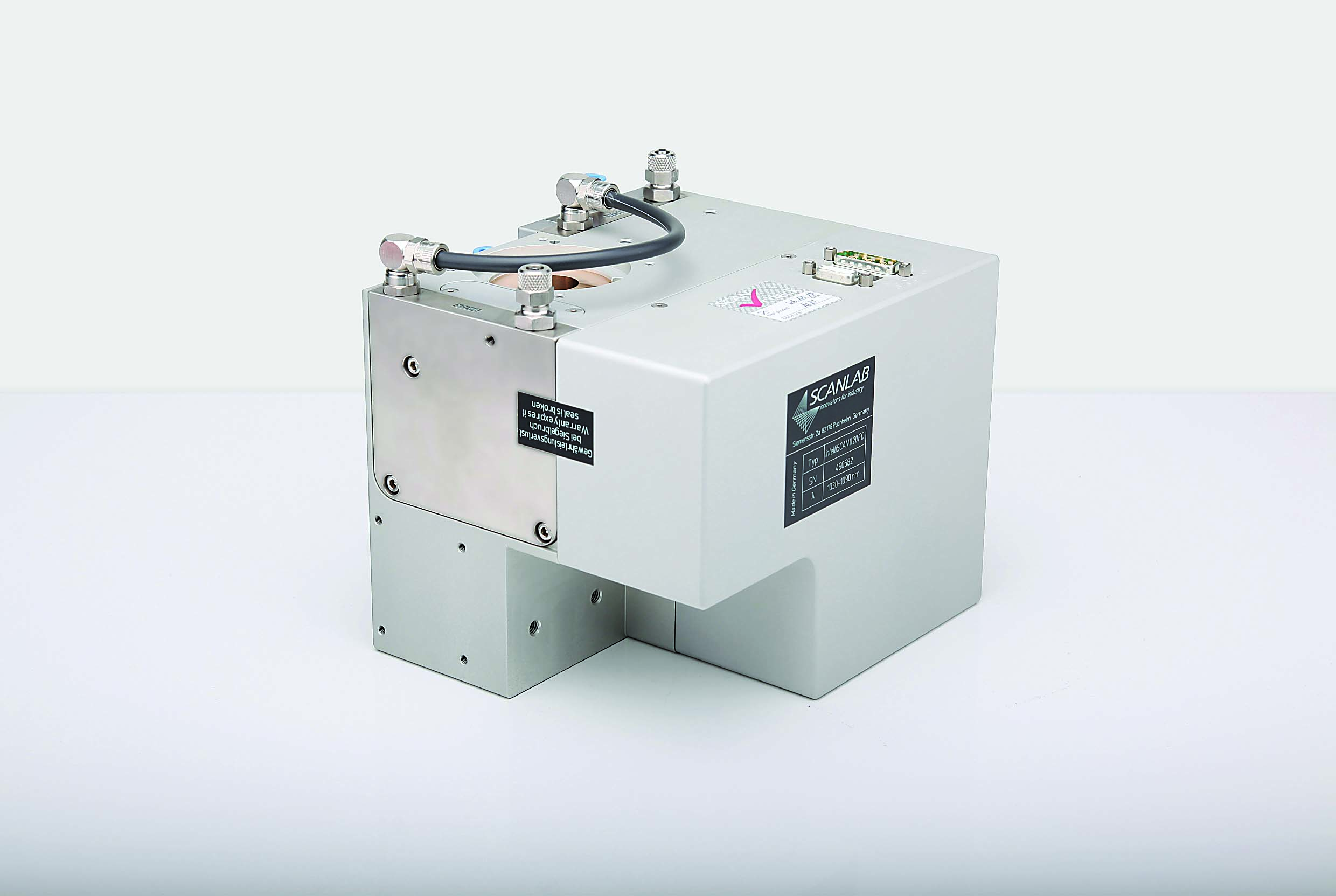
The welDYNA laser scan head uses beam oscillation to improve welding and cutting. Image courtesy of SCANLAB America.
With traditional laser welding, the beam moves in a straight line along the seam where the two pieces to be welded meet. According to Sabo, as the beam moves, heat builds up in front of it in waves that cause irregular spikes in temperature. These spikes are difficult to control or compensate for—particularly when trying to join materials that respond differently to these spikes.
Review the print ads from this magazine to continue
This quick advertiser review unlocks the rest of the article and keeps the full-screen reader focused on the ads instead of the page chrome.
Advertisers included in this article experience
Print placements connected to this article
Toolflo
API Threading Specialist!
API Inserts Chasers Many API threadforms in stock! API Threading chasers! • Buttress • WW • NPT • Rounds... Superior coatings! Scarfing Tools For internal and external scarfing operations Holders & Bars We have standard holders and bars in stock! Special forms and chip breakers We can make any special you need! for your application!
API Threading Specialist! API Inserts Chasers Many API threadforms in stock! API Threading chasers! • Buttress • WW • NPT • Rounds... Superior coatings! Scarfing Tools For internal and external scarfing operations Holders & Bars
Visit Toolflo View this placement in the issue recordPrint ads from this magazine
API Inserts Chasers Many API threadforms in stock! API Threading chasers! • Buttress • WW • NPT • Rounds... Superior coatings! Scarfing Tools For internal and external scarfing operations Holders & Bars We have standard holders and bars in stock! Special forms and chip breakers We can make any special you need! for your application!
API Threading Specialist! API Inserts Chasers Many API threadforms in stock! API Threading chasers! • Buttress • WW • NPT • Rounds... Superior coatings! Scarfing Tools For internal and external scarfing operations Holders & Bars
Continue reading
July 2017
“Heat waves build up in front of the beam like water in front of the bow of a fast-moving boat,” Sabo said.
The welDYNA scan head smooths those rough waters through beam oscillation. As the laser beam moves up the line where the pieces to be joined meet, it also moves in high-frequency “wobble patterns,” such as from side to side or in a figure-eight pattern. This oscillation prevents the “bow-wave” of heat buildup. The overlapping laser beam motions relative to the seam geometry promote tear-resistant welds of diverse materials, even for unlike materials with poor weldability.
The same technology also improves laser cutting, according to Sabo. Beam oscillation allows faster cutting speeds and improves cutting quality, he said. “The ‘wobble motion’ frequencies of several kilohertz and the availability of freely definable scan patterns” reportedly deliver process parameters superior to those of other laser methods.
For more information about SCANLAB America Inc., St. Charles, Ill., visit www.scanlab-america.com or call (630) 797-2044.
Glossary terms in this article
Related




Subscribers can use MFGAxis notes, saves and discussion tools with their innoNET account.


