

Low cost vs. real cost
What is the real cost of a cutting tool when it is applied? Carefully controlled tests provide the answer.
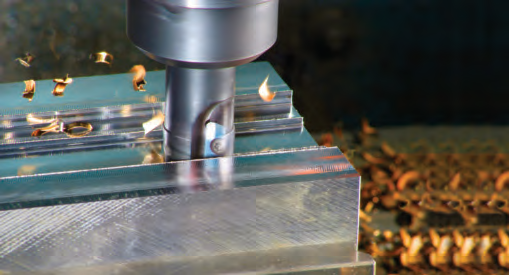
Courtesy of Dapra What is the real cost of a cutting tool when it is applied? Carefully controlled tests provide the answer.
One of the perennial issues in metalworking is the cost of cutting tools. Many tool manufacturers promote low-cost tools or “free” cutters with the purchase of inserts with the idea that their use can save shops money. However, what shops should be asking is: “What is this free cutter actually costing me?” or, “Is this cheap insert really saving me money?”
Initial savings gained by using a free cutter body or a low-cost insert can frequently affect performance by sacrificing tool life or cycle time. Upgrading to a high-performance tool will likely cost more per edge initially—sometimes significantly more. How do you determine if a specific cutting tool is a good value for the shop?
Determining the answer is not easy, unless you have the support and knowledge of a qualified cutting tool manufacturer and representative and an accurate in-house calculator designed to weigh the pros and cons of each cutting tool option. In either case, the inputs must be carefully measured, with the ultimate goal of using the results to lower cost per part.
Most cutting tool cost calculators are spreadsheets that measure all pertinent variables in a cutting application. For example, Dapra uses a spreadsheet that includes the metrics outlined in Figure 1. These metrics are often interrelated. The goal of a test report is to measure the variables involved to make an accurate determination of any cost savings.
Figure 1. Variables included in Dapra’s cutting tool cost calculator.
Workpiece material and hardness
Shop labor rate
Operation (application type)
Machining time cost
Coolant use
Cost per insert
Machine type, hp
Cost of edges in the cut per load
Spindle taper and maximum rpm
Number of indexes needed to complete
Cutter styles being compared
Time required to index all inserts
Insert styles
Tool change time cost
Gage lengths
Tooling cost total
Coating types
Job cost (tooling + indexing + machine time)
Number of flutes (actual and effective)
Dollar savings on the job
Cutter diameters
Productivity improvement
Review the print ads from this magazine to continue
This quick advertiser review unlocks the rest of the article and keeps the full-screen reader focused on the ads instead of the page chrome.
Advertisers included in this article experience
Print placements connected to this article
Walter Tools
Passion. Potential. Perfection.
TOUGHER. HARDER. SHARPER. Milling steel or cast iron? Increase output up to 75%! • Extremely stable cutting edge • Extremely smooth rake face Our passion. Your potential. • Easy wear detection thanks to Tiger·tec® Silver They drive us to create the perfect tool indicator coating for every application. The machining age is over. It’s time to Tiger
Passion. Potential. Perfection. TOUGHER. HARDER. SHARPER. Milling steel or cast iron? Increase output up to 75%! • Extremely stable cutting edge • Extremely smooth rake face Our passion. Your potential. • Easy wear detection thanks to Tiger·tec® Silver They drive us to create the perfect tool indicator coating
Visit Walter Tools View this placement in the issue recordPrint ads from this magazine
TOUGHER. HARDER. SHARPER. Milling steel or cast iron? Increase output up to 75%! • Extremely stable cutting edge • Extremely smooth rake face Our passion. Your potential. • Easy wear detection thanks to Tiger·tec® Silver They drive us to create the perfect tool indicator coating for every application. The machining age is over. It’s time to Tiger
Passion. Potential. Perfection. TOUGHER. HARDER. SHARPER. Milling steel or cast iron? Increase output up to 75%! • Extremely stable cutting edge • Extremely smooth rake face Our passion. Your potential. • Easy wear detection thanks to Tiger·tec® Silver They drive us to create the perfect tool indicator coating
Continue reading
September 2010
Cutting speeds
Dollar savings per part
Feed rates
DOC
WOC
Total metal-removal rate
Time in cut per pass
Time in cut total
Required number of passes per part
Total number of parts to run
Estimated tool life (minutes or number of parts)
Edge condition at failure point
Number of usable edges per insert
Turbine Blade Cutting
Let’s examine two case histories to see how this works. Test No. 1 (Figure 2) compared two different 90° indexable cutting tools used to machine a turbine blade. The shop was using a 1 “-dia., 2-flute indexable carbide endmill to rough turbine blade airfoil surfaces. Running at 43 ipm, the tool took the required 32 passes to complete the part in 12 minutes. Each insert cost $6. The shop produced 2,000 equivalent parts annually. The 2,000 parts required 2,000 indexes because the edges showed wear after each part, so total tool cost was $12,000 ($6 per insert × 2 inserts per tool ÷ 2 usable edges × 2,000 parts).
The shop needed to stop the machine to index, so the 2 minutes required to index the tool cost the shop $6,000 annually at a $90 hourly labor rate. With a 12-minute cycle time per part, 2,000 parts would take a total of about 400 hours annually to machine. At the $90 hourly labor rate, machining time cost $35,900 annually. Total cost for this operation (tools plus indexing time plus machining time) was $53,900 annually.
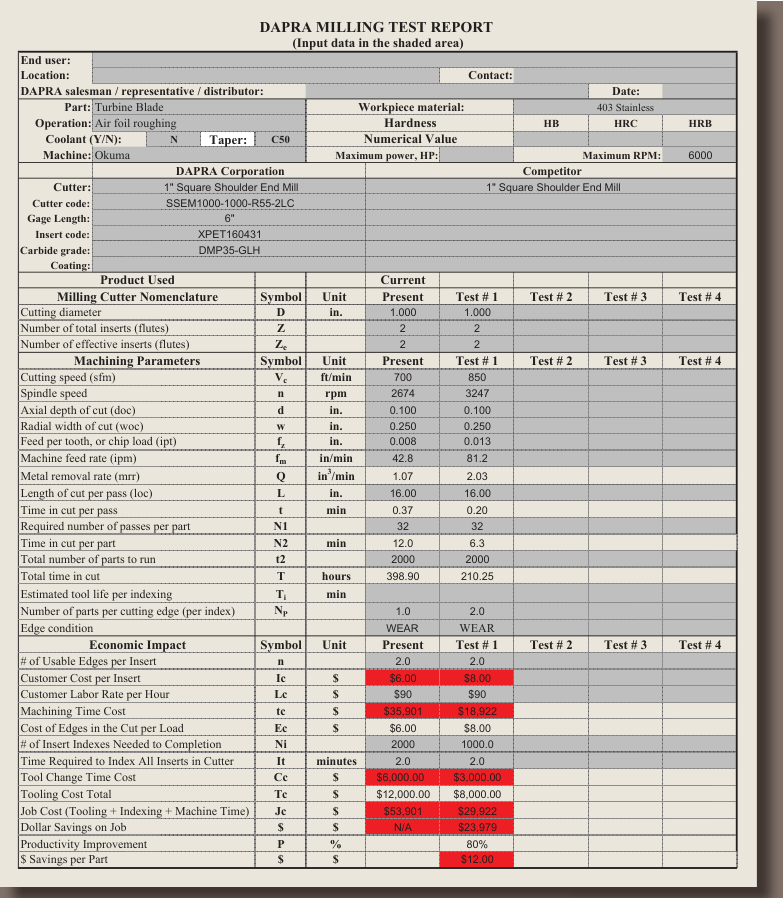
Figure 2. 1 ” square shoulder endmill test report.
The shop tested an $8 insert. Many shops would reject an insert that cost 33 percent more without even testing it, but closer examination reveals that the initial cost difference actually turns positive for the shop. The new insert was capable of both higher speeds and increased feeds, nearly doubling the metal-removal rate of the cheaper insert. Consequently, cycle time per part dropped from 12 to a little more than 6 minutes, reducing the annual machining time cost for 2,000 parts to $18,900. The number of parts produced per edge doubled, from one to two.
The new tooling cost was $8,000, because only half as many indexes were required ($8 per insert × 2 inserts per tool ÷ 2 usable edges × 1,000 indexes). As a result indexing cost was reduced by 50 percent, to $3,000 annually. Total machining cost with the new tool in test No. 1 was: $8,000 (tools) + $3,000 (indexing) + $18,900 (machining time) = $29,900. This represented an annual savings of $24,000 and a per-part savings of just under $12 compared to the old tool.
The Cost of ‘Free’
In test No. 2, a shop was purchasing inserts at a high price, but using “free” cutter bodies. The shop was reluctant to consider any cutting tool supplier that would not offer the same deal, but what were the free bodies really costing? In the test report (Figure 3), estimated annual cost for pocketing mold bases was about $23,500, based on insert cost of $12, machining time per part of 2 hours at a $90 hourly labor rate and an indexing frequency of 0.5 parts. The shop agreed to test a new tool.
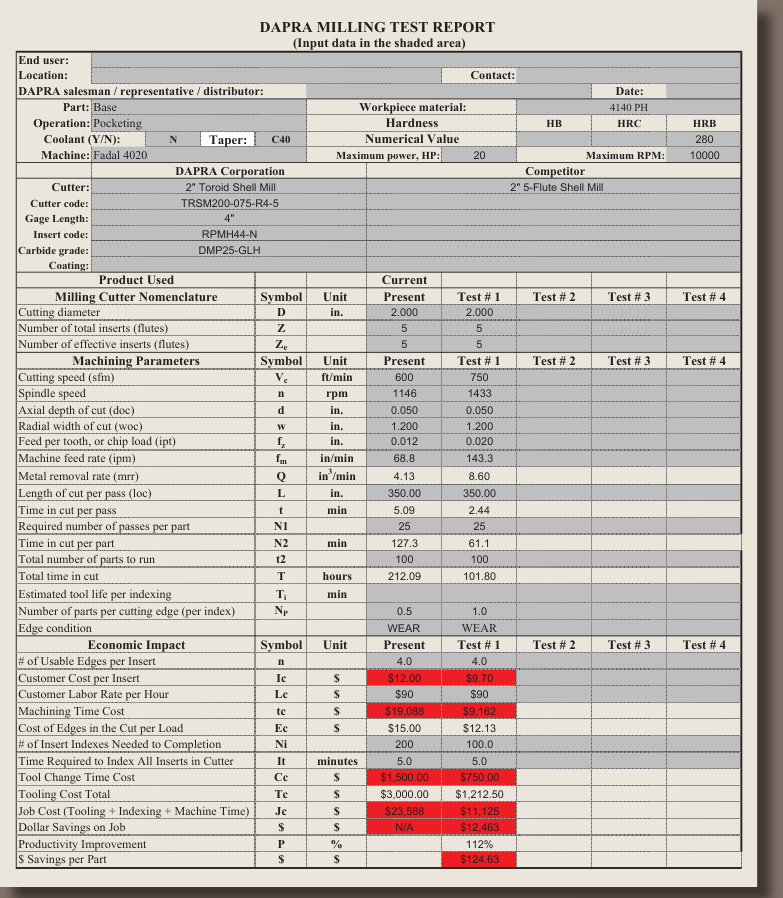
Figure 3. 2 “, 5-flute shell mill test report.
The mrr of the test tool was double that of the first cutter, reducing cycle time by more than 50 percent and finishing the part with one cutting edge. The test insert cost $9.70, producing an immediate savings. Estimated total annual cost using the tested tool is $11,125, an annual savings of more than $12,000.
But what about the free cutter body? If the shop consumes one cutter per month in this application, at a typical industry price of about $300 for a 2 ” shell mill, annual cutter cost is $3,600. That means the annual cost savings is still more than $7,500.
While this type of testing and analysis takes time, the cost savings are well worth the effort. As mentioned earlier, many factors should be considered when making a cutting tool purchasing decision, and these examples touch on only a few. The bottom line is, there are much more important factors than just initial tool cost involved in the decision to use or not use a particular tool. CTE
About the Author: Michael Bitner is vice president of product development for Dapra Corp., Bloomfield, Conn. He has been with Dapra for 12 years, including 3 years in applications and the last 9 years as product manager. Contact him at (860) 616-1172, or by e-mail at mbitner@dapra.com. For more information on Dapra products, call (800) 243-3344, visit www.dapra.com, or enter #370 the I.S. Form on page 3.
Glossary terms in this article
Related




Subscribers can use MFGAxis notes, saves and discussion tools with their innoNET account.


