Maximize thread quality when tapping aluminum alloys.
Maximize thread quality when tapping aluminum alloys.
Aluminum alloys are popular in many industries because they offer a high strength-to-weight ratio, excellent thermal conductivity and corrosion resistance.
Aluminum alloys are popular in numerous industries — from aerospace to automotive — because they offer a high strength-to-weight ratio, excellent thermal conductivity and corrosion resistance. Tapping threads in aluminum components, however, presents unique challenges. Because aluminum is relatively soft and "gummy," it can lead to issues such as poor chip evacuation, built-up edge (BUE) and inconsistent thread finish. Understanding how to overcome these hurdles is key to producing reliable, high-quality threads.
Choose the Right Tap Geometry
One of the most critical decisions for tapping aluminum is the selection of a suitable tap geometry. Generally, spiral-fluted or straight-fluted taps can be used; the choice depends on the application and aluminum grade. Spiral-fluted taps are ideal for blind holes in softer materials because they facilitate better chip evacuation. They pull chips back out of the hole, helping avoid chip packing that leads to poor thread finishes or breakage.
Additionally, the tap's rake angle and relief features should be designed for softer materials. A high rake angle can help reduce cutting forces and minimize burr formation. For form taps (also known as roll taps), the geometry is optimized to plastically deform the material instead of cutting it, eliminating the production of chips altogether. Form tapping in aluminum can deliver excellent thread strength, provided the specific aluminum grade is compatible with this method.
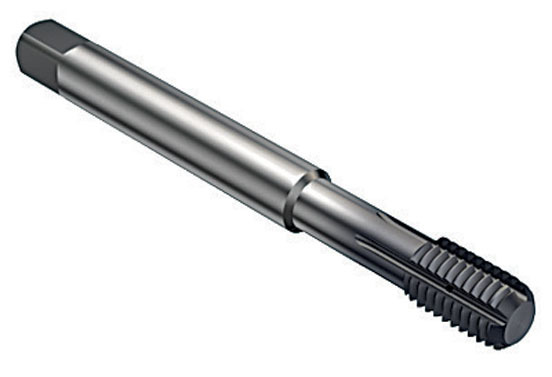
CoroTap® 400 is a high-speed, chip-free forming tap suitable for both through- and blind-holes in steel, stainless steel, aluminum, and HRSAs. Sandvik Coromat
Optimize Cutting Parameters
Aluminum's gummy nature can cause material to adhere to the cutting edge, creating BUE. To mitigate this, running at higher surface speeds — without exceeding recommended limits — may help shear the material cleanly and reduce BUE formation. However, striking the right balance is essential. Excessive speed can overheat the tap, reduce tool life and degrade thread quality.
Equally important is the feed rate. Since tapping is a synchronized process, the feed must match the thread pitch. For form tapping, slightly different speeds and feed profiles might be employed, as the process depends on material flow rather than chip removal. Always refer to tooling guidelines and perform test cuts to fine-tune parameters for each aluminum alloy.
Proper Lubrication
Effective lubrication is paramount for tapping aluminum, as it reduces friction, prevents chip welding and flushes chips from the cutting zone. Water-soluble coolants, with adequate lubrication properties, typically perform well when tapping. In some high-speed production environments, minimum-quantity lubrication (MQL) systems provide a fine mist of oil that can also help lower friction and improve chip evacuation.
To reduce the likelihood of BUE, choose a coolant or lubricant specifically formulated for aluminum. Additives like sulfur or chlorine can enhance lubricity, but always confirm compatibility with both the workpiece material and any applicable environmental or safety regulations.
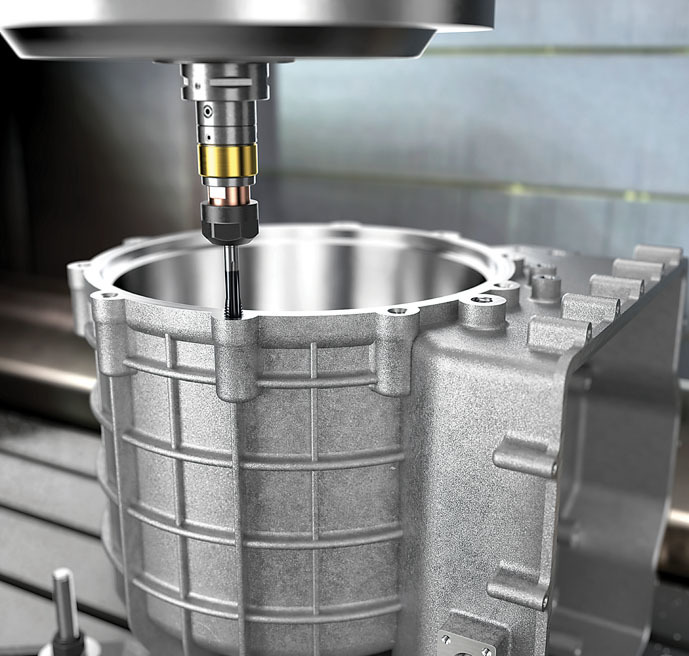
CoroTap™ 100's optimized grades ensure low friction at high speeds for precision threads, resulting in excellent thread quality. Sandvik Coromat
Ensure Rigid Setups
Maintaining rigid setups is essential for consistent tapping performance. Excessive vibration or axial runout can result in misaligned holes, broken taps and inconsistent thread geometry. Use high-quality toolholders designed for tapping — ideally with minimal runout and some float or compensation to accommodate any minor misalignment between the spindle and hole center.
Equally important is securing the workpiece to eliminate movement during tapping. For CNC machines, ensure the axis alignment is accurate and that tapping cycles (rigid or synchronous tapping) are well-suited for aluminum.
Consider Thread Milling
In applications where burrs, chips or close-tolerance threads pose challenges, thread milling can serve as an alternative to tapping. Thread milling uses a helical cutting motion and can reduce the risk of broken taps and minimize downtime. While tapping is still faster for many high-volume aluminum applications, thread milling offers more flexibility and can produce threads of various diameters with one tool. Depending on the complexity, material thickness and machine capabilities, weigh whether tapping or thread milling is the optimal solution.
By paying close attention to tap geometry, optimizing speeds and feeds, using proper lubrication, and ensuring rigid setups, manufacturers can significantly improve the consistency and quality of tapped holes in aluminum. Thorough planning and testing are essential, as each aluminum alloy can behave differently. With the right approach, tapping remains a cost-effective, high-productivity method for creating threads in these widely used and versatile materials.