



Neat ripple effect: Heat Control in Medical Machining
Lindquist Machine Corp. is a custom-machinery builder that relies on its CAD/CAM system to keep its workflow flexible, break bottlenecks and reduce lead times. The Green Bay, Wis., shop has one programmer to do complicated programming, but most of the workers on the shop floor can write, or at least modify, programs.
Lindquist Machine Corp. is a custom-machinery builder that relies on its CAD/CAM system to keep its workflow flexible, break bottlenecks and reduce lead times. The Green Bay, Wis., shop has one programmer to do complicated programming, but most of the workers on the shop floor can write, or at least modify, programs.
The shop’s machining team leader, Adam Robarge, said most programs were previously written offline by dedicated programmers, or machinists programmed conversationally at their machines. Today, everyone has a computer at their work cell, which typically includes two machines, where they can access Mastercam Mill and Lathe CAD/CAM software from CNC Software Inc., Tolland, Conn. They can use the software to write new machining programs or modify existing ones downloaded from the network. This has enabled Lindquist to shorten machining cycles and build more machines.
“The ripple effect is kind of neat,” Robarge said.

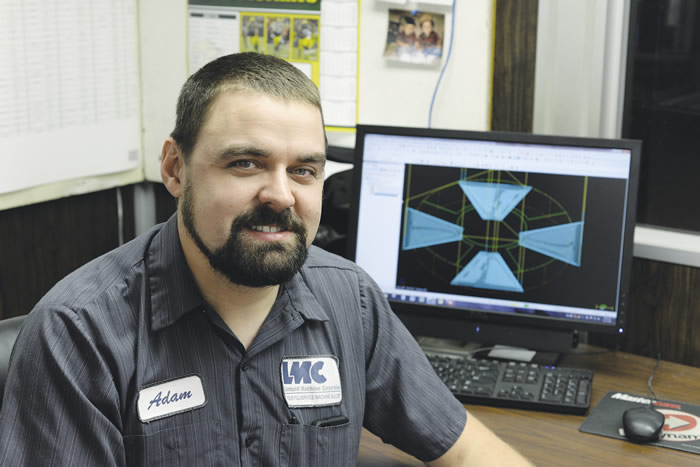
Adam Robarge, the machining team leader at Lindquist Machine, encourages machinists to step out of their comfort zone to attempt something different when writing machine programs. Images courtesy CNC Software.
In the machine shop, 18 machinists on two shifts operate 26 CNC machines. More than half have training in Mastercam.
Robarge said Lindquist designs its work cells to be flexible, because one machinist might see 10 different part numbers in a day. “We look for guys who are able to run software, do their own programming and run the machine, which is different from a lot of shops where they have a dedicated programmer,” he said. “Our machinists understand what needs to be done and how to make it happen. While a machine is running, the machinist is writing another program.”
A machinist can assign those programs to any machine in the shop. Therefore, work can be efficiently redistributed according to the contingencies at hand.
“Anytime we have a bottleneck, we start flexing parts or flexing people,” Robarge said.
Because the company adheres to a tight delivery schedule, regardless of how many machines it is building at a given time, the pace of work is usually intense but under control. Often there are more parts in the queue for machining than the company can realistically produce. Nonetheless, all parts arrive on time for assembly, because the overload is handled by flexing workers to the most overscheduled projects or subcontracting parts manufacturing to outside vendors.
Robarge added that Lindquist builds numerous prototype machines, which involves making all the components, assembling them and getting the machine to work.
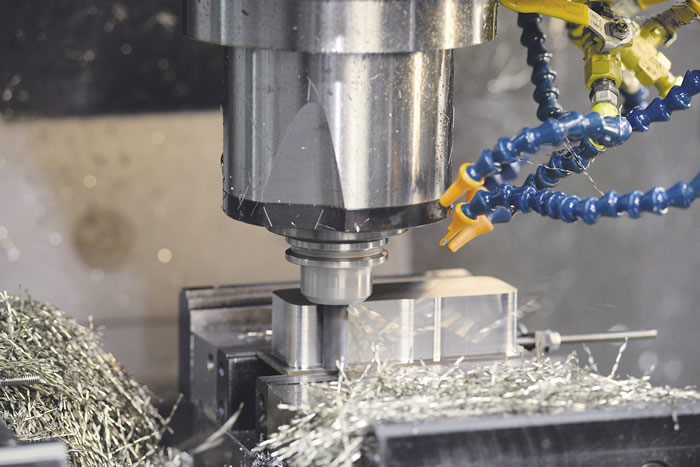
Algorithms in Mastercam’s Dynamic Motion software continually analyze a material’s condition ahead of the tool and adjust tool motions as needed to maintain a constant chip load.
“Customers are actually working in our shop with us,” he said. “They might make changes in the middle of it, and then we get a second, third or fourth wave of changes. We may take the same part back and modify it or make a whole new one. Generally, it has to be done quickly to keep the whole project moving and keep our customers happy.”
Because few jobs repeat, Lindquist gives the machinists a considerable amount of leeway to program parts in a manner they are most comfortable with. Robarge, however, said he encourages machinists to step out of their comfort zone and attempt something different. This has been the case with Mastercam’s Dynamic Motion technology for roughing and semifinishing parts. The technology allows the user to initiate a seemingly counterintuitive approach to machining that simultaneously reduces tool wear, machining cycles and programming time.
Algorithms in the program continually analyze a material’s condition ahead of the tool and adjust tool motions as needed to maintain a constant chip load. Instead of using 50 percent or greater step-overs and shallow step-downs to hog material, for example, Dynamic Motion facilitates smaller step-overs and deeper step-downs for better heat management and material removal and to reduce lateral forces on the part and tool.
These toolpaths make it easy for Lindquist to write programs that adhere to toolmakers’ recommended parameters for their latest “high-performance” cutters. “Without Mastercam, we would have a hard time even researching these tools because we know the required toolpaths are more advanced,” Robarge said. “We couldn’t use them without the software.”
The company frequently tests tools; often tests are conducted simultaneously in several cells. “This is easy to do with Mastercam,” Robarge said, “because the software can be quickly configured to make the best use of whatever manufacturers’ tools we are trying.”
Robarge said high-performance tools cost about 30 to 50 percent more, but they can last up to five times longer than conventional tools. In one manufacturing cell, the machinist uses Dynamic Motion in conjunction with high-performance tools whenever possible. This cell is seeing 200 to 300 percent productivity gains compared to cells where only conventional tools and toolpaths are being applied.
Lindquist spends hundreds of thousands of dollars on tools annually, Robarge said, so these gains make significant contributions to the company’s bottom line.
Related


Subscribers can use MFGAxis notes, saves and discussion tools with their innoNET account.


