



OSHA’s SHARP program for small businesses
OSHA officials have extended an olive branch to small businesses with its Safety and Health Achievement Recognition Program (SHARP), a partnership with those businesses that take safety seriously and respect the health and well-being of their employees. The program is administered through OSHA Consultation.
A visit from the Occupational Safety and Health Administration is something many parts manufacturers dread. Machine guards are quickly replaced, safety glasses go on and forklift drivers slow down. The repercussions of a failed inspection are often severe, with stiff fines and repeat visits assured. Higher workers’ compensation insurance premiums are sure to follow, and then there’s the difficulty of attracting top talent at a workplace considered dangerous.
OSHA officials recognized that this antagonistic relationship was unnecessary and counterproductive and have extended an olive branch to small businesses with its Safety and Health Achievement Recognition Program (SHARP), a partnership with those businesses that take safety seriously and respect the health and well-being of their employees. The program is administered through OSHA Consultation.
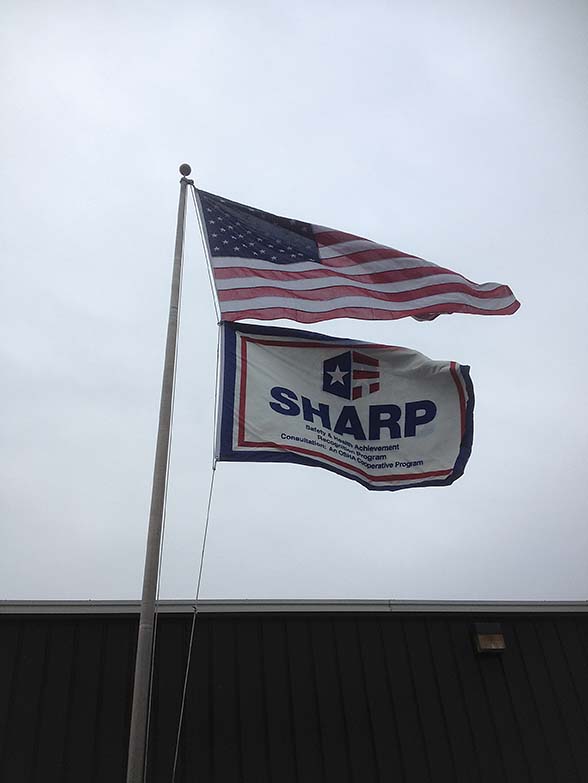
Companies that attain SHARP status receive a flag identifying them as a safe workplace. Waste Gas Fabricating
One participant is Waste Gas Fabricating Co. Inc., Fairless Hills, Pa., which attained SHARP status several years ago. President Kyle Cloman said he and his team worked hard for the SHARP flag flying in front of the company’s building and are proud of the achievement.
“Application to the program requires you to submit your safety records for the past couple of years,” he said. “OSHA Consultation will come and perform a walk-through of your plant and make recommendations, and if you can get to a certain level of safety and lost time due to accidents, they award SHARP status. It’s a great program.”
Annette Olesen is a safety and health consultant for the Pennsylvania OSHA Consultation at Indiana (Pa.) University of Pennsylvania. She said each state operates independently, but the program provides free safety and health consulting services to businesses with fewer than 250 employees. Those interested in applying for SHARP status initially complete a 58-question form based on core elements of the OSHA Safety and Health Program Management Guidelines. If the process is not completed within 18 months, OSHA may require the company to reapply.
“This is for companies that are passionate about safety and want to empower their employees with the knowledge and ability to remove hazards from the workplace” Olesen said. “The SHARP program is aimed at recognizing these businesses. By doing so, it removes them from the programmed inspection list, meaning OSHA will not visit unless there is a worker complaint, a fatality or three or more people are taken to the hospital at one time.
It also gives them an opportunity to brag a little bit, to tell their customers and potential employees, ‘Hey, we’re a good company to work with. We care about our people and have a safe place to work.’ ”
Related


Subscribers can use MFGAxis notes, saves and discussion tools with their innoNET account.


