

Pay attention to abrasives: Turning Performance
Abrasives play a significant part at a modern metalworking shop, but process design, optimization and safety aspects frequently are overlooked.
A few years ago, one of our local industrial sales representatives was giving his best pitch. He told me we should use his brand of coated abrasives, and I joked that he was trying to sell sandpaper to me.
“We sell a million dollars’ worth of sandpaper in a year,” he replied, “so we refer to them as coated abrasives.”
This lighthearted conversation made me think about the significance of abrasives in metalworking and how the application of abrasive products often is not given the same considerations as other metalworking processes.
Metalworking professionals use abrasives to clean parts, shape geometries, prepare surfaces, improve appearances, size features and cut parts. Today’s metalworking would not be possible without modern abrasives.
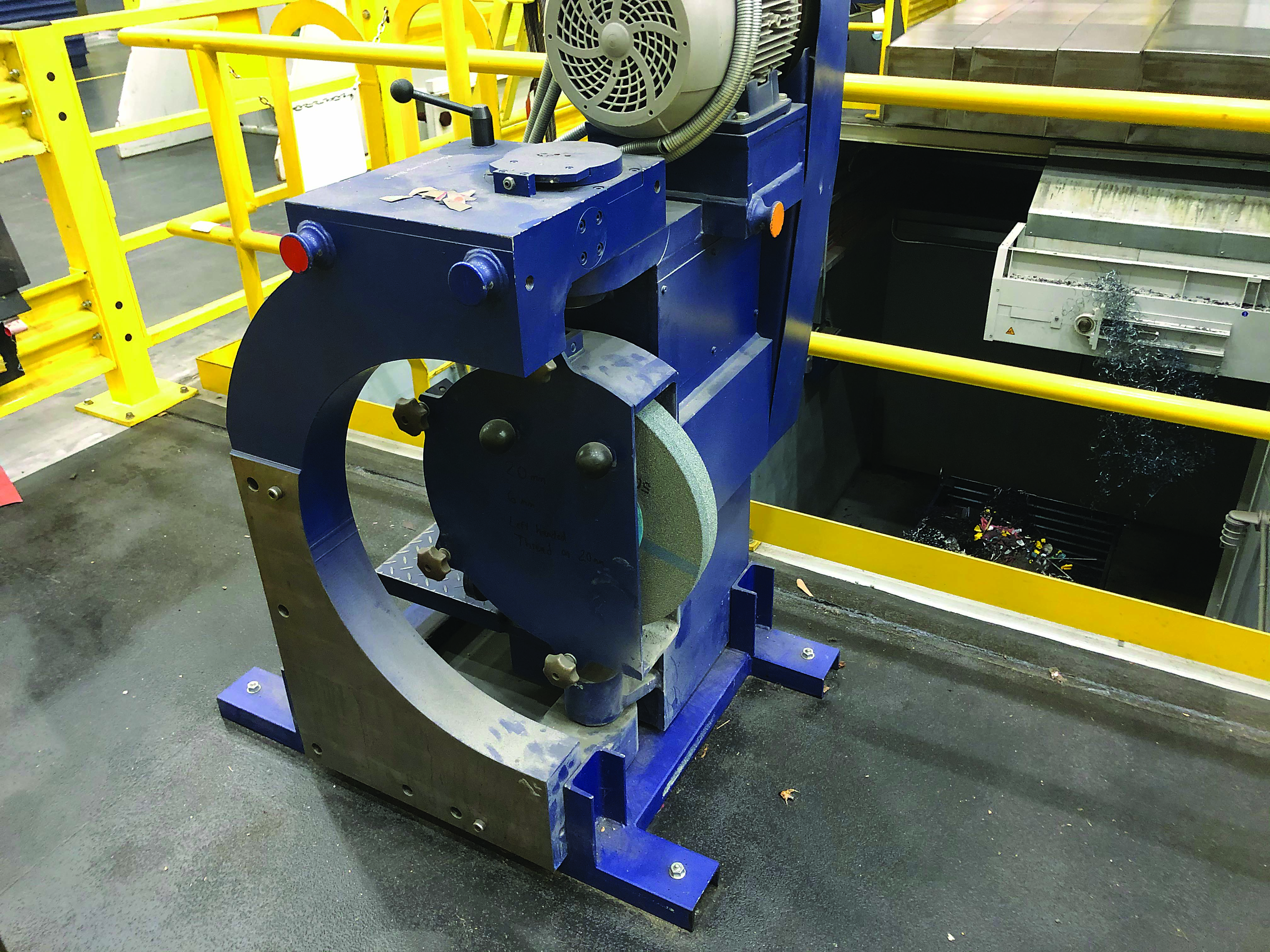
The grinding attachment for the 200 metric ton (220 ton) lathe at Mitsubishi Hitachi Power Systems Americas uses a large aluminum oxide wheel. Image courtesy of C. Tate
Abrasive grains like pumice, calcite, walnut shells and garnet, which is the most common grain in sandpaper, occur naturally and have been used by humankind for thousands of years. Technological advances have resulted in human-made materials, such as silicon carbide, synthetic diamond and aluminum oxide, which is the most frequent of these in modern metalworking. Human-made abrasive grains are the most prevalent material in contemporary manufacturing.
Types of Abrasives
Abrasive products are manufactured in various forms and presented to a workpiece in numerous ways to achieve the desired results.
Bonded abrasives are made by combining abrasive material with a bonding agent. The mixture then can be formed into many different shapes, creating grinding wheels, cutoff wheels, grinding points, dressing sticks and many other formed abrasive products.
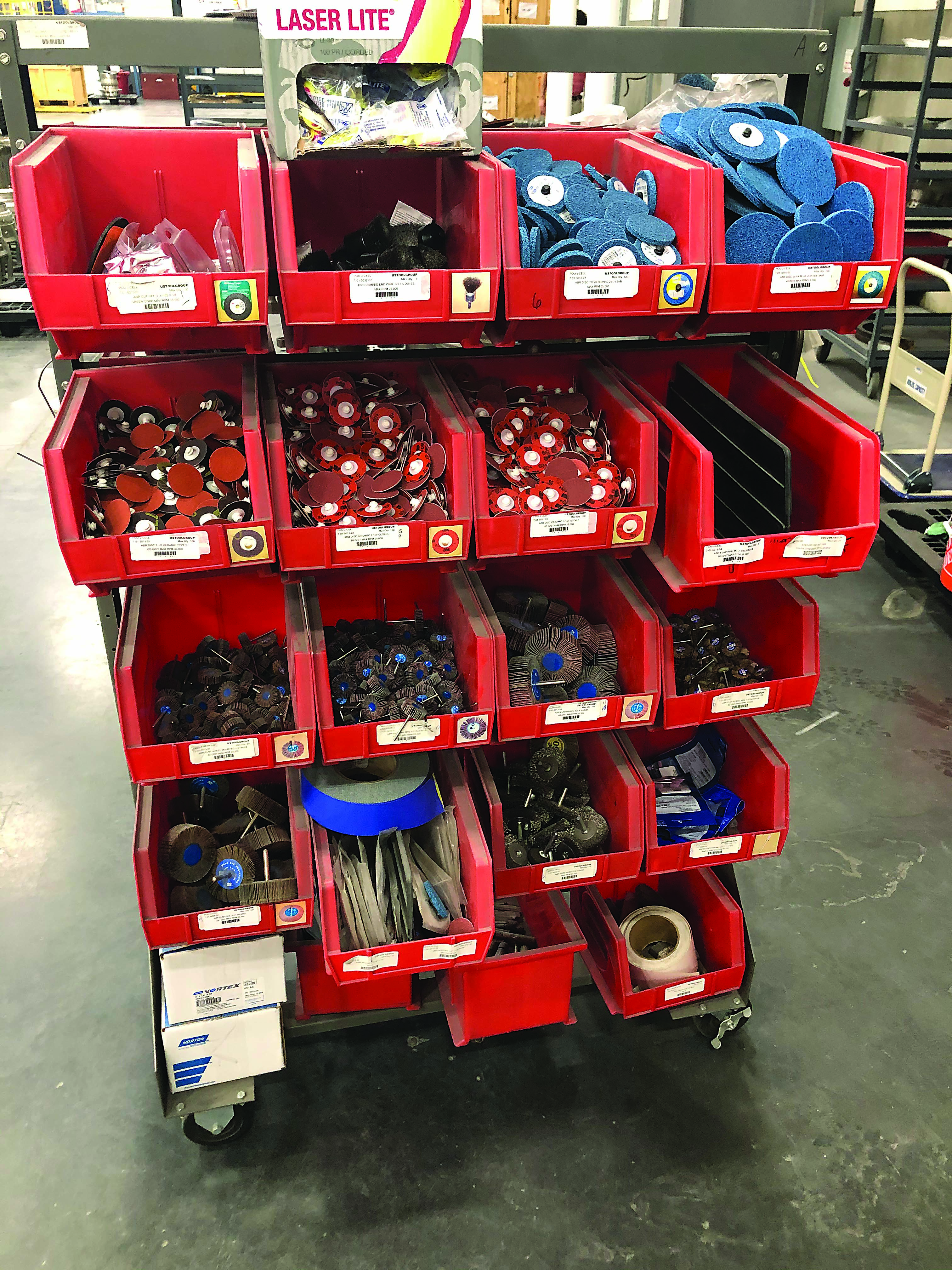
Welding superalloys requires a lot of cleaning with abrasives to ensure weld quality. Image courtesy of C. Tate
Coated abrasives are probably the most typical abrasive product as this is the group of goods we generically refer to as sandpaper. As my salesman friend pointed out, this family of abrasive materials is far more significant than we sometimes realize. Coated abrasives are constructed by applying a binding agent like glue or resin to a backing material, such as paper, cloth or something similar. The abrasive grains are applied to the binding agent and coated again to create a flexible product that has a single layer of abrasive material.
Review the print ads from this magazine to continue
This quick advertiser review unlocks the rest of the article and keeps the full-screen reader focused on the ads instead of the page chrome.
Advertisers included in this article experience
Print placements connected to this article
Nachiamerica
RE-Think Your
Carbide Oil Hole Drills with Nachi’s Aqua REVO Drill Unique patented design for coolant directed at the cutting edge Conventional Aqua REVO Keep your drill cooler while drilling ~ Allowing you to extend tool life. REVO lutionizing Drilling Area with low cooling effect Area with high cooling effect.
RE-Think Your Carbide Oil Hole Drills with Nachi’s Aqua REVO Drill Unique patented design for coolant directed at the cutting edge Conventional Aqua REVO Keep your drill cooler while drilling ~ Allowing you to extend tool life. REVO lutionizing
Visit Nachiamerica View this placement in the issue recordPrint ads from this magazine
Carbide Oil Hole Drills with Nachi’s Aqua REVO Drill Unique patented design for coolant directed at the cutting edge Conventional Aqua REVO Keep your drill cooler while drilling ~ Allowing you to extend tool life. REVO lutionizing Drilling Area with low cooling effect Area with high cooling effect.
RE-Think Your Carbide Oil Hole Drills with Nachi’s Aqua REVO Drill Unique patented design for coolant directed at the cutting edge Conventional Aqua REVO Keep your drill cooler while drilling ~ Allowing you to extend tool life. REVO lutionizing
Continue reading
December 2020
Loose or bulk abrasives are also routine. Sand, walnut shells, glass beads, garnet, dry ice and aluminum oxide are some of the abrasive materials that commonly are used loose. Delivering the abrasive at high velocity with compressed air, otherwise known as blasting, is the most standard method of application. Loose abrasives are used as well in processes like vibratory finishing and waterjet cutting. Loose abrasive grains are combined with fluids to form lapping compounds or combined with waxes or greases to make buffing compounds.
Considerations
All abrasive materials are categorized by grain, or grit, size. Grit size is determined by sifting an abrasive through calibrated screens, using air-blown separation or — in some cases — employing water separation, all of which segregate material by particle size. Smaller numbers indicate larger particle sizes, and larger numbers represent smaller particles, so a 24-grit sanding belt is rougher than a 120-grit belt.
Like endmills and turning tools, abrasives must be used under proper conditions, and correct cutting parameters are critical. In most cases, abrasives are used at much higher cutting speeds than tools like endmills. Typical machining speeds for milling and turning are less than 305 m/min. (1,000 sfm), yet the usual abrasive is used between 1,372 m/min. (4,500 sfm) and 2,134 m/min. (7,000 sfm). Abrasive materials can function at these speeds because they are not affected by high temperatures. Also, unlike the edge of an endmill, the cutting edge is expected to fracture during use, which helps keep the grain sharp.
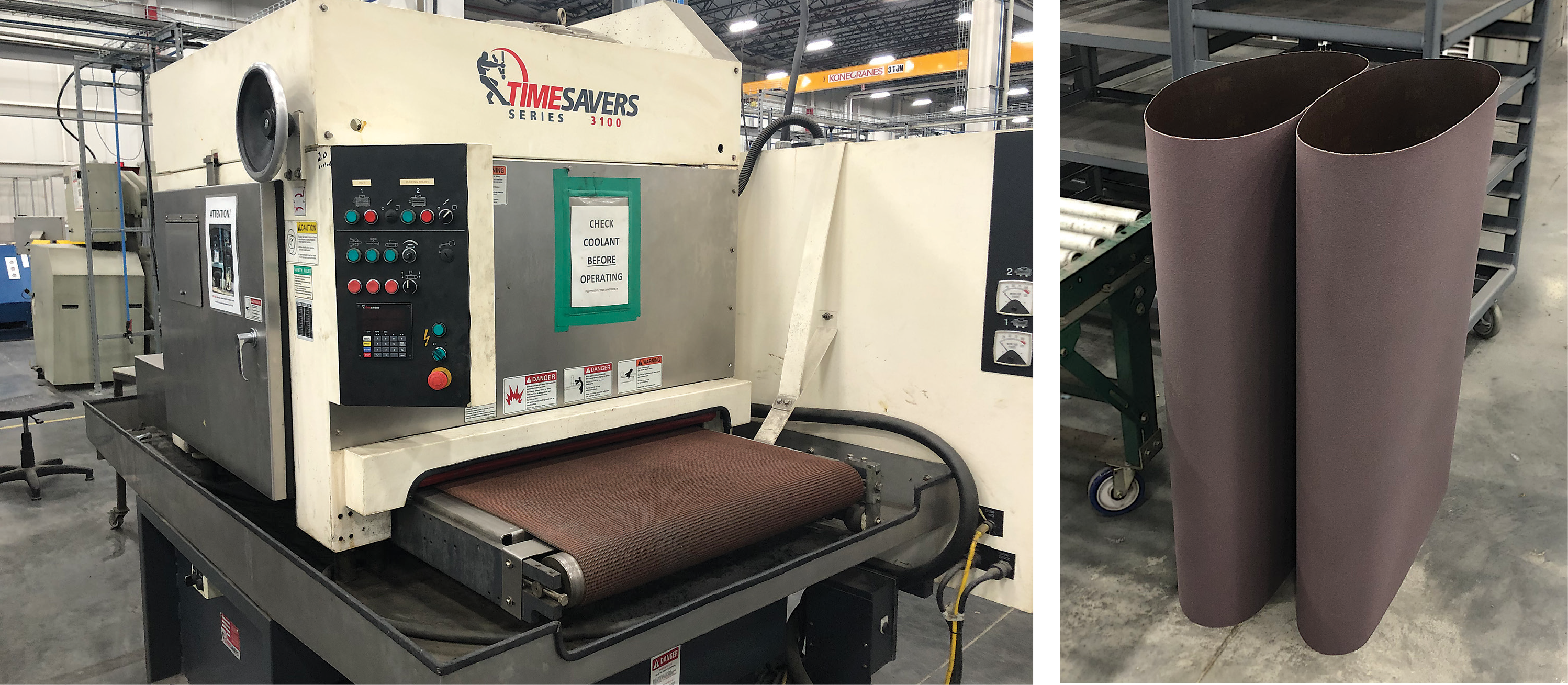
The sanding machine (left) at Mitsubishi Hitachi Power Systems Americas uses 914 mm × 1,829 mm (36″×72″) sanding belts (right) to polish parts made of sheet metal. Image courtesy of C. Tate
Operating abrasive products at optimal parameters ensures safe, efficient processes. When high-volume grinding, obtaining cutting parameters for a bonded abrasive product, such as a grinding wheel, is usually an iterative approach involving calculations and testing. However, cutting parameters for operations that utilize coated or loose abrasives are calculated less easily, so they rarely receive any consideration unless something goes wrong. This is unfortunate because substantial guidance is available from manufacturers. Poor tool life, burning, bad surface finish, excessive cycle time and other problems can be solved through research and advice from abrasive experts.
Safe use of abrasives also is not given proper consideration. It is easy for people to understand how milling or turning tools can be dangerous, but a sanding disc or pile of glass beads on the floor can seem benign.
At operating speed, the edge of a flexible disc acts like a knife, easily slicing a finger, and the abrasive surface quickly removes skin. Glass beads from a blast cabinet on a smooth concrete floor create a slipping hazard similar to ice. Compressed air transports abrasive grains around safety glasses, exposing a user to potential eye injury. Excess speed can cause grinding wheels to explode. Gloves, hair, clothes and jewelry can become tangled in machines and air tools used to power abrasives.
Abrasives and the tools that drive them should be given the same safety considerations as every other tool at a shop. Getting proper safety information is easy as all reputable abrasive manufacturers provide very detailed instructions.
Abrasives play a significant part at a modern metalworking shop, but process design, optimization and safety aspects frequently are overlooked until something bad happens. Profitable abrasive processes require the same level of planning and research as other machining operations.
Glossary terms in this article
Related




Subscribers can use MFGAxis notes, saves and discussion tools with their innoNET account.


