

Rigging and lifting safely: Turning Performance
In the olden days, riggers were the guys on the ground placing slings and chains around the object to be moved while the crane operator waited for their signals to begin lifting. Today, rigging in a small shop falls to the guys standing closest to the equipment when something needs to be moved.
The ability to safely and quickly handle and secure loads is an integral part of the entire job process. The more efficient your handling, the faster you’ll complete the job.
Rigging deals with setup and equipment, leading to the lifting event. In the olden days, riggers were the guys on the ground placing slings and chains around the object to be moved while the crane operator waited for their signals to begin lifting. Today, rigging in a small shop falls to the guys standing closest to the equipment when something needs to be moved.
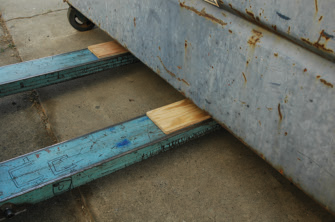
Courtesy of All images: T. Lipton
When operating a forklift, always place a piece of wood between each fork blade and the object being moved.
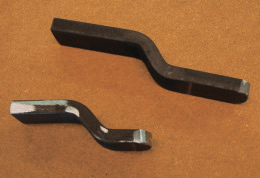
A lifting lug without a hole can be quickly and easily formed from flat bar stock by creating two equal bends.
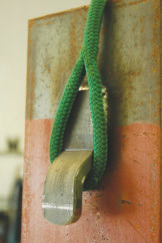
A lifting lug works with wire or rope slings.
Humans are basically weak animals. Without our tools and machines, we are just hairless primates with no particular strengths other than our big brains. Rigging and lifting in the shop requires brains. Cranes and forklifts seem like pretty simple machines that anybody should be able to use without difficulty, which is pretty far from the truth.
Review the print ads from this magazine to continue
This quick advertiser review unlocks the rest of the article and keeps the full-screen reader focused on the ads instead of the page chrome.
Advertisers included in this article experience
Print placements connected to this article
Hornusa
HORN - THE LEADERS IN GROOVING TECHNOLOGY
FOCUS ON THE ESSENTIAL SYSTEM DR Urma licence Sensitivity instead of gross motor skills – this is the motto of the new HORN “System DR” reaming tools. Very narrow cutters, simple handling, and high repeatability when replacing inserts. A large selection of base material, coatings, and cutting geometries make the DR from HORN the perfect tool system for high precision bore machining
HORN - THE LEADERS IN GROOVING TECHNOLOGY FOCUS ON THE ESSENTIAL SYSTEM DR Urma licence Sensitivity instead of gross motor skills – this is the motto of the new HORN “System DR” reaming tools. Very narrow cutters, simple handling, and high repeatability when replacing inserts. A large selection of base material, coatings, and cutting geometries make the DR from HORN the perfect tool system for high precision bore machining. HORN – INTELLIGENT TOOL DESIGN AT WORK. HORN
Visit Hornusa View this placement in the issue recordPrint ads from this magazine
FOCUS ON THE ESSENTIAL SYSTEM DR Urma licence Sensitivity instead of gross motor skills – this is the motto of the new HORN “System DR” reaming tools. Very narrow cutters, simple handling, and high repeatability when replacing inserts. A large selection of base material, coatings, and cutting geometries make the DR from HORN the perfect tool system for high precision bore machining
HORN - THE LEADERS IN GROOVING TECHNOLOGY FOCUS ON THE ESSENTIAL SYSTEM DR Urma licence Sensitivity instead of gross motor skills – this is the motto of the new HORN “System DR” reaming tools. Very narrow cutters, simple handling, and high repeatability when replacing inserts. A large selection of base material, coatings, and cutting geometries make the DR from HORN the perfect tool system for high precision bore machining. HORN – INTELLIGENT TOOL DESIGN AT WORK. HORN
Continue reading
February 2012
The simplest machines and processes can cause the most trouble. The ease with which you can move an object that weighs several tons, with no sensation of weight or even effort, disguises the seriousness of these operations. The equipment is taken for granted—and that is when the trouble starts.
If you are lucky enough to have an overhead crane or forklift, be sure that everyone who uses it has been certified in its use or received instruction from a professional rigger. There are serious consequences to moving heavy objects with small brains. As the old saying goes, “The rigger must not guess, he must know.” That includes knowing the weight, capacity and how to retain and control the load.
Everybody has heard the statement, “Bend your knees when you lift something heavy.” The same consideration should be given when preparing to move something too heavy to lift personally. Think before you lift and protect yourself at all times.
Whenever handling, moving or loading equipment or materials, it is the responsibility of the rigger to make sure the entire process is performed in a safe manner for the next person in the process. This includes landing the load so it is safe and securing the load for safe transport or, at a minimum, supervising the work to ensure proper execution by others. Typically, the rigger has overall responsibility during a lift or move. Only one person should give instructions where multiple people are involved.
Because rigging and lifting involve rope work, everybody should know how to tie at least two knots. If you remember and master two, then you most likely won’t need more. My two favorite knots that can be used almost anywhere for multiple purposes are the bowline and a simplified version of the trucker’s hitch.
Whenever you have to move a piece of material or heavy equipment with a forklift that has a metal bottom, always put a piece of wood between each fork blade and the object. All you need is a thin piece of plywood, which acts like a brake shoe and keeps the load in position.
The oily bottoms of machine tools are a good example of metal on metal as a low-friction bearing surface. A metal-on-metal moving scenario can cause the load to shift dangerously. Many forklift drivers have experienced a long piece of bar stock pivoting, as if on bearings, on the fork blades during a small turn. Uncontrolled loads are just that—uncontrolled.
A lifting lug without a hole can be quickly and easily formed from flat bar stock by creating two equal bends (see photo on page 22). Please note that this type of lifting lug is not suitable for turning loads over; it is used for pure vertical lifting of items such as tanks and boxes. The lug is easy to add where you need it during fabrication. It works equally well with wire or rope slings. For loads that need to be turned over, you need to weld on a lifting eye with a closed hole. CTE
About the Author: Tom Lipton is a career metalworker who has worked at various job shops that produce parts for the consumer product development, laboratory equipment, medical services and custom machinery design industries. He has received six U.S. patents and lives in Alamo, Calif. Lipton’s column is adapted from information in his book “Metalworking Sink or Swim: Tips and Tricks for Machinists, Welders, and Fabricators,” published by Industrial Press Inc., New York. The publisher can be reached by calling (888) 528-7852 or visiting www.industrialpress.com. By indicating the code CTE-2012 when ordering, CTE readers will receive a 20 percent discount off the book’s list price of $44.95.
Related




Subscribers can use MFGAxis notes, saves and discussion tools with their innoNET account.


