


Sharp Dresser
Shops seeking to true and dress superabrasive grinding wheels need solutions that move beyond 'tried-and-true' methods.
Shops seeking to true and dress superabrasive grinding wheels need solutions that move beyond ‘tried-and-true’ methods.
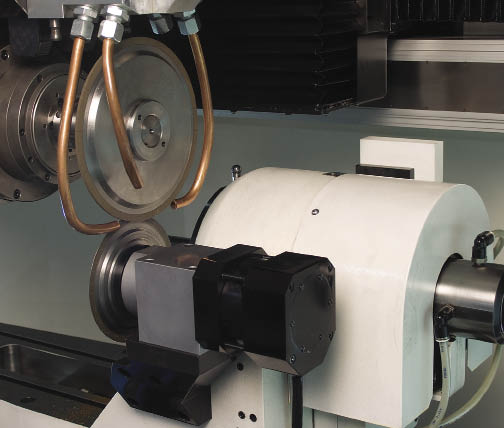
Courtesy of United Grinding Technology-Walter Grinder. All other images Saint-Gobain Abrasives
Online truing and dressing of diamond wheels with CNC rotary diamond dressing tools is particularly effective when grinding difficult-to-machine workpieces.
Superabrasive grinding wheels—particularly diamond wheels—are the tool of choice for many of today’s higher strength workpieces, but these wheels pose truing and dressing challenges due to their high hardness. Online truing and dressing of diamond wheels with CNC rotary diamond dressing tools, however, offers an effective solution.
Parts manufacturers are grinding more workpieces with higher strength-to-weight ratios that offer higher heat and wear resistance for demanding applications. These materials are often nonferrous. For example, nickel-base components are being replaced with titanium-aluminide ones in new lightweight commercial aircraft engines. Many components previously hard chrome-plated for the aerospace and oil and gas industries are now coated with high-velocity oxygen fuel (HVOF). Ceramics continue to replace steels in orthopedic applications, missile nose cones and jet turbine blades.
These materials are so hard that metalcutting operations producing large chips are inefficient, and grinding with conventional abrasives is no longer practical. As a result, many grinding applications are moving from aluminum oxide and silicon carbide to superabrasives (diamond and CBN) due to grindability and tolerance requirements. At the same time, competitive pressures require continuous and significant cost reduction.
The previously mentioned workpiece materials are best ground with superabrasives, such as diamond wheels. With conventional abrasives, it is customary to apply a truing and dressing tool that is harder than the grinding wheel. However, because diamond is the hardest known material, the ability to lower costs when using diamond grinding wheels is being hindered by traditional truing and dressing methods. Using these methods increases labor costs and throughput times and prevents meeting required tolerances. The solution is online truing and dressing of diamond wheels with CNC rotary diamond dressing tools.
Truing vs. Dressing
Truing makes a wheel true to its axis of rotation and produces the required face geometry. It typically leaves the abrasive and the bond on the same plane with no grain exposure. Truing can eliminate chatter, improve surface finish and extend wheel life by putting the entire wheel face in contact with the workpiece. Figure 1 shows the surface finish of a drill ground with a wheel that had not been trued. Figure 2 shows the finish achieved by grinding with the same wheel after truing. Wheel speed, feed rate and DOC remained the same.
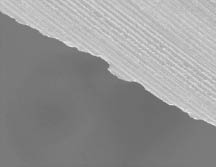
Figure 1: Surface finish of drill ground with nontrued wheel.
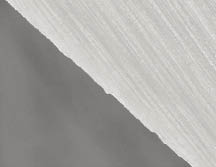
Figure 2: Surface finish of drill ground with trued wheel.
Dressing, sometimes known as conditioning, is a method of exposing abrasive grains by removing the grinding wheel bond or workpiece material embedded in the wheel face. Dressing is often required to lower grinding power and improve cutting efficiency. It also reduces heat and material damage and provides higher metal-removal rates. However, aggressive dressing can also cause a wheel to produce poorer surface finishes. Dressing exposes the grain or erodes the bond in the grinding wheel. Higher exposure of the grinding wheel grain will result in deeper and larger scratch patterns. A balance between high cutting efficiency and fine surface finish is required to optimize the grinding process.
Truing and dressing can be done as a one- or two-step process, depending on the grinding wheel and the truing tool used. In general, dressable superabrasive grinding wheels can be divided into two groups: vitrified- and hybrid-bond; both can be trued and dressed in one operation. Phenolic and polyimide resin- and metal-bond wheels are typically trued first and then dressed in a secondary stick dressing operation.
Truing Straight Wheels
There are several methods of truing straight wheels: offline with conventional abrasives, online with conventional abrasives and online with a rotary diamond truing/dressing tool.
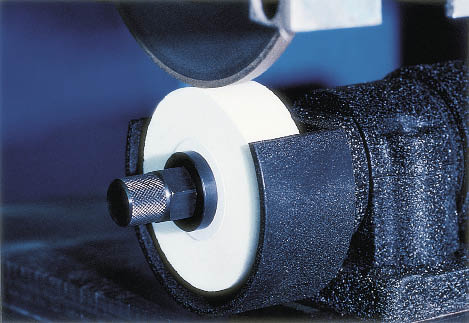
Figure 3: A brake-controlled truing device (BCTD).
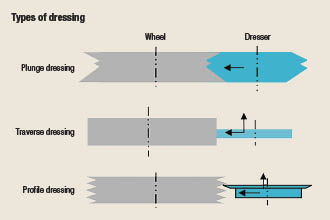
Figure 4: Types of truing/dressing.
The first method is the most common for truing diamond wheels smaller than 12 ” in diameter. The wheel is removed from the machine spindle and trued on another machine. Either a universal grinder or a machine dedicated to offline truing may be used. A SiC or Al2O3 truing wheel is turned at a periphery speed approximately five times faster than the periphery speed of the diamond grinding wheel. The truing wheel, which has grains larger than that of the diamond wheel, is moved across the face of the diamond wheel at a traverse rate of 30 to 60 ipm and an infeed of 0.0005 ” to 0.001 ” until the grinding wheel’s TIR is 0.0002 ” or less. This method generates a wheel that is true to the offline machine spindle but may actually have TIR of 0.005 ” or more when mounted back on the grinding spindle. Even in a best-case scenario, the TIR on the grinding spindle may be as much as 0.001 “. Stick dressing may still be necessary with most resin- and metal-bond wheels to ensure optimal grinding conditions.
In the second method, a brake-controlled truing device (BCTD) can be used to true wheels online on manual machines using conventional abrasives (Figure 3). The truing spindle must be oriented parallel to the grinding spindle to ensure a straight face. Cup wheels can also be dressed with a BCTD if the truing spindle is mounted perpendicular to the grinding spindle.
Diamond wheels larger than 12 ” in diameter may take longer to true due to higher truing wheel wear. To compensate, a fixture or arbor may be built to mount a truing wheel 8 ” to 12 ” in diameter in the workpiece position on the machine and rotated against the diamond wheel, effectively transforming the grinder into a truing and dressing device.
Many CNC grinders have powered truing spindles permanently mounted in a position out of the workpiece’s way. At a preset interval, a truing program is invoked that tells the machine to position the grinding wheel to the truing spindle. The machine then compensates for the amount of material removed from the grinding wheel and returns to the grind cycle. The amount of wheel trued away is predictable but will vary depending upon the grinding wheel bond type, grade, grit size and the truing wheel abrasive type, bond grade and grit size.
Online truing using conventional abrasives as the truing media is best suited to wheels with a straight face. This means they can easily true on one plane: on the periphery of a straight-faced, 1A1-style wheel or a simple angled, 1V1-style wheel or the side angle of a cup wheel. More complex geometries are not possible due to high wear on the truing wheel. Again, stick dressing may be necessary following the truing process.
In the third method, wheel truth is achieved by traversing (Figure 4) a diamond bonded profile roller (BPR) or sintered diamond roller across the face of the wheel. Wheel truth is achieved faster as a result of a higher ratio of truing wheel infeed per pass to grinding wheel removed. BPR and sintered rollers having a diamond depth of ¼ ” or more are well suited to this application due to their extended life (Figure 5). Optimizing this process by varying the truing/dressing ratio and overlap ratio permits the machine to return to grinding without the need for additional stick dressing when using vitrified-bond and newer hybrid-bond wheels. Resin-bond and some metal-bond wheels still require stick dressing to condition the wheel face.
Truing Profiled Wheels
Wheels with more complex geometries require a different approach to generate the required geometry on the wheel face. In one method, complex geometries may be formed in diamond wheels by using a single axis to plunge the wheel into a formed diamond truing/dressing tool. A second method using a rotary CNC profile tool is more common when truing and dressing diamond wheels (Figure 4).
When plunge truing/dressing, reverse-plated and infiltrated rotary diamond tools are made with the inverse geometry required on the grinding wheel face. The profile of the grinding wheel is generated by plunging the wheel into the truing/dressing tool. Reverse-plated truing/dressing tools have a single layer of diamond along the profile, which makes them unusable when the diamonds wear beyond the profile tolerance, while infiltrated truing/dressers may be reconditioned to restore the profile.
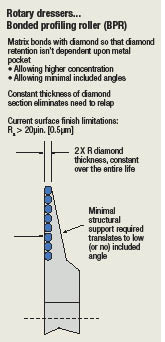
Figure 5: BPRs have a diamond depth of ¼ ” or more.
You can’t buy a diamond wheel and truing/dressing roll, mount them on a machine and expect to successfully true and dress online. The system requires enough stiffness so that it doesn’t deflect with a wide area of contact. It requires enough truing/dressing spindle torque to avoid stalling. Finally, there should be a simple software function to position the wheel to the diamond roll. A variable-speed and variable-direction truing/dressing spindle enhances the ability to adjust parameters to optimize the process.
Plunge truing cycle times are very fast. While correct geometry is not dependant on programming, the parameter variables of truing/dressing ratio, direction of dress, infeed depth and infeed speed keep the process relatively simple. The most limiting factors of using plunge profile truing/dressers on diamond wheels are that they may have a short life due to their single-layer design, and they are somewhat restricted to vitrified-bond diamond wheels. The brittle nature of the glass in vitrified-bond diamond wheels requires less pressure to fracture than other bond types. However, concentrations higher than 125 percent have a negative effect on the life of the roll.
In the second method, truing with rotary CNC profile tools (Figure 6), a standard tip profile is traversed along the grinding wheel shape via CNC. This type of tool has a narrow contact width, which reduces the required force to effectively true and dress diamond wheels.
System requirements for profile truing/dressers are the same as for plunge style, with the exception that they also require more complex software to generate the wheel contour.
Truing with rotary profiling tools is the most versatile of the wheel truing options for various bonded diamond wheels, including hybrid, metal, resin and vitrified. The same tool can condition straight wheels and shaped wheels. Parameters can be adjusted to control the cutting action by changing the surface of the grinding wheel face. Technical and economic successes of this truing/dressing process are reviewed in the following case histories. This dressing process has increased productivity, improved part quality and process reliability and saved tens of thousands of dollars.
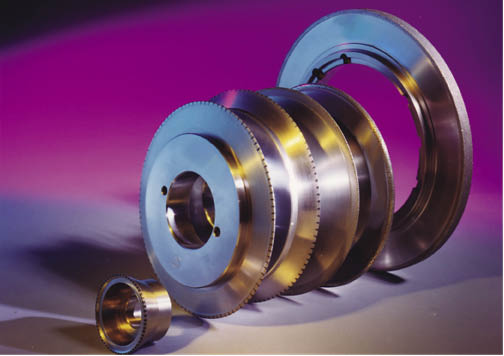
Figure 6: A profiling truing/dressing tool.
As with any process there are drawbacks to manage. Thin wheel profiles may experience chipping or breakout as the rotary diamond tool exits the wheel. When this happens, it is best to use formed-profile plunge-style tools. Another drawback of these tools lies in the design of the diamond tool. The truing/dressing grit size, concentration and corner reinforcement must be carefully designed to withstand the diamond wheel. Finally, careful process qualifying is required when a wheel contains a profile with a radius and a flat. The tip of the truing/dressing tool must remain a radius throughout its life; otherwise the wheel profile may not true accurately.
Case Studies
The following case studies provide the technical and economic outputs from actual processes, demonstrating that diamond wheels can be profile trued and dressed online in a production environment.
Case Study 1: Form grinding slots along the length of a carbide shaft. The project involved grinding a series of formed slots along the length of a carbide shaft with a total grind length in excess of 12 “, a form geometry tolerance of ±0.0001 ” and a maximum radius size of 0.0005 ” in the corners of the slots. The complexity of the form geometry eliminated the option of offline truing/dressing.
A traditional, baseline process used a series of plated form wheels to grind the slots. A roughing wheel took multiple passes per slot at 0.001 ” per pass, an intermediate wheel took multiple passes per slot at 0.0005 ” per pass and a finishing wheel took multiple passes per slot at 0.0001 ” per pass. The total time required to grind slots in one part was 8 hours, with an abrasive cost per part near $16.
|
Offline with conventional |
Online with conventional |
Online with profiling rollers |
Online with plunge rollers |
|
|
Initial price of truing product |
||||
|
Initial cost of truing device |
||||
|
Life of dressing product |
||||
|
Consumable dressing cost per piece |
||||
|
Time for truing |
||||
|
Dressing wear rate (need for compensation) |
||||
|
Profile capability |
||||
|
Truing accuracy |
||||
|
Total cost of truing/dressing |
Blue arrows point to desired direction
Figure 7: Comparison of different truing/dressing methods.
A second process using diamond wheels was also evaluated. An ANCA RX7 grinder was retrofitted with a MaxTorq rotary dressing spindle and a BPR diamond profile roll to true/dress a Norton vitrified-bond diamond wheel online. The wheel was mounted and trued online and the part ground with one pass per slot. The truing and dressing was done counterdirectional at a traverse depth of 0.0002 “, a -3.5:1 speed ratio and a 5.3:1 overlap ratio. As a result, the cycle time to grind slots in one part was 20 minutes, the cycle time to retrue the wheel was 10 minutes and the total time per part was 30 minutes. Abrasive cost per part is now near 50 cents.
Compared to the first method, the second method saved 7.5 hours per part; reduced tooling cost by $15.50 per part and reduced total cost by 96 percent.
Case Study 2: Grinding of aerospace components with a HVOF spray coating. Initially, a resin-bond diamond wheel was used on a Campbell ES750 grinder to grind a shaft coated with tungsten-carbide HVOF spray. Grinding was interrupted six times to true and dress the wheel at 0.001 ” per dress with a BCTD to remove taper from wheel wear. Total cycle time per part was 11.5 hours and the process required six dresses per part. The amount of wheel usage per part was 0.006 ” and abrasive cost per part was over $70.
The approach was changed to use a Norton vitrified-bond diamond wheel and a CVD diamond profile roller at 0.0001 ” per dress. The wheel was trued online three times per part counterdirectionally at a traverse depth of 0.0001 ” and a -0.5:1 speed ratio. As a result, total cycle time per part dropped to 4.5 hours, the number of dresses per part to three and the wheel usage per part to 0.0003 “.
In addition, abrasive cost was reduced by more than 90 percent per part, to under $5, and cycle time dropped 60 percent. The new process saved 7 hours per part, reduced tooling cost $65 per part and reduced total cost 62 percent. Later, a newly developed CNC profile truing/dressing roll technology further reduced manufacturing costs by doubling truing/dressing tool life.
Case Study 3: Flute grinding a high-precision drill. A diamond wheel was used to grind a gothic drill flute form. When truing and dressing a wheel like this on an offline truing/dressing machine, there is always some slight variation in wheel form from one dress cycle to another. This variation often requires the operator to make program adjustments to correct the geometry.
The original truing process for the flute grinding process used a resin-bond wheel and an offline truing machine. The number of parts per dress was 40, the dress depth was 0.010 “, dressing cycle time was 15 minutes and grinding cycle time was 42 seconds. Abrasive cost per part was 20 cents.
To eliminate the variance in the wheel form and improve productivity, a Walter Power grinder was fitted with a MaxTorq electric spindle, a BPR diamond profile roll and a hybrid G-Force (metal/polyimide-bond) diamond wheel. Using a -1.467 percent speed ratio and a 0.626 overlap factor, the process produced 40 parts per dress, the same as previously, but the dress depth dropped to 0.0005 “. Truing/dressing cycle time was reduced to 3 minutes and grinding cycle time dropped to 29 seconds. The new abrasive cost per part was 2 cents.
The geometry of the G-Force wheel as created with the CNC machine was repeatable and dressing time was reduced by 80 percent. After truing/dressing, the wheel was able to return to grinding without the need to stick dress, but, more importantly, the need to tweak the machine program to adjust the part back to tolerance was eliminated. Overall, the new process saved 31 seconds per part, or 48 percent, reduced tooling cost by 90 percent and reduced total cost by 53 percent.
Today’s advances in diamond grinding wheel truing and dressing methods permit manufacturers to embrace harder-to-grind materials. Not only have the limits been lifted on these materials as applied to more complex forms, but in many cases online truing and dressing is cost justified. (Figure 7 summarizes the pros and cons of each of these truing/dressing methods.) CTE
[Authors’ note: Thanks to John Besse Sr., application engineer for Saint-Gobain, for providing the information for Case Study 2.]
About the Authors: Mike Gainey is an application engineer for Saint-Gobain Abrasives and is based in Greenville, S.C. Contact him at Mike.B.Gainey@saint-gobain.com or by phone at (864) 787-7379. Brian Rutkiewicz is manager of application engineering for Saint-Gobain Abrasives, North America. He manages a staff of engineers that cover precision processes. Contact him at Brian.P.Rutkiewicz@saint-gobain.com or by phone at (508) 795-5483.
Glossary terms in this article
Related

Subscribers can use MFGAxis notes, saves and discussion tools with their innoNET account.