



Shop tips for part designers
December 2010 Shop Operations column in Cutting Tool Engineering offers tips for design engineers who would like to start to bridge the gap between design and manufacturing.
[Editor’s note: Years after “simultaneous engineering” and “design for manufacturing” promised to bridge the gap between design engineers and manufacturing personnel, true cooperation between practitioners of the two disciplines can still be elusive. Designers are often insulated from what happens on the shop floor. They create their designs almost in a vacuum, without regard for the potential issues certain features or tolerances could present for those charged with manufacturing the product. The following are a few tips for design engineers who would like to start to bridge the gap between design and manufacturing.]
n Visit the shop floor. Part designers need to spend some time in the shop to appreciate some of the problems metalworkers face. Their standing in the eyes of shop people is directly related to how much time part designers spend in their world.
n Communicate. When working on a new design, talk to the shop people who will be doing the work before a project is too far along. They will see things you may never consider.
n Promptly return any borrowed tool no matter how small or seemingly insignificant. I cannot overstress this point. After all, an Allen wrench is no reason to find yourself scratching the inside of a rough wooden box in a shallow grave under a lonely freeway overpass, now is it?
n Use shop floor expertise. Sometimes it’s much easier to tell the shop what you want than to try to overspecify or detail it exactly. Press fits, sliding fits and threads are good examples.
n Impress the shop with a clear hand sketch. Nothing screams ability more quickly than an excellent sketch done on the fly. Your drawings and instructions are your calling card in the shop. Make them look good or, better yet, perfect. Lousy drawings and bad instructions create a reputation that’s hard to break once established. One top-notch designer offered me lunch anytime I could find a mistake or omission on his work. It was 5 years before I found one and collected.
n Be realistic about tolerance requirements. This area marks one of the great all-time abuses of shop resources. If you don’t have time to put some thought into required tolerances, then leave them off entirely or at least ask the shop what is realistic.
n Allow cleanup cuts on stock sizes if the design allows it. Your related tolerances should give the fabricator a choice. A plate that is nominally 0.50 ” thick might have a note indicating 0.485 ” minimum. This allows up to a 0.015 ” cleanup if the raw material is rough or arrives undersize. If the drawing carelessly calls out 0.500 ” with a title block tolerance of ±0.005 “, then your part just tripled in price.
Courtesy of T. Lipton
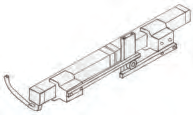
A clear hand sketch demonstrates a designer’s ability.
n Include stock material variances in the tolerance study. Half-inch-thick plate or bar stock is rarely 0.500 “, which is what I see on almost every drawing that crosses my desk. Most of the time, the designer has no intention of machining or surfacing stock material. A quick note next to the dimension stating “0.50 ” (Stock)” is a great way to communicate the proper intent.
n Only ask for maximum speed and effort when you really need it. There is no faster way to wear out your welcome than to abuse this request.
n Respect the shop’s time. You might be in for a big surprise when your friendly yak time gets billed to your project.
n Don’t try to help in the shop unless asked. Metalworkers are territorial and not only bark but occasionally bite.
n Include the shop in critical manufacturing decisions. By having extremely specialized material and process knowledge, shop personnel will spot items of concern from their viewpoints.
n Have a regular presence in the shop. I know shops can be cold and smelly, but it’s easier to get answers to your questions when you take more than a passing interest. You may have had a semester of shop experience, but most shop people have decades under the bridge. Use this to your advantage. CTE
About the Author: Tom Lipton is a career metalworker who has worked at various job shops that produce parts for the consumer product development, laboratory equipment, medical services and custom machinery design industries. He has received six U.S. patents and lives in Alamo, Calif. Lipton’s column is adapted from information in his book “Metalworking Sink or Swim: Tips and Tricks for Machinists, Welders, and Fabricators,” published by Industrial Press Inc., New York. The publisher can be reached by calling (888) 528-7852 or visiting www.industrialpress.com. By indicating the code CTE-2010 when ordering, CTE readers will receive a 20 percent discount off the book’s list price of $44.95.
Related




Subscribers can use MFGAxis notes, saves and discussion tools with their innoNET account.


