


Tool presetting truth
Lean concepts have permeated organizations large and small, so it is hard to believe that anyone in manufacturing has not heard of these ideas. Many people think that lean is the practice of putting sticky notes on whiteboards, making spaghetti diagrams or sitting in numerous meetings with no outcomes.
Lean concepts have permeated organizations large and small, so it is hard to believe that anyone in manufacturing has not heard of these ideas. Many people think that lean is the practice of putting sticky notes on whiteboards, making spaghetti diagrams or sitting in numerous meetings with no outcomes. When done correctly, it is the art of finding and eliminating waste while maximizing the efficiency of value-adding activities.
A good way to see if something is a value-adding activity is to ask whether it changes the shape of a workpiece. Milling, drilling, punching, bending and assembly all change the shape and therefore add value. That is why customers pay us for these activities. Customers do not pay invoices for sweeping, going to a toolcrib and setting tools. Yes, those costs are part of the overhead in the shop rate and do not show up on a bill, but consider what happens to profitability when they are reduced or eliminated.
Tool setting is a necessary activity at machine shops. But it adds no value because it does not change the shape of a part, and many customers would not accept it as a line on an invoice. Lots of shops continue to accept tool setting time as part of the process and absorb this nonproductive time. So how do we reduce the cost of time spent setting tools?
Reduce the Cost
Step one is to recognize that tool setting is non-value-adding time. Changing shop culture can be difficult. Every shop has a culture. Some shops are very receptive to change, and others are not. But getting employees at a shop to acknowledge tool setting as a non-value-adding activity is the first step to success. Unfortunately, there is not a formula for change that works at all shops. Otherwise someone would have been at your door trying to sell the practice. Convincing people to accept new ideas and methods is something that shop leaders must customize to fit their teams.
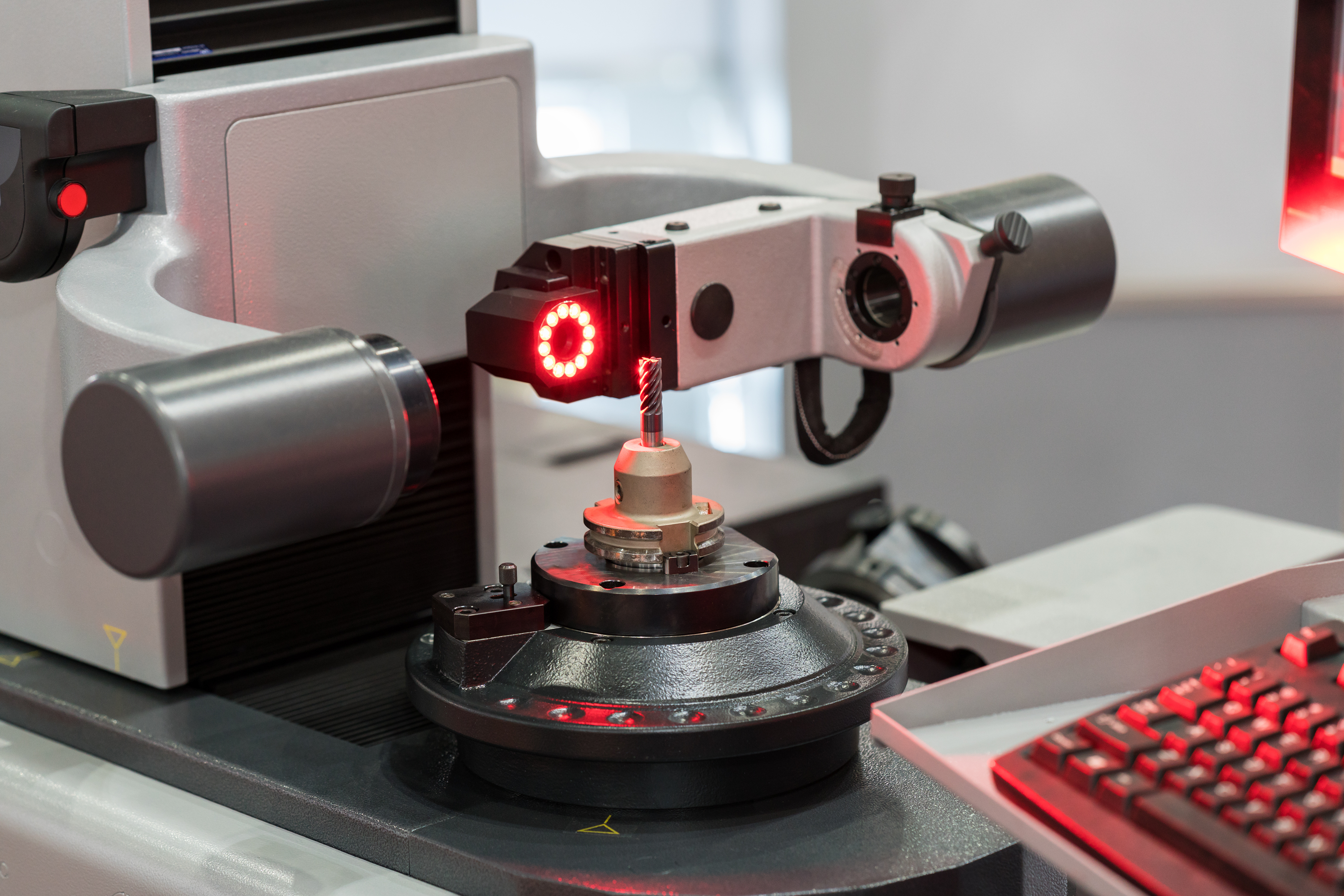
Adding tool setters to machines and utilizing automated functions are relatively inexpensive and much faster than manually setting tools.
The second step is finding the waste. This is where lean tools can be employed. For large organizations with deep pockets, a lean consultant may be the answer. For smaller shops, lean manufacturing might become a do-it-yourself project. For those of you without the financial resources, do not worry, because this part is easy. Each time a machine stops so someone can set a tool, record the time that the machine does not make chips. Even if you already have some automation like onboard tool setters, track the noncutting time during the tool setting sequence. Record the data for a significant amount of time to ensure accurate analysis. Having this continuous stream of data also will allow you to measure the impact of improvements.
Step three is understanding the data. Analyzing it does not have to be complex. Tally the time and convert it to dollars so you can see the magnitude of the expense. Most people are surprised by the cost of non-value-added activities like tool setting.
After the cost is known, it can be extrapolated over a longer period. This is important for those of us who work at large corporations where it is necessary to demonstrate long-term cost advantages so we can justify capital expenditures for major projects. Acquiring equipment at a smaller shop is less bureaucratic and often requires only a decision by the owner. However, if a bank is involved, a good justification may be handy for a small shop as this kind of data could be needed to convince a loan officer to increase a line of credit.
Planning
Before discussing ideas, knowing the cost is necessary so solutions can be sized to fit a project. A small shop that has a few machines may find that costs associated with tool setting are small. There are a lot of simple, inexpensive solutions that a small shop with limited resources can employ. Adding tool setters to machines and utilizing automated functions are relatively inexpensive and much faster than manually setting tools. Keeping commonly used tools mounted in holders and storing data in a machine are very affordable. A shop can add one or two toolholders as cash resources permit until all the common tools are mounted and need only to be set when they are changed. A more expensive but more efficient alternative is to buy a good tool setter along with enough toolholders to allow machinists to set tools for the next job while a machine runs.
A big shop with many machines frequently can justify advanced solutions. At a previous employer, our manufacturing engineering team spent well over $500,000 on equipment to eliminate tool setting operations. We bought a toolchanger for our large machining cell that held more than 500 tools. The changer was coupled with a tool setter that automatically measured a tool and then downloaded and stored tool data in the control while the machine ran. We eliminated all the wasted time and a lot of opportunities to make mistakes. Cost reductions paid for the system in three years.
The most advanced systems do not require human interaction at a machine tool. Tool monitoring systems are used to identify tools that are ready for maintenance. Worn tools are removed from production and sent to a separate area at the shop where they are maintained. After maintenance, the tools return to the machine ready for production without anyone at the machine. The best example that I have seen was at a CNC machine tool builder where several large machining centers were managed by one person in a toolcrib. Tools arrived in the crib from overhead in a special carrier. The attendant performed necessary maintenance and stored tool measurements on a chip. The carrier returned the tools to the various machines, eliminating all interaction with the machine tool and all interruptions to production.
Many shops fall victim to the idea that tool setting is part of the hourly shop rate, so there is no effect on the bottom line. That is a myth. Reducing or eliminating non-value-adding time like tool setting lowers costs, which makes a shop more competitive in the market and increases profits.
Glossary terms in this article
Related



Subscribers can use MFGAxis notes, saves and discussion tools with their innoNET account.