
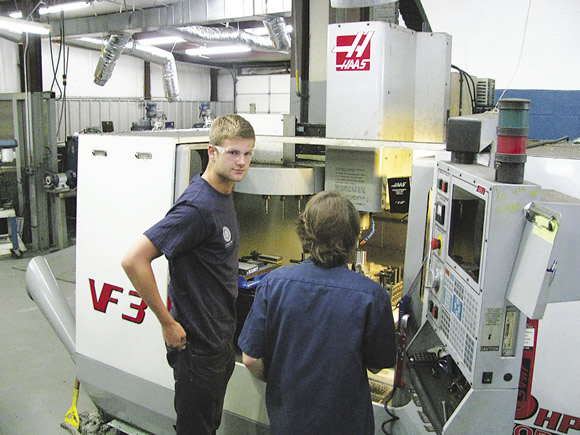
I'm a big a supporter of my local community college's machining programs. There's one facet of machine shop management a classroom can't prepare a student for, though: the constant, yet unexpected, gear shifting that goes on when you're running a shop.
After working in the machining and fabrication business for 21 years, Keith Jennings, the Manager's Desk columnist for Cutting Tool Engineering, has concluded that million-dollar jobs don't guarantee big profits.
Representing your company through community involvement accomplishes two goals. Hopefully, you're doing something positive and, in return, raising the reputation of you and your company. You may also gain access to another network of valuable contacts and potential leads.
A challenge arises when a worker is promoted to manage a group of what were previously his coworkers. It's not an easy situation to tackle and much thought should be given to how this arrangement may impact personal relationships.
If an employee makes up his mind to borrow or take something without permission, chances are he'll get away with it, cautions the Manager's Desk column in the April 2013 issue of Cutting Tool Engineering magazine.
My recent past has, unfortunately, included the passing away of several acquaintances, one only 38 years old. I also read an obituary in the local paper about a machinist we formerly employed, a man only in his 50s.r In addition, an employee's wife was diagnosed with cancer, completely changing his priorities.
Over the past few months, I've experienced an increasing number of friends, acquaintances and even referred strangers hitting me up for jobs. Most ask about employment opportunities for their kids, dad, brother or even neighbor.
A machine shop can become a messy place if you don't stay on top of it. If you've visited other shops, you've probably observed what I've seen over the years—a few that are spotless and well-maintained, and others that look like a cave, with little thought or care given to the work environment.