Browse

Industry News

Select one or more.
Select one or more.
Select one or more.
Select one or more.
Reset
News January 29, 2019 Alan Richter
The art of machining
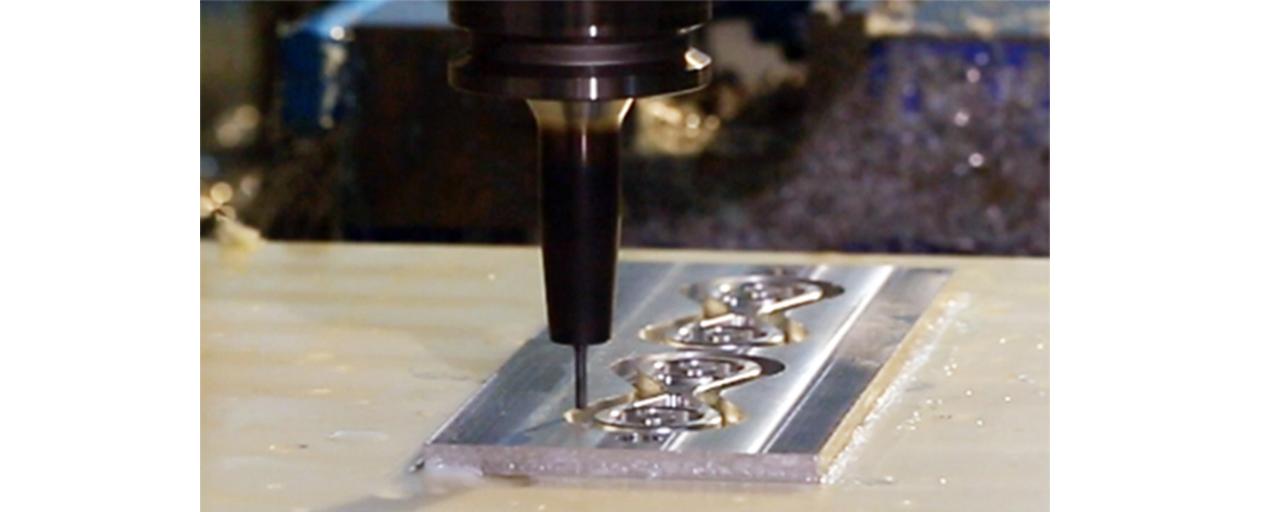
A metal blisk or heat exchanger component can certainly be aesthetically pleasing, but those and the vast majority of other machined metal parts serve a practical function first and foremost. The metal parts Chris Bathgate machines don't.
News January 28, 2019
Run machines to their full potentials with new facemilling technology
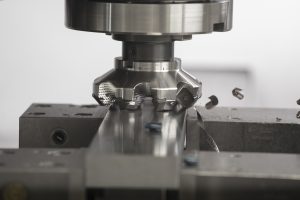
Almost every machine shop uses facemills for roughing, semifinishing and finishing, but many of these shops miss out on increased material-removal rates because they run yesterday's tooling on today's machine tools. The larger spindle tapers and higher horsepower ratings, feeds and speeds of modern machines need to run with the latest in facemilling cutter and insert technology to maximize a machine's facemilling potential and thus significantly speed up production, increase efficiency and reduce cost per part, especially on larger workpieces.
News January 25, 2019
Increasing production capacity, the right way
Expand existing capacity or turn down orders? Many companies are caught in this dilemma. Every time a company turns down an order, it risks losing that customer and potential orders. If the company has no alternative but to accept new orders, at some point the existing machines will reach their limits. What then?
News January 24, 2019
Third trade fair for deburring technologies and precision surface finishing
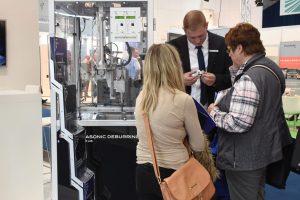
Whether they're required for downstream manufacturing steps or for error-free functioning, surface characteristics are decisive with regard to part and product quality. Processes such as deburring and precision surface finishing are becoming more and more significant as a result – regardless of whether the parts are produced by means of erosion, forming, primary forming or additive manufacturing. DeburringEXPO, the world's only trade fair that deals exclusively with the removal of burrs and the production of precision surface finishes, will be held at the Karlsruhe Exhibition Centre from Oct. 8-10, 2019.

News January 22, 2019
How to choose the right material for CNC machining
CNC machining is one of the most common methods used to manufacture parts and products. The use of computer numerical controls allows parts to be manufactured using a highly automated process, which has the upper hand on many conventional manufacturing methods in terms of speed, production rate and accuracy. However, determining the right material for the process can be a daunting task.
News January 22, 2019
Manufacturing with intelligence: A framework for system-level anomaly prediction
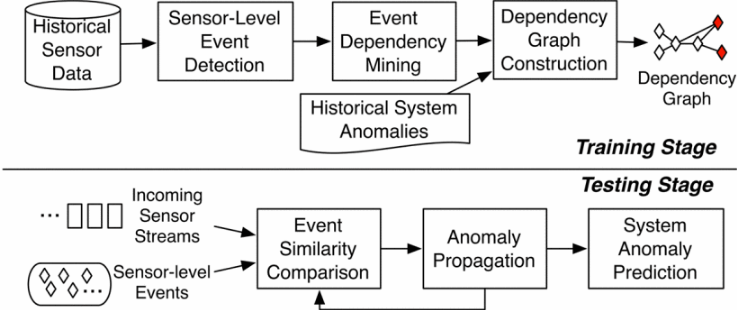
It is time to put smarter manufacturing into production. An increase in the data and sensors available to the manufacturing industry has made it much easier to gather data on manufacturing efficiency through the internet of things. However, IoT systems tend to look at sensors at an individual level, which limits the ability to forecast anomalies across a manufacturing operation, as each sensor can measure only a specific part of the operation. To address this issue, a team of researchers has created a framework for system-level anomaly prediction in manufacturing.
News January 22, 2019
The next generation of surface profilometer for in-process inspection
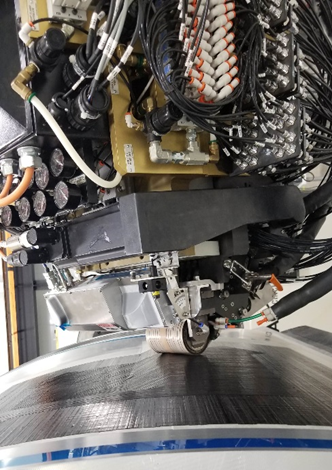
As the aerospace industry in Canada and around the world continues to increase its use of automated composite manufacturing techniques to produce large aircraft components, the industry is eager to find solutions to manufacture reliable, safe, and cost effective composite structures. The National Research Council of Canada (NRC) and Fives are working together to improve the efficiency of manufacturing composite parts. They are developing an advanced profilometer that will provide faster and more accurate part inspection.
News January 19, 2019
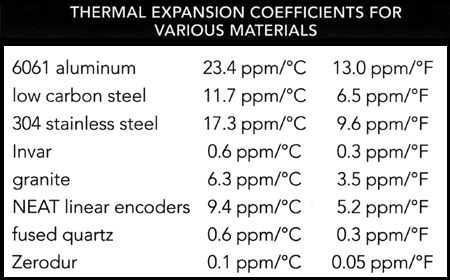
Thermal expansion poses significant constraints on the accuracy achievable in positioning
It becomes increasingly important as the table travel is increased. Ambient temperature changes are one obvious source of thermal expansion. As the positioning table warms, its constituent parts undergo expansion, at a specific rate for any material. Accordingly, to permit any two users to agree on what constitutes an "accurate" positioning system, all critical dimensional measurements world-wide are understood to take place at 20 degrees C (68 degrees F).
News January 18, 2019
Connecticut’s manufacturing future continues to evolve
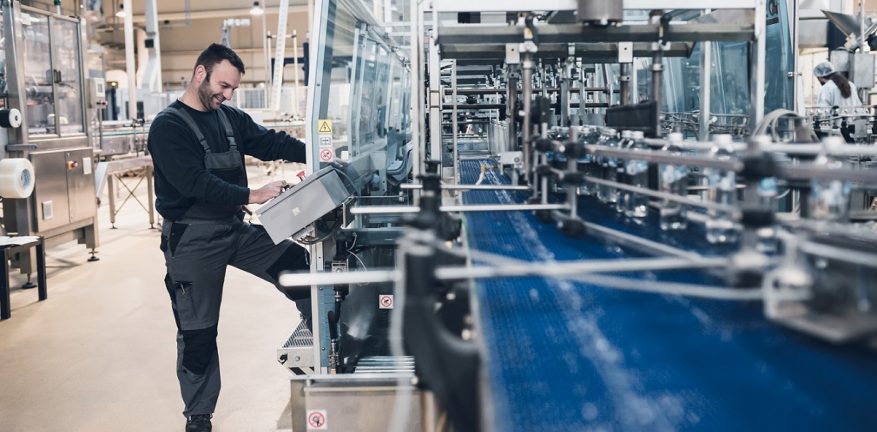
Connecticut's manufacturing future continues to evolve. The dirty, dark and dangerous shop floors of yesterday have increasingly become bright spaces with smart technology. Advanced manufacturing, robotics and the internet of things are more than buzzwords—they're happening. But with all the advancements on the manufacturing floor comes a corresponding need to improve the approach to developing the workforce necessary to ensure success.
News January 18, 2019
2019 is the year of the manufacturing platform
The big technology platforms get all the attention these days. But the biggest tech news of 2019 may turn out to be the rise of manufacturing platforms: companies that rewrite the rules of production and product development and in the process create opportunities for local manufacturing.
News January 18, 2019 Bill Pflager
Avoiding patterns caused by traversing rotary dressing – straight-line chatter
Generally, when using abrasive wheels to grind parts, a dressing tool is required to maintain form and finish within specifications. Several options exist when choosing the type of dressing tool for an operation. These include single-point diamond tools, diamonds blade tools, form or plunge roll diamond wheels and "rotary single-point," or "traversing rotary," dressing.
News January 18, 2019
Manufacturing intelligence: Keep processes under control
A trend in manufacturing is toward tailor-made products in smaller lots with shorter delivery times. This change may lead to frequent production modifications resulting in increased machine downtime, higher production costs, product waste and the need to rework faulty products. To satisfy the customer demand behind this trend, manufacturers must move quickly to new production models. Quality assurance is the key area that information technology must support.