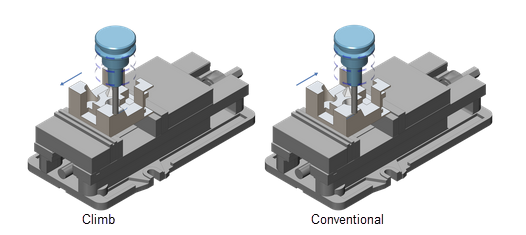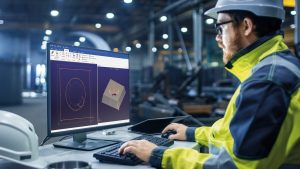
Users can choose between the climb or conventional cutting methods and define the contact point between the tool and the workpiece, e.g. in the middle of the flute. This is relevant for non-ball cutters like chamfer mills where careful control over the cutting conditions creates chamfered edges with a high quality finish.
With HALCON 23.05, it is now possible to further optimize the underlying deep learning networks, which are already pre-trained on industry-related images, for the user's own application. This allows even more robust recognition rates for Deep OCR applications as well as an even more reliable detection of suitable gripping surfaces for applications using 3D Gripping Point Detection technology.
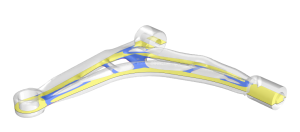
Integrated into the Rafinex solution, the ModuleWorks software generates highly automated, collision-free toolpaths for PBF. The workflow enables users to quickly program resilient, high-performance parts for production where expert knowledge of the manufacturing process is not required. The pre-defined parameters assist engineers in optimising the workpiece geometry for the PBF process to generate a toolpath and NC code that automatically minimises material waste.
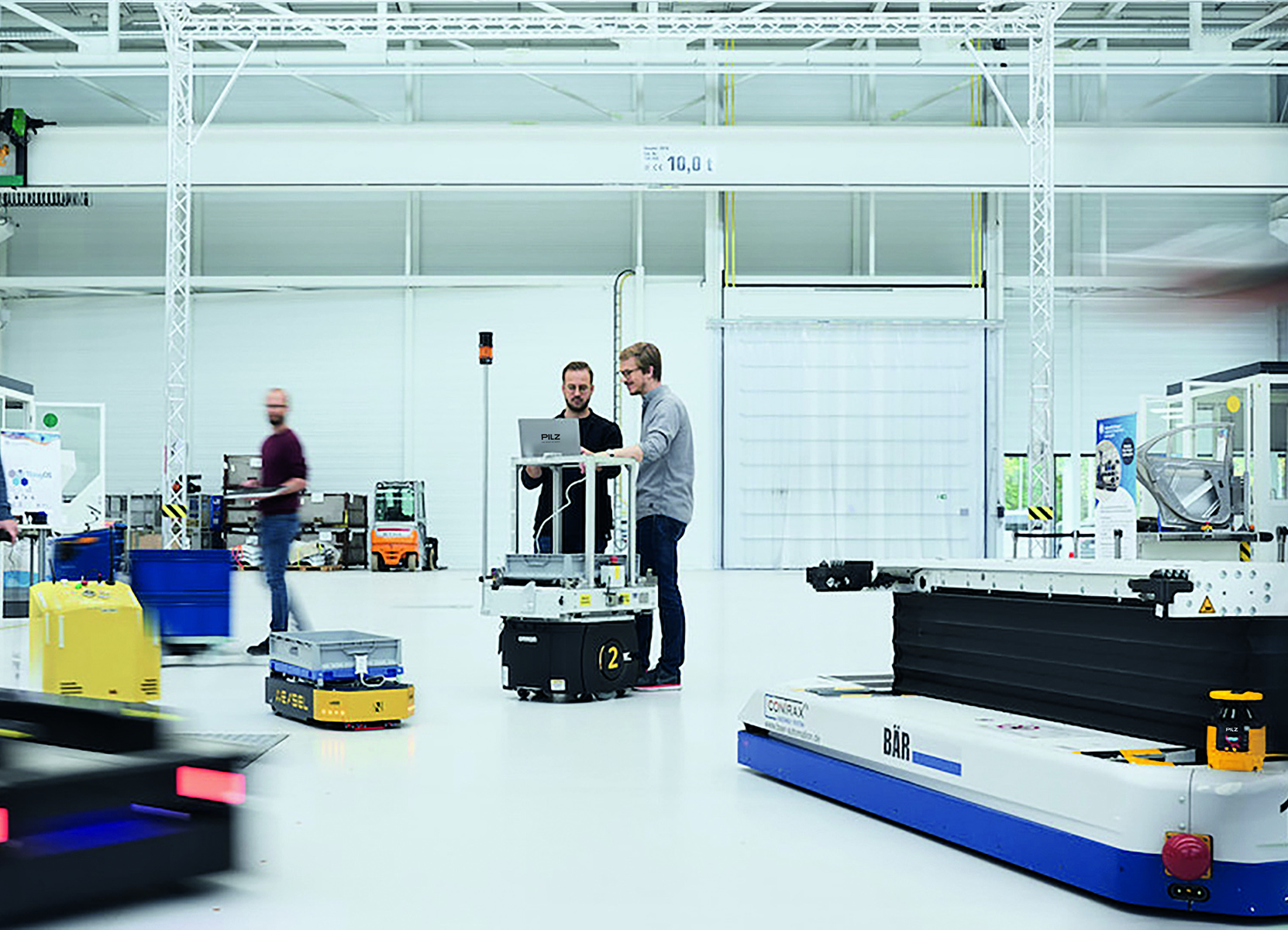
Via the sensor infrastructure and intelligent, as well as integrated and manufacturer-independent communication, the traffic and order management software NAiSE Traffic analyses the flow of traffic and goods in intralogistics applications, in real-time. The software coordinates and controls traffic involving all parties – humans and industrial trucks such as AGV systems or forklifts.
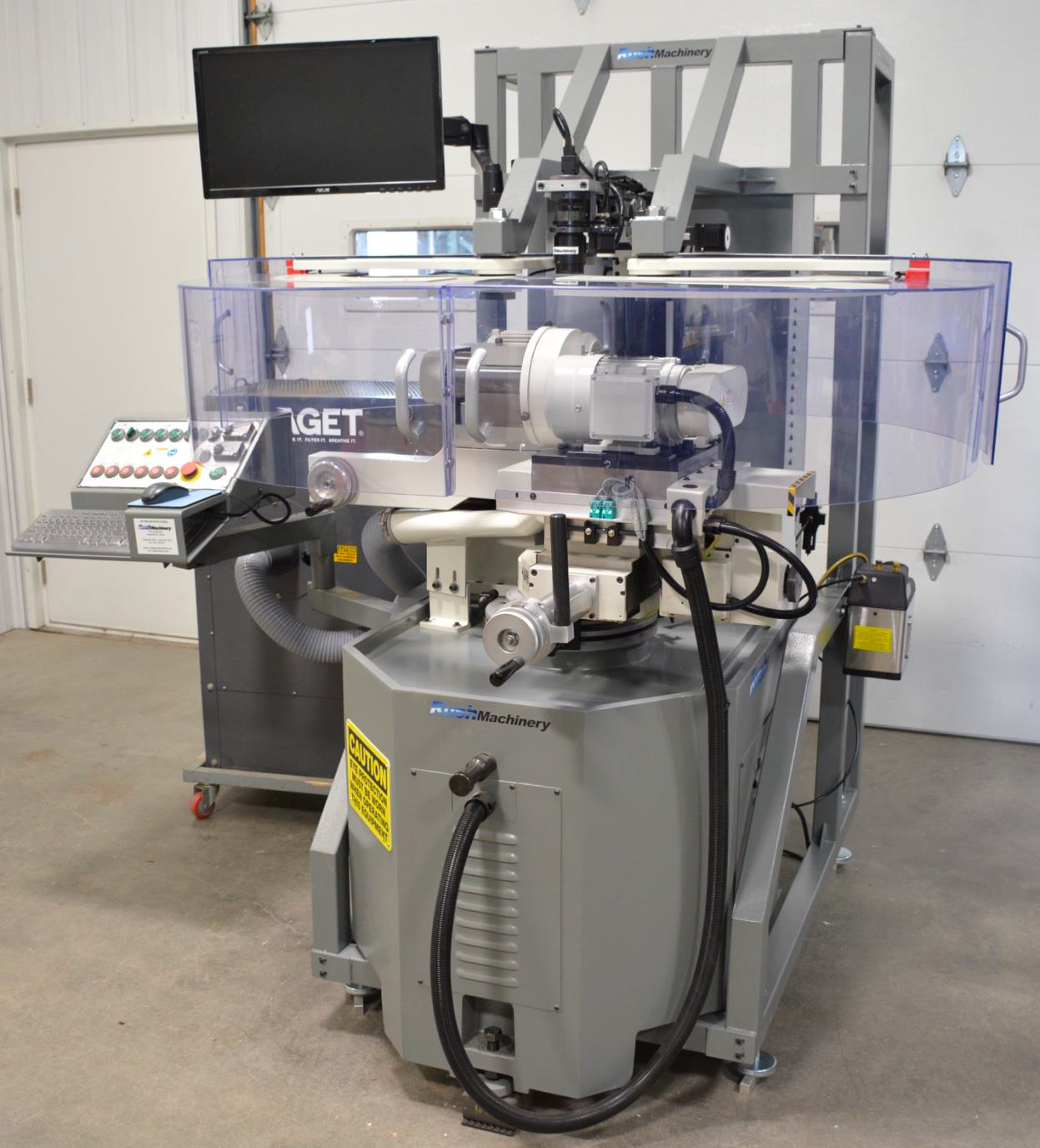
At this year's Eastec trade show, Rush Machinery plans to display the FC-350W wheel truing and dressing machine with new accessories and functionality as well as the Auto-Cut carbide rod cut-off machine.
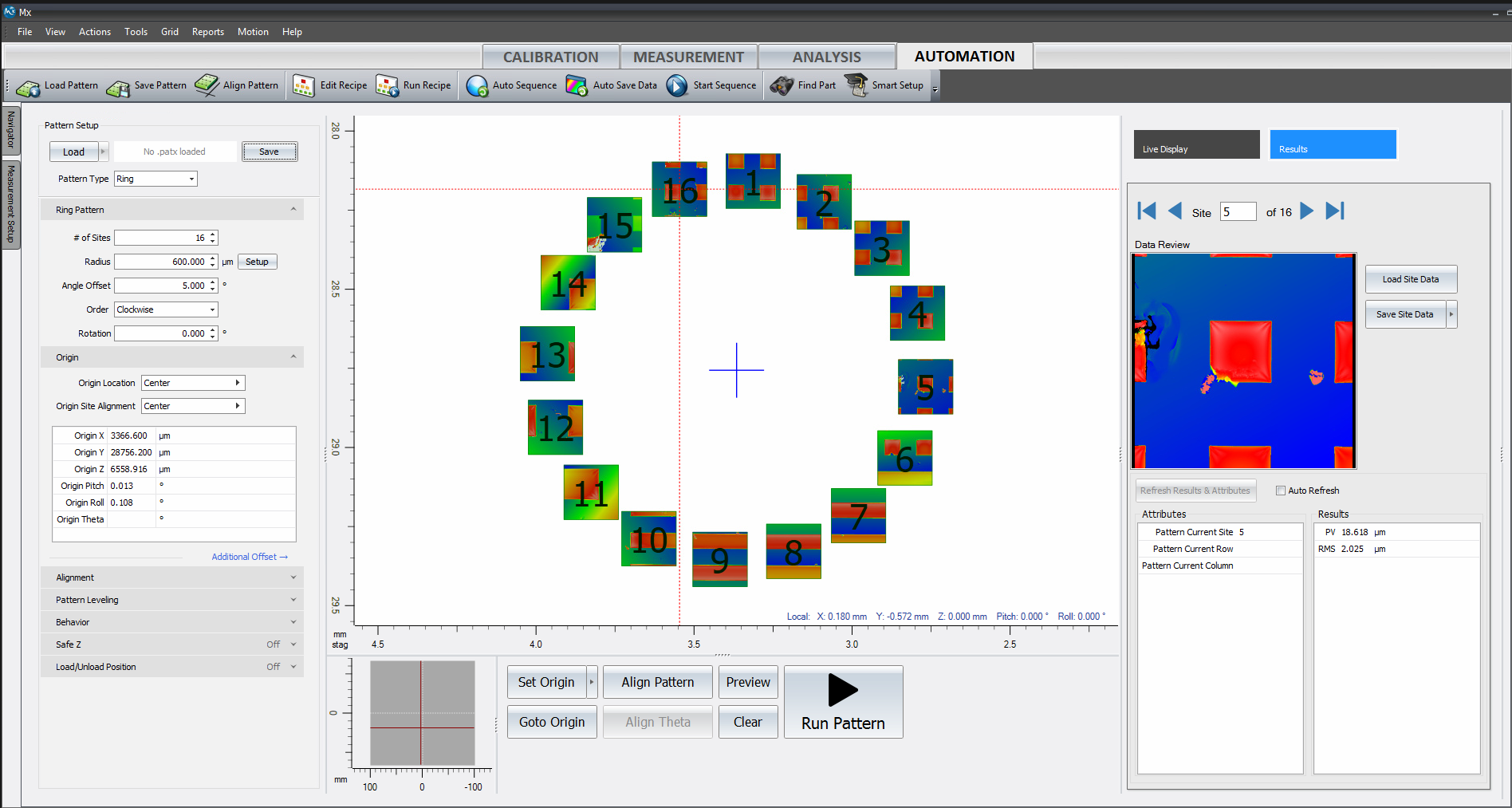
Mx 9.1 software extends Zygo's collaborative metrology software with Asphere+ Analysis functionality, providing a common toolset to explore aspheric surface data obtained using any instrument.
CT-data analysis software for inspection has a quality role in nearly every industry that has critical parts and processes that need monitoring for faults and variations. These include automotive, aerospace and electronics, among others. Volume Graphics' software tracks, analyses, and visualizes porosity/inclusions, delaminations, fiber or grain orientations, deformations and areas of low density and weakness.
Version 3.40 of the edge products includes a number of new features that greatly facilitate integration with standard Docker IT solutions. With version 3.40 of its edge products, Softing Industrial continues its commitment to improving connectivity at the interface of OT and IT and facilitating the use of standard IT management and monitoring solutions.
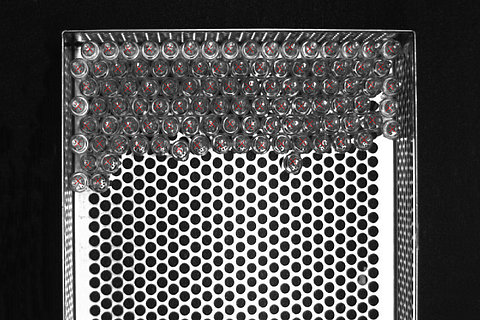
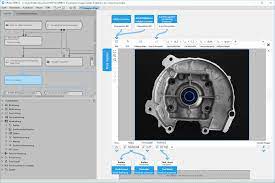
The deep learning technology for object detection is now also available in MERLIC. The "Find Object" tool locates trained object classes and identifies them with a surrounding rectangle (bounding box). Touching or partially overlapping objects are also separated, which allows counting of objects.
The EdgeLine Bevel technology offers several key advantages over traditional methods that allow specific beveling techniques to be performed without tilting the laser head, reducing overall processing time, and eliminating the need for separate work center processes.
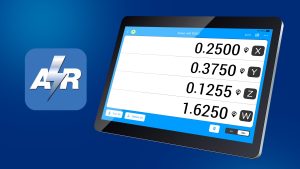
Two key user advantages of the droPWR app are split-screen functionality and dynamic zoom. The split-screen capability allows users to multitask—having more than one application displayed at a time (the readout application on one side and part print on the other, for example).