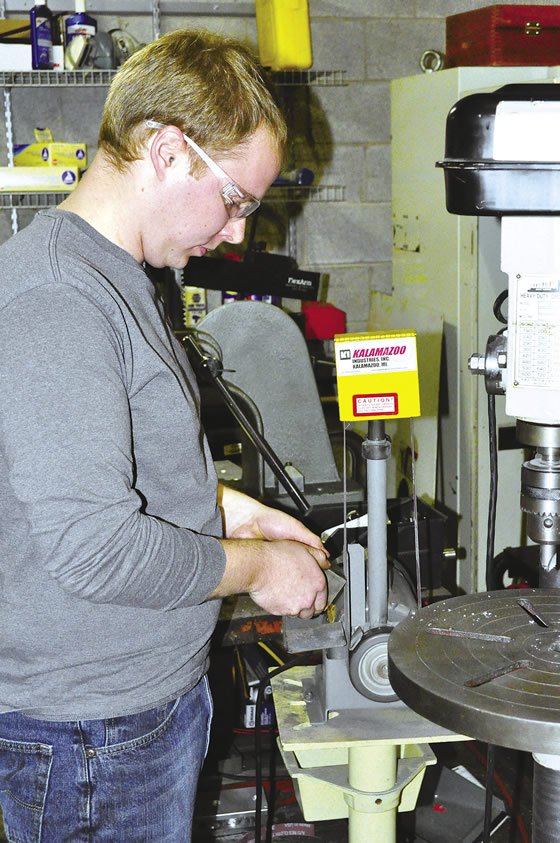
Train your workers to sharpen their skills and keep them on the job, suggests this month's Shop Technology column in Cutting Tool Engineering magazine.
Hand scraping mating surfaces on CNC machine tools helps maintain high levels of machining accuracy and reduces wear and tear, resulting in a long, stable and productive life for the machine, as detailed in a new white paper from machine tool builder Okuma America Inc., Charlotte, N.C.
The University of Tennessee—Knoxville, a longstanding member of the Council on Competitiveness, was selected by the White House to lead a public-private partnership of 122 leading companies, universities, research laboratories and non-profits that will create a $250 million manufacturing innovation hub.
Cutting Tool Engineering magazine hosted a Webinar Dec. 10, 2014, featuring Mike MacArthur, vice president of engineering at the RobbJack Corp. Following the main presentation, titled "Technologies & Strategies for Composite Drilling, Routing and Trimming," CTE Publisher Don Nelson held a brief Q&A session with questions submitted by the audience.
Dr. Jeffrey Badger, author of the "Ask the Grinding Doc" column in Cutting Tool Engineering magazine and host of CTE's Grinding Doc Video Series, previews his 3-day High Intensity Grinding Course.
A machinist wrote to Dr. Jeffrey Badger, author of the "Ask the Grinding Doc" column in Cutting Tool Engineering magazine, because the "old-timers" in the shop tell him he has to dress at the same wheel speed he uses to grind. The machinist wanted to know if that was true, and, if so, why?
A shop surface grinding 12" x 36" plates has to remove 1/8" of material on both sides, but the cycle time is a killer. To find a way to reduce the cycle time, the shop turned to Dr. Jeffrey Badger, author of the "Ask the Grinding Doc" column in Cutting Tool Engineering magazine and the host of our Grinding Doc Video Series.
Machine shop managers in various regions across the country say they have struggled to fill open positions, and that the job applicants they get often do not have the requisite skills. But the experience of one shop in Massachusetts suggests that the real problem isn't a lack of willing job applicants as much as it is a lack of pertinent training programs.
Dr. Jeffrey Badger, the host of Cutting Tool Engineering's Grinding Doc Video Series, fields a question from a shop hoping to find a faster way to find the sweet spot when cylindrical-plunge grinding tugsten-carbide shafts. About the Grinding Doc Video Series: Thanks to his work as an independent grinding consultant and the author of the "Ask the Grinding Doc" column in Cutting Tool Engineering magazine, Badger routinely receives questions about grinding from shops all over the world.
A shop that cylindrical-grinds tungsten-carbide is running into trouble maintaining optimal parameters when switching to a larger diameter. Dr. Jeffrey Badger, the host of Cutting Tool Engineering's Grinding Doc Video Series, offers some insight.
A shop seeks relief from the burn experienced during its creep-feed grinding operations. Given that slowing down the feed rate only helped a little, and only for a short time, the shop sought an alternative solution from Dr. Jeffrey Badger, the host of Cutting Tool Engineering's Grinding Doc Video Series.