

How Better Workholding Cuts Hidden Costs and Boosts Spindle Uptime
The bedrock of success How Better Workholding Cuts Hidden Costs and Boosts Spindle Uptime. By Austin Heisick In many machining environments, workholding is still evaluated using narrow criteria: can the workholding securely hold the part, and how much does it cost? While ensuring adequate clamping force is critical, this perspective overlooks the broader role workholding plays in CNC machining.
The bedrock of success
How Better Workholding Cuts Hidden Costs and Boosts Spindle Uptime.
In many machining environments, workholding is still evaluated using narrow criteria: can the workholding securely hold the part, and how much does it cost? While ensuring adequate clamping force is critical, this perspective overlooks the broader role workholding plays in CNC machining. Workholding is more than just a vise. It is the foundation of your machining process and directly impacts:
setup time and complexity,
process stability,
cutting tool performance and lifespan,
machine tool utilization, and
overall profitability.
The challenges facing CNC machine shops today include labor shortages, shorter lead times, smaller lot sizes, greater part variety and lower prices. All of these are amplified by inefficient workholding and impact your profitability every day. Yet, the costs associated with inefficient workholding rarely appear as line items in the budget. On the shop floor, however, these costs usually show up in a variety of ways: a machine sitting idle, an operator watching a machine after pressing cycle start, premature cutting tool wear, or increased inspection frequency.
In contrast, better workholding can benefit a shop’s operations by:
reducing setup times and recouping lost spindle utilization,
improving process stability and part quality,
better cutting tool performance and life, and
increased operator confidence.
Reduced setup times and lost spindle utilization
Setup time is one of the most significant contributors to lost spindle utilization and reduced profitability. In many shops a new job or operation requires a time-consuming setup process that includes indicating, aligning vises, replacing jaws and verifying part location. Each of these steps is time-consuming and occurs while the spindle is stopped. This is particularly impactful in high-mix, low-volume machining environments where setup time can sometimes exceed the job’s run time.
Review the print ads from this magazine to continue
This quick advertiser review unlocks the rest of the article and keeps the full-screen reader focused on the ads instead of the page chrome.
Advertisers included in this article experience
Print placements connected to this article
Beckett Packaging
Beckett Packaging print ad
Print ad listed on page 31 of the June/July 2026 issue.
Visit Beckett Packaging View this placement in the issue recordJ.W. Done Co.
J.W. Done Co. print ad
Print ad listed on page 31 of the June/July 2026 issue.
Visit J.W. Done Co. View this placement in the issue recordEltool Corp.
Eltool Corp. print ad
Print ad listed on page 32 of the June/July 2026 issue.
Visit Eltool Corp. View this placement in the issue recordRush Machinery
Rush Machinery print ad
Print ad listed on page 32 of the June/July 2026 issue.
Visit Rush Machinery View this placement in the issue recordPrint ads from this magazine
Print ad listed on page 31 of the June/July 2026 issue.
Continue reading
June/July 2026
Workholding systems that rely on the operator to perform all steps of the setup process inherently fosters variability and delays. Each setup is a one-off process dependent on each operator’s skill level. This not only increases setup time, but makes it difficult to train operators and achieve a consistent setup across multiple shifts and different machines.
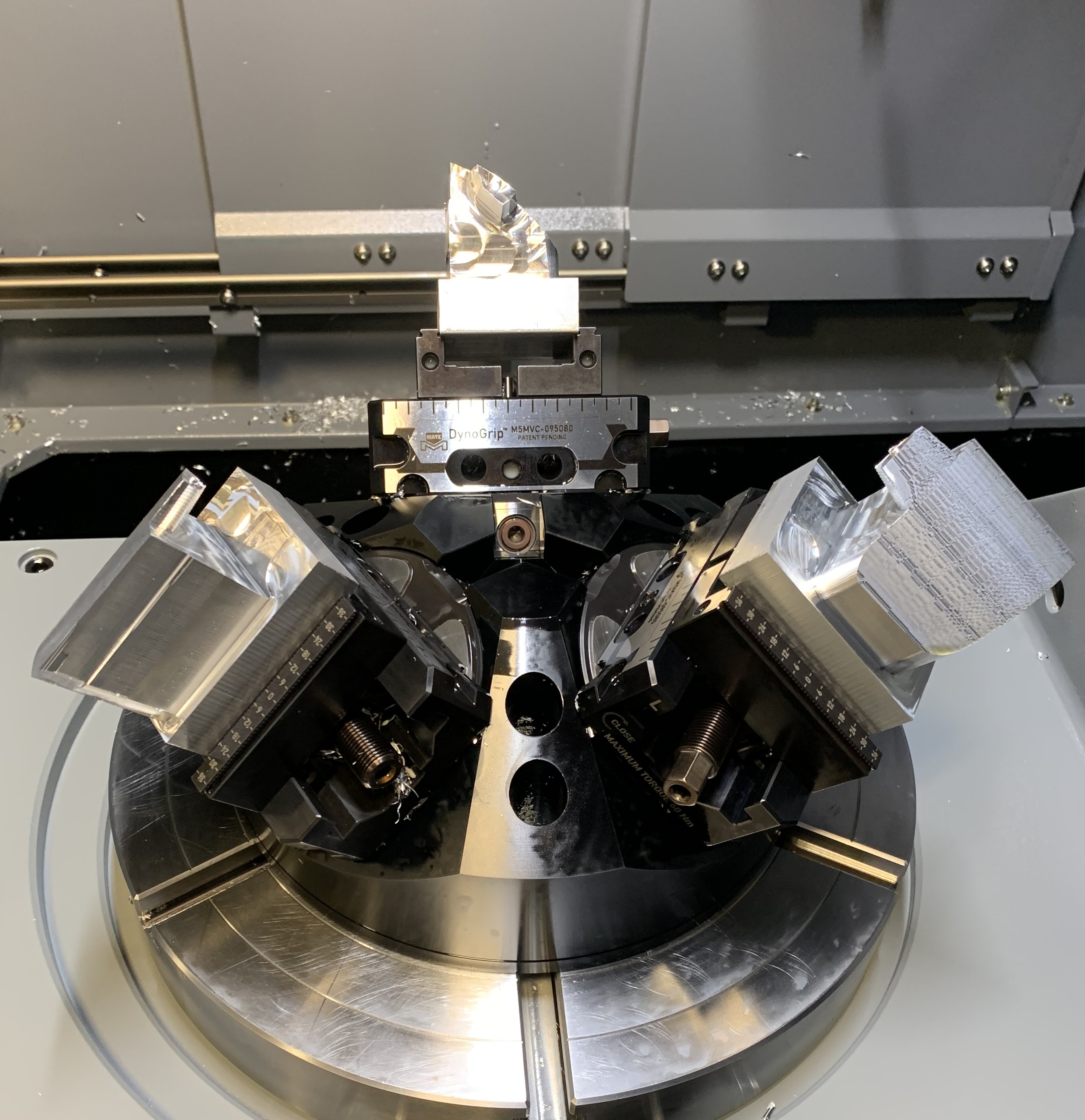
Selecting the correct workholding solution can ease this burden. In particular, zero-point workholding systems offer high repeatability and standardize the top tooling mounting interface. Choosing a workholding system that offers standard setup-reducing features, such as quick-change jaws and precision ground locating features for machine tool probing, will further simplify the process and allow setups to be installed and removed without re-indicating. Once a zero-point system is installed, it becomes a repeatable and reliable foundation for all future setups. The result is simple: more time cutting chips and less time setting up.
Improved process stability and part quality
When dimensions drift or it becomes difficult to hold a required surface finish, it’s common to blame the cutting tool or the machine tool, which leads the operator to slow down speeds and feeds or increase inspection frequency. In many cases, however, the instability originated from the workholding.
When the workpiece is not held securely, small movements and vibrations affect how a cutting tool engages the material and how it moves through the material. This directly impacts your ability to achieve tight tolerances and smooth surface finishes. Any inconsistency in the workholding is amplified through the cutting tool and ultimately affects the workpiece quality.
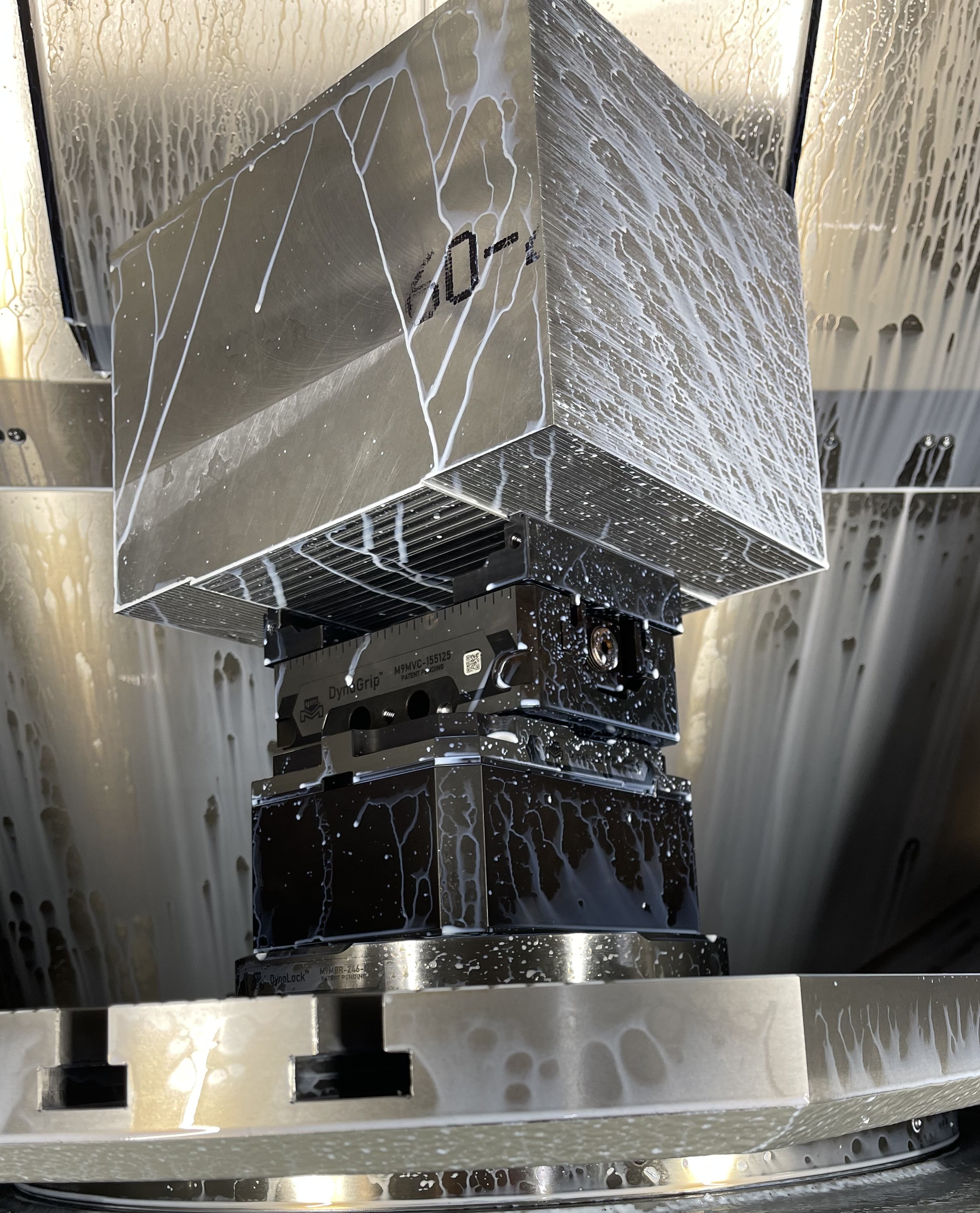
Utilizing a workholding system that incorporates self-centering vises with high clamping force to minimize jaw lift will reduce variability, increase process stability and improve workpiece quality. Self-centering vises reduce the need for constant offsets by keeping the workpiece centerline in the same position despite variations in saw-cut blanks or different workpiece lengths. Maximizing clamping force minimizes workpiece movement and vibration. Reducing jaw lift and part lift maintains process stability and minimizes lost clamping force to jaw deflection. A stable and dependable machining process also reduces cycle time and inspection frequency.
Better cutting tool performance and life
Cutting tool performance is closely tied to the stability of the machining process. When the workpiece is not held rigidly, vibration and chatter will occur at the cutting interface. This leads to uneven cutting tool wear, reduced cutting tool life and, in some cases, premature cutting tool failure. This is particularly important with the recent spike in carbide costs and the subsequent increase in cutting tool prices.
When considering workholding solutions, maximizing holding force and improving cutting tool access are critical to maximizing cutting tool life. To achieve maximum cutting tool access, it’s beneficial to use a modular workholding system. This will allow you to quickly and easily match your workholding. Improved cutting tool access means shorter, more rigid cutting tools, a reduction in chatter and vibration, improved surface finishes and extended cutting tool life. Improved holding force and cutting tool access reduce cutting tool cost and process variability.
Increased operator confidence
Operator involvement is rarely noticed, but it is an impactful hidden cost associated with workholding. When the workholding setup is inconsistent or unreliable, the operator will often stay close to the machine, sometimes with their hand over the emergency stop button, instead of starting work on the next machine or performing other tasks. This hidden cost presents itself as poor labor utilization, increased overtime and scheduling delays. The machinist often takes the blame rather than the true root cause, leading to poor morale and increased turnover, further exacerbating labor shortages.
A reliable workholding solution with high accuracy, repeatability and holding force will reduce this dependency. Operators should feel confident walking away from the machine after pressing cycle start so they can take care of their other responsibilities. Consistent clamping force, predictable part location and repeatable mounting produce a workholding setup that allows your CNC machines to run unobserved during the machining process.
Workholding is the process foundation
A more effective way to evaluate workholding is to view it as the foundation of your CNC machining operations, rather than a standalone component. Workholding connects the machine tool, the cutting tool and the workpiece. It determines how the part is located, how it withstands cutting forces, and how consistently a part can be machined. For operators, workholding impacts the speed with which they can transition between parts, the level of confidence they feel when running parts, and the ultimate workpiece quality they produced.
When workholding is optimized as the foundation of the CNC machining process, setup becomes faster, easier to train, and more consistent. Cutting chips becomes more stable, cutting tool performance improves, and operators gain confidence in the process. From an organizational perspective, this approach aligns workholding performance with the broader process and efficiency goals of the entire organization.
Improving the entire machining process
Hidden machining costs often result from small inefficiencies that accumulate over time. Workholding often plays a significant role in many of the inefficiencies, even though it is rarely identified as the source. Improving workholding directly reduces setup time, improves repeatability, extends cutting tool life, increases cutting tool access, and increases operator confidence. The result is higher machine tool utilization, improved part quality and improved labor productivity.
In manufacturing environments where productivity and consistency are critical to success, workholding should be evaluated not just for its ability to hold a part, but also for its ability to support and improve the entire machining process.

Related

Subscribers can use MFGAxis notes, saves and discussion tools with their innoNET account.


