


Facing My Simplest Problems
Face milling can make for better connections.
Face milling can make for better connections.
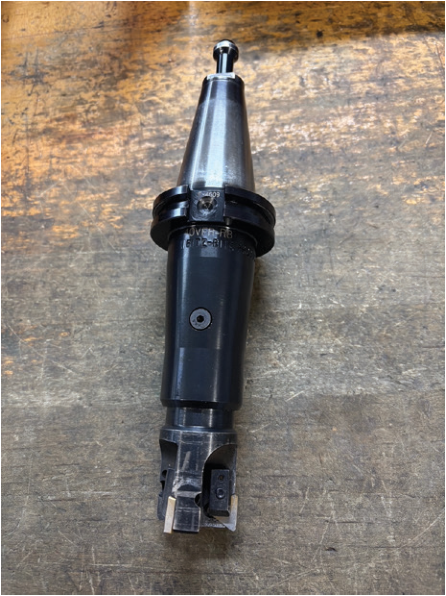
When machining mating parts that need to fit together tightly, relying on a machined surface from another process or operation can lead to miserable results. This is why we include face milling in our list of operations when making a set of legacy connectors for our Civil Engineering students. Figure 1 shows our 1.500″-diameter face mill in the same R-8-to-CAT40 adapter mentioned in another article, “Getting a Grip on Toolholders.” We manufactured two distinct types of connectors: the “lollipops” and “quarter-turn locks,” as we call them. These are the same perpetually banned connectors that I’ve mentioned in the past. They have served me almost as well as they’ve served the Civ-Eng student bridges.
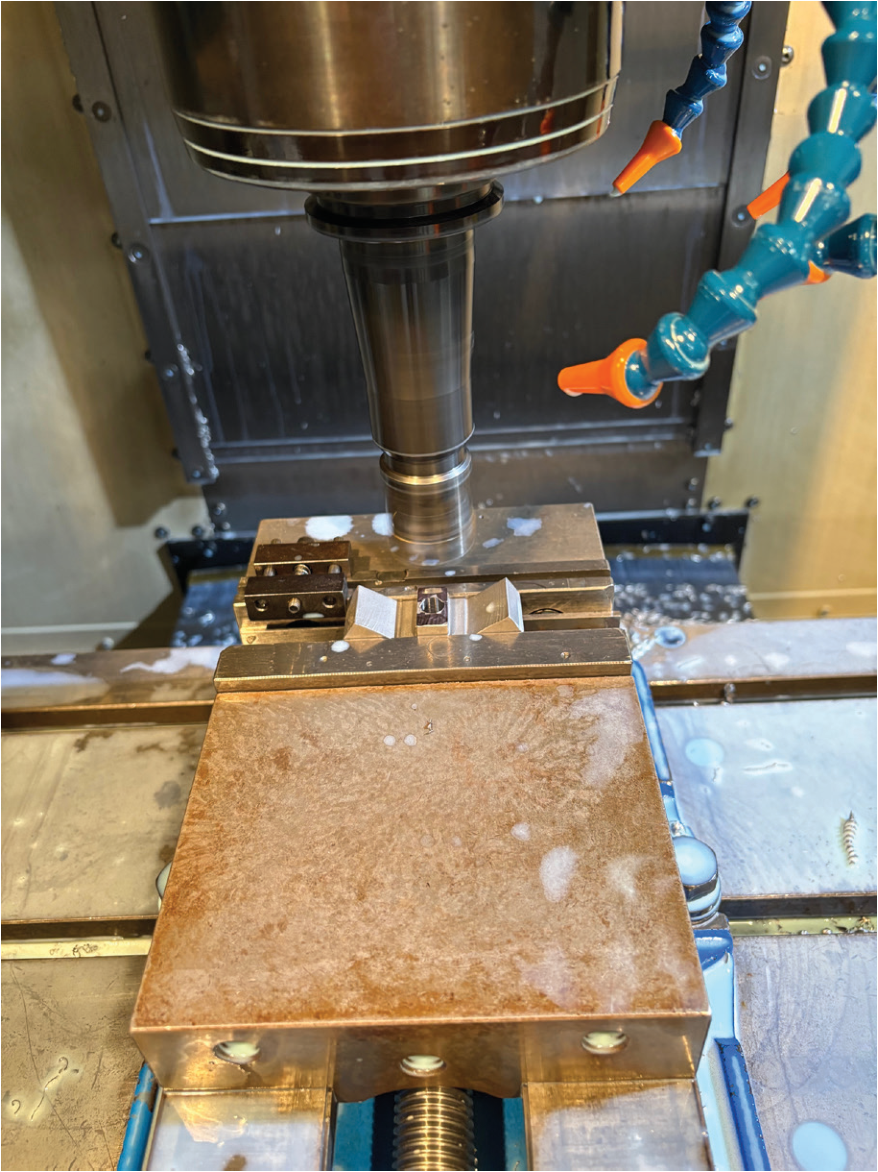
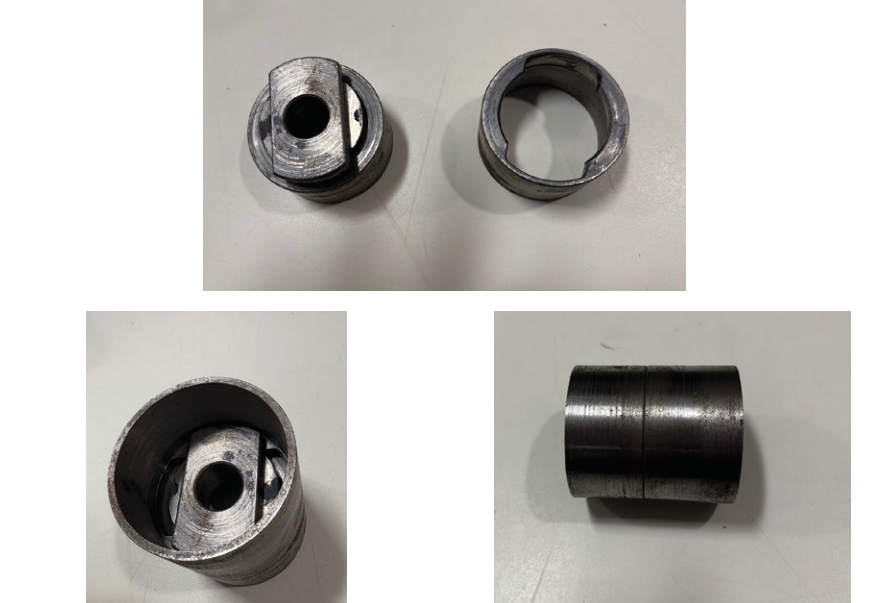
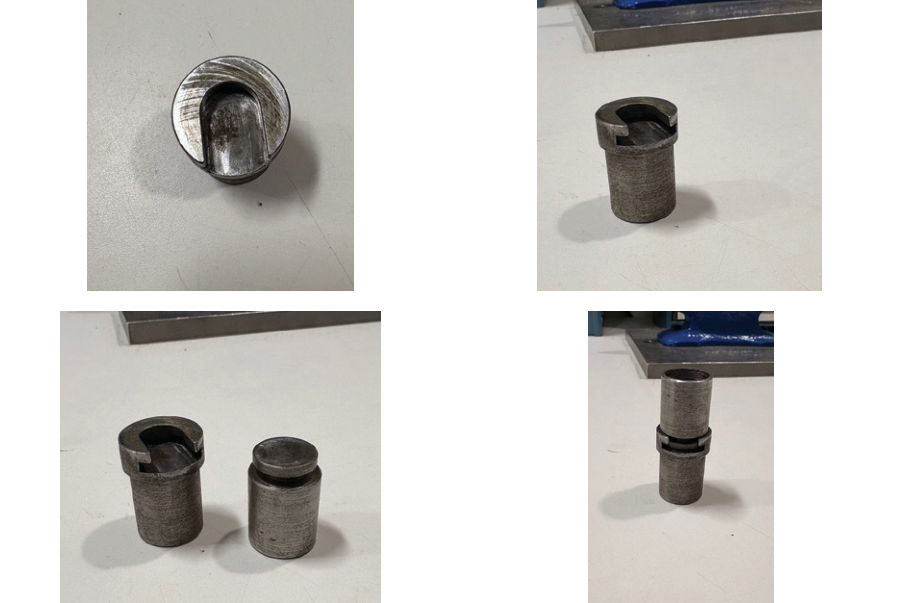
After these parts are mostly completed on our CNC lathe, we remove the blanks, saw them from the barstock while leaving 0.030″ to 0.060″ of excess material and place them in our fixture in the CNC mill—an Atlas-brand three-jaw chuck for mill tables. We then deck off the excess with our face mill before pocketing and back-facing the parts so the mating pieces lock in place. Figures 2 and 3 show sets of mating parts separated and assembled.
Another major use for our face mills is finishing parts to height after completing the feature work. For this past year’s Formula SAE car, one of the leaders of the many subassembly teams came up with a sharp set of pedals. I machined both pedals from one large block of aluminum, cutting deeper than the parts’ finished thickness. Once the feature work was complete, I sawed along the end mill’s path to separate the parts from the stock.
After bolting fresh soft jaws into our vise, I clamped a piece of scrap metal between them and machined the negative profile of the pedals as pockets in the jaws. I then seated one pedal at a time in the vise, set the face mill depth and let it buzz away the excess.
View print ads from this spread
Review the ads on this magazine spread to continue reading. Each ad takes two seconds; a two-page ad counts once.
Advertisers on this magazine spread
Print placements on this magazine spread
J.W. Done
J.W. Done — October 2026
Printed 11 in the October 2026 issue of Cutting Tool Engineering.
Visit J.W. Done View this placement in the issue recordPrint ads from this magazine
Printed 11 in the October 2026 issue of Cutting Tool Engineering.
Continue reading
October 2026 | Vol. 78 | Issue 8
We also use our face mills to finish another legacy part: steel tubing that we face to length to make a housing for a gearbox project. The project introduces students to basic shop practices and is part of one of the hallmark courses for Mechanical Engineers here at Lafayette College. Students learn how to interact with in-house machine shops, the limitations of what can and cannot be machined easily, and how to design parts for manufacturability (abbreviated “DFM” in industry).
When selecting a face mill, consider the workpiece material, the logistics of stocking inserts and the parts being machined. The part mostly dictates the cutter’s maximum diameter. We use an off-the-shelf, three-tooth face mill that accepts standard TPG-320-series turning inserts for most of our facing work. Many of our parts fit inside a 6″ × 6″ × 6″ envelope, so our cutter works well. We typically keep TPG-322 inserts in the holder because they are a good general-purpose choice for most soft metals, ferrous or nonferrous. For hot-rolled steel or dirty material that requires heavy stock removal, we switch to TPG-323 inserts. For skim cuts on stainless steel or other tough materials, we use TPG-321 inserts for a sharper tool tip and finer finish.
Photos courtesy of Lafayette Engineering.
For our 4″ face mill, we use square SPG-420-series inserts, largely because they are easy to source and have the strength and durability for nearly any material we machine. This cutter uses seven inserts per change, so replacing them costs considerably more than replacing the three inserts in the smaller cutter. However, each insert has four cutting edges, and we use the 4″ face mill only about three times a year, which helps offset the cost. The 1.500″ mill uses readily available turning inserts that can be sourced overnight. We use that mill for nearly every facing operation that doesn’t require the larger cutter.
I hope you enjoyed this look into our shop’s face-milling practices. It may be a simple and mundane process, but it is important. Don’t be afraid to face-mill any challenge posed to your shop.
Related

Subscribers can use MFGAxis notes, saves and discussion tools with their innoNET account.