

Portable smart drill: Drilling Performance
A device designed to travel brings electromagnetic and CNC technology to holemaking applications away from the machine shop.
A device designed to travel brings electromagnetic and CNC technology to holemaking applications away from the machine shop.
Developed by Cleveland-based Zagar Inc., the Z-Mag portable CNC drill and tap machine, or DTM, can be taken to remote sites to assist with shipbuilding, bridge construction and other jobs for structures that are installed permanently or too large to move.
“Right now, what’s being used in the industry (for these applications) is either hydraulic or pneumatic drills that have no real precision,” said Brian Zagar, vice president of sales. “So I said, ‘What can we do as far as (developing) a portable CNC machine?'”
For machining at a job site, Z-Mag DTM features an electromagnetic base with 5,000 lbs. of hold-down force on any type of ferrous metal. In addition to drilling and tapping, the device can be used for reaming and combination tool operations. Although magnetic force firmly attaches the machine to ferrous structures, he doesn’t recommend using it in an inverted orientation due to the danger it could pose to people underneath if power to the unit unexpectedly is cut off.
Z-Mag DTM is not a standard item, so its specifications vary, but a base unit measures 10″ wide × 20″ high × 20″ deep and weighs 150 to 175 lbs. While designed to be portable, the unit is heavy enough that operators need a wheeled cart or dolly to move it around.
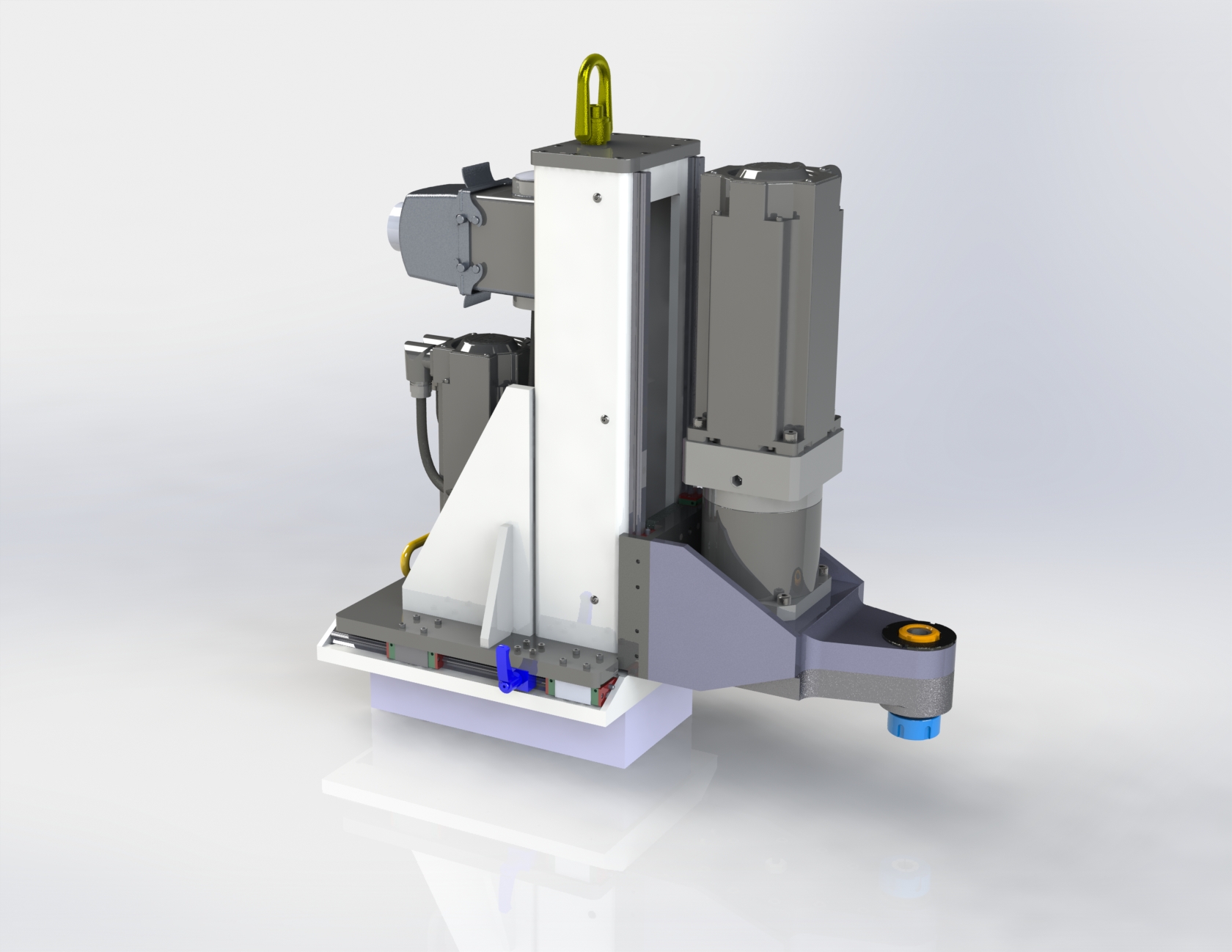
Portable and programmable, the Z-Mag CNC drill and tap machine can work in remote locations. Image courtesy of Zagar
Besides its electromagnetic base, Z-Mag DTM includes a sturdy cast-iron frame, a linear rail system and an HSK-style spindle adapter that lets operators use a variety of HSK toolholders. Key operational specifications include 13″ of stroke, 1,300 lbs. of force and spindle speeds up to 3,000 rpm.
Review the print ads from this magazine to continue
This quick advertiser review unlocks the rest of the article and keeps the full-screen reader focused on the ads instead of the page chrome.
Advertisers included in this article experience
Print placements connected to this article
Platinumtooling
THE NAME TO KNOW FOR...
LIVE TOOLS / ANGLE HEADS / SPEED MULTIPLIERS SWISS COMPONENTS / MARKING TOOLS / KNURLING TOOLS Platinum Tooling is the exclusive North American importer of Heimatec Live Tools and Angle Heads, Tecnicrafts Swiss Collets and Guide Bushings, Henninger Spindle Speeders, AMF Cleaners and Markers and Quick Knurling and Marking Tools
THE NAME TO KNOW FOR... LIVE TOOLS / ANGLE HEADS / SPEED MULTIPLIERS SWISS COMPONENTS / MARKING TOOLS / KNURLING TOOLS Platinum Tooling is the exclusive North American importer of Heimatec Live Tools and Angle Heads, Tecnicrafts Swiss Collets and Guide Bushings, Henninger Spindle Speeders, AMF Cleaners and Markers and Quick Knurling and Marking Tools. Platinum Tooling offers a wide selection of machine tool accessories for most machine brands, including standard and custom tools to help with the most challenging applications. If you need live tooling, we’re here to help. 16 E. Piper Lane, Ste.128 | Prospect Heights, IL | 847-749-0633
Visit Platinumtooling View this placement in the issue recordPrint ads from this magazine
LIVE TOOLS / ANGLE HEADS / SPEED MULTIPLIERS SWISS COMPONENTS / MARKING TOOLS / KNURLING TOOLS Platinum Tooling is the exclusive North American importer of Heimatec Live Tools and Angle Heads, Tecnicrafts Swiss Collets and Guide Bushings, Henninger Spindle Speeders, AMF Cleaners and Markers and Quick Knurling and Marking Tools
THE NAME TO KNOW FOR... LIVE TOOLS / ANGLE HEADS / SPEED MULTIPLIERS SWISS COMPONENTS / MARKING TOOLS / KNURLING TOOLS Platinum Tooling is the exclusive North American importer of Heimatec Live Tools and Angle Heads, Tecnicrafts Swiss Collets and Guide Bushings, Henninger Spindle Speeders, AMF Cleaners and Markers and Quick Knurling and Marking Tools. Platinum Tooling offers a wide selection of machine tool accessories for most machine brands, including standard and custom tools to help with the most challenging applications. If you need live tooling, we’re here to help. 16 E. Piper Lane, Ste.128 | Prospect Heights, IL | 847-749-0633
Continue reading
December 2022
For applications ranging from light roughing to finishing, users can operate Z-Mag DTM without the need to feed by hand thanks to a precision ballscrew feed system. Zagar said the mechanical ballscrew also makes the unit a better choice for use with carbide cutting tools than hydraulic or pneumatic systems, which lack the rigidity of a ballscrew and therefore make it more likely that carbide tools will chip or shatter as they’re fed into a workpiece.
On the other hand, Z-Mag DTM can cause problems for tools made of high-speed steel. He explained that the magnetic field created by the unit can magnetize HSS tools, causing chips to stick to the flutes when cutting through ferrous materials.
Z-Mag DTM’s ballscrew is driven by a servofeed motor that provides consistent feed rates and precise hole depths, according to the manufacturer. In addition, Zagar pointed out that a servomotor on the spindle produces a consistent amount of torque through its entire speed range, unlike regular AC spindle motors on competitive systems.
With a servomotor, “you have the same amount of torque at 10 rpm that you do at a couple of hundred rpm,” he said. “With an AC motor on there, you have to run very slow or at a nominal speed to get the full torque out of that spindle motor.”
Of all its features, though, Zagar thinks that the one that makes Z-Mag DTM stand out most is its programmability. Operators can program feeds, speeds, dwells and peck cycles using a hand-held human-machine interface with a touch screen, which is connected by cable to the unit’s control box.
Z-Mag DTM “is unique because it’s the first smart mag driller in the industry,” he said. “You’ve seen a magnetic base before but only with hand drilling. With this, you can lock to a position, stand back with a teach pendant and — after a program is written — just hit ‘go,’ and it drills.”






