Driven to finish: People & Companies
With the many complicated components in an automotive system, one tiny burr, misplaced fit, chip, ding or uneven finish can wreak havoc and affect the performance of the entire engine. The industry looks for perfection down to the micromillimeter, and that's where technology for finishing comes in.
With the many complicated components in an automotive system, one tiny burr, misplaced fit, chip, ding or uneven finish can wreak havoc and affect the performance of the entire engine. The industry looks for perfection down to the micromillimeter, and that’s where technology for finishing comes in. Products exist to tackle various aspects of automotive finishing, including Norton Finium, Orbitool and DeBurr-Z.
Knock Down the Peaks
When it comes to surface condition, smoothness really matters. Ra, or the arithmetic average of surface heights measured across a surface, gives a snapshot of the microscopic peaks and valleys on any given part.
“When you’re talking about bearing surfaces on a crankshaft or camshaft, even at a fine Ra there is wear on the shaft and bearings,” said David Goetz, senior application engineer at Norton | Saint-Gobain Abrasives in Worcester, Massachusetts. “Although it may be slight, all that metal ends up in the engine.”
Norton Finium microfinishing films use a proprietary resin system to hold grains in place for finishing in automotive engine applications. The film-backed ultrafine grit abrasives come in a range of shapes, sizes and grits to fit a wide variety of requirements and eliminate the concern of grain fallout, which could leave coarse scratches and result in defective parts.
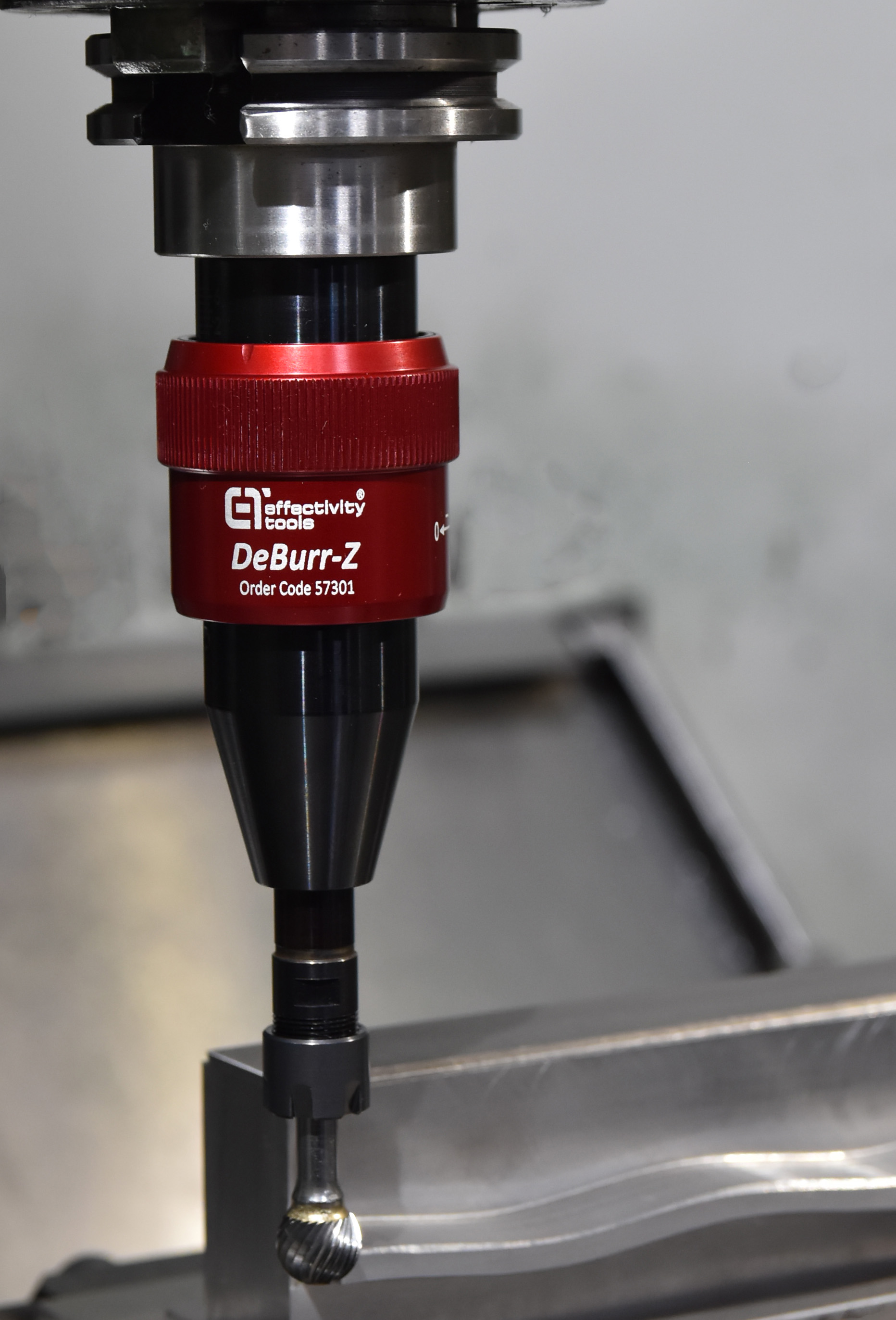
DeBurr-Z follows the outer contours of the component with an adjustable force accommodating the type of material and the desired edge break. Image courtesy of Tapmatic
Used to finish the surface of many automotive components — including camshaft lobes and journals; crankshaft mains, pins, thrust walls and oil seals; and transmission shafts — Norton Finium is wound onto a roll that varies in length depending on the machine being used. The width of the film depends on the part being polished. A user places the film over polishing shoes attached to polishing arms while the part is secured in a fixture and the polishing arms are clamped around the part. The array keeps contact with the part and Norton Finium for a given amount of time, generating the desired finish.
“Polishing is a rubbing or abrasion process where the cutting fluid (mineral seal oil or polishing oil), the Finium abrasive and resin from the bond form a flurry, and that’s what’s doing the finishing,” Goetz said. “Typically, we’re only taking off between 3 and 5 μm when we’re lapping. By polishing, you get a better surface condition and the engine runs more true. In turn, it cuts down on the vibration and noise and adds to the life of the product.”
Smooth the Burrs
In the past, deburring was treated as an afterthought in the automotive industry. The focus always had been on more efficiently making parts and vehicles, but nowadays manufacturers review costs and work hours for all aspects of production. And manual deburring is time-intensive and subject to human error.
“We’ve realized that many shops weren’t factoring in the cost of someone in the deburring department manually damaging or scraping the parts,” said Stan Kroll, partner and general manager of J.W. Done Corp. in Hayward, California. “There were cases where thousands of engine blocks weren’t deburred properly and now they have to go back to fix them. That gets costly very quick.”
From the standpoint of quality, automakers can track engine failures to the tiniest burr in a camshaft. With possibly thousands of complex parts, an engine can be affected by one particular cross-hole shaving that enters a timing system and can cause the entire engine to fail.
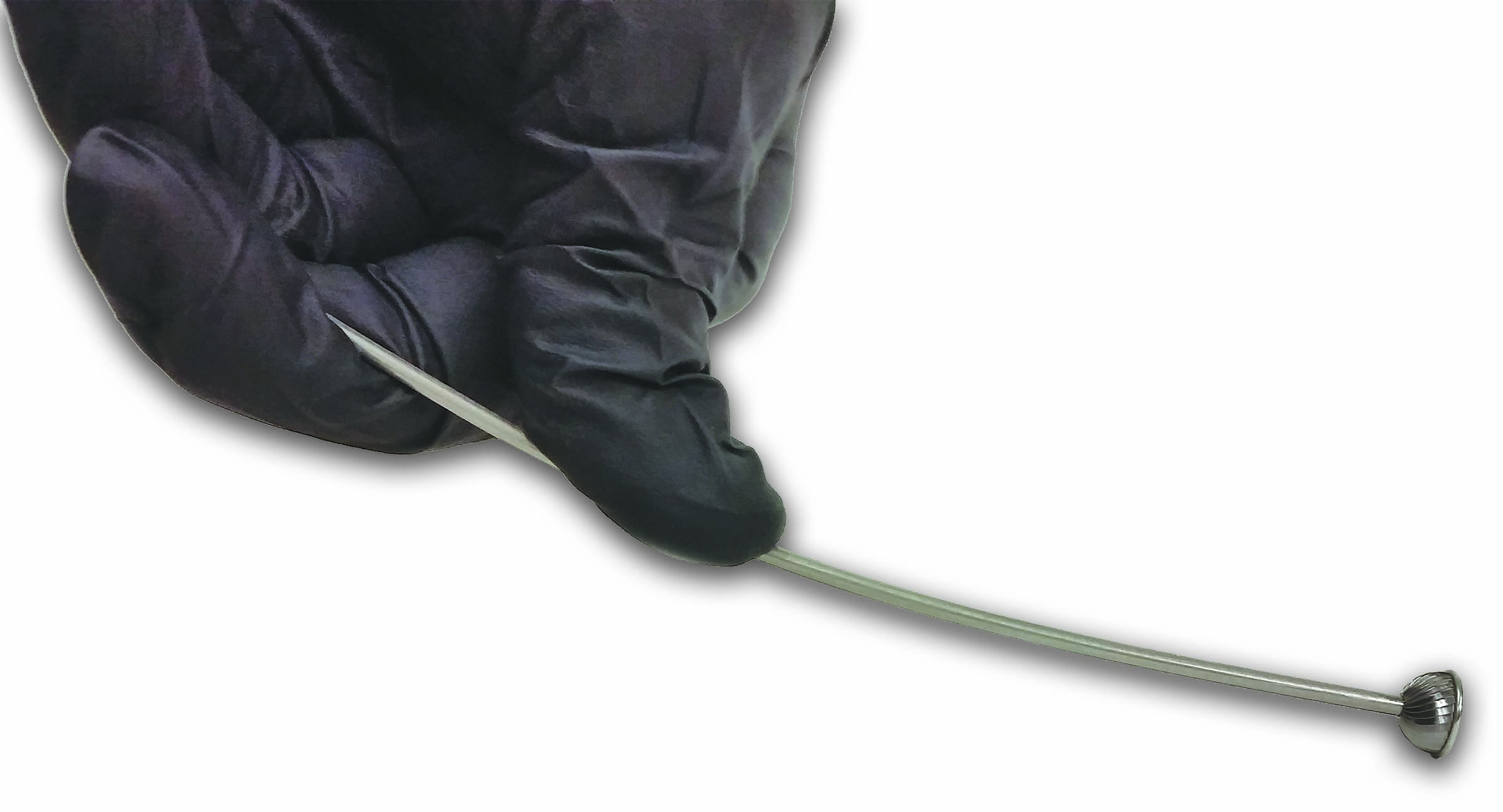
Orbitool’s flexible shaft allows a user to bend and pre-load the tool. Image courtesy of J.W. Done
“Improving those cross-holes gets us one step closer to increased reliability,” Kroll said. “Higher-quality reliable parts made economically and quickly is the goal.”
Review the print ads from this magazine to continue
This quick advertiser review unlocks the rest of the article and keeps the full-screen reader focused on the ads instead of the page chrome.
Advertisers included in this article experience
Print placements connected to this article
Platinumtooling
THE NAME TO KNOW FOR...
LIVE TOOLS / ANGLE HEADS / SPEED MULTIPLIERS SWISS COMPONENTS / MARKING TOOLS / KNURLING TOOLS Platinum Tooling is the exclusive North American importer of Heimatec Live Tools and Angle Heads, Tecnicrafts Swiss Collets and Guide Bushings, Henninger Spindle Speeders, AMF Cleaners and Markers and Quick Knurling and Marking Tools
THE NAME TO KNOW FOR... LIVE TOOLS / ANGLE HEADS / SPEED MULTIPLIERS SWISS COMPONENTS / MARKING TOOLS / KNURLING TOOLS Platinum Tooling is the exclusive North American importer of Heimatec Live Tools and Angle Heads, Tecnicrafts Swiss Collets and Guide Bushings, Henninger Spindle Speeders, AMF Cleaners and Markers and Quick Knurling and Marking Tools. Platinum Tooling offers a wide selection of machine tool accessories for most machine brands, including standard and custom tools to help with the most challenging applications. If you need live tooling, we’re here to help. 16 E. Piper Lane, Ste.128 | Prospect Heights, IL | 847-749-0633
Visit Platinumtooling View this placement in the issue recordPrint ads from this magazine
LIVE TOOLS / ANGLE HEADS / SPEED MULTIPLIERS SWISS COMPONENTS / MARKING TOOLS / KNURLING TOOLS Platinum Tooling is the exclusive North American importer of Heimatec Live Tools and Angle Heads, Tecnicrafts Swiss Collets and Guide Bushings, Henninger Spindle Speeders, AMF Cleaners and Markers and Quick Knurling and Marking Tools
THE NAME TO KNOW FOR... LIVE TOOLS / ANGLE HEADS / SPEED MULTIPLIERS SWISS COMPONENTS / MARKING TOOLS / KNURLING TOOLS Platinum Tooling is the exclusive North American importer of Heimatec Live Tools and Angle Heads, Tecnicrafts Swiss Collets and Guide Bushings, Henninger Spindle Speeders, AMF Cleaners and Markers and Quick Knurling and Marking Tools. Platinum Tooling offers a wide selection of machine tool accessories for most machine brands, including standard and custom tools to help with the most challenging applications. If you need live tooling, we’re here to help. 16 E. Piper Lane, Ste.128 | Prospect Heights, IL | 847-749-0633
Continue reading
December 2022
Traditional deburring methods include using abrasive brushes, reamers and carbide balls attached to a grinder, with an operator going after every hole to remove extra material. Some dedicated deburring tools, such as J.W. Done’s Orbitool, are designed strictly for cross-drilled hole deburring. The tool is used just like any cutting tool found on a lathe turret or a tool magazine of a CNC or milling machine.
Orbitool expressly removes burrs from the intersection of cross-holes. The operation can be tailored to leave a minimally broken edge or a blended radius.
“The original idea for the Orbitool came about specifically for aerospace fittings because of the difficult nature of their intersections and radius requirements,” Kroll said. “But it was applicable to one of our earliest customers, which was Ford, using it on camshafts.”
The cutting method is fairly traditional using a carbide rotary burr, but Orbitool features the combination of a flexible drive shaft made of tool steel, a carbide shaped cutter and a polished steel disk. This commonly is referred to as a lollipop cutter. The larger-diameter polished disk negates the risk of damage to a part.
“The flexible shaft allows us to bend and pre-load the tool,” Kroll said. “We have a protective ring to place against the wall, bend the shaft slightly and pre-load the cutting tool. The toolpath uses helical interpolation, otherwise known as a thread spiral or helix spiral. With the Orbitool, the operator doesn’t have to program any complex contours or even know precisely where their edge is or its precise shape. We pre-load the tool and place the helix spiral where deburring is needed. It’s the tool’s ability to self-select and constantly bend and flex to the environment around it that allows it to deal with an interrupted cut. It only cuts material in the area where you need deburring but won’t damage anywhere else.”
Other deburring tools exist to help with the top and underside edges. Tapmatic Corp. in Post Falls, Idaho, created DeBurr-Z, which works on a CNC machine for both compression and extension, allowing the cutting tool to follow the outer contours of the component. With an adjustable force, the pressure may be increased or decreased to accommodate the type of material and the desired edge break.
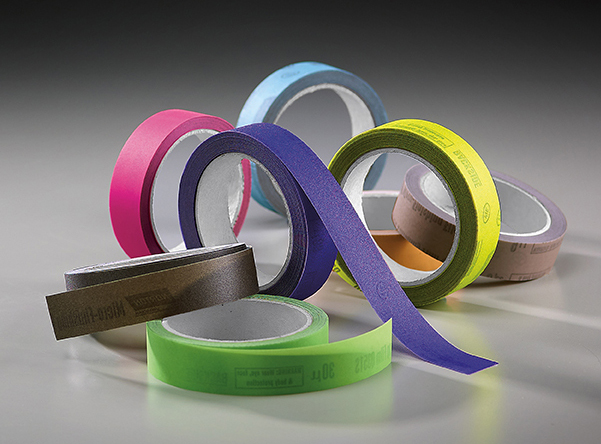
Norton Finium films can be custom-cut to meet customer-specific width and length requirements, core dimensions and edge designs. Image courtesy of Norton | Saint-Gobain Abrasives
Chamfering holes on a curved surface also presents problems for conventional deburring methods. Using a standard countersink tool results in inconsistent edge breaks. Going around the holes with the axially floating DeBurr-Z produces consistent results, said President Mark Johnson. In general, either angular- or spherical-shaped burr cutting tools are used to apply the right contact to the workpiece for chamfering or deburring the edge.
“The edges of the workpiece can often be a little difficult to identify or clearly define like in the case of castings, cross-holes or slots,” he said. “It can be difficult to follow the edges evenly, but a floating tool has the compensation that lets the burr cutting tool follow the edge even when its position varies.”
Mark the Spot
DeBurr-Z can be used for engraving, allowing a quicker approach to the workpiece and the ability to mark on curved surfaces.
“If you have a part number, logo, date or batch code, you can use it to mark the workpiece,” Johnson said. “The advantage of having the axial compression for engraving is it allows you to approach the workpiece faster and makes the engraving process quicker than it would be if you held the engraving tool in a solid holder. We also offer a ScribeWriter, which is a scribing tool; our TapWriter for dot peen marking, creating dots on the workpiece; and we offer our Marking Head for stamping the workpiece. It uses custom stamps or standard type to mark numbers, date codes and other information.”
When it comes to automotive parts and systems, it could be said that it’s not so much how you start but how you finish.
“They can machine the parts faster and better,” Kroll said, “but deburring and finishing is the last step. It may not be the most important, but it’s still a step you can’t skip. There will always be a finishing process required on the part after the machine but before its final destination. It’s the last, most important step before anything ships out in a sellable condition.”
Glossary terms in this article