Ceramic surprises: Turning Performance
When it comes to ceramic cutting tools, don't believe the old saying, "What you don't know can't hurt you." A lack of knowledge about ceramic cutters can put a big hurt on shop productivity.
When it comes to ceramic cutting tools, don’t believe the old saying, “What you don’t know can’t hurt you.” A lack of knowledge about ceramic cutters can put a big hurt on shop productivity. What’s more, even shops that are somewhat informed about ceramic cutting tools often aren’t getting the most out of the tools because they are unaware of lesser-known applications that are a good fit for ceramic machining, let alone recent developments that make the ceramic option more attractive than ever.
The main advantage of ceramic tools is the effectiveness with which they handle the heat generated by the cutting process.
“The big thing with ceramic is it conducts heat better than anything else,” said Steven Howard, marketing and engineering manager at NTK Cutting Tools USA in Wixom, Michigan.
When cutting with common tool materials, such as carbide, CBN and PCD, heat is not conducted away from the cutting edge, which eventually breaks down as a result, Howard explained. By contrast, he said, ceramics do a good job of transferring heat away from the cutting edge, thereby extending its life and the life of the tool as a whole.
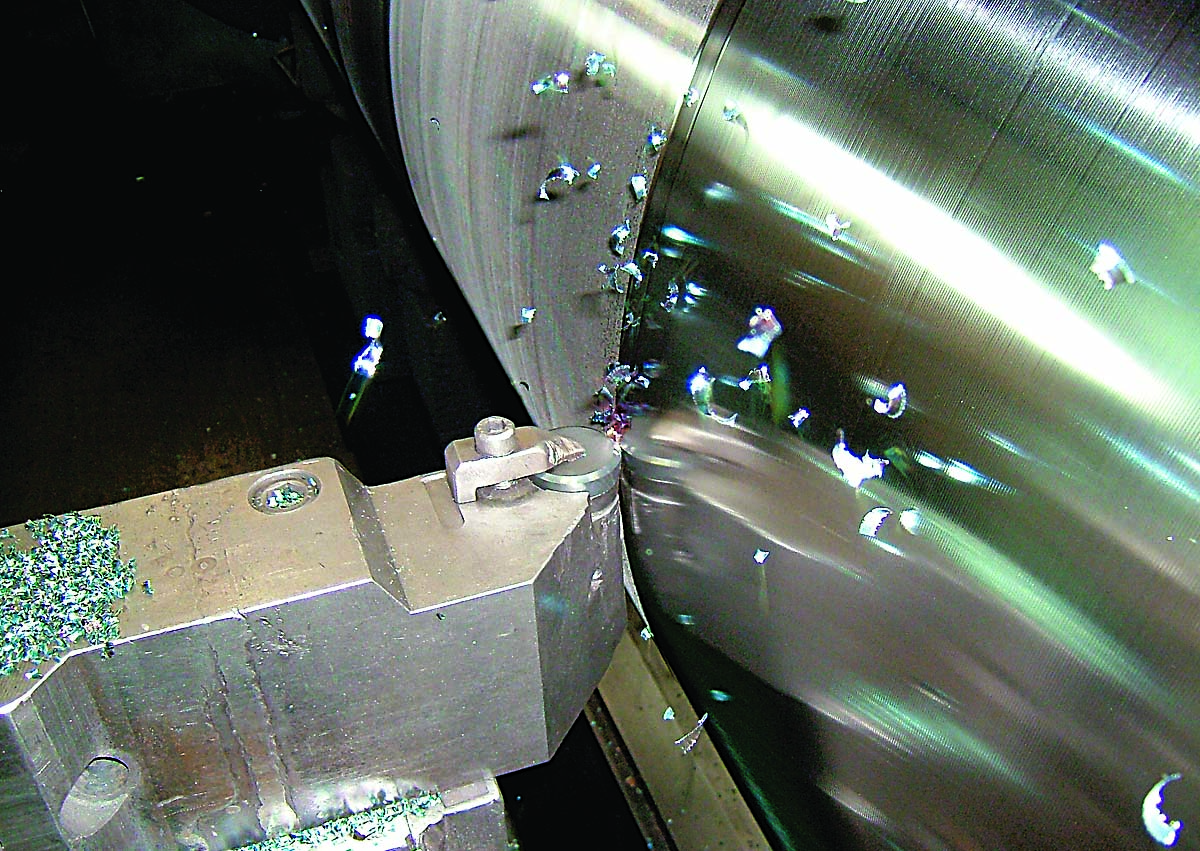
The amount of heat produced during the cutting process is a function of the cutting speed and the material being machined. So the ability of ceramics to conduct heat away from the cutting edge means that ceramic tools can run much faster than those made of carbide, CBN or PCD when cutting most materials, Howard said. He noted that while carbide tools cut heat-resistant alloys at 125 sfm, for example, ceramic tools can cut them at anywhere from 800 to 1,500 sfm.
“Speed takes time out of a cut, so you can make more parts in a day,” he added.
On the downside, Howard pointed out that the hardness of ceramic materials makes them brittle, so those who make tools out of ceramics can’t put very sharp edges on them. As a result, he said, ceramic tools don’t cut as efficiently as carbide tools.
” data-entity-type=”file” data-entity-uuid=”eb376408-4820-46be-8ae5-616566457008″ height=”959″ src=”/wp-content/uploads/legacy/inline-images/NTK_Ceramic%20End%20Mill_Cast%20Iron%20Part.jpg” width=”624″ />
In addition, he noted that ceramic tools are more expensive than their carbide counterparts. When it comes to tools with inserts, he said this is because ceramic inserts require a good deal of grinding while carbide inserts are easily mass-produced.
Depending on the amount of material needed to make an insert, ceramic inserts could be anywhere from 1.5 to four times more expensive than inserts made of more commonly used materials, said Martin Dillaman, global manager of engineering and applications at Greenleaf Corp. in Saegertown, Pennsylvania. Dillaman added that solid-ceramic tools probably cost two to four times as much as their counterparts made of more widely used materials. He added, however, that the higher cost of ceramic tools can be justified by savings in cutting time and throughput increases at shops that use them.
Even if shops aren’t put off by the higher cost of ceramic tools, shops may be unable to make proper use of the tools because their equipment can’t match the speeds for which ceramic tools have the capacity. Or shops actually may be afraid to reach those speeds.
Ceramics “run so much faster” than carbide, Howard said. “And with that comes a lot of fear. People say, ‘Wow, I can’t control this thing because I don’t have enough knowledge or skill.'”
Lesser-Known Applications
In general, Howard believes there’s a fairly widespread lack of knowledge about ceramic cutting tools in the machining industry. So he had no trouble identifying some lesser-known applications for these tools. One is cutting hardened stainless steel.
“Stainless steel is an area that a lot of people never think of ceramic for,” he said. “It’s got to be hard, though — above, say, 32 to 35 Rockwell — because we’re going so fast and (therefore) cut so hot.” If the steel is below that hardness level, “you will melt it and light it on fire.”
Another lesser-known ceramic application cited by Howard is cutting powder metal, which is popular in the automotive industry.
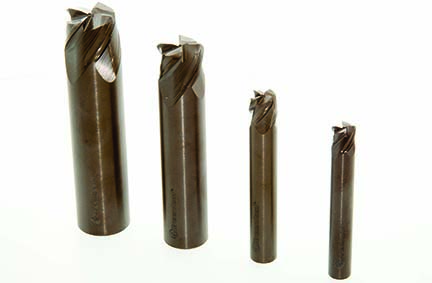
“That material is both abrasive and creates heat, and those are the things that wear out tools the fastest,” he said. So for this application, “people will go from carbide straight to CBN, and the cost difference between those two is astronomical.”
Ceramic tools, however, hold up well when cutting powder metal and don’t cost as much as CBN tools.
Howard also noted that ceramic tools are a good choice for cutting compacted graphite iron, which he described as a fairly new type of cast iron that’s very dense and strong. Today, he said, CGI is used to make many diesel engines because it allows manufacturers to use a smaller engine block that can take more compression.
“When they invented this stuff, tooling people loved it because it just carves up cutting tools,” he said. “And the cost justification wasn’t there to go to CBN or PCD because it wears that stuff out too.”
Review the print ads from this magazine to continue
This quick advertiser review unlocks the rest of the article and keeps the full-screen reader focused on the ads instead of the page chrome.
Advertisers included in this article experience
Print placements connected to this article
Nskamericacorp
EXPERIENCE SPEED
Nakanishi Electric Spindles 80,000 RPM 30,000 RPM Electric Fully Tool-Changeale Coolant-Through Spindle Electric Spindle for CNC Mills 80,000 RPM Compact Electric Motor Spindle for Swiss CNC Machines NORTH BUILDING - BOOTH 237311.
EXPERIENCE SPEED Nakanishi Electric Spindles 80,000 RPM 30,000 RPM Electric Fully Tool-Changeale Coolant-Through Spindle Electric Spindle for CNC Mills 80,000 RPM Compact Electric Motor Spindle for Swiss CNC Machines NORTH BUILDING - BOOTH 237311 www.NSKAmericaCorp.com | Phone: (847) 843-7664 | Toll Free: (800) 585-4675
Visit Nskamericacorp View this placement in the issue recordPrint ads from this magazine
Nakanishi Electric Spindles 80,000 RPM 30,000 RPM Electric Fully Tool-Changeale Coolant-Through Spindle Electric Spindle for CNC Mills 80,000 RPM Compact Electric Motor Spindle for Swiss CNC Machines NORTH BUILDING - BOOTH 237311.
EXPERIENCE SPEED Nakanishi Electric Spindles 80,000 RPM 30,000 RPM Electric Fully Tool-Changeale Coolant-Through Spindle Electric Spindle for CNC Mills 80,000 RPM Compact Electric Motor Spindle for Swiss CNC Machines NORTH BUILDING - BOOTH 237311 www.NSKAmericaCorp.com | Phone: (847) 843-7664 | Toll Free: (800) 585-4675
Continue reading
September 2022
He pointed out, however, that NTK makes ceramic tools that can cut CGI for 10 times less than the cost of carbide tools. But few in the industry know this.
“So people say they’re going to go really, really slow and change tools a lot,” Howard said. “But when we get a few brave people that let us play with ceramic, they go, ‘Oh, my God, I never knew I could do this.'”
Better Than Grinding
At Greenleaf, Dillaman and his colleagues have had success using ceramic inserts to replace grinding in some cases.
“Some customers were using OD grinding or surface grinding for hardened materials just because that’s the traditional method that has been used,” Dillaman said. “But with ceramic inserts, you can remove large amounts of material much quicker than you could in a grinding application.”
In addition, he noted that users of ceramic inserts in these cases aren’t limited by the form on a grinding wheel. Instead, they can program different cutting profiles to meet different requirements.
Dillaman also reported that Greenleaf got good results when it pitted ceramic inserts against PCD in an aluminum-cutting application for a customer. He said the ceramic inserts that were used showed little wear and held up as well as their PCD counterparts. The biggest downside for ceramic inserts was the accumulation of some built-up edge that had to be removed.
As for Greenleaf’s solid-ceramic endmills, Dillaman said they can speed up machining of hardened materials normally done entirely with EDM operations.
“Traditionally, you have to use an electrode to burn material out of a hardened workpiece,” he said. “With our solid-ceramic endmills, (you can) use the endmill to remove the bulk of that material instead of having to create an electrode to remove the full amount of material.”
A ceramic endmill removes material much more quickly than an electrode, he said, and use of an endmill should slash the number of electrodes needed for the overall process, as well as the time spent creating them.
“You may still have to do some finish work with an electrode, but the amount of electrodes consumed should be much reduced,” he said.
Ceramic Advances
Information about these applications usually falls into the category of what people in the machining industry don’t know about ceramic cutting tools. Equally frustrating for the firms that sell these tools, however, is what many people think they know based on outdated information.
When people tell Howard that they tried ceramic tools for a particular application and it didn’t work, he asks when they tried ceramics. Sometimes, it turns out that the failed ceramics experiment wasn’t even in this century. So he tells these people, “Well, we’ve invented a few things in the last 20-some years.”
A relatively new entry in the ceramic tool market from Greenleaf is its Xsytin-360 line of solid-ceramic endmills. Launched last year, Xsytin-360 endmills come in standard diameters down to 3/8″, so they can cut much smaller features than indexable tooling.
Dillaman said these endmills are made from the company’s Xsytin-1 material, which features a “whisker,” or reinforcing material, that’s grown internally via processing rather than laid in. This makes the ceramic material much harder to break apart, he said. He added that Xsytin-1 has shown itself to be capable of handling challenging roughing applications and turning interruptions.
Another invention of late that may interest shops that haven’t tried ceramic tools in a long time is a patented material called Bidemics. Howard describes Bidemics as an advanced ceramic designed to conduct more heat away from the cutting edge.
“We found a way to fuse carbide and ceramic together without a cobalt binder,” Howard explained. “The carbide is introduced into the ceramic in kind of a spiderweb fashion. When heat hits the cutting edge, it runs down those little carbide trails and disperses more efficiently.”
Because they do a better job of transferring heat away from the cutting edge, Bidemics inserts can run even faster than typical ceramic cutters — close to 1,600 sfm, Howard said. He added that efficient heat transfer also lengthens the life of cutting edges.
In recent years, Bidemics has become popular with makers of larger aerospace engines, Howard said. But he added that some shops find the performance boost offered by the material a bit unsettling.
“If somebody is cutting heat-resistant alloy at 125 sfm, and you bring in this new product that can do 1,600 sfm, it’s kind of like taking somebody from a horse to a rocket ship,” he said. So sometimes “the (reaction) is, ‘There’s no way I’m doing that.'”