Pallet-handling prowess: Automation & Robotics
The PSS-L linear pallet storage system from Grob Systems Inc. is designed to boost the productivity and unmanned operating time of multiple connected machines.
A new automated system for moving and storing pallets is designed to boost the productivity and unmanned operating time of multiple connected machines.
Recently unveiled by Grob Systems Inc. in Bluffton, Ohio, the PSS-L linear pallet storage system is suitable for a variety of metal parts. The modular system can be used with individual Grob Systems machine tools and can interlink up to five of the company’s machines. The machines are connected to pallet storage racking with a maximum of 87 pallet positions. Pallets are staged close to the machines to shorten exchange times.
The PSS-L features a pallet-changing vehicle with a gripper that transports materials among work-setting stations, workpiece deposits and machines. Traveling on a linear rail, the vehicle can move in the x and y directions and is capable of rotary motion. The vehicle can move a pallet from a setup station to any of the machining centers in the line or store the pallet in the rack system. Pallets of parts machined by one of the machine tools in the line can be moved to the rack system or brought back to a setup station, where an operator can unload finished parts or reload parts into another fixture for an additional machining operation.
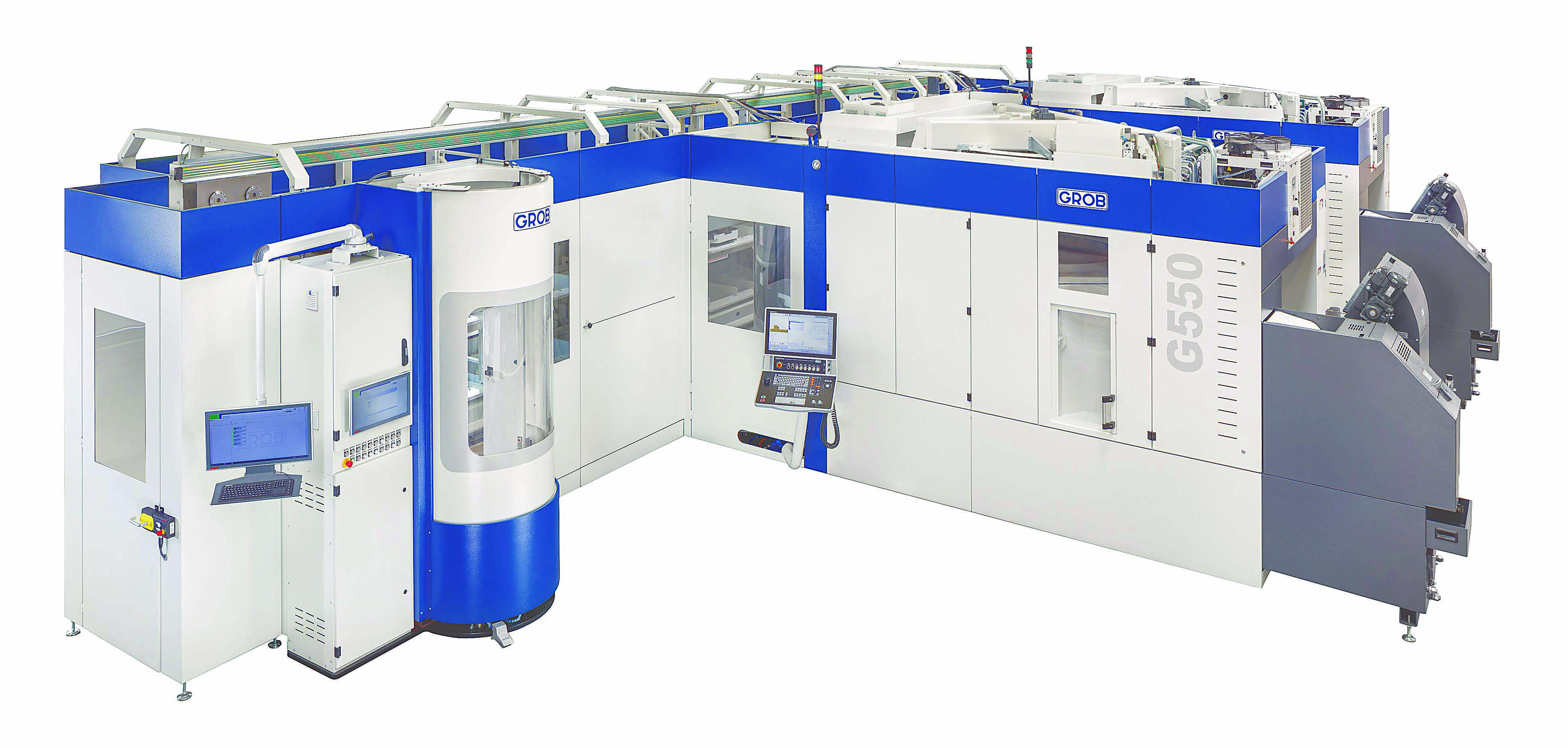
The new linear pallet storage system can link multiple machine tools. Image courtesy of Grob Systems
The PSS-L comes with production control software that allows autonomous part and pallet control, as well as monitoring and verification of tool resources for scheduled orders.
Construction of the PSS-L is “very rigid and heavy-duty,” said Derek Schroeder, sales supervisor for universal machines. The system is surrounded by a sheet metal enclosure with windows that provide visibility into the workspace and pallet storage locations. The PSS-L also includes a full base, which sets it apart from many similar systems “built on top of the concrete” in factories, he said.
Another key difference between the PSS-L and other linear pallet systems is in how signals and information are transmitted. He said similar systems normally employ a cable track for this purpose, but the cable track presents a problem when users want to expand the systems.
“Typically, customers start with one or two machines and keep adding machines over the years,” Schroeder said. “But if you do an expansion, the cable track is very hard, time-consuming and expensive to replace.”
So the PSS-L design leaves out the cable track and instead uses infrared signals for transmission purposes. He said this change makes expansions much easier and less expensive for users.
Review the print ads from this magazine to continue
This quick advertiser review unlocks the rest of the article and keeps the full-screen reader focused on the ads instead of the page chrome.
Advertisers included in this article experience
Print placements connected to this article
Tungaloy America | [email protected] | 888.554.8394
Double clamping system optimized with two
streams of coolant jets to maximize productivity double clamping system chip control improved tool life 10/23/2020 1:52 PM AM.
Double clamping system optimized with two streams of coolant jets to maximize productivity double clamping system chip control improved tool life Tungaloy America | [email protected] | 888.554.8394 www.tungaloy.com/us 10/23/2020 1:52 PM AM
Visit Tungaloy America | [email protected] | 888.554.8394 View this placement in the issue recordPrint ads from this magazine
streams of coolant jets to maximize productivity double clamping system chip control improved tool life 10/23/2020 1:52 PM AM.
Double clamping system optimized with two streams of coolant jets to maximize productivity double clamping system chip control improved tool life Tungaloy America | [email protected] | 888.554.8394 www.tungaloy.com/us 10/23/2020 1:52 PM AM
Continue reading
February 2021
Other PSS-L benefits make things easier for operators. For example, they can load parts from a single location even if multiple machines are running at the same time. In addition, a single system can handle a number of different operations ranging from simple to complex.
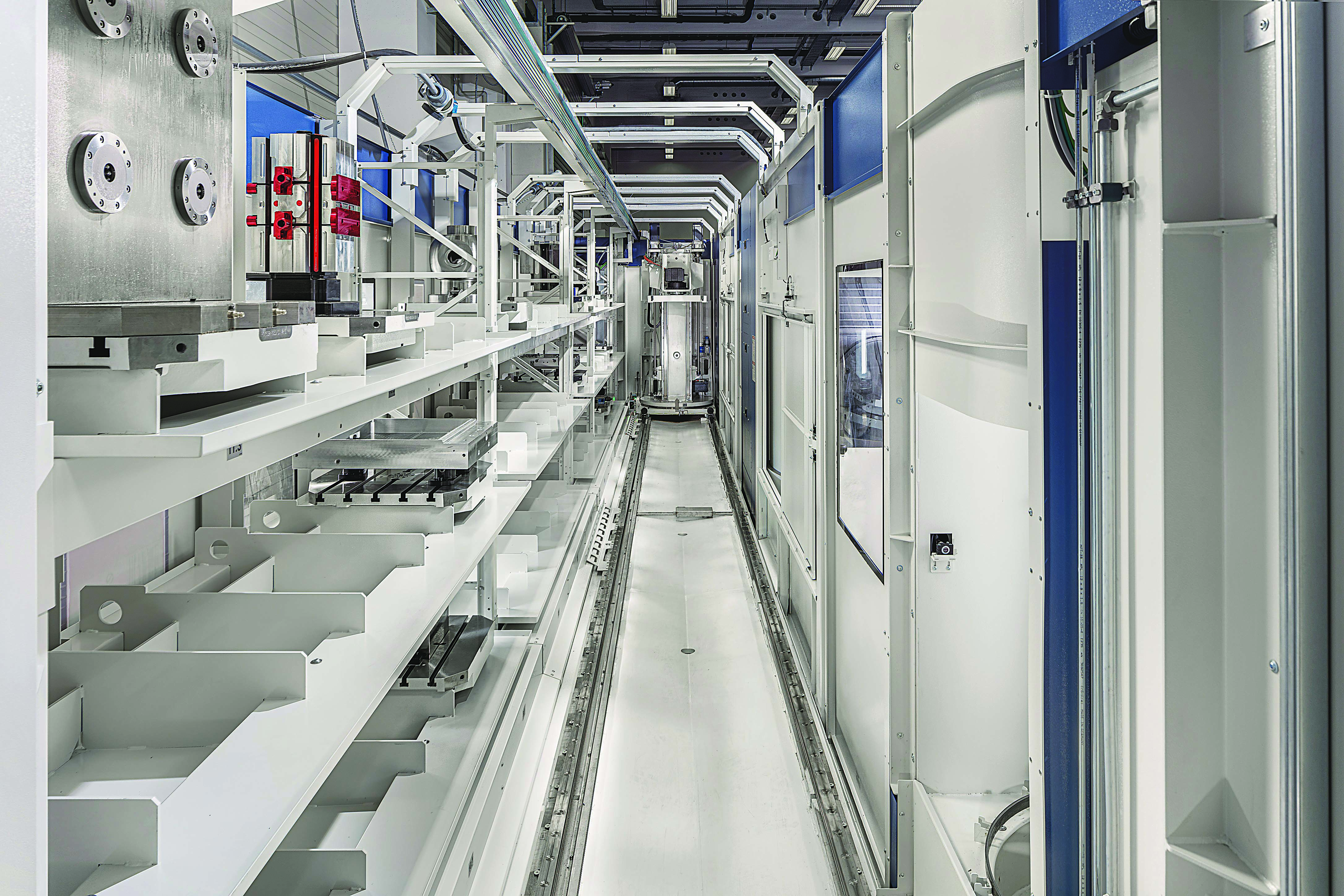
The PSS-L’s linear pallet changer moves through the storage racking area. Image courtesy of Grob Systems
At plants without a system like the PSS-L, “you may have to do an operation in one cell and then move (the workpiece) to another cell in a different location, re-fixture it and do the subsequent operation,” Schroeder said. “And then maybe it needs to go somewhere else. With our system, you’re getting more done in one place rather than moving parts to systems across the factory.”
In addition, he said the automated system offers better efficiency and cutting time to people using processes that rely on manual loading and unloading. In these processes, he noted, someone has to open the machine door and unload the pallet after a machining operation. And in many cases, that person actually waits by the machine to do the job when the time comes.
“Even if someone is waiting there, it may take minutes to exchange pallets and get the spindle running again,” Schroeder said. “But this system can exchange a pallet in under a minute.”
He said the PSS-L also allows long unattended production periods. Users can load a large number of pallets, set up the process to run autonomously and then leave for hours or even days, during which time the system will handle all pallet changing without human intervention.
Schroeder believes that the system is best suited for factories filling orders for small part batches that recur regularly. Consider, for example, a shop that manufactures 200 different aerospace parts every month but makes only 10 of each.
With the PSS-L, users “can store all those pallets, fixtures and programs in a central place,” he said. “So they’re ready to go when (each) job comes back and can easily produce those parts again without much setup time.”