

Smart sensor manages fluid: Digitalization & Industry 4.0
The Unifying Smart Sensor for autonomous fluid management systems uses proprietary technology for real-time monitoring of the heat removal capability of coolant, acidity levels, the amount of coolant and its temperature.
The Unifying Smart Sensor for autonomous fluid management systems uses proprietary technology for real-time monitoring of the heat removal capability of coolant, acidity levels, the amount of coolant and its temperature.
“Instead of aggregating different technologies of single-function sensors that also require compensation and calibration, the Unifying Sensor uses a single technology to monitor most of the functions of fluid quality and quantity without needing calibration or compensation,” said Josef Maatuk, a consultant at Max Em Engineering in Los Angeles.
The Wave technology probe consists of a thin organic layer with etched traces of a thermocouple for measuring the temperature of liquids. The junction of dissimilar metals produces electrical potential related to temperature.
Maatuk, who developed the sensor, likens it to a self-driving car because it can monitor and control fluid quality and quantity and tell a user, for example, when more water or acid neutralizer is needed for a process.
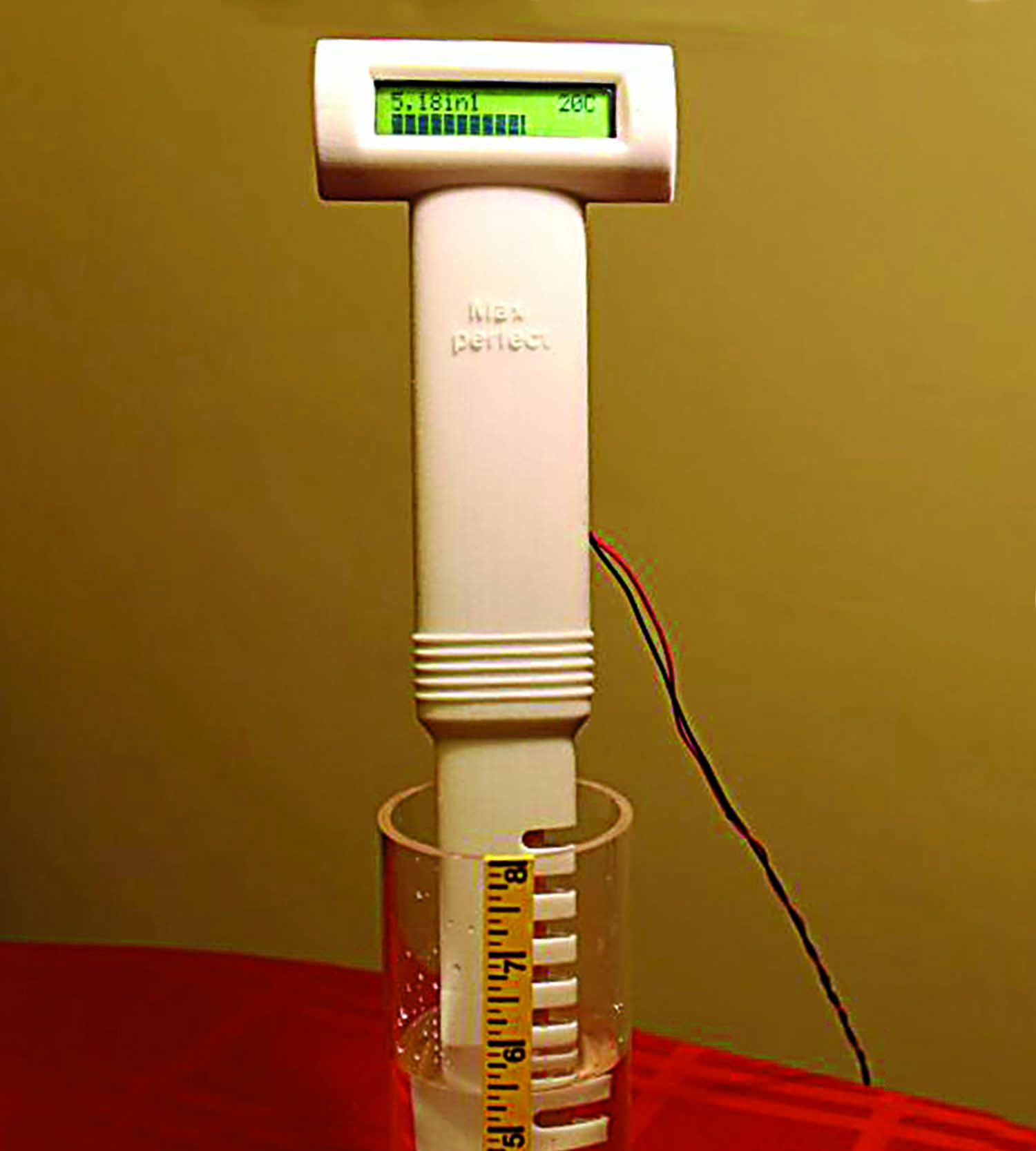
The Unifying Smart Sensor is shown. Image courtesy of Max Em Engineering
Review the print ads from this magazine to continue
This quick advertiser review unlocks the rest of the article and keeps the full-screen reader focused on the ads instead of the page chrome.
Advertisers included in this article experience
Print placements connected to this article
RobbJack’s Thru-Coolant Slitting Saws
SOLVE YOUR MACHINING PAINS
15X Gripping Force 500% Faster Cycle Time RobbJack Solid Carbide Saws and Arbors are the tightest tolerances in the industry and solve many of the problems associated with using carbide slitting saws. RJ Arbors have less than .0002 Runout Works with a single saw or multiple (gang) application. Solid carbide thru-coolant flanges and spacers eliminate burr ©2.
RobbJack’s Thru-Coolant Slitting Saws SOLVE YOUR MACHINING PAINS 15X Gripping Force 500% Faster Cycle Time RobbJack Solid Carbide Saws and Arbors are the tightest tolerances in the industry and solve many of the problems associated with using carbide slitting saws. RJ Arbors have less than .0002 Runout Works with a single saw or
Visit RobbJack’s Thru-Coolant Slitting Saws View this placement in the issue recordPrint ads from this magazine
15X Gripping Force 500% Faster Cycle Time RobbJack Solid Carbide Saws and Arbors are the tightest tolerances in the industry and solve many of the problems associated with using carbide slitting saws. RJ Arbors have less than .0002 Runout Works with a single saw or multiple (gang) application. Solid carbide thru-coolant flanges and spacers eliminate burr ©2.
RobbJack’s Thru-Coolant Slitting Saws SOLVE YOUR MACHINING PAINS 15X Gripping Force 500% Faster Cycle Time RobbJack Solid Carbide Saws and Arbors are the tightest tolerances in the industry and solve many of the problems associated with using carbide slitting saws. RJ Arbors have less than .0002 Runout Works with a single saw or
Continue reading
January 2021
A single continuous heated wire with junctions along its length that measure relative increases in temperature in the boundary layer around the heater indicates how much heat is removed during cutting, as well as how fast the heat is removed. By applying different sequences of power to the heater, the continuous fluid level also can be determined accurately. The same heater can be used to measure coolant temperature at a few points along the wire.
Heat removal is controlled by keeping the ratio of coolant to water at a desired range through use of a refractometer. Maatuk said the refraction index of a solution is not always a good indicator of its heat removal capabilities. The refractive index of a solution with bad coolant that occupies only 5% of the solution volume might be the same refractive index as a solution with 5% of good coolant.
The sensor wirelessly sends monitoring results to a laptop or cellphone, and he said the sensor can help increase the life of coolant and reduce the number of rejected parts. Maintenance costs also may be reduced.
Replacing two or more sensors, the sensor can be integrated in liquid containers during the manufacturing process.
Maatuk hopes to find a strategic partner to help Max Em Engineering produce and market the sensor. He can be reached at 310-274-1434, 310-497-9859, info@maxperfect.net or maxperfect@sbcglobal.net. For more information about the company, visit www.maxperfect.net.
Glossary terms in this article
Related


Subscribers can use MFGAxis notes, saves and discussion tools with their innoNET account.


