

What is a Joule? The History and Applications of Joules, Watts, and Coulombs
Learn about the origin, definition, and practical applications of the Joule, a key energy unit in physics and engineering.
On Oct. 21, 1948, the ninth meeting of the General Conference on Weights and Measures (CGPM) adopted the joule as a unit of energy, work, and heat. A joule is defined as the energy transferred when the force of one newton moves an object through a distance of one meter in the direction of the force.
Understanding the Joule
The mathematical expression for the joule is:
- J = N × m = (kg × m/s2) × m = kg × m2/s2
In terms of SI base units, it is expressed as m2 × kg × s-2. Another way to express the joule is N × m.
Origins of the Joule
James Prescott Joule (1818–1889), an English physicist, is the namesake of this unit. His groundbreaking experiments and measurements estimated the mechanical equivalent of heat, paving the way for modern energy calculations.
Conversion of Units
To better understand energy conversions between metric and U.S. customary systems, the following chart highlights key equivalences:
| 1 J = 0.73756 ft-lbf | 1 ft-lbf = 1.35582 J |
| 1 J = 0.23892 cal15 (15° C) | 1 cal15 = 4.1855 J |
This conversion table provides practical insights for engineers, scientists, and educators working across different systems of measurement.
Comparison with the Calorie
The calorie is a pre-SI metric unit of energy. For example, Cal15 is the amount of energy needed to warm 1 g of water from 14.5° C to 15.5° C at the standard atmospheric pressure of 760 mm of mercury.
Today, the joule has largely replaced the calorie in scientific contexts, further solidifying its role as a standard unit of energy.
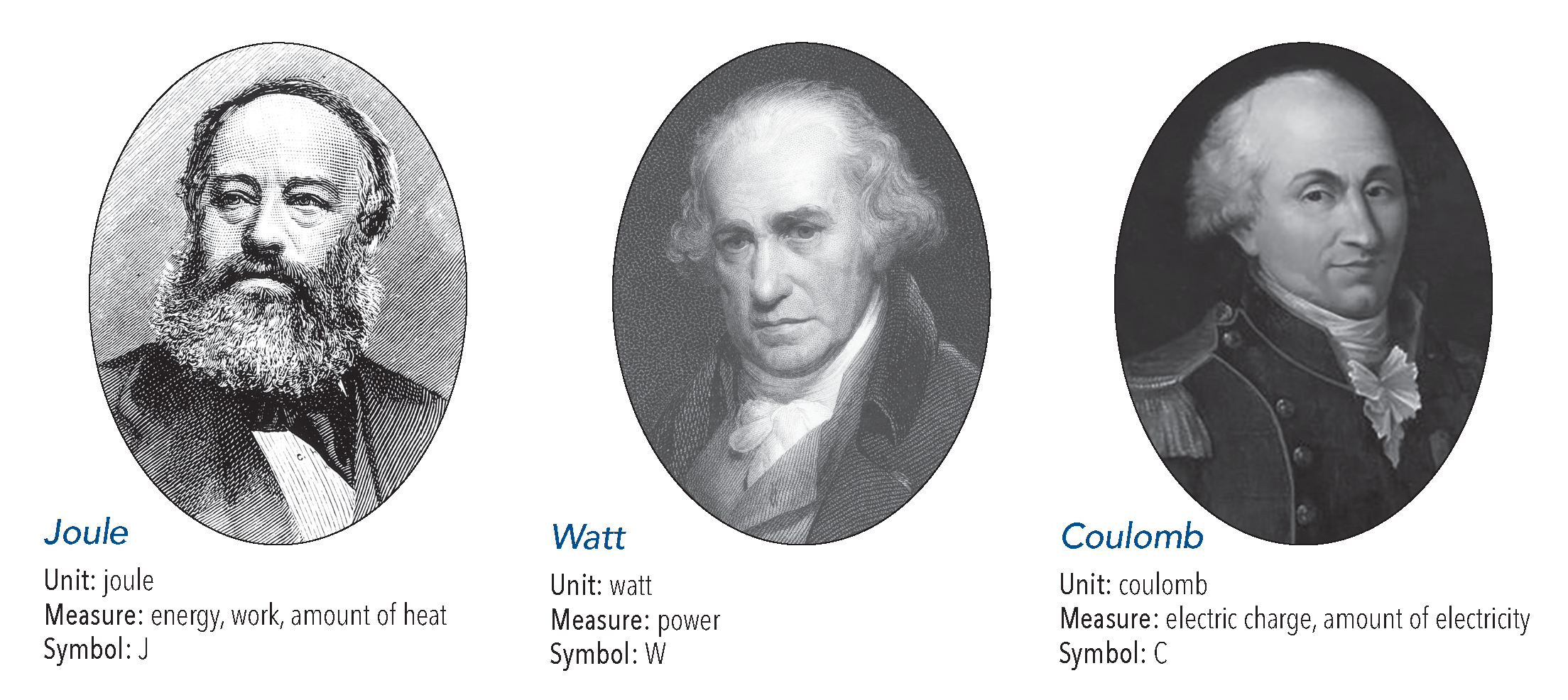
Fig. 1: Understanding the Joule through history and science
Review the print ads from this magazine to continue
This quick advertiser review unlocks the rest of the article and keeps the full-screen reader focused on the ads instead of the page chrome.
Advertisers included in this article experience
Print placements connected to this article
Tungaloy America | [email protected] | 888.554.8394
H i g h f e e d m i l l i n g c u t t e r w i t h m a x i m u m v e r s a t i l i t y a n d e f f i c i e n cy
high-feed milling 4 cutting edges ZER insert UER insert great APMX small APMX.
H i g h f e e d m i l l i n g c u t t e r w i t h m a x i m u m v e r s a t i l i t y a n d e f f i c i e n cy high-feed milling 4 cutting edges ZER insert UER insert great APMX small APMX Tungaloy America | [email protected] | 888.554.8394 www.tungaloy.com/us
Visit Tungaloy America | [email protected] | 888.554.8394 View this placement in the issue recordPrint ads from this magazine
high-feed milling 4 cutting edges ZER insert UER insert great APMX small APMX.
H i g h f e e d m i l l i n g c u t t e r w i t h m a x i m u m v e r s a t i l i t y a n d e f f i c i e n cy high-feed milling 4 cutting edges ZER insert UER insert great APMX small APMX Tungaloy America | [email protected] | 888.554.8394 www.tungaloy.com/us
Continue reading
September 2020
What About the Watt?
On the same date in 1948, the CGPM also adopted the watt as a unit of power. Power measures the rate at which work is done or energy is expended.
- Mechanical Terms: A watt equals 1 joule per second.
- Electrical Terms: A watt equals the power produced by a current of one ampere flowing through an electric potential of one volt.
The mathematical expression for the watt is:
- W = J/s = (N × m)/s = [(kg × m/s2 × m)]/s = kg × m2/s3
In SI base units, this is expressed as m2 × kg × s-3.
The Coulomb and Electric Charge
The coulomb, also adopted in 1948, measures electric charge or the amount of electricity accumulated in one second by a current of one ampere. Its mathematical expression is:
- C = A × s
In SI base units, this is expressed as A × s.
Charles-Augustin de Coulomb (1736–1806), a French military engineer and physicist, is the namesake of this unit. He is renowned for Coulomb’s law, which describes electrostatic forces of attraction and repulsion.
Why Are These Units Important?
Understanding units like the joule, watt, and coulomb is critical for fields ranging from physics and engineering to everyday applications like energy consumption and power generation.
Conclusion
The joule remains a cornerstone of modern science and engineering. Whether you’re learning its history or applying it to practical problems, its significance cannot be overstated.
Related




 MFGAxis Discussion
Be part of the shop-floor conversation
Like, save, or comment on this CTE story.
MFGAxis Discussion
Be part of the shop-floor conversation
Like, save, or comment on this CTE story.


MFGAxis Discussion