

What is your shop wasting?
By now, almost everyone in manufacturing is probably familiar with the concepts of lean manufacturing or at least the term. Lean manufacturing can be so effective that many companies employ lean leaders, process improvement teams, kaizen teams or similar groups to help facilitate lean initiatives.
By now, almost everyone in manufacturing is probably familiar with the concepts of lean manufacturing or at least the term. Lean manufacturing can be so effective that many companies employ lean leaders, process improvement teams, kaizen teams or similar groups to help facilitate lean initiatives. Part manufacturers that do not have dedicated personnel or teams frequently hire consultants to aid with developing and implementing lean concepts.
Lean manufacturing has become an accepted practice at large and midsize companies, but small manufacturers, machine shops and fabrication shops have been slow to adopt the concepts. In my experience, owners and managers at smaller shops often believe that the concepts are applicable only to larger companies or that taking advantage of lean manufacturing concepts requires hiring people with special skills.
Focus on Waste
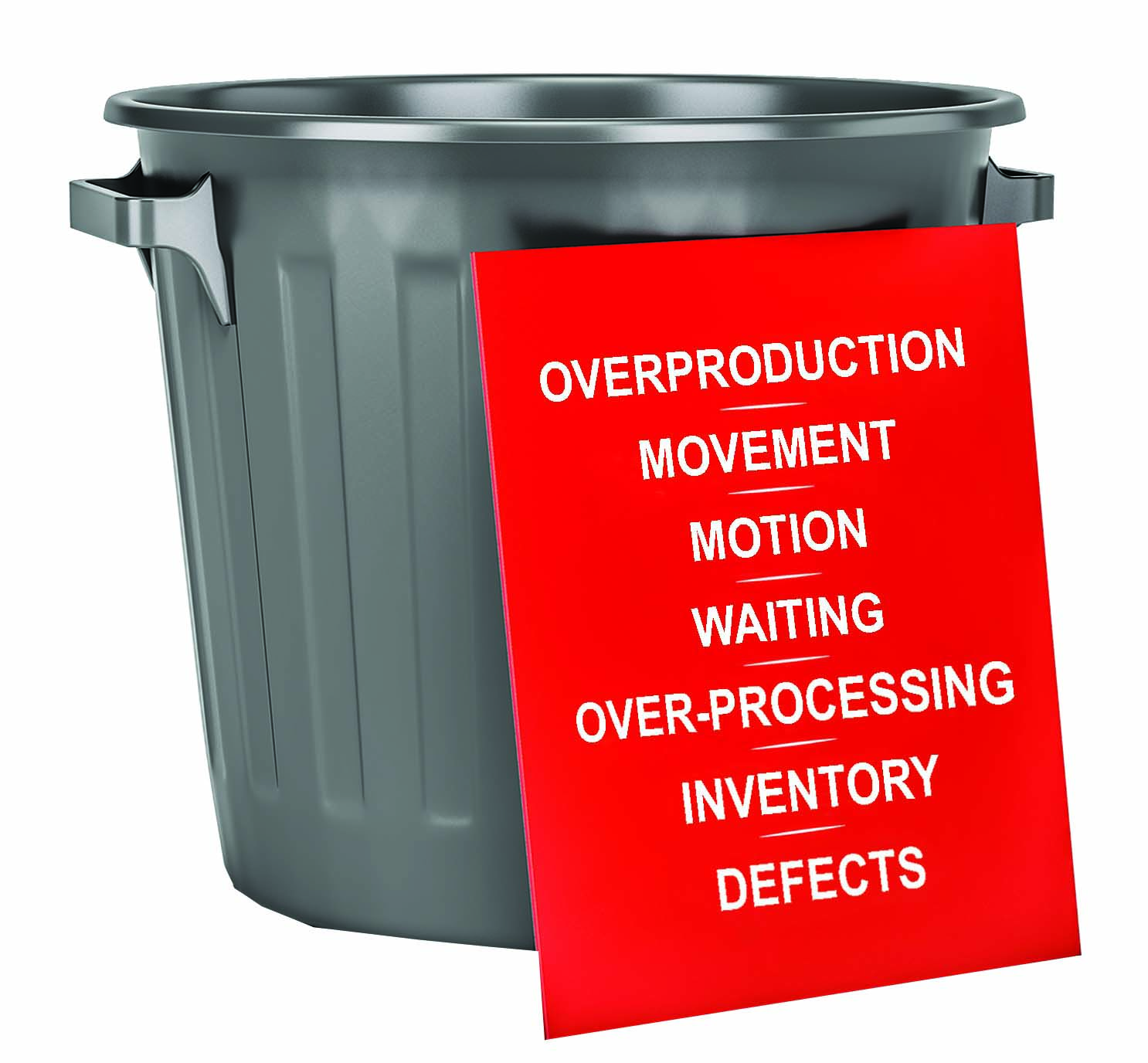
Those who are unknowledgeable about lean manufacturing easily can become intimidated by the concepts and tools, so implementation at places where these people work might be daunting. Very simply, lean manufacturing is the identification and elimination of waste in manufacturing processes and systems. Waste can be categorized in one of seven forms: movement, inventory, motion, waiting, overproduction, over-processing and defects.
The first step of the lean journey is learning to identify waste.
Movement. Traditional production at a machine shop moves batches of parts from workstation to workstation. A shaft, for example, may move from a lathe where turning is completed to a mill where keyways and cross-holes are drilled. A leaner method is using a work cell where all the necessary machines are close to each other so the shaft can go into the mill after turning, frequently using a robot. Another alternative could involve purchasing a lathe with milling capability to end the need for a separate mill.
Review the print ads from this magazine to continue
This quick advertiser review unlocks the rest of the article and keeps the full-screen reader focused on the ads instead of the page chrome.
Advertisers included in this article experience
Print placements connected to this article
Cutting Tool Engineering
®
OPTIMIZED A COMPLEX ROUGHING PROCESS MADE SIMPLE.
® OPTIMIZED A COMPLEX ROUGHING PROCESS MADE SIMPLE. Visit ctemag.com to learn more.
Visit Cutting Tool Engineering View this placement in the issue recordPrint ads from this magazine
OPTIMIZED A COMPLEX ROUGHING PROCESS MADE SIMPLE.
® OPTIMIZED A COMPLEX ROUGHING PROCESS MADE SIMPLE. Visit ctemag.com to learn more.
Continue reading
January 2020
Inventory. Most small shops fail because of inadequate cash flow. A shop must pay rent, buy materials and make payroll while waiting for funds to arrive from customer invoices, which can strain finances, and having cash tied up in inventory only exacerbates the problem. Identify and eliminate activities that create inventory. Resist the urge to make extra parts out of those last few inches of bar. Don’t buy a 208-liter (55-gallon) drum of coolant to save a few dollars per gallon when a 19-liter (5-gallon) pail will suffice. Try to remove the inventory of cutting tools by selecting ones that effectively machine a range of materials.
Motion. This form of waste is similar to movement but related to people, not parts, in a manufacturing system. Eliminating wasted motion often results in improved workstations. Consider the prior example involving a shaft. Eradicating unnecessary motion could be as simple as placing raw materials at an ergonomic height in a cell so machinists can retrieve them without bending, stooping or reaching. A shop could put machine tools in close proximity to each other or buy specially configured ones.
Waiting. This waste occurs when a machine or person cannot proceed because the previous step is incomplete. Waiting can be difficult to overcome in the low-volume, high-mix environment found at many small shops. Constructing a shaft cell to eliminate motion in the earlier example could cause waiting if turning operations take longer than milling operations.
Overproduction. A common statement at shops is “I made a few extra in case we scrap some.” Making more parts than required is typical at small shops and sounds good until actual costs are calculated. Overproduction also occurs when managers feel pressure to keep people and machines working despite no demand for parts or when there is a diminished backlog of work and a shop starts producing parts before they are needed.
Over-processing. Simply doing more than required is over-processing. One of the most common forms of over-processing at a machine shop is the quest for a superfine surface finish. Machinists are taught to strive for a good surface finish, so imparting one on a part is a way to demonstrate skill. Unfortunately, a customer who requires a 3.18 µm Ra (125 µin. Ra) finish usually won’t pay for the extra processing needed to produce a 1.62 µm Ra (64 µin. Ra) finish. Remember that providing high quality and craftsmanship means meeting a customer’s expectations, so a part that conforms to requests is good enough. Don’t go beyond what is obligated. This is a difficult concept to sell to skilled machinists.
Defects. It is easy to see why defects are wasteful. Anytime that parts have to be remade or reworked because of a defect, the costs are unrecoverable. Eliminating variation and developing robust processes are the best ways for small shops to avoid part defects. Establish effective methods for performing work, and encourage everyone at the shop to use them.
Lean concepts are not difficult to understand. They have a commonsense feel once they become routine. But creating a lean shop does not happen in a short period of time. Significant cultural change often is required, and people must alter habits and opinions that may have existed for years. Recognizing waste in manufacturing processes and systems is the first act to becoming lean — no matter the size of the company.
Glossary terms in this article
Related



Subscribers can use MFGAxis notes, saves and discussion tools with their innoNET account.


