Get the most out of tried-and-true machinist vises
Image courtesy of Kurt Industrial Products
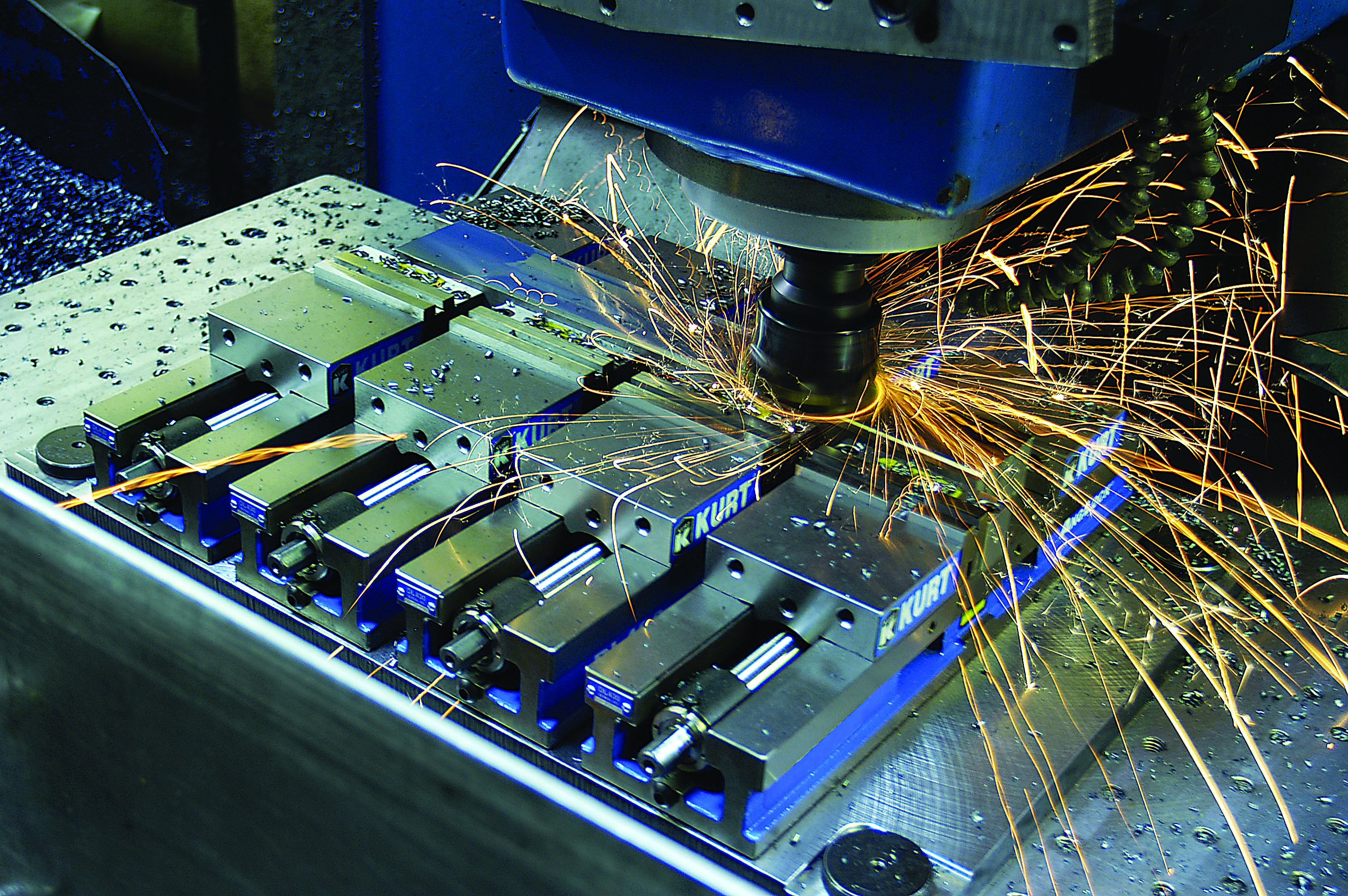
Image courtesy of Kurt Industrial Products
Of all the workholding methods available to machine operators, the machinist vise continues to be the most popular. It’s easy to use, flexible and readily accessible with a price tag that all but the most cash-strapped of shops find agreeable. Getting the most out of a vise, however, requires a little tender, loving care, as well as the ability to think creatively.
The TLC part is easy. Steve Kane, sales and marketing manager at Kurt Industrial Products, Minneapolis, said the first step is simply to keep vises clean.
“A lot of people make the mistake of not wiping the vise down and applying a coat of oil when they’re done using it,” he said. “Depending on what kind of coolant they’re using and its condition, this can lead to rust, especially if the vise gets placed on a shelf between jobs. They should also make sure there are no chips collecting inside. If so, blow them out with a little shop air.”
Aside from keeping a vise clean, Kane said to apply a small amount of marine grease to the screw threads once a month and then run the vise through its full travel to evenly disburse the grease. It’s also wise to remove scratches or dents with a fine stone.
Of course, shops must adjust their maintenance routines to the types of materials being machined and the amount of use a vise gets. Shops that routinely cut cast iron and other abrasive materials, for example, should watch for wear. Machinists might want to more often clean and lubricate internal components and even periodically break down a vise to avoid damage, as long as they know how to properly reassemble the vise.
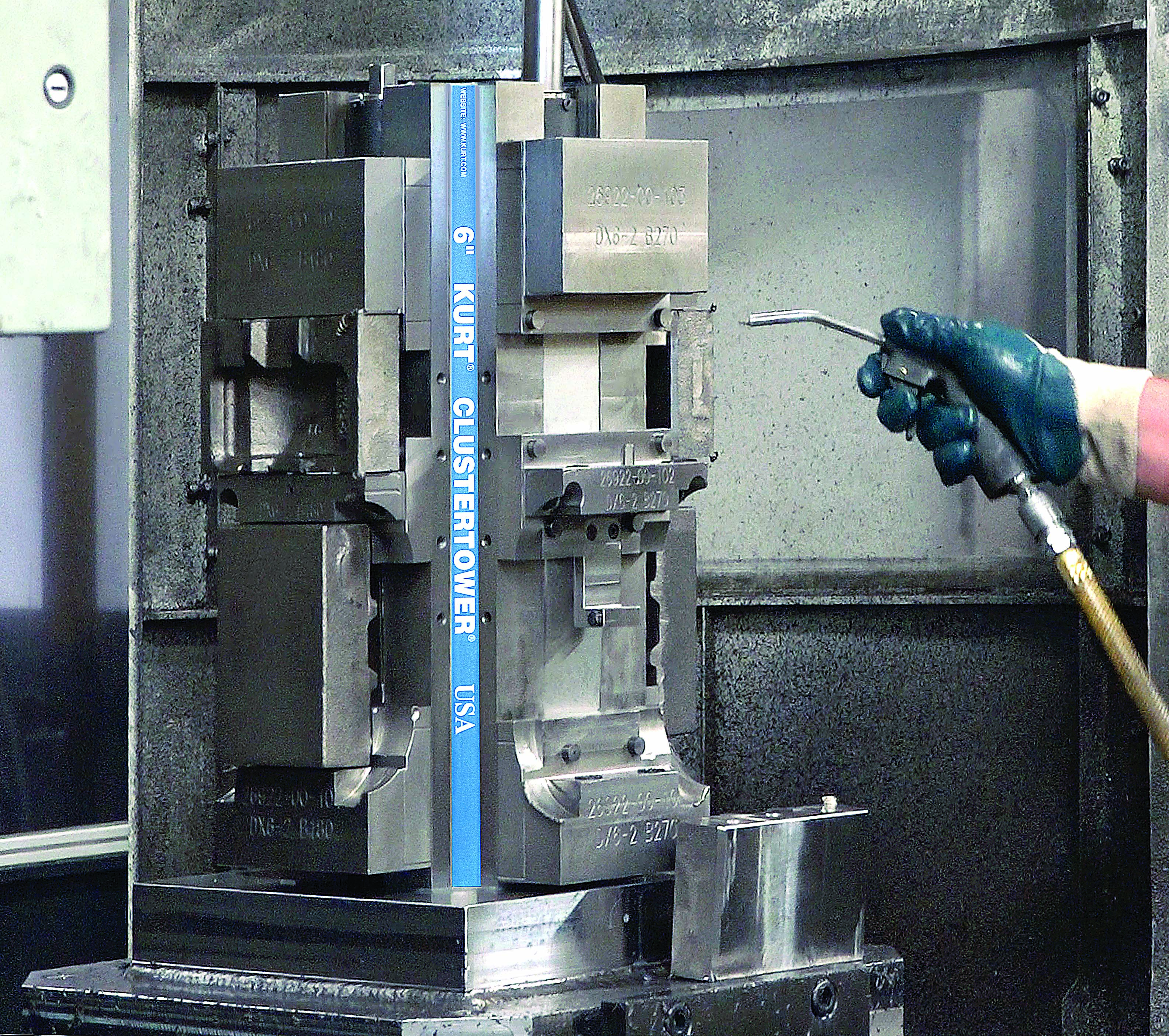
Vise longevity and accuracy often come down to keeping it clean. Image courtesy of Kurt Industrial Products
“We get frequent calls from people who wonder why there’s so much jaw lift after they’ve reassembled the vise, only to find they lost one of the internal components or failed to tighten it properly,” Kane said.
A common mistake is overtightening. Operators can damage vises when using an impact wrench to tighten them or cranking on the handle with a 3′ breaker bar. Instead, manual vises should be tightened with a torque wrench for the most consistent, accurate clamping, using forces no higher than manufacturers’ recommendations.
Beyond the Bridgeport
The second part of getting the most from a vise—thinking creatively—is a bit more challenging. The traditional pair of 6″ machinist vises often seen on machining centers get the job done, but a variety of space-saving, time-saving and more accurate options exist.
Mike Antos, product manager at Cleveland-based Jergens Inc., said vise selection frequently comes down to familiarity.
“A lot of machinists and shop owners learned the trade working on a manual knee mill,” he said. “When they graduate to CNC, they use the workholding they’re most comfortable with. There’s certainly nothing wrong with this, but we feel it’s better to take a systematic approach to workholding, which starts by mounting a subplate onto the machining center table.”
Most people agree that the beauty of a subplate is its flexibility, especially when it’s equipped with a quick-change ball lock or zero-point clamping system. Again, options are available, each with its own merits and cost considerations. But all alternatives make it easy to switch among vises, fixtures, toe clamps and rotary tables in moments.
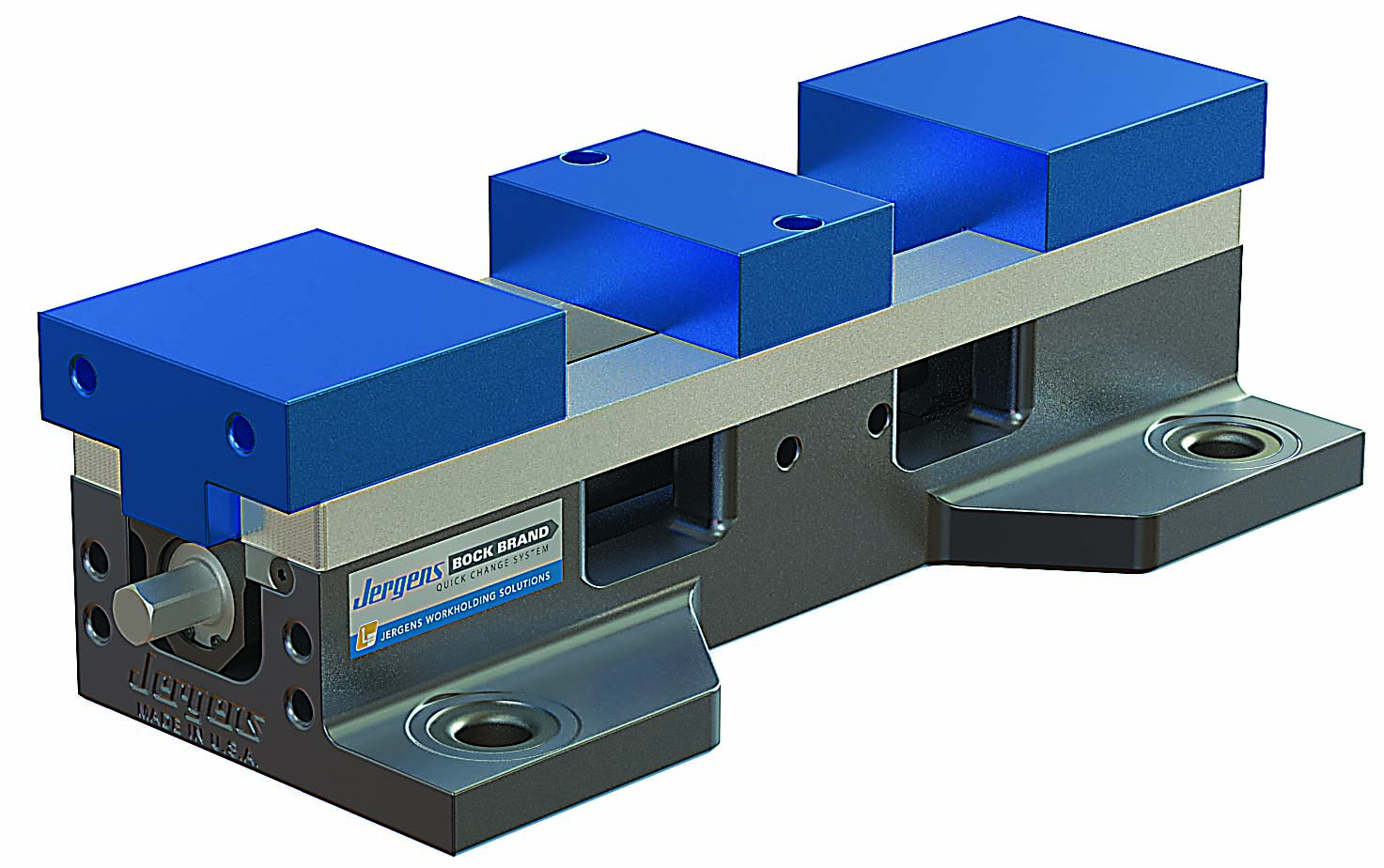
Double-station vises are a great way to increase productivity without eating up a lot of real estate. Image courtesy of Jergens
In that vein, all vises also should be equipped with some sort of quick-change jaw system. Eric Sun, founder and CEO of Orange Vise Co. LLC, Placentia, California, said his company’s vises accept CarveSmart-style jaws, as well as Orange Vise’s proprietary system.
“An increasing number of shops recognize the need for speed and flexibility in their workholding systems, and we’ve developed a number of vise styles and configurations to support that,” he said. “So aside from quick-change jaws and our own ball-style coupling system, there’s the possibility of using the top jaw as a pallet or incorporating the bottom half of the vise into a fixture. There are a lot of ways you can go, and there’s no reason to settle for the status quo.”
Review the print ads from this magazine to continue
This quick advertiser review unlocks the rest of the article and keeps the full-screen reader focused on the ads instead of the page chrome.
Advertisers included in this article experience
Print placements connected to this article
TAKE ADVANTAGE OF THIS DISCOUNT Phone 800.348.2885 www.gfii.com
Creating quality solutions
for your standard and special application requirements. See our website for details BUY2GET1FREE High Performance Variable Index Solid Carbide End Mill FROM APRIL 1ST - JUNE 30TH, 2019.
Creating quality solutions for your standard and special application requirements. See our website for details BUY2GET1FREE High Performance Variable Index Solid Carbide End Mill TAKE ADVANTAGE OF THIS DISCOUNT Phone 800.348.2885 www.gfii.com FROM APRIL 1ST - JUNE 30TH, 2019
Visit TAKE ADVANTAGE OF THIS DISCOUNT Phone 800.348.2885 www.gfii.com View this placement in the issue recordVektek
The Latest
Technology In Workholding! . NOW.. ...Sequence at the device • In the port sequence valves. Imagine the possibilities! High Capacity Work Supports • 3X’s stronger than competitors Part Present Sensing Work Support • Confirm part is present and contacted even o as-cast surfaces! Advanced Workholding Pump • Fully configurable 0-6 valve stack.
The Latest Technology In Workholding! . NOW.. ...Sequence at the device • In the port sequence valves. Imagine the possibilities! High Capacity Work Supports • 3X’s stronger than competitors
Visit Vektek View this placement in the issue recordPrint ads from this magazine
for your standard and special application requirements. See our website for details BUY2GET1FREE High Performance Variable Index Solid Carbide End Mill FROM APRIL 1ST - JUNE 30TH, 2019.
Creating quality solutions for your standard and special application requirements. See our website for details BUY2GET1FREE High Performance Variable Index Solid Carbide End Mill TAKE ADVANTAGE OF THIS DISCOUNT Phone 800.348.2885 www.gfii.com FROM APRIL 1ST - JUNE 30TH, 2019
Continue reading
April 2019
Feel the Power
Another convention being challenged is manual clamping. Virtually all vise manufacturers offer hydraulic or pneumatic activation systems. Which is better for a given application is debatable, but what’s not in question is the greater accuracy, speed and, above all, operator ergonomics these systems provide.
“Consider a typical 40″ machining center with five or six vises on the table, and then imagine having to stand there loading and unloading them for eight hours a day,” Antos said. “I can pretty much guarantee the operator won’t be applying the same pressure at the end of the day as he did at the beginning. And then here comes the second shift with another operator who has his or her own idea of what ‘tight’ actually means. Yes, a torque wrench is one way around this, but it’s much more effective to simply flip a lever or push a button and activate all of the vises at once.”
Kane agreed, saying, “For us, the hydraulics end of the business is growing. Some of this is due to an increase in automation, whether it’s robotic loading and unloading or pallet changers. But we’re definitely seeing more and more shops get on board with some form of hydraulic or pneumatic
activation.”
Elbow Room
There’s also real estate to consider. For the best use of available table space, consider a double-station vise. Whether called a Production Vise (Jergens), a DoubleLock or an HDL Vise (Kurt), double-station vises offer the ability to machine twice as many parts per machine cycle versus single-station counterparts, with a footprint that’s only marginally larger.
It’s for this reason that Orange Vise didn’t always offer a single-station vise.
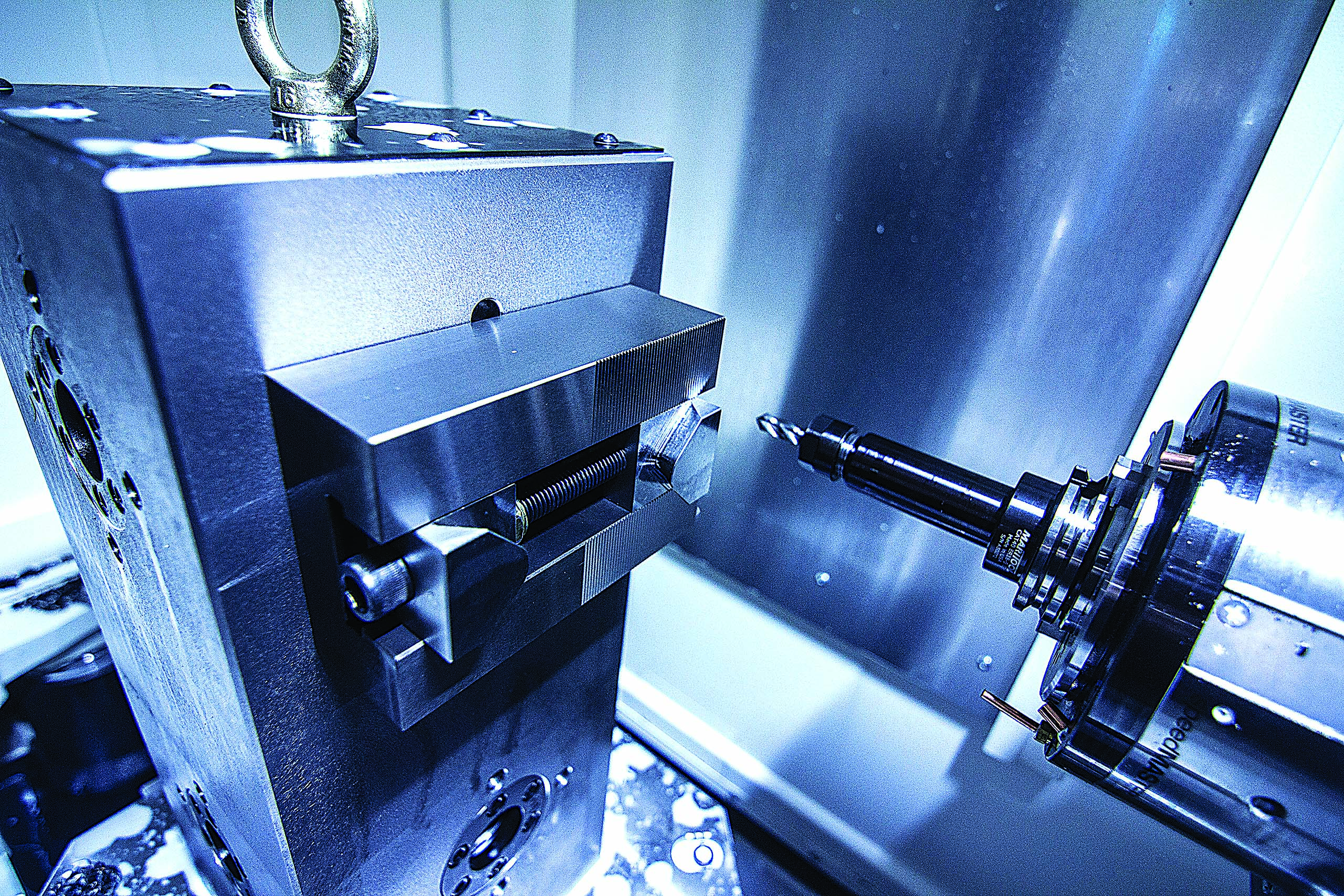
Orange Vise says its Twin-Delta uses a pair of dovetailed wedges to self-align top-mounted fixture plates. Image courtesy of Orange Vise
“A lot of folks buy equipment without being fully aware of how much the tooling will cost,” Sun said. “That’s nobody’s fault—it’s just the way things work in the machining industry. You never know what’s going to pop up or whether there’s enough budget available for what are admittedly more expensive dual-station vises. That’s why we recently introduced a single-station vise to address this particular need.”
Vise manufacturers continuously improve and expand their product offerings, and only by staying abreast of what’s available in the market will shops stay competitive. To those concerned they’ll end up with a hodgepodge of vise styles and brands, this is one more reason to install a quick-change modular subplate on every machining center and manual mill. Doing so makes it easy to use the best tool for the job while ensuring less downtime and greater flexibility no matter whose vises do the holding.
Dovetails to Dimples
As 5-axis machining grows in popularity, the need for high-profile yet rigid vises able to lift workpieces into the work area is abundantly clear. Most of the available options require that part blanks be pre-machined with a dovetail shape along their bottom edge, which allows the workpiece to be gripped using a small amount of sacrificial material that is later removed.
Eric Nekich, operations, technology and inside sales manager at Hartland, Wisconsin-based Lang Technovation Co., suggested there’s a better way.
“Most people don’t stop to evaluate the cost of pre-machining both in time and lost material,” he said. “For instance, a dovetail cutting operation might take 20 minutes and use 1⁄4″ of material whereas our Makro-Grip stamping unit takes maybe five seconds of workpiece prep and only uses 3mm of material.”
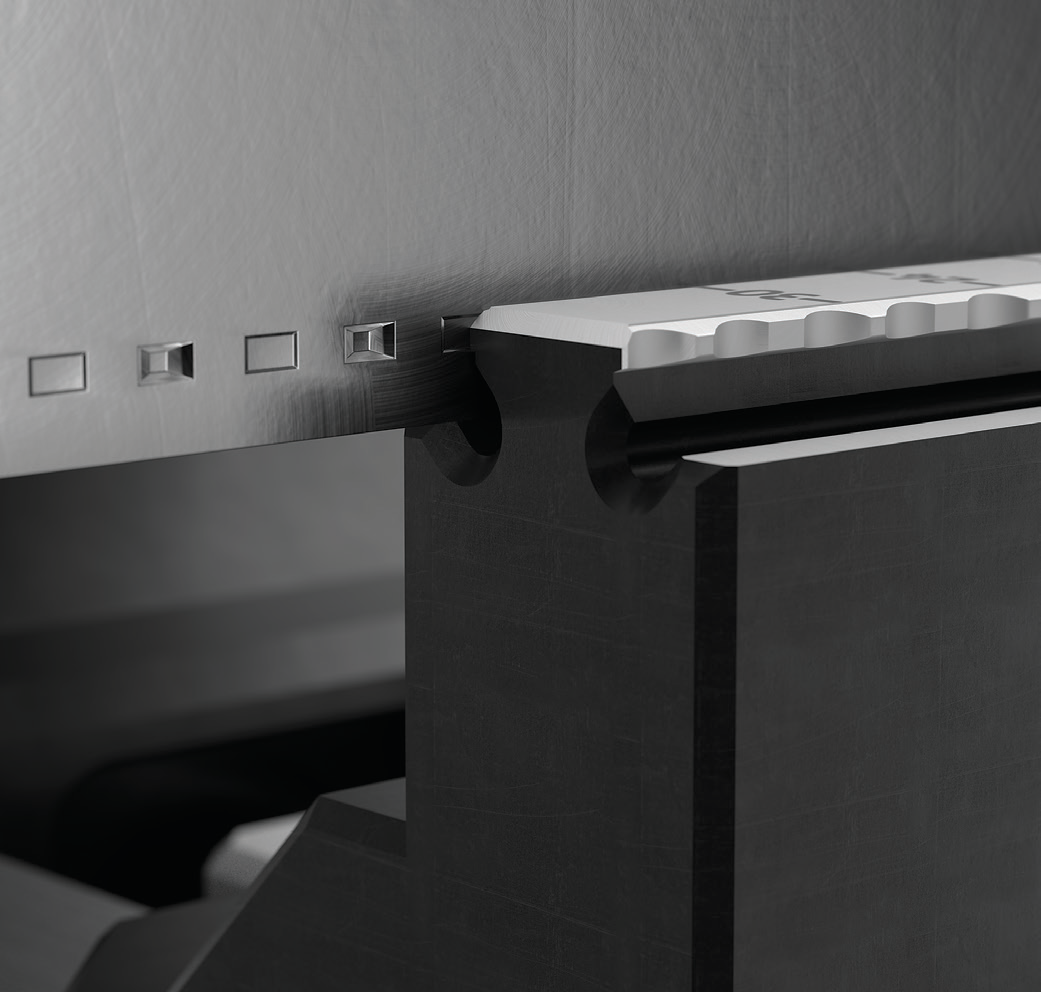
The Makro-Grip stamping unit produces dimples on the workpiece, which connect with mating bumps in the Makro-Grip vise jaws. Image courtesy of Lang Technovation
The tool clamps a workpiece blank in a special fixture, which creates a series of small dimples where the dovetail would normally sit. These dimples connect with mating bumps in the Makro-Grip vise jaws. Investment in equipment is needed, but Nekich said return on investment is usually fast. He also said the product is not a be-all and end-all solution. Depending on part geometry, a dovetail might be a better option.
“I’m probably a little biased, but if the name of this company was Eric’s Precision, I would go for the Makro-Grip all day long just because of the time and energy it saves,” he said. “I don’t need a milling machine and special cutters, the parts can be pre-stamped in the toolcrib or warehouse, and it’s easy enough that anyone can do it with a few minutes of training. It’s a very simple process, and for those operations where it works, it works really well.” —K. Hanson
For more information about Lang Technovation, call 262-446-9850 or visit www.lang-technovation.com.
Related Reading
- Related guide: Machinist Resources.
Glossary terms in this article