


Effective training programs improve employees’ skills, morale
Many companies fail to recognize the benefit of having well-designed, effective training programs, despite a proven track record for improving the skills and morale of employees and increasing the flexibility and bottom line of a company.

Successful manufacturing companies exhibit many common attributes, like strong leadership, competitive compensation and clearly defined goals. Such companies also have talented, well-trained workforces. However, many companies fail to recognize the benefit of having well-designed, effective training programs.
Beyond Button Pushing
Training bolsters workforce morale by providing an opportunity for personal growth. People typically think of growth in terms of dollars, often forgetting intellectual growth. Employees want to feel they contribute to an organization by providing ideas and solutions.
One of the most common statements I hear from people at my shop is, “I don’t want to be a button pusher for the rest of my life.” This sentiment is echoed throughout the manufacturing industry.
Advanced training allows and encourages employees to learn new skills and accept greater responsibility, feeding their desire to grow. Detailed training programs demonstrate that a company is confident in the abilities of its workforce, both motivating individuals and spurring their creativity. Frankly, a shop full of button pushers is far less desirable than a shop full of skilled, creative and motivated craftspeople.
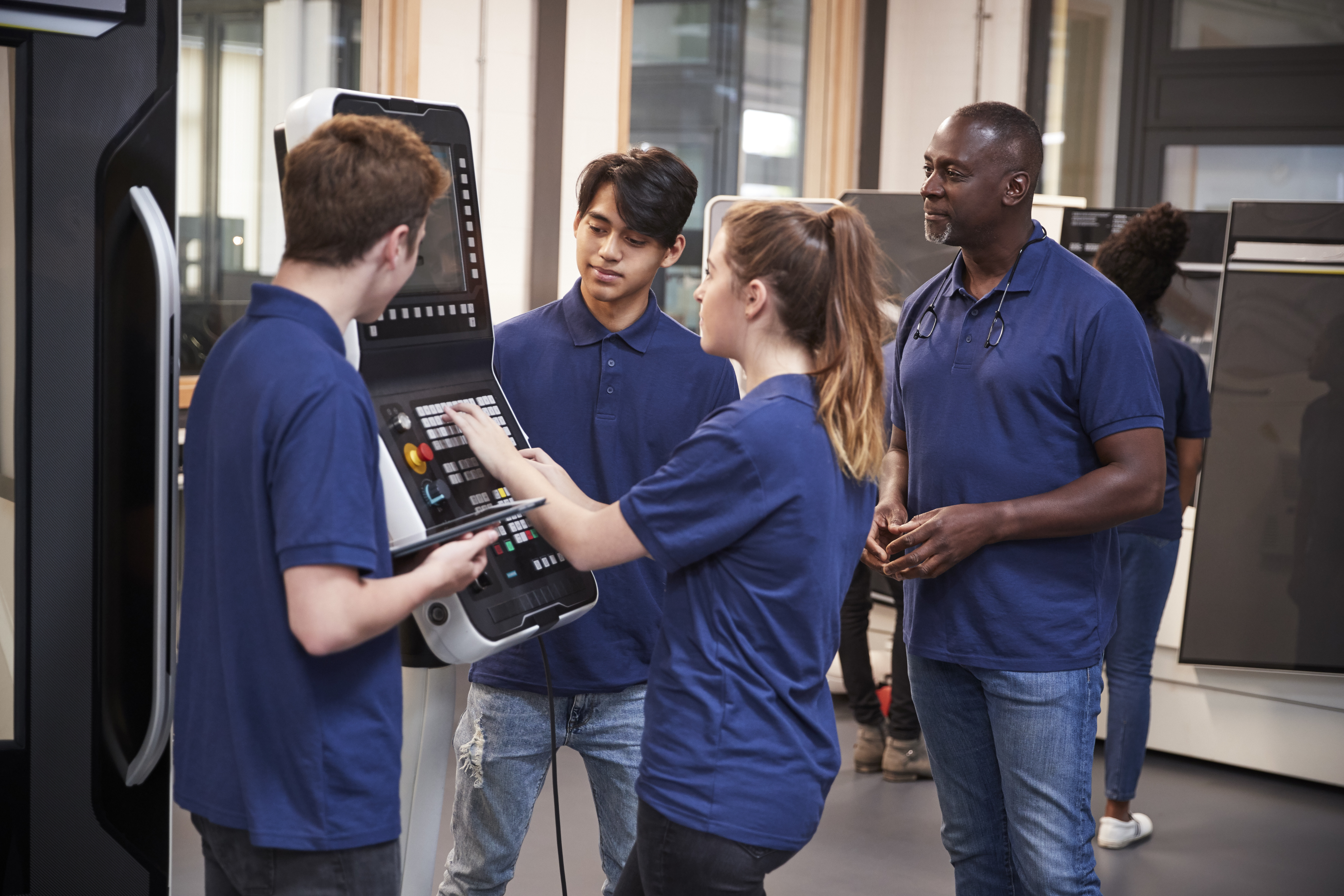
Advanced training developed for a specific machine lets an operator understand all its capatilities.
Effective training not only motivates the workforce but positively affects the bottom line in other ways. Diversity of skills in the workforce creates flexibility, which, in turn, allows for creative scheduling. For example, our shop’s employees are often expected to work 24/7 on hot service jobs. To ensure that critical operations, like automated welding, do not stop, we need the ability to shift normal work schedules. An organization can then more easily adjust to fluctuations in demand. Diversity of skills also mitigates risk associated with attrition, improves problem-solving and aids process improvement.
Machine tools and manufacturing processes are complicated. The combination of turnkey manufacturing processes, attrition and lack of training creates situations in which an employee can operate a machine without truly understanding all its functions and capabilities. Advanced training developed for a specific machine tool or manufacturing process works to close that knowledge gap. Greater knowledge of the machine or process encourages creativity and initiates process improvement.
I have been in numerous classes when someone learned about a new feature on a machine or a technique and said, “I wish I had known that before.” It is common for people to return from a week of training and immediately generate positive change.
Specific training for a machine tool or manufacturing process is not the only way to foster creativity. Industry journals and even vendor catalogs elicit “aha!” moments for many. I experienced this very situation recently when I stumbled across a link to a company that makes peripherals for automated welding equipment. I sent the link to my manufacturing engineer responsible for robotic welding. He responded, “I did not know those existed. We need to investigate them.”
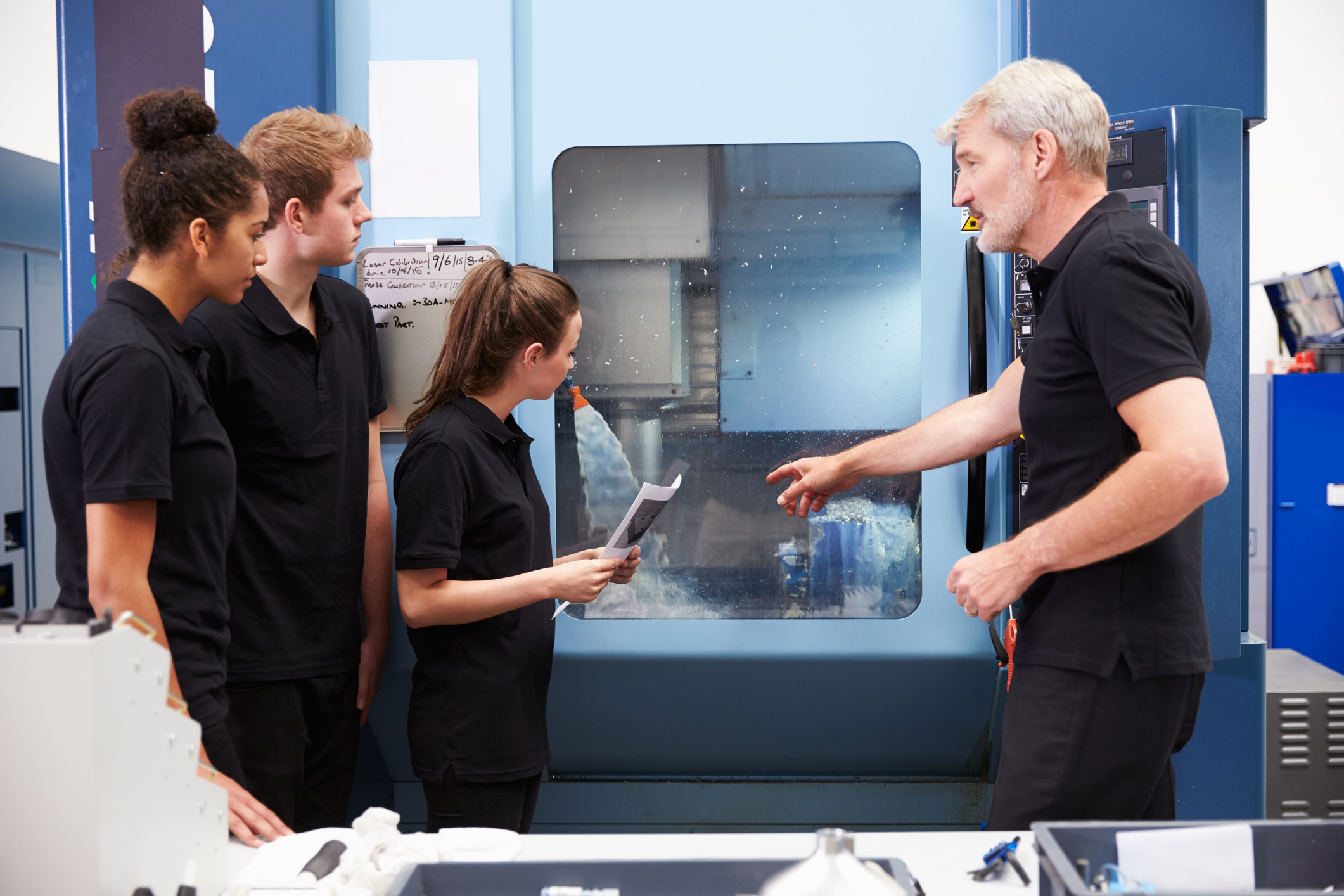
Planning and instituting a robust training program allows employees to prepare for ever-increasing responsibilities.
Although trade shows are not technically training, they provide a fantastic way to introduce people to innovative ideas and devices. Shows will often have vendor-sponsored seminars. A well-presented seminar on a specific topic—like trochoidal milling or grinding wheel selection—can expose people to new concepts, creating a desire for greater depth of knowledge.
Meeting Present and Future Demands
Parts manufacturers of all sizes suffer from a shrinking pool of skilled labor; the outlook can often be discouraging. Many experts believe that the exit of baby boomers from the labor market will increase the demand for skilled trades to the point that labor markets and educational institutions will not be able to satisfy demand. As the labor market tightens, companies will need to return to more traditional styles of development, like apprenticeships, or transition skilled craftspeople into technical roles—for example, manufacturing engineering.
Planning and instituting a robust training program allows employees to prepare for ever-increasing responsibilities. It offers a path for growth in the company. Creating depth in the organization this way strengthens product and process knowledge in a manner that is often not captured by a set of work instructions.
I experienced an extremely effective training program while working in the automotive industry. My then-employer required all new salaried employees to participate in a 4-week program. Each week was spent in a different manufacturing area. By the end of the month, participants had loaded machining centers, run automated welding equipment and assembled the product. It was profoundly humbling to learn how difficult it was to put the dust boots on a power steering gear. The experience made me consider every manufacturing process from the perspective of the employee who had to live with it every day.
Training should not be a necessary evil or a check-the-box compliance activity to ward off regulatory agencies. Instead, training should be an investment in a company’s most important assets: The people who make up the workforce. Robust, well-executed training programs can offset some of the most significant challenges faced by manufacturers.
Glossary terms in this article
Related




Subscribers can use MFGAxis notes, saves and discussion tools with their innoNET account.