


What’s on your pallet?
Implementing automated pallet systems in small and medium-size shops can reduce labor costs and increase profitability.
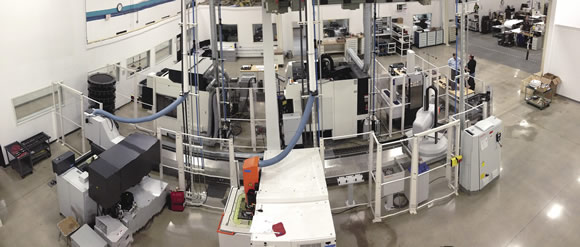
Courtesy of System 3R USA
System 3R’s WorkMaster Linear flexible manufacturing system.
Implementing automated pallet systems in small and medium-size shops can reduce labor costs and increase productivity.
More small and medium-size job shops are turning to unattended machining to compete effectively. A key part of many lights-out strategies is an automated pallet system to load and unload pallets of fixtured parts into and out of machine tools. By keeping a machine running through a second or third shift without adding personnel, shops can increase productivity.
While many consider automated pallet systems only suitable for large manufacturers, lights-out machining is something shops with five to 100 employees can achieve, according to sources interviewed for this article.
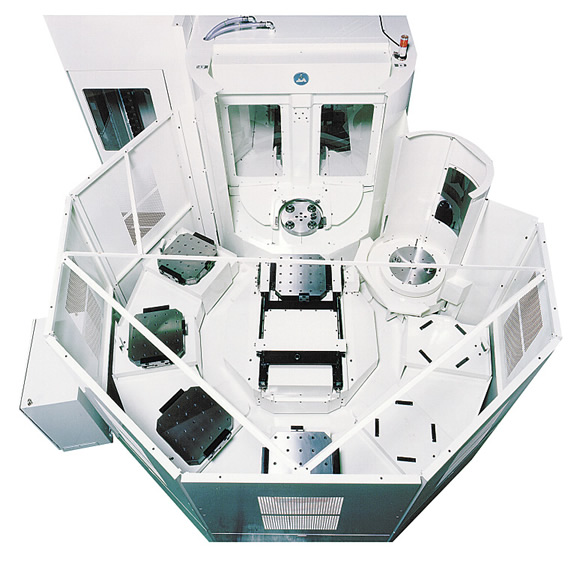
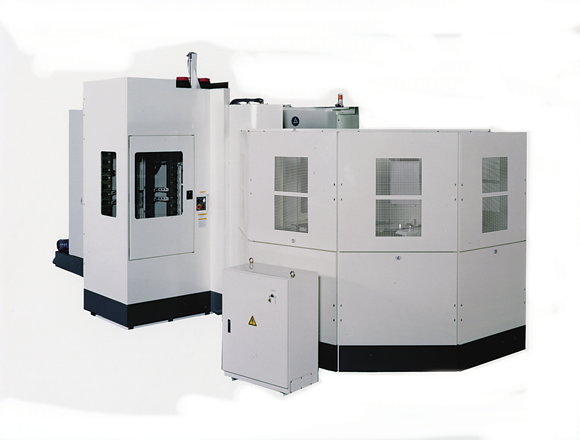
Courtesy of Kitamura Machiney of USA
Kitamura’s HX400i FTGA 8APC system is an HMC with an eight-pallet system.
“A 400mm or 500mm horizontal machine center is a big investment for any job shop, and for a small shop that investment is magnified,” said Robert Humphreys, international sales manager for Fastems LLC, West Chester, Ohio, a third-party integrator of flexible manufacturing systems. “So a small shop has to be as efficient or more efficient than who he is supplying to stay in the game. A lot of industries, especially the medical and aerospace, say, ‘Here is a 5-year contract but we want costs down over that 5 years.’ How are you going to offer price reductions unless you automate in some way and become more efficient?”
The main obstacle to small and medium-size shops taking advantage of automated pallet systems is the initial up-front investment. “Between the HMC, pallet system, additional pallets, fixturing and tooling, it may be overwhelming to some shops,” said Cari Vanik, assistant sales manager for machine tool builder Kitamura Machinery of USA Inc., Wheeling, Ill. “But with proper planning and guidance, the return on investment is often seen sooner than expected because of more efficient practices and unmanned machining.”
Kyle Klaver, product specialist for machine tool builder Okuma America Corp., Charlotte, N.C., gave this ROI example: “Say the shop rate is $100 an hour and they have a complicated job that takes 10 hours to set up. A 500mm pallet costs around $4,000. If they run that job four or five times a year, they could save $4,000 to $5,000 worth of setup time.”
A Fit for All Sizes
Generally, a standard HMC has two pallets, which the operator sets up manually. The most common size in the U.S. is the 500mm (20 “) square, followed by 400mm and 630mm square machines. The majority of automated pallet systems are used in conjunction with HMCs with 3-, 4- or 5-axis motion.
Linear-type automated pallet systems have a pallet carrier “crane” running on a rail-guided vehicle (RGV). The machine tool and load station(s) are on one side with the pallet storage rack on the other. A stacker crane runs in between on a linear rail.
There are also systems where the load stations can be opposite the machine. The RGV crane can move left and right, and has a pallet handling device that moves forward and back. The system brings the pallets to the load station and the system control informs the operator what actions to take, such as load, unload and where to put finished parts.
These types of systems are expandable. For instance, Okuma’s Palletace-M automated system is for one or multiple Okuma machining centers. It offers expandable capacity to 300 pallets, 10 machines and four workstations.
In addition to linear systems, “pallet pool” systems are available. A typical pallet pool shape is circular, but other shapes are used. These systems can hold eight to 40 pallets or more and are dedicated to a single machine tool. Pallet pool systems often offer shops vertical storage alternatives, an option for shops that need to conserve floor space.
Most metalworking professionals consider automated pallet systems as being for high-production, repetitive work. However, they are also good for small shops because they can use them for short runs while changing the tooling for the job that just ran or is going to run.
“The real strength of small shops is they can and will do a little bit of everything, so if someone comes with a rush job and they do a great job, it can lead to other jobs,” Klaver said. “With automated pallets, because all of your setups are taken offline, you can fit that rush job and keep the machine running to make other parts. As the shop realizes the benefits, it starts to migrate more work into that cell to take advantage of the spindle utilization.”
He added that eight to 10 pallets would be enough capacity for a small to medium-size shop starting with pallet automation. “Most companies have a 1- to 2-hour cycle time on a HMC for a four-sided tombstone on a pallet, so if you load the system with 10 pallets, at even an average of 1 hour machining time per pallet, you would have 10 hours of unattended machining, which could be your unmanned third shift,” Klaver said. In general, a two-pallet system can run unattended for 3 hours, an eight-pallet system can run for 8 to 12 hours, and a 40-pallet system can run an entire weekend.
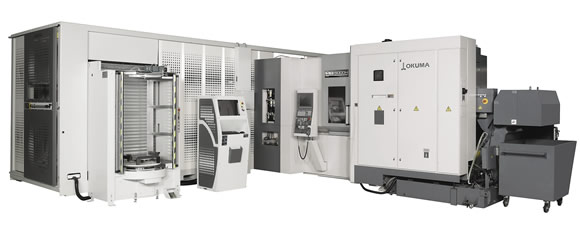
Courtesy of Okuma America
Okuma’s MB-5000H HMC with a base Palletace C1000 10-pallet system. It is expandable to three MB-5000H machines and two additional C1000 extensions for a 30-pallet system.
For small shops with short runs, the real benefit to having more pallets is being able to leave complex jobs with long setup times permanently set up to run on demand rather than having to reset them for each run.
“If you set the job up again, you have to make a new prove out and validate it,” Fastems’ Humphreys said. “Whereas if you have it set up and haven’t changed anything and have all the tools in the magazine, you can load the pallet and be confident that the first-off part will be a good part—the same as the last part from the previous batch. When introducing new work to the pallet system and while first-article inspection is happening, you can run another proven part while waiting. When you get the green light that the new first-off part is good to run, it is easy to release the part for production.”
That is the challenge with a stand-alone machine—proving out parts. While waiting for the first-article inspection, typically the machine is just sitting there, Humphreys added.
And that is where shops can use a less- skilled operator. “All the operator has to do is load and unload the parts in the pallet. They don’t need to be the high-level machinist who does prove out and system validation,” Klaver said.
Super Pallets
One smaller shop that is utilizing pallet automation for unattended machining is West Valley Precision Inc., San Jose, Calif. The 35-man shop produces Invar, stainless steel, aluminum and plastic parts for medical instruments.
WVPI has about 20 machine tools, including a Kitamura HX500i horizontal machining center with 150-tool capacity and eight pallets, which it has had for about 3 years, and a Kitamura SuperCell 400mm 5-axis HMC with 190-tool capacity and 40 pallets, which it has had for about 2 years.
“The automated system has a huge tool library on it, so all of the tools you need to machine a setup pallet are on that machine,” said Dane Madsen, WVPI president. “Being able to use the same tool on many different jobs is a function of your tool library. Every time that job comes up, you just pull that program and it will grab that pallet with the material on it just like it was the next part on the machine, even a couple of months later.”
As for unattended machining, the shop’s longest production time is on the HX500, running eight pallets and having the machine busy for 56 hours.
Builder vs. Integrator
WVPI chose to use Kitamura factory-installed pallet pools for its automated pallet systems, but a third-party automatic pallet system builder that integrates its systems with existing machine tools is another option.
A linear-type automatic pallet system is appropriate when a shop plans to expand the system in the future. “Kitamura and our distributors also partner with Fastems,” Vanik said. “So if a customer is looking down the road and knows it is going to need to add more machines, pallets, robotics and so on, our partnership with Fastems allows us the flexibility to offer a more expandable-type pallet system.”
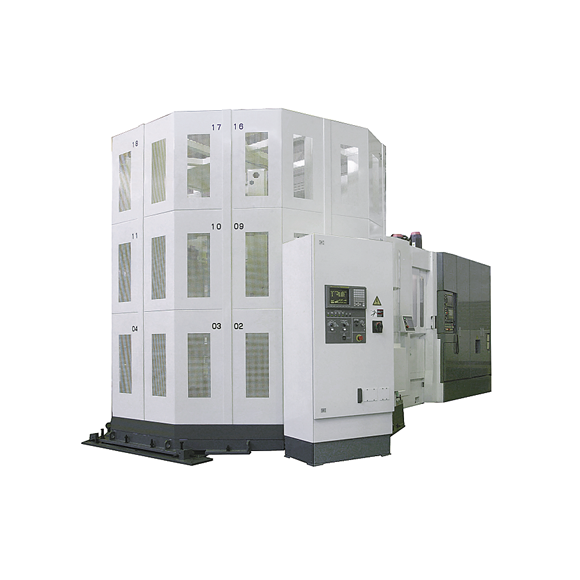
Courtesy of Kitamura
Kitamura’s HX400iFTGA with a 21-pallet system stacks upward, which is effective for smaller shops because it takes up less floor space.
One benefit third-party integrators offer is the ability to accommodate multiple machine tool brands. “In our higher level MLS systems, we can mix machine tool brands in one cell, such as a Makino, Mazak and Okuma,” Humphreys said. Although nearly all cells have the same brand of machine, it is useful to know it is possible to mix machine brands or even the same brand but different machine sizes in one system.
“And our systems typically will outlive the machine tool,” he added. “So if the customer buys our system for an Okuma and, in 7 or 10 years, wants to change to a Mori Seiki of the same size, we can reconfigure that system for the new machine.”
System 3R USA Inc., Elk Grove Village, Ill., is another third-party integrator of flexible manufacturing systems. “All of our automation is built around our standard tooling components,” said John Roskos, vice president-sales. System 3R offers standardized pallet tooling from 1 ” in diameter to 16 “×16 ” (400mm × 400mm) pallets. System 3R does a lot of automation for EDMs and milling machines that produce electrodes.
“But we are seeing demand from people that make products as well,” Roskos said. “I have a customer that makes aerospace and automotive turbochargers for engines. His workload goes from a HMC to a VMC with a B-axis to a straight vertical, and he has two 5-axis machining centers in that cell. All of his parts fit within a 290mm-square pallet, so we built the system around that 290mm cube.”
Using Delphin tooling, System 3R was able to provide 48 pallets for the system at a competitive price.
How does System 3R do this? “All HMCs come with a pallet and a load station,” Roskos said. “We take those two pallets and build Delphin chucks into them, essentially converting the OEM pallets into Delphin receivers. Now we can just make very simple, inexpensive pallets with ground-steel plate or cast- aluminum fixture plate by adding our Delphin drawbars, which provide reference and clamping. This keeps a customer from having to buy more of the OEM pallets.”
A 630mm pallet from a machine tool builder might cost $9,000. Using Delphin components can bring the pallet costs down to $1,500 or $2,000 each.
Automated pallet systems can manage production schedules and loads for machine tools. The automated system control typically prioritizes and optimizes the correct pallet order. The machine responds to what the pallet system control—the master—tells it to do.
“In our systems, we use our own cell controller so the machine is a slave,” Humphreys said. “The system tells the machine what to machine and the operator what to load and unload.”
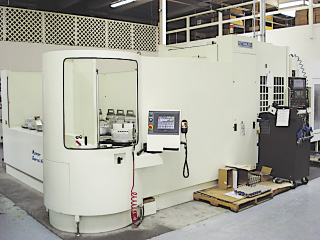
Courtesy of West Valley Precision
West Valley Precision Inc.’s Kitamura SuperCell 400mm 5-axis HMC has a 190-tool capacity and 40-pallet stations.
System 3R’s Roskos noted that for stand-alone machine tools, the integrator runs its system on the machine control. “If we have a cell with four or five machines, we try to implement our WorkShop Manager software,” he said. “And the software can be up to 20 percent of the cost of an automated pallet system, but that investment makes a serious difference in the machine utilization for a small shop. But if the cycle times are long and there are a lot of repetitive parts, we run the automation on the machine control.”
Machine Needs
The key to any machining operation is the machine tool itself. The automated pallet system is simply a way of moving the work into place—not making parts. But there are some features the machine should have to make lights-out machining effective.
The machine must have a large tool magazine or one that can be upgraded in the field when needs change. A typical tool magazine for an automated pallet system starts at 150 positions.
Another feature is tool breakage detection. “When running lights out with a tough material, you want a probe that can check the cutting tool to see if it has broken,” WVPI’s Madsen said. “We also have probes on the machine so we can inspect the part.”
An option Okuma’s Klaver recommends is a tool monitor adaptive control to measure the load on the tool and stop it before it breaks.
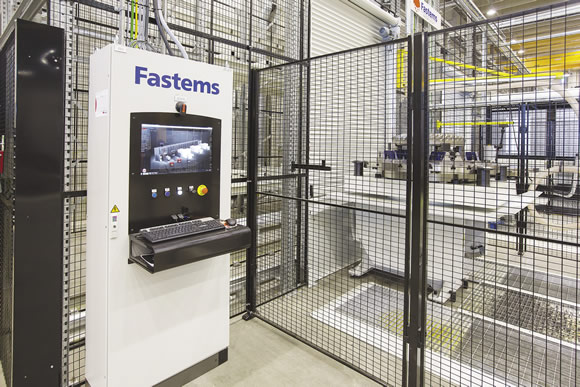
Courtesy of Fastems
Fastems’ MMS5 Data Manager automation software presents tools for production management. It creates job lists for load stations and machines, and decides which tools and materials will be needed during the schedule.
Also, make sure the machine has a high-quality chip removal system because chips can quickly accumulate in an unattended environment.
Lastly, because a machine is running additional hours, consider preventive maintenance programs to keep the machine running, Humphreys emphasized.
Unattended machining is obviously not as simple as setting up a job and letting it run. It requires careful planning and the right equipment. A shop needs to plan for the types of jobs it is going to run, the volume of work anticipated, how it will affect the shop’s configuration, and when it can expect an ROI.
A shop also needs to consider its long-term investments in machine tools and equipment. “It is interesting that so many job shops don’t have an investment strategy, and that is a weakness,” Humphreys said. “Many companies with a new contract need a new HMC on short notice. This normally leads the company to invest in whatever machine is available in the market regardless of machine control or similarities with what it already has.”
There is also the mentality of using older machines as long as possible, even though they might frequently break down and run half the speed of modern machines, he added. “If you don’t change and invest and evolve your company, you are standing still, and standing still is moving backward compared to everyone else.”
About the Author: Susan Woods is a contributing editor for CTE. Contact her at (224) 225-6120 or susanw@jwr.com.
Contributors
Fastems LLC
(513) 779-4614
www.fastems.com
Kitamura Machinery of USA Inc.
(847) 520-7755
www.kitamura-machinery.com
Okuma America Corp.
(704) 588-7000
www.okuma.com
System 3R USA Inc.
(847) 439-4888
www.system3r.com
West Valley Precision Inc.
(408) 519-5959
www.wvpi.com
Glossary terms in this article
Related




Subscribers can use MFGAxis notes, saves and discussion tools with their innoNET account.