

Adding and subtracting: Turning Performance
The 3D printer was introduced in 1981 and ultimately gave rise to rapid prototyping. Advancements in this technology have resulted in a new form of manufacturing that we now call additive manufacturing. In one way, it has fulfilled the dreams of engineers as it gives us the ability to go directly from design in CAD to a finished part with no intermediate processing.
The 3D printer was introduced in 1981 and ultimately gave rise to rapid prototyping. Advancements in this technology have resulted in a new form of manufacturing that we now call additive manufacturing. In one way, it has fulfilled the dreams of engineers as it gives us the ability to go directly from design in CAD to a finished part with no intermediate processing.
Additive manufacturing has evolved since the introduction of the 3D printer to become the latest manufacturing process to revolutionize engineering design and the production of prototype parts. A lot of people believe that additive processes are poised to replace many of the more familiar processes like casting, forging, machining and stamping.
Although developments are vigorous and focused on removing limitations, additive manufacturing has not become a mainstream manufacturing process, and we are still a long way from it replacing the more traditional processes.
Speed is a significant drawback to using additive processes. They build parts one layer at a time, usually only a few thousandths of an inch thick, and printing complex parts can take hours. Casting processes can fill a mold in just a few seconds and have the ability to produce multiple parts in a single operation. Stamping produces completed parts that are more accurate than most printed parts, with speeds that cannot be matched by any other process. Printing parts at rates comparable to stamping and casting would require an immense number of machines.
Entry costs for additive are very high compared with traditional machine tools. Additive processes that produce metal parts employ other advanced technologies, such as laser sintering, which bear high maintenance and operational costs. When the expense of the machines is considered, along with the slower production rates and reduced capacities, the cost of production parts is unacceptably high versus traditional processes.
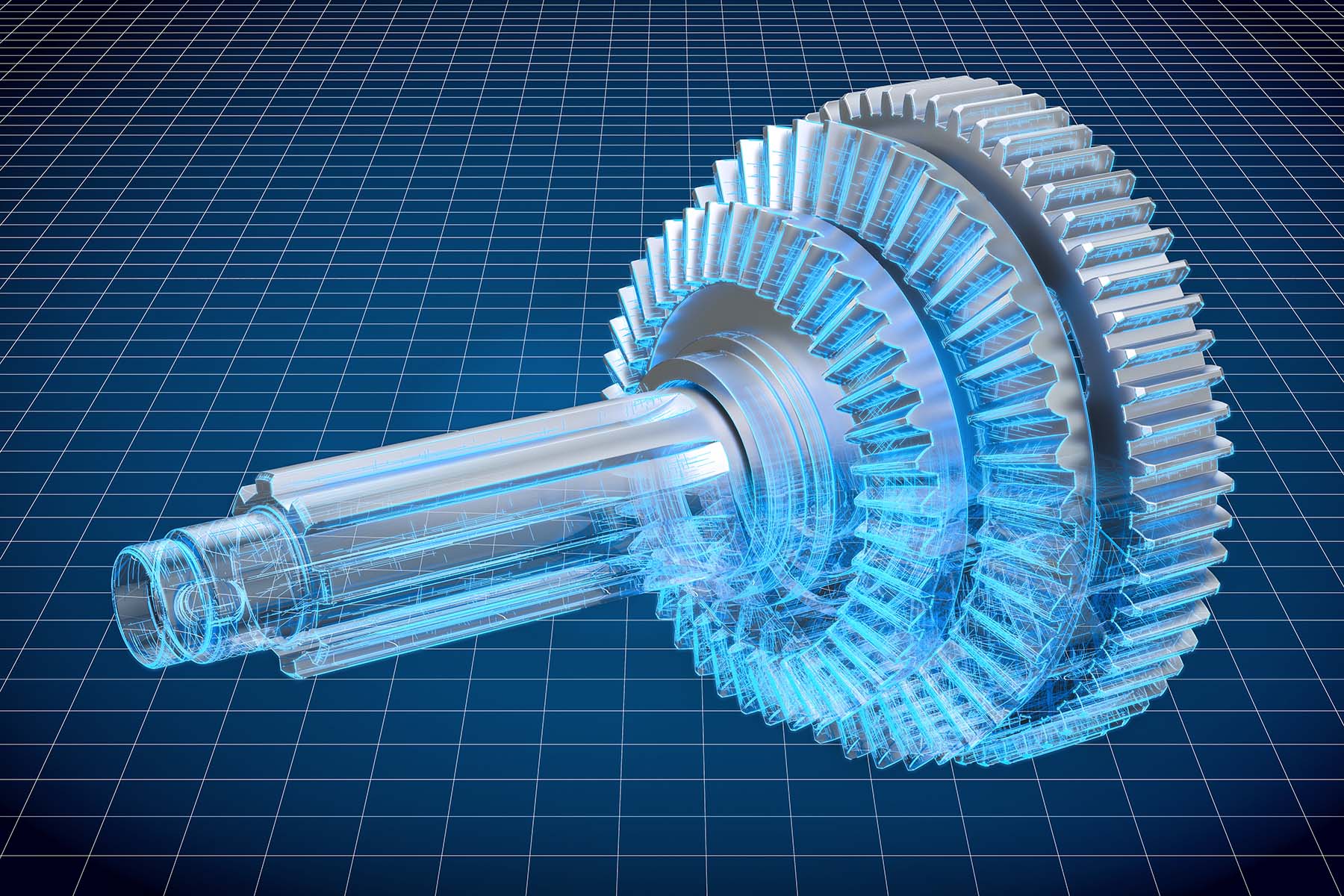
3D printing is the fastest way to turn ideas into parts.
Materials are another limitation of additive manufacturing. Unlike other processes, parts produced by additive manufacturing usually need an additional processing like sintering to achieve the necessary mechanical properties, increasing complexity, lead times and the number of operations.
Finding acceptable alloys is a challenge as well. Castings, forgings and stampings are available in countless alloys, so finding a material with the desired mechanical properties is relatively straightforward. Additive manufacturing processes are
limited to a small number of alloys with limited mechanical properties, which limits their use in production parts. These materials also are produced in much smaller quantities, making them far more expensive than common products used in traditional manufacturing processes.
Review the print ads from this magazine to continue
This quick advertiser review unlocks the rest of the article and keeps the full-screen reader focused on the ads instead of the page chrome.
Advertisers included in this article experience
Print placements connected to this article
Hainbuchamerica
Adapting to
New Possibilities Chucks and adaptations are available in round or hexagonal configurations n Change from O.D. to I.D. to jaw clamping in < 2 minutes n Use the same adaptations on your HAINBUCH turning or stationary chucks n Keep the basic clamping device mounted on the machine Germantown, WI USA.
Adapting to New Possibilities Chucks and adaptations are available in round or hexagonal configurations n Change from O.D. to I.D. to jaw clamping in < 2 minutes n Use the same adaptations on your HAINBUCH turning or stationary chucks n Keep the basic clamping device mounted on the machine 1.800.281.5734 Germantown, WI USA www.hainbuchamerica.com
Visit Hainbuchamerica View this placement in the issue recordPrint ads from this magazine
New Possibilities Chucks and adaptations are available in round or hexagonal configurations n Change from O.D. to I.D. to jaw clamping in < 2 minutes n Use the same adaptations on your HAINBUCH turning or stationary chucks n Keep the basic clamping device mounted on the machine Germantown, WI USA.
Adapting to New Possibilities Chucks and adaptations are available in round or hexagonal configurations n Change from O.D. to I.D. to jaw clamping in < 2 minutes n Use the same adaptations on your HAINBUCH turning or stationary chucks n Keep the basic clamping device mounted on the machine 1.800.281.5734 Germantown, WI USA www.hainbuchamerica.com
Continue reading
May 2023
Stamping, casting and similar processes require significant engineering preparation ahead of production, but the design concepts and general rules have been in place for many years. Therefore, finding or training people to design stamping and casting processes is still easier than finding additive experts. In many cases, an additive expert must have a collage of skills that range from CAD to metallurgy, making such people industrial unicorns.
So why is this technology so popular when a substantial number of limitations seem to exist? It’s because 3D printing is the fastest way to turn ideas into parts. Additive manufacturing is the only method that allows us to go directly from CAD to part. Casting, stamping and machining necessitate some type of tooling and post-processing of the CAD file, making the realization of ideas much slower than additive manufacturing.
Additive manufacturing requires specialized engineering skills to ensure that parts are designed to permit printing and that support structures are placed in the optimal position. However, an engineer does not need to have years of toolmaking experience and a room full of mills, lathes and grinders to produce a prototype part. The reduced number of resources lowers development time and cost and moves prototyping from the shop to the office.
There is a cool factor that cannot be matched by other processes. Watching your idea come to life on a computer screen and then grow one layer at a time from resin or powder metal has a science fiction quality that engineers naturally gravitate to.
Additive manufacturing processes will continue advancing. Machine tool costs are coming down. Material manufacturers are improving alloys. And engineering schools already are teaching the technology to students.
If it does not at the moment, then additive manufacturing shortly will dominate prototype manufacturing and proof-of-concept activities for design engineers. Soon we will begin to see additive processes slide into low-volume manufacturing environments, especially where part shapes are very complex and the advantages of other processes like casting cannot be realized.
Additive manufacturing has been infiltrating the machining world as some machine makers have incorporated multi-axis machining into the additive process, which brings machining closer to the concept of turning a CAD file into a part with no intermediate steps. As alloys improve, we can expect to see significant changes in the way that we produce hard tools, such as molds and forming dies. It is realistic to anticipate machines that can print a mold or die and then machine it after printing — all from a single CAD model.
Additive processes will continue to improve low-volume, complex component manufacturing because the advantages of additive manufacturing are aligned to the needs of that sector. Additive manufacturing also will improve processes like casting, stamping and forging, most likely from a reduction in tool costs and lead times. However, additive manufacturing will not replace processes, such as casting and stamping, because they are simply too efficient.
Glossary terms in this article
Related




Subscribers can use MFGAxis notes, saves and discussion tools with their innoNET account.


