

Bet on waterjet: Inspection Efficiency
Abrasive waterjet machining can be a terrific complement to more traditional machining processes.
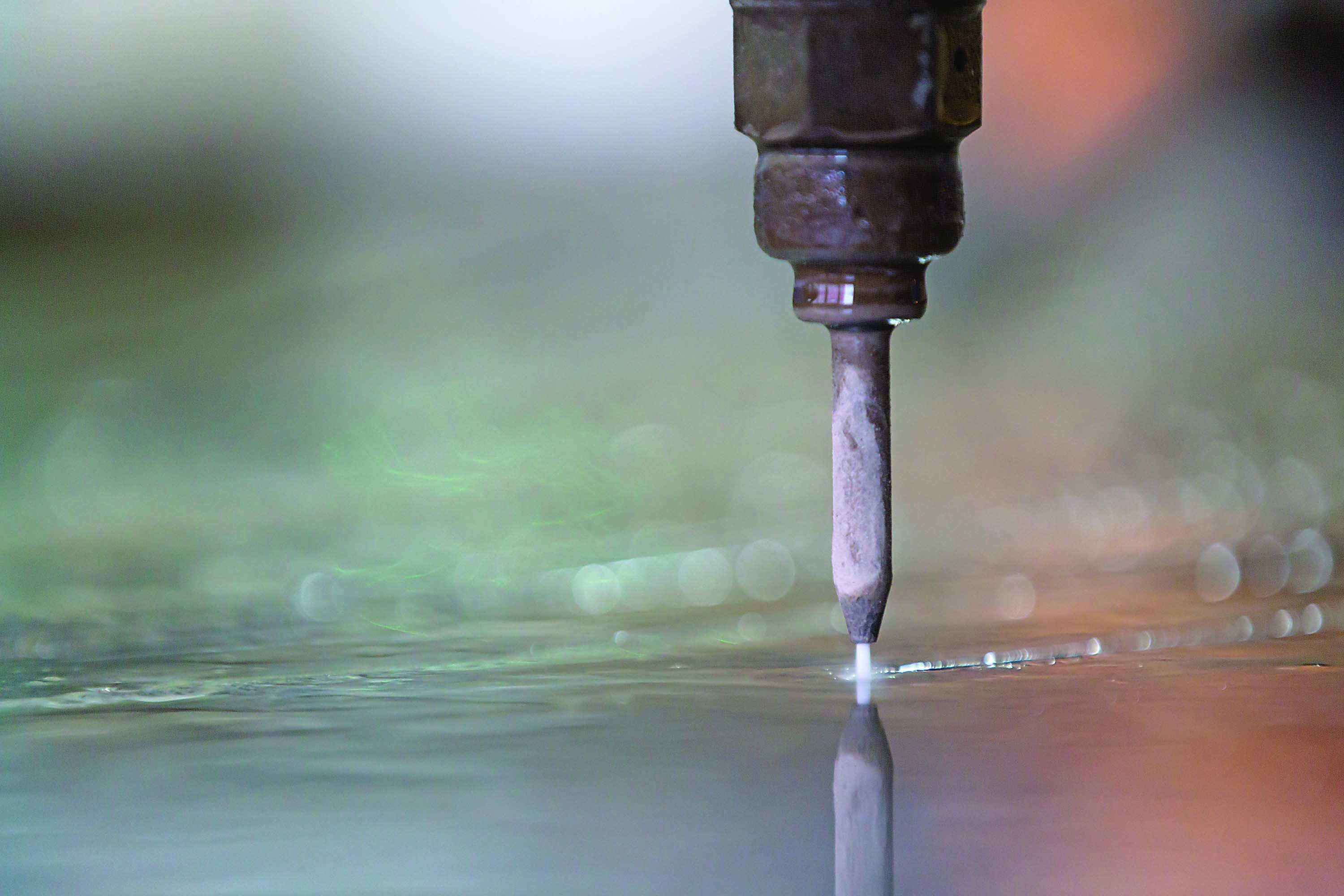
Waterjet technology, which uses high-velocity water mixed with garnet, can cut any thickness of material that fits under the head.
Those employed in metalworking industries are probably familiar with abrasive waterjet technology. However, many likely do not understand its unique capabilities and benefits. When we started Savannah (Georgia) Machinery Works in 2010, we had the opportunity to examine different manufacturing technologies and determined that waterjet cutting would be critical to the success of our startup.
Almost every component in gas turbine combustion hardware starts life as flat stock that is cut, formed and welded. Obviously, the flat stock has to be cut before we can do any forming and welding, so selecting the appropriate metalcutting machine tool was an important decision.
Most of our cut parts have nonrectilinear shapes, which require a CNC machine capable of producing complex shapes with different angles and radii. All current technologies, such as laser, oxy-fuel, plasma and waterjet cutting, have large tables, making them capable of holding entire sheets of flat stock.
Because programs were necessary to control the machine, we wanted to ensure that it was easy to program. Every cutting technology employs similar software that accepts various CAD files, making programming easy. In all cases, it was as simple as selecting the profile, telling the machine where to start, providing basic information about the workpiece material and pushing the start button.
Different Dimensions
The next consideration was material thickness. This is where we started to see distinct differences in capability between the thermal machines and the waterjet.
Our materials range in thickness from 1mm to 25mm, which presents a challenge when trying to select a style of machine. Thermal machines that worked well with sheets 1mm or 1.5mm thick, for example, using laser technology were not capable of cutting materials 15mm or 18mm thick. And the machines that could cut thick materials using plasma and oxy-fuel technology did not provide the specified cut quality. Waterjet was the only technology capable of delivering the desired profile definition over our range of material thicknesses. Waterjet technology, which uses high-velocity water mixed with garnet, can cut any thickness of material that fits under the head. An added advantage is that changeover from a thin to thick material is simple and done entirely through the control.
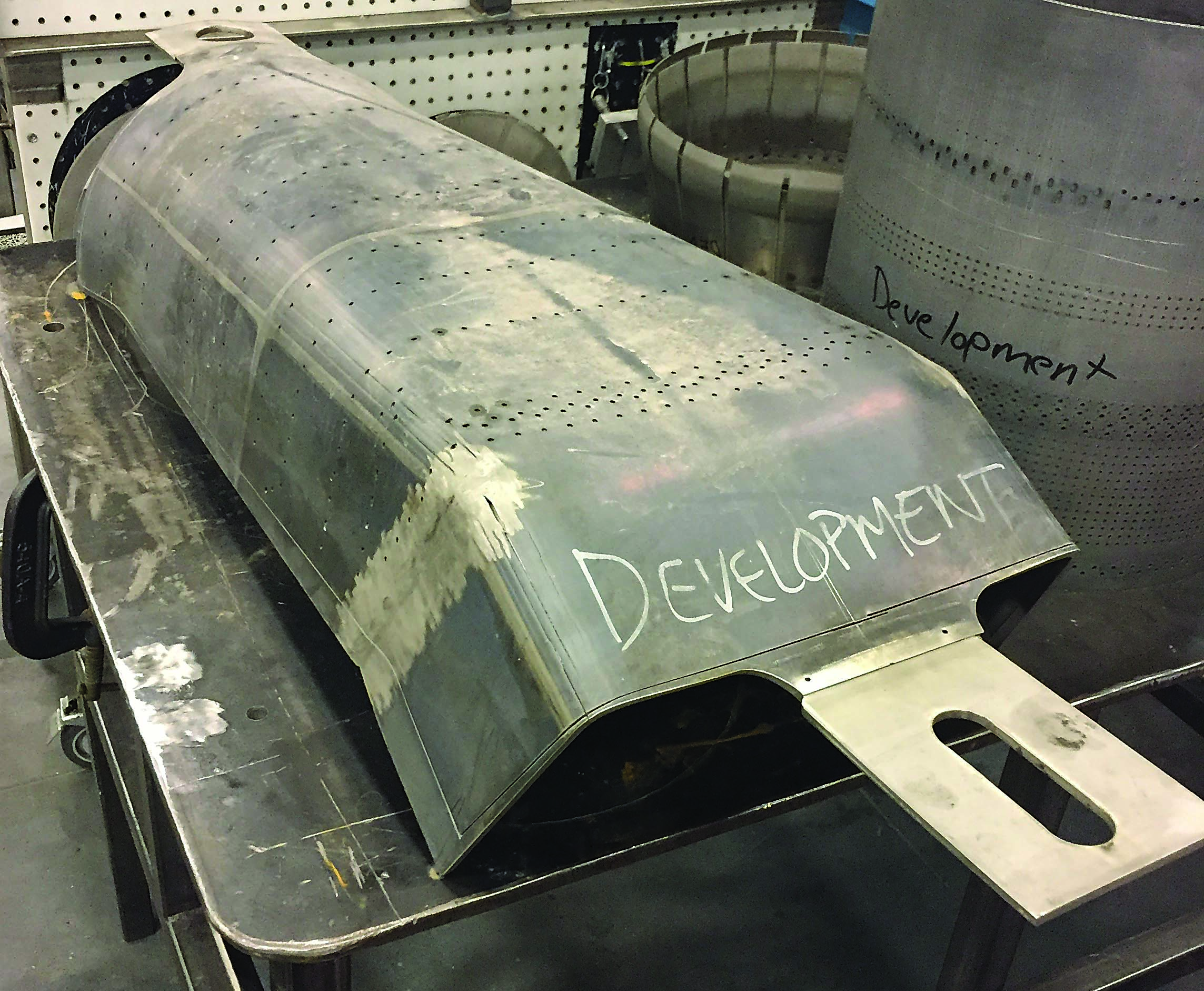
Pictured is the lower half of a gas turbine combustion component. The rectangular tabs and extra stock must be removed, which is done with a 5-axis abrasive waterjet machine at Mitsubishi Hitachi Power Systems Americas. Image courtesy of C. Tate
Review the print ads from this magazine to continue
This quick advertiser review unlocks the rest of the article and keeps the full-screen reader focused on the ads instead of the page chrome.
Advertisers included in this article experience
Print placements connected to this article
and quality results.
Drill with confidence
Star SU’s solid carbide drills are built to your specific design providing precision - Engineered and manufactured to order - Helical or straight flute - High performance geometries - Advanced coating options - Reconditioning services available For more information or to request a quote, give Star SU a call or visit our website:.
Drill with confidence Star SU’s solid carbide drills are built to your specific design providing precision and quality results. - Engineered and manufactured to order - Helical or straight flute - High performance geometries - Advanced coating options - Reconditioning services available For more information or to request a quote, give Star SU a call or visit our website: 248-474-8200 www.star-su.com
Visit and quality results. View this placement in the issue recordPrint ads from this magazine
Star SU’s solid carbide drills are built to your specific design providing precision - Engineered and manufactured to order - Helical or straight flute - High performance geometries - Advanced coating options - Reconditioning services available For more information or to request a quote, give Star SU a call or visit our website:.
Drill with confidence Star SU’s solid carbide drills are built to your specific design providing precision and quality results. - Engineered and manufactured to order - Helical or straight flute - High performance geometries - Advanced coating options - Reconditioning services available For more information or to request a quote, give Star SU a call or visit our website: 248-474-8200 www.star-su.com
Continue reading
June 2019
Combustion hardware operates in an extremely harsh environment and is subject to cracking and other mechanical failures, especially around welds. Almost all our combustion parts require some type of welding operation after cutting. Because of these risks, our welds must be practically flawless and are subjected to rigorous inspection. Achieving the highest-quality welds requires the weld joint to be meticulously cleaned and prepared before striking an arc.
When compared with thermal methods, waterjet cutting is the cleanest way to cut parts. The cut edges are clean and well defined and have no recast layer from the melting and solidification experienced with thermal cutting. Thermal methods force the welder to grind or sand the cut edge to ensure that oxidized material—the recast layer—does not contaminate the weld. No melting takes place with waterjet machining, so there is no oxidized surface to clean.
Under Pressure
Waterjet machines pressurize water to very high pressures, with 60,000 psi being common. Some machines are capable of even higher pressures. The pressurized water is presented to a small-diameter orifice, and the restricted flow combined with the pressure create a jet that can travel four times the speed of sound.
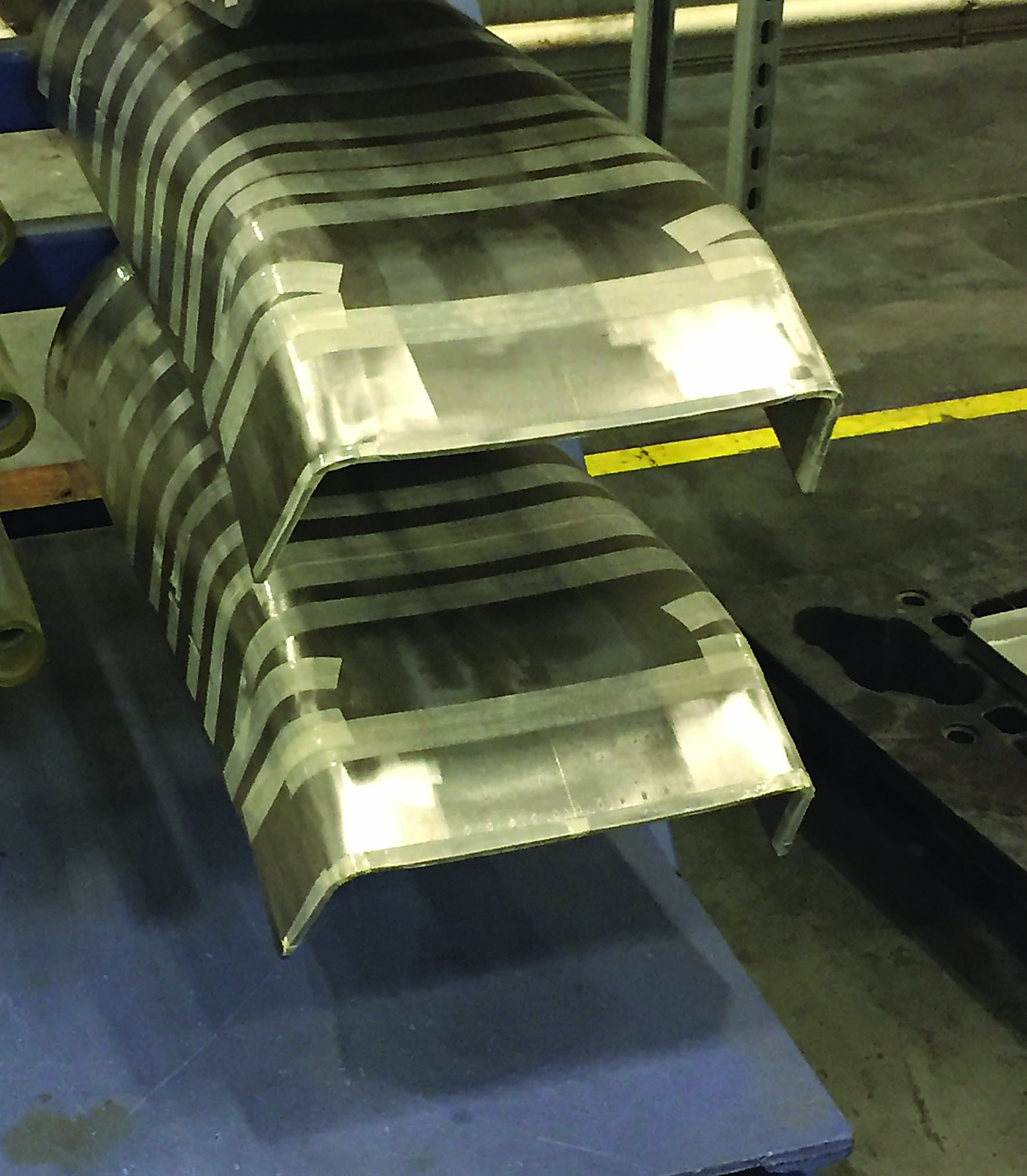
These parts have been through the waterjet machine and are ready for laser welding. Because waterjet cutting does not create a recast layer, no grinding or sanding is needed to remove one. Image courtesy of C. Tate
Ironically, the workpiece does not experience high cutting forces in this environment. This is a considerable advantage at my company because we have parts with complex shapes, and securely holding them with traditional machine tools would necessitate expensive, complex fixtures. Waterjet cutting allows us to employ simple, inexpensive workholding. In fact, we would have had to resort to a much more complex manufacturing process without waterjet technology.
The technology is surprisingly accurate compared with most thermal processes. When properly maintained and correctly set, a waterjet machine can routinely hold a tolerance of ±0.1mm. Some manufacturers claim to hold ±0.025mm. My company regularly holds to ±0.1mm on small-diameter holes in 5mm- and 6mm-thick materials. I suspect we could do better if necessary, but it would require significant development time.
Waterjet cutting allows a user to cut what seems to be an unlimited array of materials, including cardboard, plastic, wood, foam and ceramics. Simply tell the control what material is being cut, along with the thickness, and the control will compensate. Waterjet machining does not produce fumes, gases, dust or other airborne contaminants, and there is little chance of starting fires, unlike with thermal processes.
For us, waterjet technology was the right choice and has proven to be the perfect complement to the more traditional manufacturing processes we use. We did not realize how important our waterjet machines would become when they were purchased. Over time, they began to play a role in some of our most meaningful manufacturing processes and allowed us to make parts we may not have been able to produce otherwise.
Glossary terms in this article
Related




Subscribers can use MFGAxis notes, saves and discussion tools with their innoNET account.


