

Certifiably consistent: Medical Manufacturing
Quality is obviously important in machining. While definitions of quality can vary from machine shop to machine shop, and machinist to machinist, shop certification programs aim to establish a universal definition. Shops, in turn, use that certification to improve their processes and gain access to new customers.
Quality is obviously important in machining. While definitions of quality can vary from machine shop to machine shop, and machinist to machinist, shop certification programs aim to establish a universal definition. Shops, in turn, use that certification to improve their processes and gain access to new customers.
Industry standards for quality are established primarily by the International Organization for Standardization (ISO), based in Switzerland and represented in the U.S. by the American National Standards Institute (ANSI). According to Robert Keys, aerospace program/sector manager for certifying organization DNV GL, Katy, Texas, “quality” standards focus more on quality assurance (QA) than quality control (QC).
“If you look at ISO 9000-2005, which forms the fundamentals of and vocabulary used within the ISO world, quality control is a term that implies being more reactive than proactive,” he explained. “Quality assurance, which is really where the standards come in, is based on the philosophy of doing things right the first time. That doesn’t mean not to practice quality control, to take measurements and adjust accordingly, but almost all of quality control resides within Clause 8.2.4, monitoring and measuring of product.”
QA, on the other hand, is the primary focus of multiple standards to which organizations can become certified. ISO 9001 is a general quality systems management certification, dating back to 1987, with the next update to the standard scheduled for 2015, Keys said. Beyond that, AS 9100 is a sector-specific standard applicable to the aviation, space and defense manufacturing industry, TL 9000 is the standard for telecommunications and ISO 13485 governs medical devices. All these standards contain the entirety of ISO 9001, as well as additional, sector-specific requirements.
“Each industry took the basic ISO 9001 standard and added to it,” said Larry Parah, ISO certified principal auditor for BlueSkye Track Inc., a South Burlington, Vt., consulting firm. For example, he explained, ISO 13485 established that medical device companies must maintain records on all devices for the life of the product but not less than 2 years from the date the product is released or as specified by relevant regulatory requirements.
“A company should, at minimum, be ISO 9001-certified,” Parah continued. “If not, they probably aren’t taking quality management very seriously. An ad-hoc approach to quality might work, but it’s difficult to put faith in a program without defined parameters.”
Standard Bearers
To become certified to a standard, according to Keys, the first step is to obtain a copy of the standard. However, while that sounds easy, Keys said many smaller organizations may not have the resources to interpret and apply the standard. “Some organizations may take training courses, others might opt to buy books and study on their own,” he said, “but a lot choose to hire a consultant to interpret and apply the standard for them.”
Parah, a consultant for more than 10 years, provides ISO consulting and training services, typically priced at $1,400 per day.
“For a company in the 10- to 50-person range, I can assure them that after 10 days of my services spread over a 3-month period, they will be ready to be certified,” Parah said. “All they need is the desire to get certified, and once they bring me on board, I provide the necessary work and also train them on the standard.”
Parah said he not only acts as an adviser, he also walks employees through the work, showing them what needs to be done so they can learn to do it themselves. His work involves helping shops conceptualize and implement their QA systems, documenting core processes and ensuring maintenance of all necessary records. He also handles the internal auditing on a company’s behalf.
Once the organization has established and documented its quality management system and accumulated the amount of records required by the standard, typically 90 days’ worth, it must submit an application, known as a request for proposal, to a certification body like DNV GL. Once the proposal is presented to the organization and a certification agreement (contract) has been executed, the first stage of external auditing occurs.
“The first stage is very high-level, looking at records and procedures, and is followed by a written recommendation to either proceed to the next audit or to revisit the initial audit at a later date,” Keys said. “The second stage is much more in-depth and examines implementation of all requirements, including adherence to the standard at every level.” Upon completion of the second stage, the auditor issues a report to be reviewed by Keys or one of his colleagues, who determines whether the organization has sufficient information to make a certification decision and issue a certificate.
Jim Hebda, quality manager of Peerless Precision Inc., said the Westfield, Mass., machine shop earned its ISO 9001 and AS 9100 certificates concurrently in August 2005, noting the two standards feature significant overlap.
“If you’re going to get [AS 9100], you might as well get them both,” he said. “The ISO 9001 restrictions exist in both, but there are a few measures in AS 9100 that are a little more stringent and specific. The biggest differences are in areas like record retention—for AS 9100, you need to hold certifications, inspection reports, things like that, for 5 years. You also need to conduct a deeper risk analysis of your company and document what you are doing in certain areas like part measurement.”
Recertification Nation
While the certification process can be arduous, hanging the certificate on the wall doesn’t exactly mark the end of the road.
“The main goal of all these certifications is continuous improvement,” said Chad Paulson, global quality manager for Suttle, Hector, Minn. The telecommunications hardware manufacturer earned its ISO 9001 in 1997 and became TL 9000 certified in 2003, and, like all certified shops, must complete yearly surveillance assessments, with a full recertification occurring every third year.
“Every 3 years, all of our procedures, our measurements, our records, our entire quality management system undergo the same level of scrutiny as when we received our initial certification,” he said. “When DNV carries out the annual assessments, they always do a management review and a manufacturing audit, then tackle different aspects—purchasing, design, scheduling, material handling, what have you. All of it leads up to the full recertification, which covers everything in the book.”
This schedule applies for all standards, meaning maintaining multiple certificates requires serious dedication to quality on the shop’s part. To help stay prepared for the recertification audits, shops can request the surveillance assessments take place semiannually, but according to Hebda, no shop is perfect.
“You can prepare all you want, but during every audit they’re going to find something ‘wrong’ in your shop,” he said. “We were as prepared as we could have hoped to have been going into the process, but we still had four findings at our initial audit. No two auditors are the same, so the best thing you can do is not be surprised at those findings; just be prepared to fix them and move on.”
Why Certify?
The main reason shops pursue certification is, quite simply, because it’s required. Hebda said Peerless Precision became certified because virtually all of its aerospace customers require AS 9100. Paulson said major telecom corporations such as AT&T and Verizon include TL 9000 in the terms of their contracts. However, that’s not to say there isn’t value in certification outside of customer requirements.
“All of our aerospace customers were requiring the certifications, but once we got involved in the process and understood the goals, it became a very useful tool for the shop,” Hebda said. “It’s reduced our scrap and rework rates, because once you get the system in place and all the employees on board, it makes you more meticulous with how you lay out your jobs. It also gives the operators more understanding of what their role is on a given operation, more of a sense of their value within the process. Once everyone bought into the idea of getting certified, they took a lot of pride in meeting those standards and it made the shop atmosphere a lot more positive.”
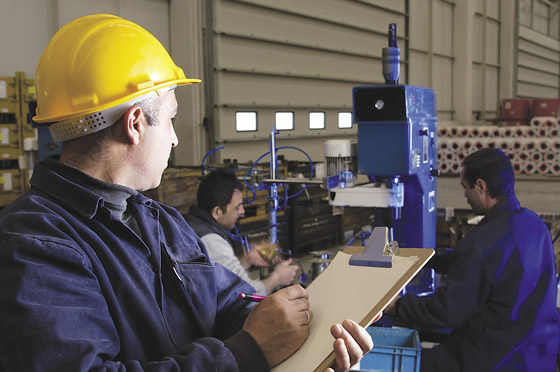
Completion of the process also led to more aerospace prospects contacting Peerless for jobs, because being certified eliminates the need for companies to perform their own quality audits prior to engaging a shop’s services, Hebda said.
“Certification is a way an organization can demonstrate that it is a forward-looking organization, genuinely interested in continually improving its ability to supply quality products,” said DNV GL’s Keys. “It shows they have established, as the standard requires, quality objectives like on-time delivery and product quality, and that they are monitoring, measuring and improving their systems every year. Essentially, whether certification is specifically required or not, implementing a quality management system shows your customer base that you are committed to meeting requirements and serving them to the best of your ability.”
Review the print ads from this magazine to continue
This quick advertiser review unlocks the rest of the article and keeps the full-screen reader focused on the ads instead of the page chrome.
Advertisers included in this article experience
Print placements connected to this article
Fax+1 817 258 3221, [email protected]
No T ti m
! e! me n for D o w i ISCAR METALS INC. 7/10/14 9:52 AM.
! e! No T ti m me n for D o w i ISCAR METALS INC. Tel + 1 817 258 3200, Tech Tel 1-877-BY-ISCAR, Fax+1 817 258 3221, [email protected] www.iscarmetals.com 7/10/14 9:52 AM
Visit Fax+1 817 258 3221, [email protected] View this placement in the issue recordPrint ads from this magazine
! e! me n for D o w i ISCAR METALS INC. 7/10/14 9:52 AM.
! e! No T ti m me n for D o w i ISCAR METALS INC. Tel + 1 817 258 3200, Tech Tel 1-877-BY-ISCAR, Fax+1 817 258 3221, [email protected] www.iscarmetals.com 7/10/14 9:52 AM
Continue reading
August 2014
Other Opportunities
In addition to the obvious benefits, some certifications allow shops opportunities for improvement not available to the uncertified. For example, TL 9000-certified companies are required to submit monthly measurement data to the QuEST Forum, a collective of ICT service providers, which supplies that data to its members for benchmarking purposes.
“They value their measurements more than anything,” said Suttle’s Paulson, whose shop is a member and who submits data on seven different QuEST Forum categories. “We primarily make metal and plastic injection-molded enclosures, so if I go into the enclosures category, I can’t see the specific supplier names, but I can see all of the measurement data from every shop with TL 9000 certification. I can compare our stats on things like on-time delivery, number of problem reports and concern response rate to the national average. If we’re above, that’s good; if we’re below, I know what we need to work on.”
QuEST Forum membership fees depend on a shop’s revenue, but range from $2,500 to $12,000 annually. While nonmembers can purchase Forum data, Paulson said it costs $500 for a single product category and $2,500 for all product categories for the first request, $2,500 for each subsequent single category report, and $15,000 for all reports for a subsequent request within the same year.
“When we started the transition to TL9000, we were not QuEST Forum members,” he said. “Earning our TL 9000 certification was customer driven. But once we had that certification, we realized membership would allow us to compare our measurements to the exact same measurements for every company around the world. These benchmarking opportunities are key to our business.”
On the aerospace side, DNV GL’s Keys explained that AS 9100-certified manufacturers (along with AS 9110 for maintenance, repair and repair organizations and AS 9120 for distributors) are entered into the International Aerospace Quality Group’s Online Aerospace Supplier Information System (OASIS) database.
“Every accredited certificate is entered into that database and the whole world can see that list of certified suppliers,” he said. “It’s really an incredible level of exposure that uncertified organizations don’t have.”
However, not all quality management systems are created equal. DNV GL is accredited by the ANSI ASQ National Accreditation Board (ANAB), but many companies offer unaccredited certifications, something Keys and the accredited certification bodies regard as little more than a piece of paper.
“Those processes typically involve sending your quality system to a company, and in return they send you a certification,” he explained. “There’s typically no auditing process, there’s not even a visit to the organization being audited.” The biggest problem with these types of certifications is that they aren’t transferrable—DNV GL can only transfer certifications from other accredited certification bodies, because unaccredited certifications lack any tangible system of accountability.
“[ANAB] watches over us, we watch over our customers, and our customers have to watch over their supplier base,” he said. “There is intrinsic value in that kind of accountability.” CTE
Quality credentials for individual workers?
While ISO 9001 and other certifications are applicable at the shop level, what about individual employees? While still less ubiquitous and not widely required by customers, the National Institute for Metalworking Skills offers more than 50 individual occupational credentials—all of which carry a built-in quality aspect.
“We typically don’t offer separate quality control credentials,” said James Wall, NIMS executive director. “Instead, we try to incorporate quality requirements that are appropriate for the specific occupation on which the credential focuses.”
The standards, he continued, are developed by technical work groups of industry experts, and the quality requirements put special emphasis on the application of geometric dimensioning and tolerancing. “Our job is to convene technical experts from the industry, people from the specific occupational specialties that deal directly with these standards,” he said. “One of the biggest issues those experts have faced is how to deal with GD&T. While that is an extremely important measure of quality, especially in high-end machining, we have found that there are wide variations within the industry regarding its application.”
NIMS credentials are modular in nature—they can be earned at different levels for different tasks, depending on the individual occupation—and the quality requirements scale along with everything else.
While the credentials may not be based on an existing standard like ISO 9001, NIMS is an ANSI-accredited standards developer, so many of the same principles apply. Level I credentials might have somewhat forgiving tolerances for quality, Wall explained, but at Level II, the tolerance requirements not only get much more stringent, but a time limit to complete the job is introduced.
“Even for the Level I credential, the parts are not acceptable unless they are 100 percent within the quality tolerance given,” Wall said. “For a lot of people coming out of school, that’s a big change, because suddenly 80 or 90 percent correct just isn’t a passing grade. But it’s realistic, because in our industry, if the part [isn’t completely right], it’s scrap.”
The metalforming industry spearheaded the effort to develop a separate QC credential, acknowledging that many metalforming shops still use dedicated QC departments.
“We recognize that one size does not fit all in machine shops,” said Wall. “This is why NIMS launched a modular credentialing system in order to support manufacturers in using credentials that best suit their needs.”
—E. Jones Thorne
Contributors
BlueSkye Track Inc.
(802) 489-5540
www.blueskyetrack.com
DNV GL
(218) 396-1000
www.dnvgl.com
National Institute for Metalworking Skills Inc.
(703) 352-4971
www.nims-skills.org
Peerless Precision Inc.
(413) 562-2359
www.peerlessprecision.com
Suttle
(800) 852-8662
www.suttlesolutions.com
Related




Subscribers can use MFGAxis notes, saves and discussion tools with their innoNET account.


