

Considerations when having taps resharpened
Resharpening dull taps by hand is probably not a good idea when you could be making parts. Plus, a thorough reconditioning requires a grinder designed for grinding the actual tap form. So resharpening dull taps is one job best left to the experts.
YouTube videos to the contrary, it’s probably not a good idea to sharpen dull taps by hand, especially using a Dremel tool or bench grinder. A high-quality tool and cutter grinder might do the trick. However, these are limited to touching up the chamfers and possibly the flute faces.
A grinder designed for grinding the actual tap form is required for more thorough reconditioning. Regardless, why spend time sharpening taps (or any other cutting tool) when you could be making parts? This is one job best left to the experts.
Those experts include Tap Saver LLC, Commerce Township, Mich.; Tapco Cutting Tools Inc., Loves Park, Ill.; and Cheboygan (Mich.) Tap & Tool Co. They promise to quickly return worn taps to like-new condition. They also can modify taps to improve threading performance.
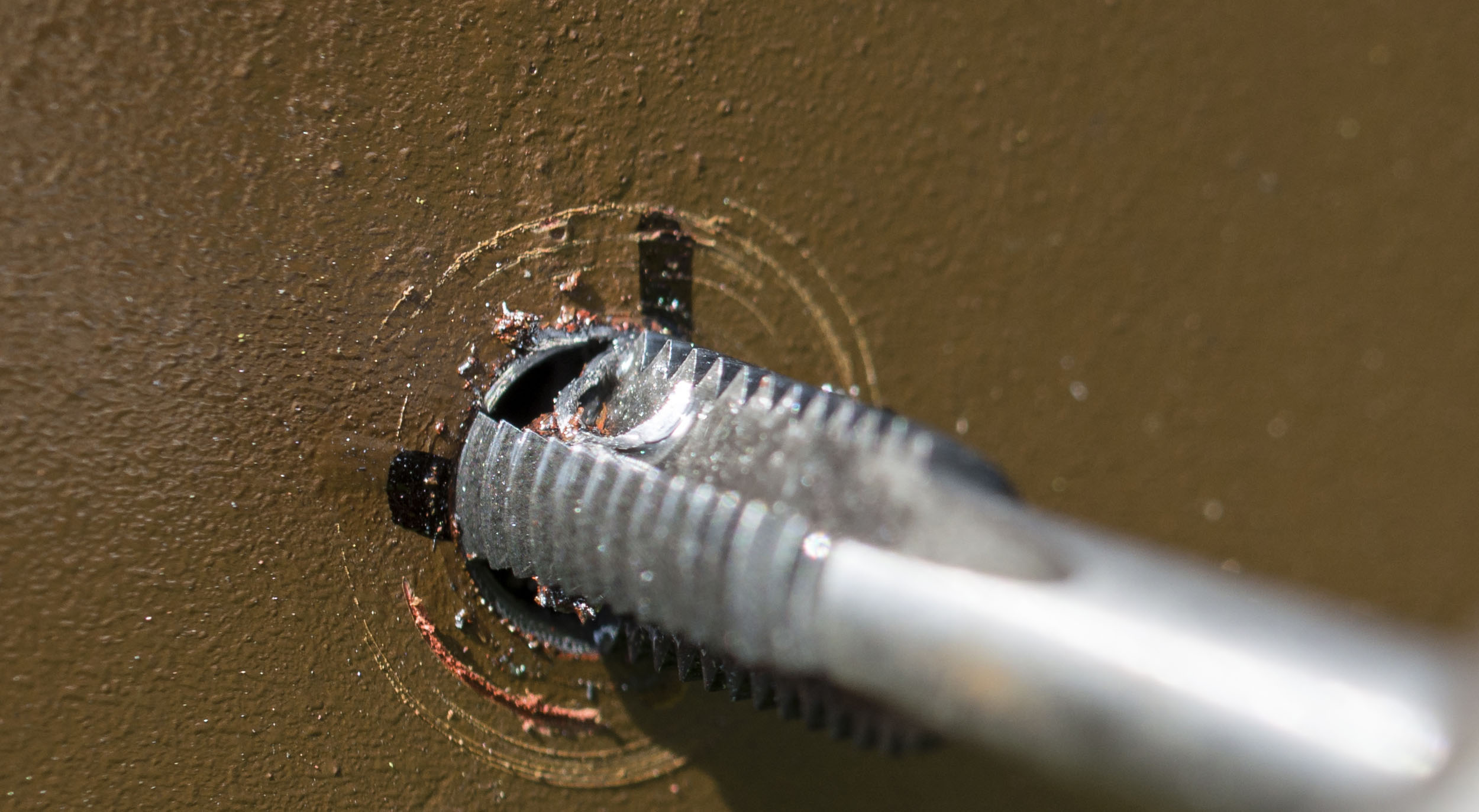
Properly resharpened taps often perform as well as new, at a fraction of the cost.
When reconditioning taps, the first consideration is tap size. Taps that are 1⁄4-20 and smaller cost less than a double latte at Starbucks. Most industry experts will tell you it’s best to recycle them at the first sign of flank wear.
Review the print ads from this magazine to continue
This quick advertiser review unlocks the rest of the article and keeps the full-screen reader focused on the ads instead of the page chrome.
Advertisers included in this article experience
Print placements connected to this article
See why our design features matter. Visit takumiusa.com/art
At Takumi, we implement stringent processes to design and build rigid and reliable machining centers that
exceed our customer’s expectations. From our meticulous manufacturing processes, such as hand scraping contact areas, to the use of premium components, we infuse quality into each of our products. ORK NETW RT PO SUP & ICE ERV S DE Takumi USA Showroom & NWI Service Center in Indianapolis TIO NA Takumi USA | 7220 Winton Drive | Indianapolis, IN 46268.
At Takumi, we implement stringent processes to design and build rigid and reliable machining centers that exceed our customer’s expectations. From our meticulous manufacturing processes, such as hand scraping contact areas, to the use of premium components, we infuse quality into each of our products. See why our design features matter. Visit takumiusa.com/art ORK NETW RT PO SUP &
Visit See why our design features matter. Visit takumiusa.com/art View this placement in the issue recordPrint ads from this magazine
exceed our customer’s expectations. From our meticulous manufacturing processes, such as hand scraping contact areas, to the use of premium components, we infuse quality into each of our products. ORK NETW RT PO SUP & ICE ERV S DE Takumi USA Showroom & NWI Service Center in Indianapolis TIO NA Takumi USA | 7220 Winton Drive | Indianapolis, IN 46268.
At Takumi, we implement stringent processes to design and build rigid and reliable machining centers that exceed our customer’s expectations. From our meticulous manufacturing processes, such as hand scraping contact areas, to the use of premium components, we infuse quality into each of our products. See why our design features matter. Visit takumiusa.com/art ORK NETW RT PO SUP &
Continue reading
July 2017
“At Cheboygan Tap & Tool, we take our resharpening program very seriously,” said Engineering Manager Jeff McLeod. “We have long-standing relationships with customers who understand the benefits of pulling a tool before its usable life and taking advantage of our services. This is especially true with complex, multiple-start tooling, (ball form, ACME) that require long lead times to manufacture, whereas a resharpening/reconditioning program can keep the customer making parts.”
The other consideration is process control. While like-new condition is just fine when detailing a car, it might be less than adequate when making a batch of expensive aerospace or medical parts. Still, for shops where every penny counts or those machining high-volume, commodity-grade products, resharpened taps might bring big benefits.
Consider sending some worn taps to a regrinder as a test. If the documented results are positive, work with your production team to implement a reconditioning program, and be sure to keep refurbished taps separate from new ones.
Jackie Brewster, president and co-owner of Tapco, said “like new” is a misnomer. “It’s more accurate to say ‘resharpened to a functional tool,’ ” she said. “Regardless, the biggest benefit of tap resharpening is found with special taps. Standard tools are not as cost-effective, although they are still a good value for many shops. We simply look at a tool and determine if it is at all salvageable and worth the cost of sharpening. The end user must be the one to determine if doing so is worthwhile.”
One thing to keep in mind about reground taps is that they lose one H size (0.0005″, or 12.7µm) or more during resharpening. However, less material is lost as tap size decreases. So, a reconditioned tap may not perform as it did prior to regrinding. That could lead to reworking or scrapping a part.






