

Ground Round: General Industry Coverage
Courtesy of All images: V.N. Bakul Institute Developments in superabrasive grinding wheels for producing ceramic balls.Editor's Note: An immeasurable number of roller bearings, pumps, hydraulic and other devices are in use and their service life depends on the working capacity of "ball-type" parts.
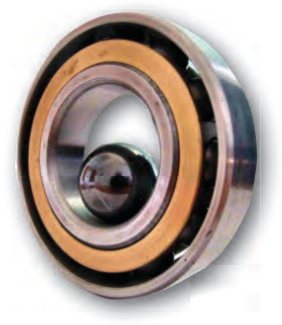
Courtesy of All images: V.N. Bakul Institute Developments in superabrasive grinding wheels for producing ceramic balls.
Editor’s Note: An immeasurable number of roller bearings, pumps, hydraulic and other devices are in use and their service life depends on the working capacity of “ball-type” parts. Service life of standard ball-type parts is too low, especially when they are exposed to abrasive, corrosive and other severe, wear-causing environments. Similar parts made of ceramic materials have high hardness and chemical wear resistance, which significantly increases service life.
A review of international studies about ceramic materials concludes that these materials can be used to make high-strength, ball-type parts. Such parts would effectively work in valve, bearing and other mechanisms for various industries, including chemical, machine building, defense and oil and gas.
Scientists in Ukraine, Russia, Germany, China and other countries have created advanced ceramic and composite materials, including refractory compounds based on boron carbide, silicon carbide, chromium carbide, silicon nitride and cemented carbides. These materials have high hardness, reasonable strength and unique wear-resistance properties, making them suitable for applications in aggressive and abrasive media. Success in those applications requires advanced grinding processes to achieve the required part accuracy.
High dimensional accuracy of ceramic balls can be achieved by precisely grinding them with diamond wheels. To develop such a process, studies were performed to determine the grinding parameters and general characteristics of the proper wheels, determine functional kinematics for grinding ceramic balls with diamond wheels and optimize quality indexes and industrial implementation of new nanodispersive ceramic materials based on silicon nitride, boron carbide, aluminum oxide, zirconium dioxide and yttrium oxide.
The technology described in this article was developed in accordance with the CERBALL EU-4156 project, which is a part of the EUREKA scientific and engineering program. The aim of the program is implementation of R&D projects that can compete on the international market.
The integrated technology for manufacturing specially designated ball-type parts includes:
• Fabrication of composite materials based on plasma-chemical synthesis of nanodispersive powders and other ceramic materials;
• Use of hydrostatic powder molding and compressed sintering of the balls; and
• Diamond-abrasive machining of ball-type parts.
The project’s partners are Neomat Co. (Latvia), BИPИAΛ (Russia) and the V.N. Bakul Institute of Superhard Materials of the National Academy of Sciences of Ukraine. Neomat developed the technology for plasma-chemical synthesis of ceramic nanopowders, including nitrides, oxides, carbides and their compounds. This technology makes it possible to produce pure powders with internal phase compositions that are different than powders produced using a traditional synthesis method. BИPИAΛ developed the technology for fabricating round ceramic-ball blanks and implemented processes for mixing, molding and sintering ceramic materials. The V.N. Bakul Institute developed the technology for diamond-abrasive machining ball-type parts made of ceramic materials, including nanodispersive ones.
Description of R&D
Applying a special diamond wheel (Figure 1) and lapping tools are recommended to achieve high-productivity precision grinding, which produces ceramic balls with an average surface roughness less than or equal to 0.05µm Ra (2 µin. Ra) and out-of-roundness of about 0.5µm to 1.0µm (about 20 to 40 µin.). The novelty of these tools is the presence of multiple-profile surfaces.
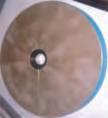
Figure 1. A 6A2T-type grinding wheel made of superhard materials.
Grinding is performed on special equipment (Figure 2), which provides the functional kinematics necessary for machining solid spherical bodies with diamond wheels.
The equipment’s uniqueness is characterized by special control for movement of the axes of rotation of parts during grinding. The technology requires the diamond wheel to uniformly contact the surface of the machined balls. The length of such contact should secure part rotation at the applied compressive force of about 5,000 N (1,120 lbf, where lb is pound and f is force). The spindle speeds are 60, 70, 90 and 105 rpm. Coolant is applied during grinding.
Experimental studies, performed as part of the R&D, optimized grinding operations for the ceramic balls. In accordance with the Ukraine state standard ΓOCT 3722-81, these ceramic balls can be used for various ball bearings. Grinding ceramic materials with diamond wheels included the following operations.
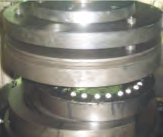
Figure 2. Ceramic balls are ground with diamond abrasive.
Operation 1. Grinding the blanks to obtain the required configuration of the spherical surface. The following are the recommended diamond wheel characteristics and machining parameters.
Wheel: 6A2 300×80×3 – AC15 125/100 to 315/250 – MX5, MП-1-100
Cutting speed: 20 to 30 m/sec. (3,940 to 5,900 sfm)
Feed rate: 1.0 to 1.5 mm/rev. (0.04 to 0.06 ipr)
Applied compressive force per ball: 3 to 5 kgf (6.6 to 11.0 lbf)
Review the print ads from this magazine to continue
This quick advertiser review unlocks the rest of the article and keeps the full-screen reader focused on the ads instead of the page chrome.
Advertisers included in this article experience
Print placements connected to this article
800.521.9520 | mscmetalworking.com
Available exclusively at MSC Industrial Supply Co.®
IS #42.
Available exclusively at MSC Industrial Supply Co.® IS #42 800.521.9520 | mscmetalworking.com
Visit 800.521.9520 | mscmetalworking.com View this placement in the issue recordPrint ads from this magazine
IS #42.
Available exclusively at MSC Industrial Supply Co.® IS #42 800.521.9520 | mscmetalworking.com
Continue reading
May 2011
[Translator’s note: The following describes wheel nomenclature.]
• The first three characters (6A2) indicate the wheel type.
• The following three-digit number (for example, 300) is wheel OD, the next two-digit number is the width of the diamond layer (for example, 80mm), and the number 3 is the thickness of the diamond layer. All dimensions are in millimeters.
• The two letters (AC) and following number (15) indicate the grade of synthetic diamond and the static load it can withstand, ranging from 7 to 30 N (15 N on average).
• The next set of numbers (for example, 125/100) indicates size of diamond grains in microns.
• The characters to far right, after the dash sign, indicate the proprietary bond type.
Operation 2. Grinding the balls to obtain a spherical surface with an accuracy of 10µm (0.0004″) or better. The following are the recommended diamond wheel characteristics and machining parameters.
Wheel: 6A2 200×50×3 – AC6 125/100 to 100/80 – MX5, MП-1-100
Cutting speed: 20 to 30 m/sec. (3,940 to 5,900 sfm)
Feed rate: 0.2mm to 0.5mm/rev. (0.008 to 0.02 ipr)
Applied compressive force per ball: 3 kgf (6.6 lbf).
Operation 3. Grinding the balls to obtain a spherical surface with an accuracy of 1µm (39 µin.). The following are the recommended diamond wheel characteristics and machining parameters.
Wheel: 6A2 300×80×3 – AC6 125/100 to 100/80 – MX5, MП-1-100
Wheel’s rotational speed: 60 rpm
Feed rate: 0.1 to 0.2 mm/rev. (0.004 to 0.008 ipr)
Applied compressive force per ball: 3 to 5 kgf (6.6 to 11.0 lbf)
[Translator’s note: Diamond wheels used in operations 2 and 3 contain AC6-grade synthetic diamonds, which can withstand a static load from 3.9 to 8.6 N (6 N on average).]
Operation 4. Grinding the balls to obtain a spherical surface with an accuracy of about 0.20µm to 0.25µm (about 8 to 10 µin.) and an average spherical surface roughness of about 0.02µm to 0.05µm Ra(about 0.8 to 2.0 µin. Ra). The following are the recommended diamond wheel characteristics and machining parameters.
Grinding wheel: cast iron disc
Rotational speed: 50 to 60 rpm
Applied compressive force per ball: 1 to 2 kgf (2.2 to 4.4 lbf)
This grinding technology is required to achieve accurate geometric parameters of the ceramic balls, which will increase grinding productivity two to three times compared to the standard process to manufacture steel ball bearings.
Analysis of practical results of this study reveals this grinding technology effectively produces ceramic balls used in roller bearings. Such hybrid bearings were developed in Ukraine for the first time. It was shown that a mechanism with ceramic ball bearings consumes 10 to 14 percent less power compared to one with standard steel balls.
Also, productivity of pumps used in the oil and gas industry increased 20 to 25 percent because their valves had ceramic balls. Such valves have a higher wear resistance in severe media compared to valves with standard steel balls. CTE
About the Authors: A.A. Shepelev, D.Sc.; V.G. Sorochenko, Ph.D., A.A. Shepelev Jr.; B.B. Grzhibovsky; and E.P. Poladko, Ph.D., are with the V. N. Bakul Institute for Superhard Materials of the National Academy of Sciences of Ukraine. The article was adapted from one published in Equipment and Tools for Professionals, International Magazine for Metalworking, issue No. 6, 2010. The article was translated from Russian by Edmund Isakov, Ph.D., consultant, writer and frequent contributor to CTE.
Glossary terms in this article
Related




Subscribers can use MFGAxis notes, saves and discussion tools with their innoNET account.


